Slow living has a Japanese cousin that rarely gets named. It is the small, deliberate emptiness you leave around your days, the gap you do not fill, the surface you do not cover, the few minutes you do not account for. The Japanese call it yutori, and once you notice it, you start to see where your own life could use a little more room to breathe.
There is a particular feeling that comes from arriving somewhere early. You walk in without your heart racing, you have a minute to take off your coat and look around, and the day feels a size larger than it did five minutes ago. The Japanese have a word for that feeling, and for the way of living it points to. The word is yutori.
Yutori sits quietly behind a lot of what people now call slow living, and it is worth knowing on its own terms. It is not a wellness trend or a productivity hack. It is closer to a habit of mind, one that asks a simple question of your days: where is the room?
What yutori actually means
Yutori (ゆとり) is usually written in hiragana, and it translates into a small cluster of related English words rather than a single one. Spaciousness. Room. Margin. Ease. Breathing room. Leeway. Latitude. None of them is wrong, and together they get close to the heart of it.
What matters is that the spaciousness is not only physical. Yutori describes room in three places at once: in your time, in your surroundings, and in your mind. A schedule with yutori has gaps in it on purpose. A room with yutori has empty surfaces and air around the things on them. A mind with yutori is not braced for the next thing before the current one has finished.
The poet Naomi Shihab Nye encountered the word through a note a student gave her on her last day teaching in Yokohama. The student described it with a very ordinary example: leaving early enough that, when you arrive, you have time to look around. That is yutori in one sentence. The margin is not wasted. The margin is the point.
Where the idea comes from
Yutori is an everyday Japanese word, used the way an English speaker might talk about having a bit of breathing space. But it also carries some cultural weight.
In the early 2000s, Japan's school system ran a set of reforms widely known as yutori education. The aim was to cut back classroom hours and rote learning and give students more unstructured time to think and develop. The policy was debated for years and later scaled back, and the word itself picked up some baggage along the way. That history is worth knowing, because it shows how seriously the question of margin has been taken in Japan, well beyond any individual choosing to slow down on a Sunday.
The idea also lives in older parts of Japanese culture. There is a concept called ma (間), the meaningful empty space between things, the pause in a piece of music, or the gap in a composition that lets the rest of it speak. There is also omotenashi, the tradition of heartfelt, anticipatory hospitality that grew out of the tea ceremony, and you could say a good host gives a guest yutori: unhurried service, time to enjoy a meal, the sense of being welcomed rather than processed. In all of these, the empty part is doing real work. Yutori is the everyday name for valuing that empty part in your own life.
Yutori is not the same as doing nothing
It is easy to hear 'room to breathe' and picture lying on the sofa avoiding your responsibilities. Yutori is not that, and the difference is useful.
Doing nothing is the absence of activity. Yutori is the presence of margin around your activity. You still do things. You still work, cook, answer messages, raise children, run a business. Yutori is the buffer you leave on either side of those things so they do not run into each other. It is the ten minutes between meetings that you do not fill. It is finishing a task and not immediately starting the next one. It is keeping one shelf empty rather than finding something to put on it.
It is also not quite the same as minimalism, though the two get on well. Minimalism is mostly about how much you own. Yutori is about how much space you leave, whether that space is on a table, in a diary, or in your attention. You can own a fair amount and still live with yutori, as long as the things have room around them and you are not asked to attend to all of them at once.
How yutori connects to slow living
Slow living is often described in terms of pace, the simple idea of doing things more slowly and noticing them more. Yutori adds something practical to that: structure. It tells you where the slowness is meant to go.
A slow life with no margin built into it is just a busy life with good intentions. You can resolve to savour your morning coffee, but if the coffee is squeezed between the alarm and the commute, the savouring has nowhere to happen. Yutori is the part of slow living that protects the gaps, so that the savouring has somewhere to land. Slow living tells you to slow down. Yutori tells you to first make the room in which slowing down is possible.
This is why yutori tends to be more durable than a burst of good resolutions. It does not depend on willpower in the moment. It depends on a few decisions made earlier, calmly, about how full to let your days and your rooms become.

Three places to find room
Room in your time
Time is where most people feel the lack of yutori first. The diary fills, one commitment touches the next, and a day with no slack means a single delay knocks everything over.
Building yutori into time mostly means refusing to use all of it. You might end meetings five minutes early by default, so there is a real gap before the next thing rather than a sprint. You might leave for an appointment with enough margin that traffic is an inconvenience instead of a crisis. You might keep one evening a week with nothing planned, then resist the urge to plan it. The aim is not an empty diary. It is a diary that breathes.
Room in your space
Physical yutori is the easiest to see and often the most calming to create. A surface with a single considered object on it reads very differently from the same surface covered edge to edge, even when both are tidy. The empty part of the table is not waste. It is what lets your eye rest and your hands have somewhere to work.
You do not need a bare, austere home for this. Yutori in a room is less about how little you have and more about leaving air around what you keep. One vase on a windowsill with space on either side. A reading corner that is not also the laundry corner. A shelf left partly empty, so the next thing you love has somewhere to go.
Room in your mind
Mental yutori is the hardest to hold, and the reason the other two matter. When your attention is full, small things feel large, patience runs thin, and conversations turn transactional because there is no spare capacity to give. When there is some margin in your mind, you can meet what arrives without bracing against it.
Time and space help here, which is the quiet logic of the whole idea. An unhurried morning produces an unhurried mind. A room with air in it is easier to think in. You rarely talk yourself into mental spaciousness. More often you arrange your hours and your surroundings so that it has room to appear on its own.
Small ways to make a little room
Yutori does not arrive through a dramatic change. It tends to come from a few small, repeatable choices. A handful that people find workable:
- Leave the gap unfilled. When you finish something earlier than expected, treat the spare time as the reward, not as space to cram in another task.
- Keep one surface clear. Pick a surface you do not cover, a single table, shelf, or worktop, and let its job be emptiness. It becomes a small visible reminder of the idea.
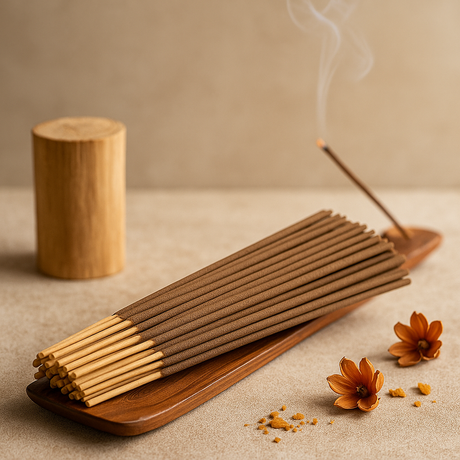
- Build a pause into something you already do. A pot of tea takes a few minutes to steep whether you watch it or not. Lighting incense and waiting for the scent to fill the room is a margin you can place anywhere in the day.
- Under-plan one part of the week. Choose a morning or an evening and leave it deliberately open, then let it stay open.
None of these is a rule. Yutori works against rules, really. Think of them as small experiments in leaving more room than you normally would, and keep the ones that make your days feel a size larger.
Objects that hold a little space open
Yutori is mostly about decisions rather than things, but a few objects are good at building a pause into the day, because using them takes time you cannot easily rush.
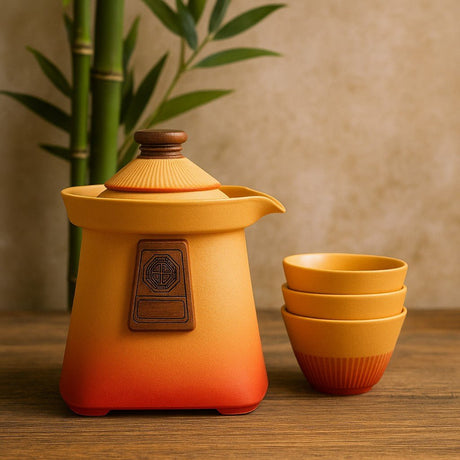
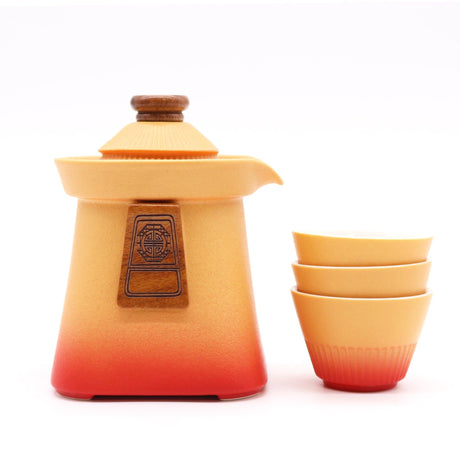
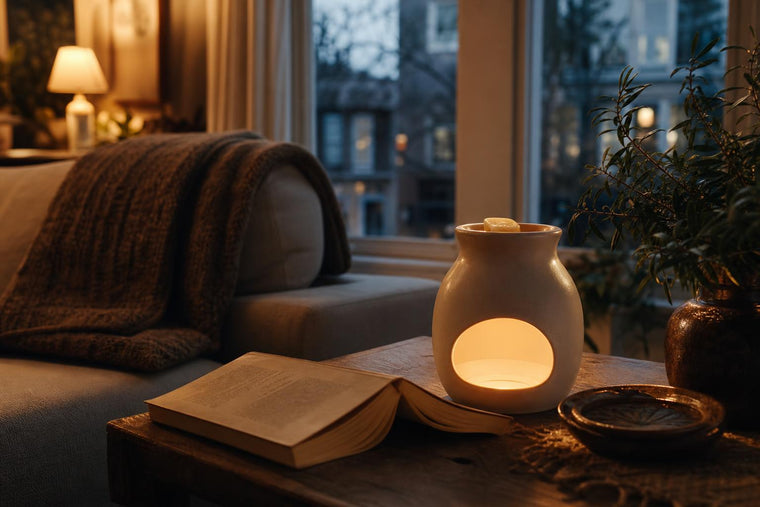
Tea is the clearest example. A loose-leaf brew has a steeping time of two or three minutes that belongs to nobody else, and the small ritual of warming the pot, measuring the leaves, and waiting is a margin with a shape. A singing bowl to mark the start and end of a quiet sitting works similarly; struck once, the tone holds for around twenty seconds before it fades, which is long enough to stop and notice. Incense and essential oils give you a few minutes that are defined by waiting for a scent to settle rather than by getting something done.
At SHAMTAM we tend to choose objects with that quality in mind, things that earn their place on a clear surface and reward a slower pace rather than fighting it. A single, considered piece is enough: a single considered object on it says more than a crowded shelf. If you are gradually making more room at home, our Artisan Tea, Aromatherapy, and Sound Instruments collections are reasonable places to start looking. There is no rush. That is rather the point.
A last thought
Yutori asks very little of you. It does not require a new routine, an early start, or a stricter version of yourself. It asks you to leave some room: a gap in the day you do not fill, a surface you do not cover, a few minutes you do not account for.
The strange thing is how much arrives in that room once you stop filling it. A clearer head. More patience with the people around you. The small noticing that slow living is really about, a honeybee on a flower, the colour of the light at four o'clock, the taste of the tea you actually waited for. The margin is not empty. It turns out to be where a good deal of the day was hiding all along.