A reader writes in with a question most of us have quietly asked ourselves, standing at the bathroom sink with a tin of something expensive that still isn't working.
The balm isn't the problem, the moment is
Q: I keep buying balms and none of them last. My hands are dry again within an hour. What am I doing wrong?
Almost certainly, the timing. A balm functions as a seal. It slows the rate at which water escapes through the skin, a process dermatologists call transepidermal water loss. But if you apply it to skin that is already dry, you are sealing in very little. The moisture has already gone.
The practice that changes this is simple: apply your balm within roughly sixty seconds of washing your hands, while the skin is still slightly damp. This is sometimes called the soak-and-seal method, and it is a commonly recommended practice in skincare guidance, not because it is complicated, but because it is often overlooked. We wash, we dry, we move on. The balm comes out later, as a crisis response, when the knuckles are already tight.
Lip skin is even more vulnerable than hand skin, because it has no sebaceous glands and a thinner outer layer; it loses moisture faster and needs more frequent attention. The same timing principle applies: a lip balm applied before you feel the dryness tends to outperform one applied after.
So before you change the product, change the moment. Keep the tin beside the tap, not in a drawer.
How to read an ingredient, texture logic over marketing
Q: How do I choose between shea, coconut, beeswax, kokum? The labels all say "nourishing" and "natural." I can't tell them apart.
The labels converge because marketing converges. The ingredients themselves are genuinely different, and the distinction worth understanding is functional: some ingredients nourish, some seal, and some do both to varying degrees.
Beeswax is primarily occlusive. It forms a physical barrier on the skin surface that slows water loss, but it does not itself penetrate or feed the skin the way a butter does. It is excellent in a lip balm for exactly this reason, a thin, protective film, but as the sole ingredient in a hand product it can feel more like a coat of varnish than a treatment.
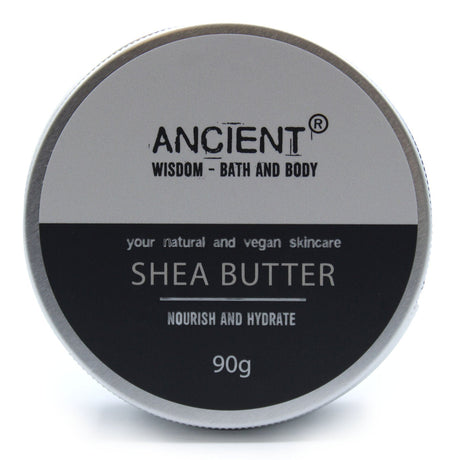
Shea butter (pressed from the nut of Vitellaria paradoxa, native to the savannah belt of West and Central Africa) is both occlusive and emollient: it softens and smooths while also slowing moisture loss. It is rich in oleic and stearic fatty acids, which makes it deeply nourishing but also relatively heavy. In cold or very dry climates, that weight is an asset. In warm weather, or on skin that tends toward congestion, it can feel like too much.
Coconut oil absorbs quickly and stays light, which makes it pleasant on lips but often insufficient as a sole hand balm in genuinely dry conditions.
Kokum butter is an ingredient less often discussed in English-language guides, cold-pressed from the seeds of Garcinia indica, a tree native to the Western Ghats, the coastal forests of Karnataka, Goa and Kerala. Kokum butter has a melting point close to body temperature, which means it liquefies on contact with skin without needing to be warmed or worked. It is non-comedogenic and light enough for facial and lip use, yet substantive enough to protect the hands. In warm climates, where heavier butters can turn greasy, kokum tends to behave with more precision. It is worth noting that Garcinia indica is a distinct species from Garcinia cambogia; the two are sometimes conflated, but they are not the same plant.
The Ayurvedic framework offers a useful way to think about all of this. The Charaka Samhita, in its Sutrasthana, describes snigdha guna, the unctuous quality, among the qualities set out in classical Ayurvedic texts on the properties of substances. Snigdha is characterised as nourishing, softening and supportive of tissue integrity; it is the quality that classical texts assign to oils and fats applied to the body. The logic is not mystical so much as observational: heavy, unctuous substances slow loss and build resilience. Lighter ones move faster and suit warmer, more active conditions. Matching the texture of what you apply to the climate you live in, and the skin you have, is the same reasoning arrived at independently, centuries apart.
As a general principle, lighter oils and butters suit warm climates and combination skin, while heavier butters earn their place in cold or very dry conditions. Skin response varies too, what feels right for one person's hands may still not suit another's, even in the same climate, which is really the honest answer to "which one should I buy": less than the marketing suggests, and more than a single ingredient can promise. On our own shelf, that range runs from a light calendula oil to a denser shea body butter, the choice is texture, not virtue.
The thirty-second pause
Q: Is there a way to use a balm more intentionally, not just slap it on and move on?
My own japa practice involves the hands constantly: the mala moves through the fingers, bead by bead, for as long as the practice lasts. I notice, in a way I didn't before I kept this practice, how much the hands carry. Not metaphorically. Literally: the texture of the beads, the slight resistance of each knot, the warmth that builds in the palm. The hands are the site of a great deal of daily attention, if you let them be.
Applying a balm slowly, working it into the knuckles, the nail beds, the webbing between the fingers, takes perhaps thirty seconds longer than doing it quickly. That thirty seconds is not a ritual in any grand sense. It is simply a pause in which you are doing one thing, and you know you are doing it. In a day that otherwise moves at the speed of the next notification, that is not nothing.
Some traditions have long understood the hands as a site of intention. In puja, the positioning of the hands (mudra) is not decorative; it is considered a form of directed attention. You do not need to hold that belief for the observation to be useful. Slowing down for one small act tends to change the quality of the minute that follows it.
That is not a promise. The balm does not do this for you. You do it, and the balm is there.