For centuries, people have arranged crystals in patterns to focus attention and hold an intention. A crystal grid carries that quiet habit forward. It is less about the stones doing the work and more about giving your own focus a place to rest, a small, beautiful reminder of what you are working towards, sitting somewhere you will see it each day. Here, we will walk through the patterns, the placements, and the simple practice of building one.
Crystal grid patterns and placement
The beauty of a crystal grid lies in its flexibility. There are patterns drawn from sacred geometry that can help you focus, but there is no single correct way to arrange your stones.
Think of these patterns as blueprints, a framework to guide you, not a rule to follow. Here are some popular options to consider.
- Flower of Life. This interlocking pattern of circles is one of the oldest symbols in sacred geometry, found carved into the Temple of Osiris at Abydos in Egypt and echoed across many later cultures. Many people choose it for grids about connection and interconnectedness.

- Hexagon. The hexagon is a symbol of balance and harmony, the shape bees build by, and the shape quartz crystals grow in. It is a versatile choice for a range of intentions, from rest and well-being to abundance or creativity.

- Circle. The circle is a near-universal symbol of wholeness and unity. A circular grid suits setting intentions, focusing on protection, or fostering a sense of togetherness.

- Phi spiral (golden ratio). The golden spiral appears throughout nature, in shells, ferns and the spread of galaxies, which is why many people reach for it when building grids around growth and momentum.

- Square. The square represents stability and grounding. A square grid suits protection rituals, holding your focus and determination, or finding balance across different parts of life.

- Five-pointed star. The five-pointed star has long been read as a symbol of protection and guidance. A star-shaped grid, with a stone at each point, suits setting intentions or focusing on a sense of steadiness.

- Tree of Life. A symbol of growth and interconnectedness found in many traditions, from the Norse Yggdrasil to the Kabbalistic Tree of Life, it makes a thoughtful frame for an intention, with each branch holding a particular goal or hope.

Crystal shapes and sizes are secondary to your intention. In crystal lore, pointed stones are said to draw attention outward, while spheres radiate energy more evenly for a settled, balanced feel. The most important thing is simply choosing the stones that call to you and feel right in the grid.
What is a crystal grid?
So what exactly is a crystal grid? Picture an arrangement of crystals laid out in a geometric pattern, placed with care. That is a grid. It goes a little beyond the aesthetic: by gathering stones you have chosen and arranging them with intention, you create a focal point for reflection, somewhere your attention can settle and return.
Think of it like an orchestra. Each stone is its own instrument, with its own character and association. The grid is the conductor, drawing them into one arrangement, a quiet, deliberate focus for your intention. Grids are increasingly popular among people who enjoy mindful, hands-on rituals and like to make their practice tangible.
Beginner-friendly crystals
Some crystals are particularly forgiving for beginners, easy to find and lovely to work with in a grid. Here are a few to consider.
| Crystal | Properties |
|---|---|
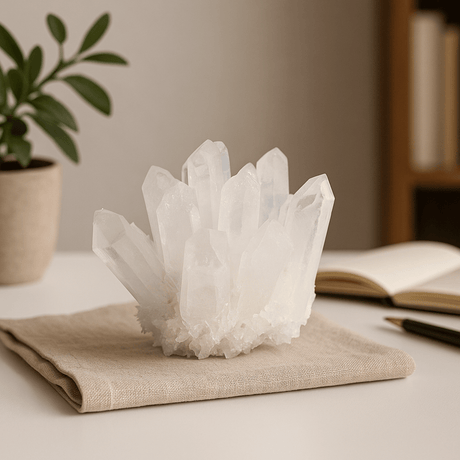
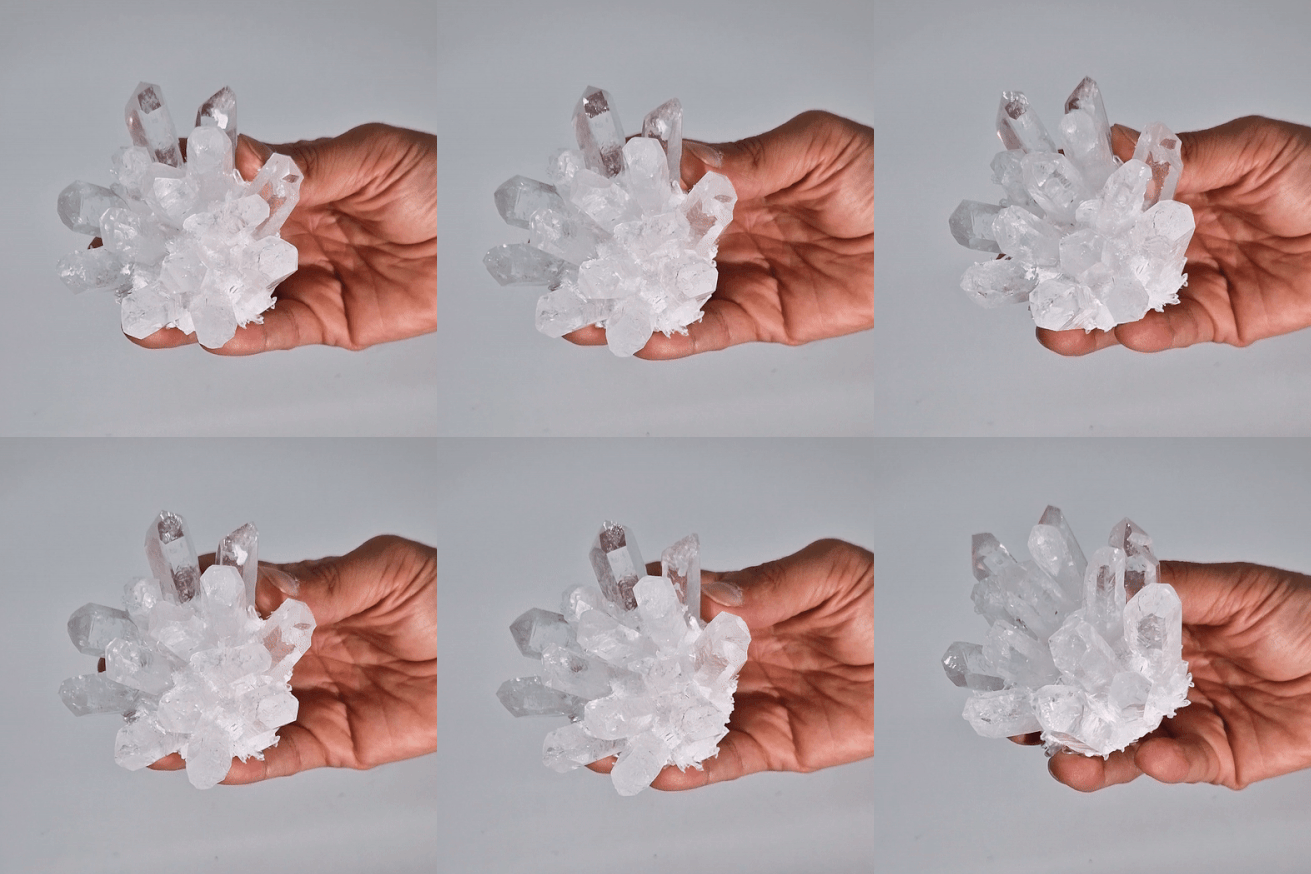
| Clear quartz | Often called the 'all-rounder' in crystal lore, clear quartz is believed to amplify the energy of other crystals. It is a popular anchor stone in grids for its clarity and versatility. |
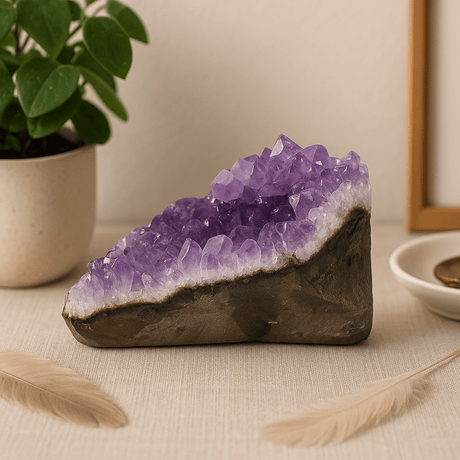
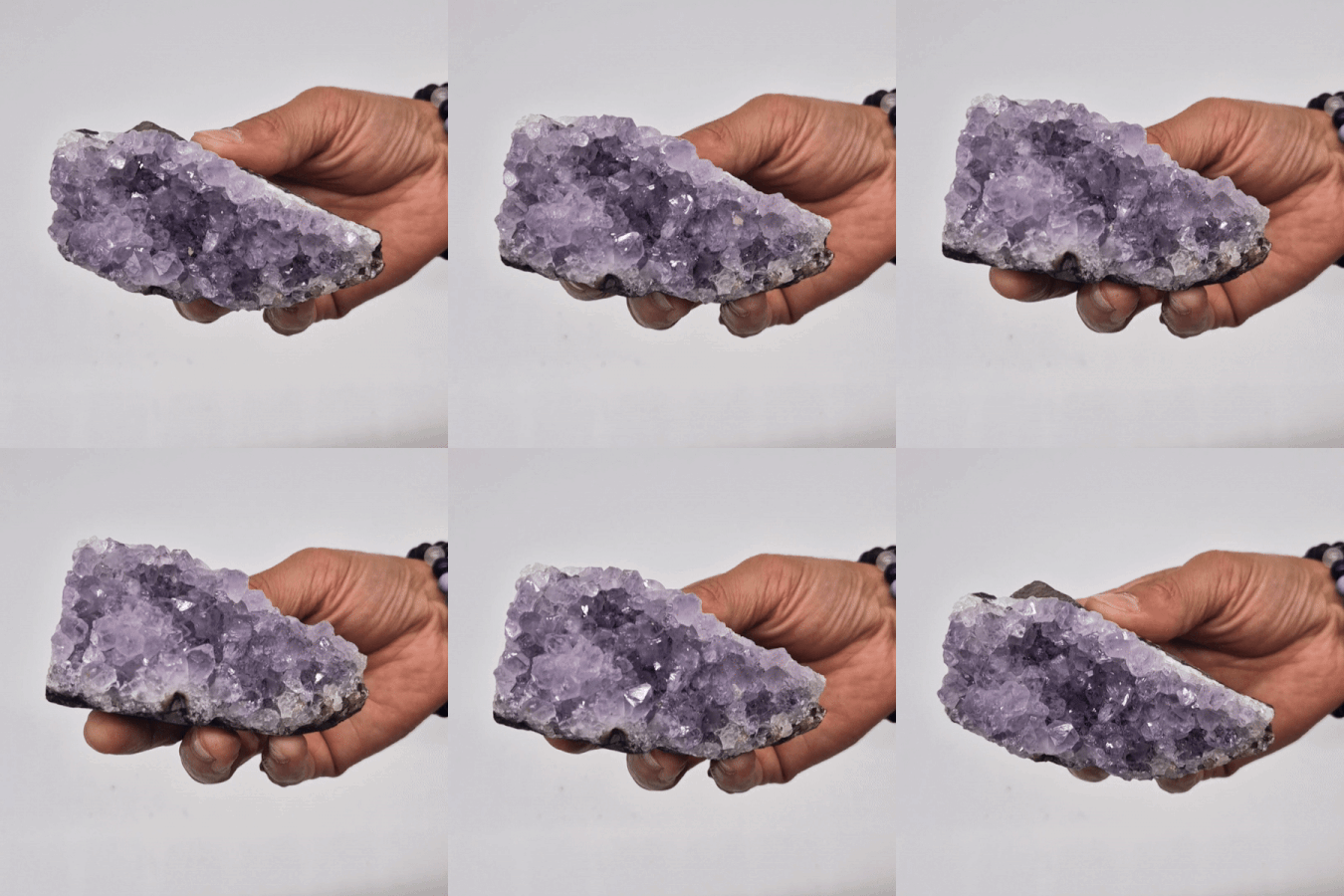
| Amethyst | A beautiful purple stone, amethyst is known for its calming and protective qualities. It is a lovely choice for grids around rest, inner peace and quiet reflection. |
| Rose quartz | The soft pink hues of rose quartz are associated with love, compassion and gentleness. A welcome addition to a grid focused on relationships, kindness or self-love. |
| Citrine | In folklore, this bright yellow crystal is associated with abundance and good intentions around work. A note worth knowing: much of the citrine on the market is heat-treated amethyst rather than naturally golden quartz. |
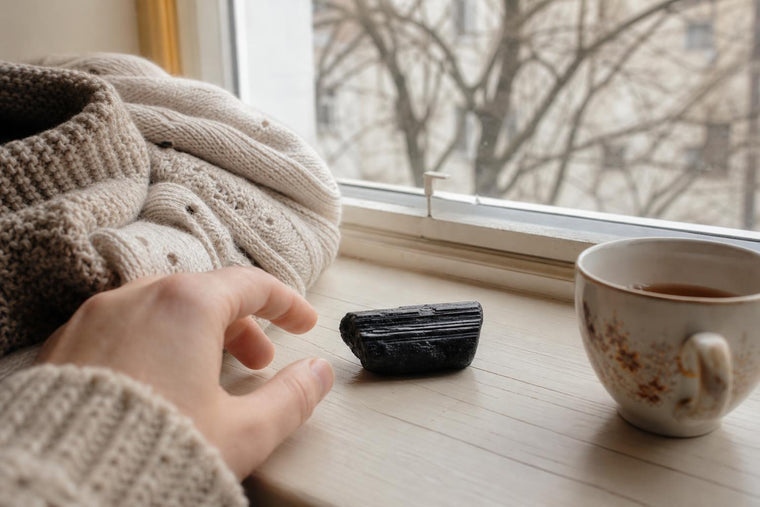
| Black tourmaline | A grounding, steadying stone, black tourmaline is believed to shield against negativity in crystal lore. A natural choice for grids about protection or finding calm under pressure. |
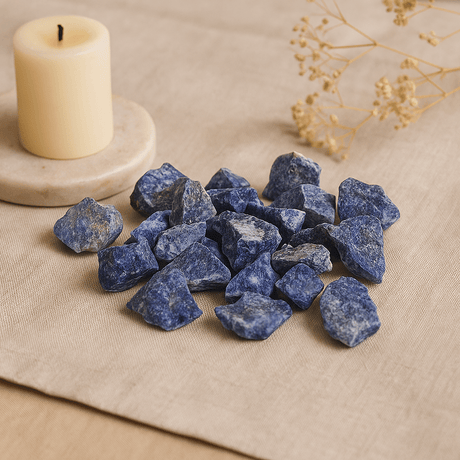
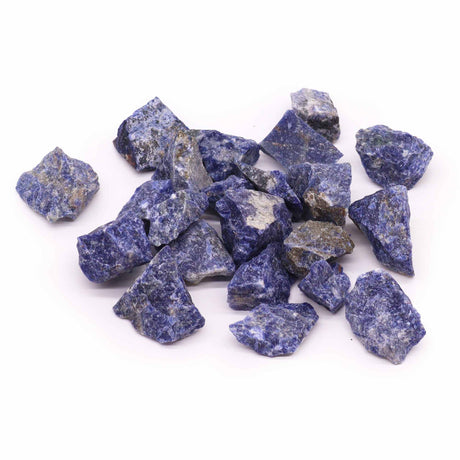
| Sodalite | This calm blue stone is associated with clear thinking, communication and steadiness. A helpful addition to a grid for focus, self-expression or finding the right words. |
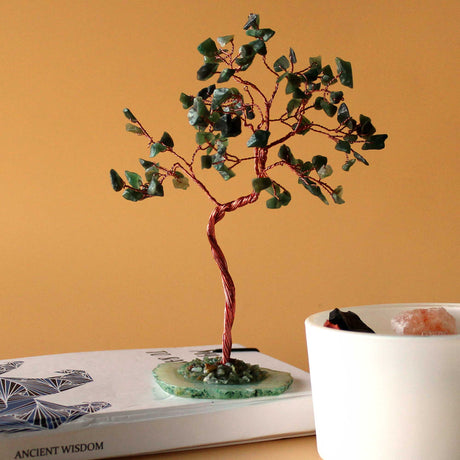
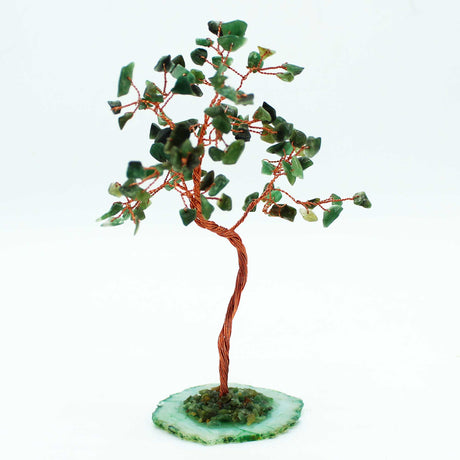
| Green aventurine | In folklore, green aventurine is the stone people reach for around opportunity and fresh starts. A pleasing addition to a grid set around new ventures or open doors. |
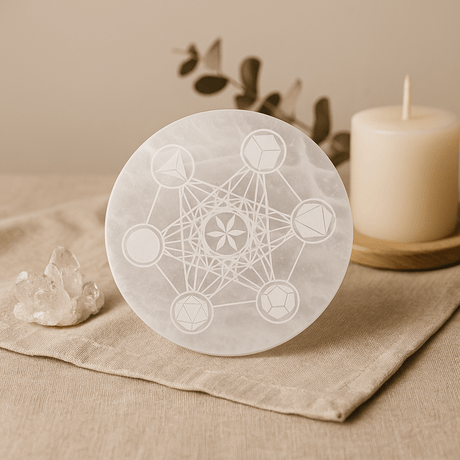
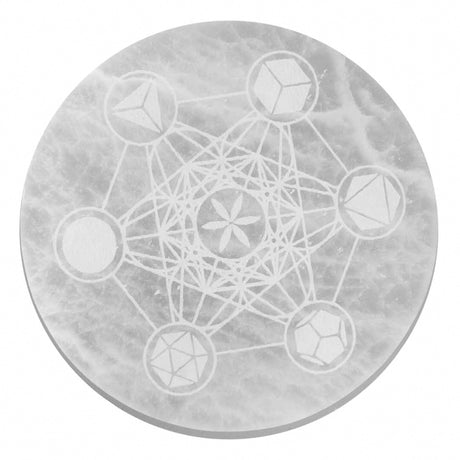
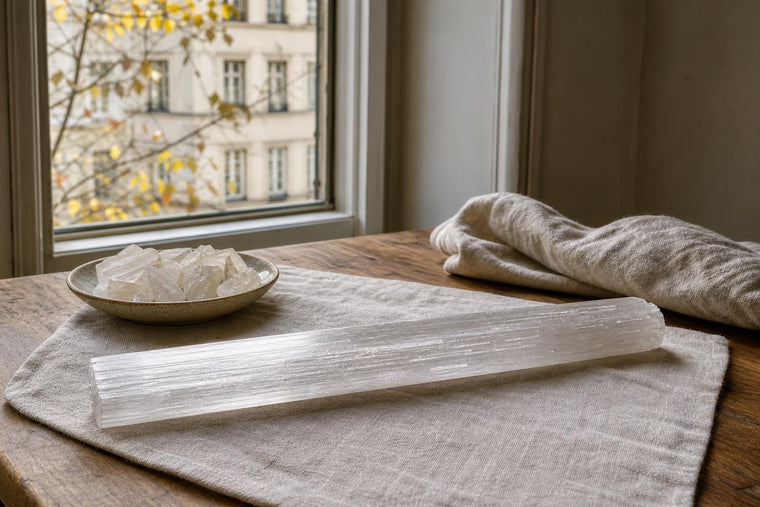
| Selenite | Valued for its luminous, milky look, selenite is believed to clear stagnant energy and bring a sense of clarity. It is a traditional companion stone in many grids. A care note: selenite is a soft, water-soluble mineral, so it should not be rinsed or soaked. |
| Labradorite | This iridescent stone is associated with intuition and transformation. A thoughtful addition to a grid for creativity, self-discovery or trusting your own sense of things. |
| Obsidian | A black volcanic glass, obsidian is a grounding stone associated in lore with protection and self-reflection. A good choice for a grid about releasing old patterns or building a sense of security. |
| Lapis lazuli | Long known as the 'wisdom stone', lapis lazuli is associated with truth, inner knowing and self-awareness. A fitting addition to a grid for learning or deeper reflection. |
| Tiger's eye | Tiger's eye is associated with courage, willpower and steady resolve. A good companion in a grid for building confidence or working towards a goal. |
These are just a few suggestions to get you started. As you explore crystals, you will discover plenty of others, each with its own character.
There is no right or wrong answer when choosing crystals for your grid. Trust your intuition and gravitate towards the stones that resonate with you.

Choosing crystals for your intention
Much of the appeal of a grid is how readily you can shape it to a particular intention. By gathering stones associated with the thing you are working on, you give your focus a clear, tangible anchor. Think of your crystals as companions, each carrying its own quiet association.
Here are some common intentions and the stones people often choose for them.
- Abundance, prosperity, focus on work. Citrine, pyrite, green aventurine.
- Rest, well-being, calm. Amethyst, clear quartz, carnelian; orange calcite is another option.
- Peace, restfulness, grounding. Amethyst, lepidolite, selenite.
- Happiness, joy, re-energising. Carnelian, citrine, orange calcite.
- Courage, self-confidence, a kinder self-image. Tiger's eye, sodalite, carnelian.
- Love, relationships, self-love. Rose quartz, rhodonite, amethyst.
- Intuition, third-eye focus, connection. Amethyst, sodalite, labradorite.
- Alignment, balance, a clear head. Clear quartz, selenite, black tourmaline.
This is only a starting point. Many other crystals carry associations that might align with what you are working on. Here are a few thoughts on choosing.
Remember, there is no single correct way to choose crystals. Experiment, explore, and trust your own sense of what feels right for your grid.
Cleansing your crystals
Many people like to cleanse their stones from time to time, as much a way of resetting your own relationship with them as anything else. Here are a few common methods.
- Smudging. Burn sage or another cleansing herb and let the smoke bathe your crystals, taking a quiet moment as you do.
- Water rinse. Run water-safe crystals under cool water for a few minutes. Check each stone first, some should never be soaked.
- Sun or moon bath. Place your crystals in natural light or moonlight for several hours. Some stones fade in direct sun, so check before you leave them on a windowsill.
- Sound. Use a tuning fork or a singing bowl, letting the vibrations move over the stones.
One word of care: a few crystals do not take well to water or strong sun. Selenite, for instance, is a soft gypsum mineral that dissolves in water, so it should never be rinsed, and softer or soluble stones in general are best kept dry. Selenite is also traditionally regarded as self-cleansing, so it asks very little of you. When in doubt, look a stone up before you wet it or set it in the sun.
Mixing crystal shapes and sizes
As you lay your crystals into their chosen pattern, you might wonder whether the shapes and sizes need to match. The answer is a refreshing no. Some people prefer a uniform grid for the look of it, but there is no rule against mixing things up.
This is where the flexibility of a grid shows. Focus on what feels intuitive and suits your intention. If you are drawn to a particular stone, use it, whatever its size or shape.
Here is a thought: picture your grid as a piece of music. Each crystal is its own instrument, and the varying shapes and sizes add depth and texture to the whole.
In the end, what matters most is that you feel a connection to the crystals you have chosen, and that they suit the intention you are holding.
Understanding keystone dispositions
The keystone is the central stone of your grid, the piece your eye and attention return to. Choosing it comes down to what you are focusing on, and the shape you pick can change how the whole grid feels.
- Points and towers. With their long, tapered shape, an activator wand, with its long pointed shape, is the form people reach for when they want a single, directed focus for their intention.
- Spheres. A sphere has no single point, so people like it for grids about balance and an even, settled focus.
- Hearts. A heart-shaped stone is an easy, affectionate centrepiece, often chosen for grids about relationships, kindness or self-love.
- Squares and cubes. A cube sits flat and stable, people choose it for grids about grounding and structure.
- Crystal clusters. Crystal Clusters... emit amplifying energy in all directions in crystal lore, with their many points; a striking, characterful keystone for the centre of a grid.
- Pyramids. A pyramid draws the eye to a single point, so it is a popular centre stone. Pyramids hold and focus your desired outcome for many who build grids around a specific goal.

Crystal grid activation and duration
Activating your grid is a personal moment, and a simple one. Here are some common ways to do it.
- Set your intention. Say or think clearly what you are working towards. There is nothing to summon here, the ritual works by focusing your own attention, the way a deliberate pause focuses a busy morning.
- Use a mantra or affirmation. Repeating a short phrase tied to your intention can help hold your focus while you sit with the grid.
- Sit with it. Hold your hands over the grid, take a few slow breaths, and let yourself settle into the intention you have set.
Choose an activator wand (optional). A wand, with its long pointed shape, is a handy tool for tracing the connections between the stones as you set the grid, and later for taking it apart. Clear quartz makes a good all-purpose choice, while other stones, such as labradorite, bring their own character to the moment.
And how long should you keep the grid set up? That depends on your intention.
- Short-term focus. For something near at hand, a job interview, a presentation, a grid might sit for a few days or a week.
- Longer-term focus. For something ongoing, like an intention around work or relationships, you might leave the grid for weeks or even months. Trust your sense of it and adjust as you go.
A few signs your grid might be ready for a refresh:
- You no longer feel much connection to the stones.
- The crystals look dull or lacklustre and could do with a cleanse.
- You have reached your intention and are ready to set a new one.
When you are finished, take the grid apart slowly, offer the stones a quiet word of thanks, cleanse them, and store them until the next time. Dismantling with the same care you built it is part of the practice.
Deactivating and dismantling your grid
Your grid has done its quiet work, and the moment has passed. Taking it down is a simple way to mark the close of one focus and make room for the next.
Here is how to dismantle a crystal grid.
- Reverse the process. Sit with the grid one last time and let the intention settle. A few words of thanks to the stones is a lovely way to close.
- Cleanse your crystals. As with setting the grid, this is optional, but it is a nice habit before storing them away.
- Store your crystals. Keep them individually or together in a dish or a soft pouch, ready for next time.
Combining crystal grids with other practices
A grid sits happily alongside other mindful practices. Think of it as a focus aid for your own intention, one that pairs naturally with the things you may already do. Here are a few that combine well.
- Meditation. Meditation helps quiet the mind and settle your attention. Sitting near your grid gives that focus a gentle anchor to return to.
- Visualisation. Picturing the thing you are working towards, clearly and calmly, sits well with the steady focus a grid encourages.
- Affirmations. Repeating a short, honest phrase that matches your intention reinforces it for you, and reading it near the grid gives the practice a place to live.
Pairing a grid with practices like these turns it into one part of a fuller, more considered routine, with the focus always staying with you.

Crystals to use with care
The world of crystals is broad and rewarding, but a few stones are worth approaching gently. Here are a couple of things to keep in mind.
- Stones with an intense reputation. Moldavite, a tektite, which is a natural glass formed by a meteorite impact, and some other tektites have a reputation in crystal circles for feeling intense. Many people find it best to start with gentler, more familiar stones and explore from there.
- Read up first. Before working with an unfamiliar crystal, look into its care and its traditions. Some need special handling, and a little reading goes a long way.
Above all, listen to your own sense of things and choose stones that feel right in your hand. A crystal that feels like a good fit is the one most likely to keep your focus where you want it.
A gentle close
A crystal grid is a simple, quietly satisfying way to give an intention a home. Choose stones that resonate with you, set them in a pattern that feels right, and return to it day by day. If you would like to build your own, our crystal spheres and wands are a gentle place to start, and you can explore the vast crystal collection at SHAMTAM for more. A small note in closing: crystal practices are a lovely complement to looking after yourself, never a replacement for professional medical or mental-health care.