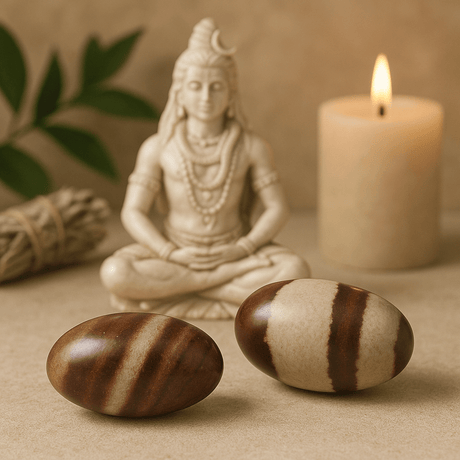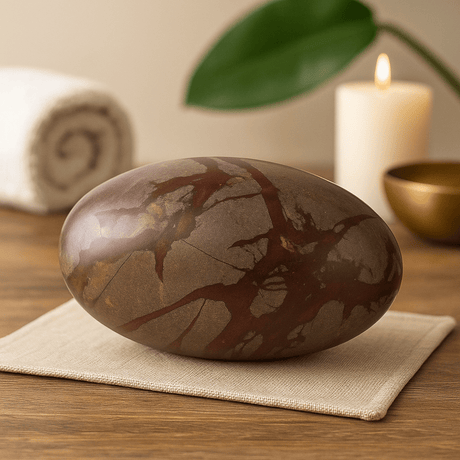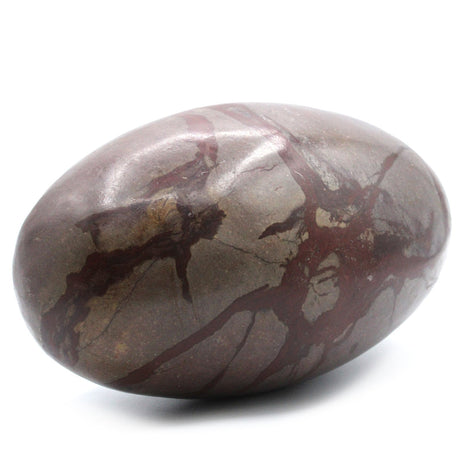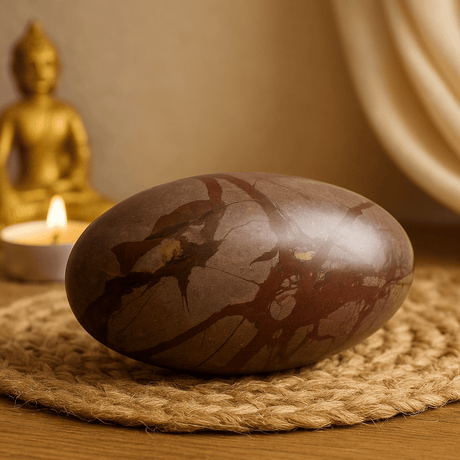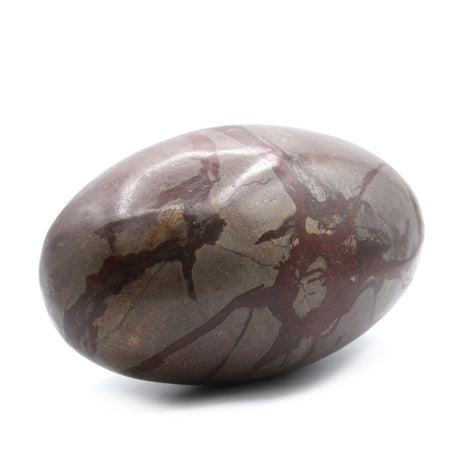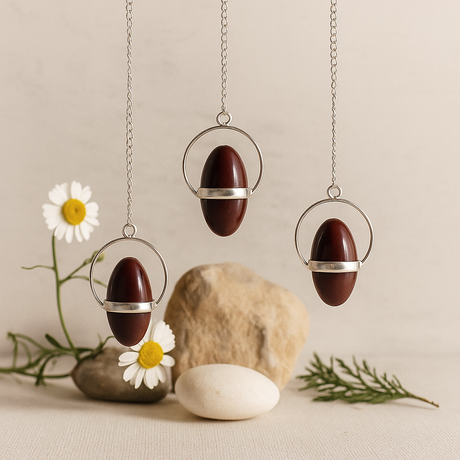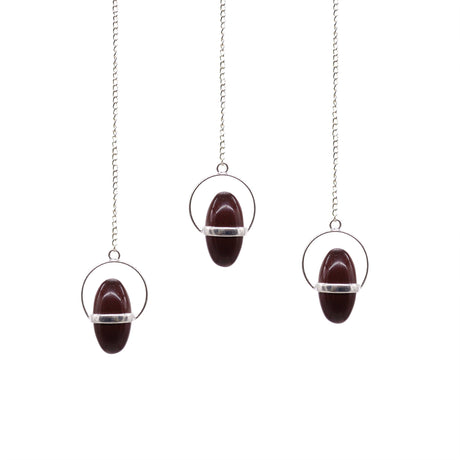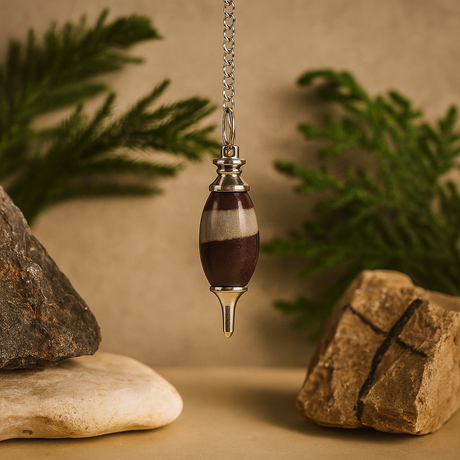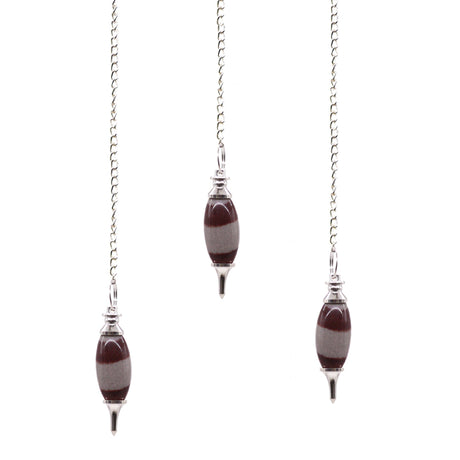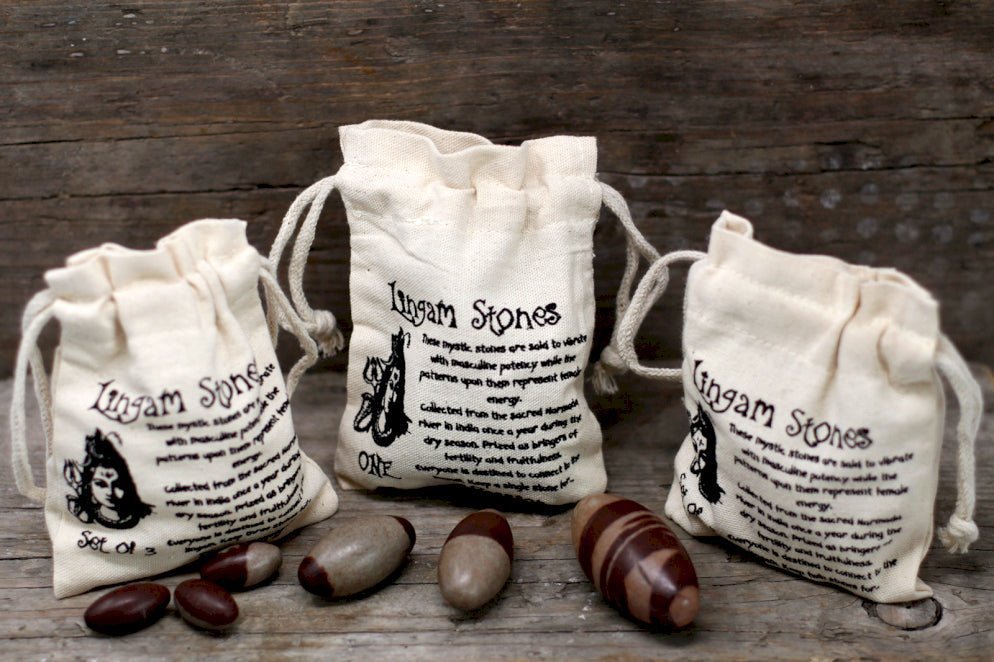
Hold one in your palm and the first thing you notice is the weight. A Shiva Lingam stone is smooth, egg-shaped, and cool to the touch, its brown-grey surface marked with bands of red-brown. It comes from a single river in central India, gathered by hand. This is a small object with a long story behind it, and it asks for nothing more than a little attention. Here is where it comes from, what the markings mean in tradition, and how people quietly fold it into their own practice.
A sacred stone from the Narmada River
The Shiva Lingam Stone comes from the bed of the Narmada, one of India's most revered rivers, in the central state of Madhya Pradesh. For generations these stones have been carried into temples and home altars, where the smooth ovoid shape is read as a symbol of Shiva and of creation itself.
Local lore tells of a meteor strike that fused cosmic fragments into the riverbed. It is a beautiful image, and worth knowing as legend. Geologically the stones are cryptocrystalline quartz, shaped by the Narmada's currents over thousands of years, their red-brown bands the trace of iron oxide in the rock. Both stories sit side by side: the one the tradition tells, and the one the river itself tells. No two stones are quite alike.
What the shape and markings mean
A symbol of the masculine principle
In Hindu tradition the rounded form of the stone is associated with Shiva and the generative masculine principle, the creative force that runs through all things. The ovoid shape, often likened to an egg, has long been held as a reminder of that beginning. Presented here as cultural and historical context, it is part of why the stone has been treasured for so long.
The union of Shiva and Shakti
The stone is not only a masculine symbol. Its natural markings are read in tradition as the feminine, the Shakti, wisdom and nurture, complementing the masculine with balance. The rounded form and the surface pattern together carry both. It is the Hindu pairing of Shiva and Shakti, two principles held as one, rather than two things to choose between.
A balance of opposites
In this way the Shiva Lingam stone is often described as holding opposites together, masculine and feminine, earthly and celestial, physical and spiritual. For many people the appeal is exactly that: a small object that quietly suggests these forces are not at war but in balance, within a person and in the world. We offer this as a way of seeing it, not as a path you must walk.
How people work with the stone
Working with the chakras
In chakra work the stone is used as a focus. Placed on an energy centre, or simply held, it gives your attention something to settle on while you do the balancing yourself. The chakras are best understood as a framework for self-awareness, a way of noticing where you feel tense, scattered, or grounded. If you would like to balance the chakras as part of a wider practice, the stone can sit alongside that work as a steadying point, bringing a sense of calm and clarity. You can also explore the seven chakras in more depth.
An anchor for reflection
Some people keep the stone close as an anchor for reflection. The small ritual is simple: name a limiting thought, hold the stone, and set the thought down. The person does the work; the stone holds the note. Returned to over days and weeks, this kind of practice can build a quieter, more honest sense of where your attention goes.
A companion for creative work
Others keep one on the desk as a creative companion. There is no magic in this, only the steadying effect of a small object you return to when ideas need room to settle. Writers, makers, and musicians have long kept such talismans to hand. The stone simply marks the intention to begin.
The stone in spiritual practice
A focus for meditation
In meditation the Shiva Lingam stone is most often used as a focal point. Rest it in the palm, or set it where you can see it, and let it hold your gaze as you settle. It is the practice that deepens, not the stone that acts on you, but a steady object to return to can make sitting down to meditate a little easier, and easier to repeat tomorrow.
A note on Kundalini
In Kundalini awakening, the stone is said to support the practice rather than cause it. In tradition, Kundalini is described as an energy that lies coiled at the base of the spine. The work of awakening it is understood to be the practitioner's own, undertaken with care and ideally with guidance; here the stone is used as a supportive focus, not the source of any transformation.
A place in the Tantric tradition
The Shiva Lingam stone also holds a place within the Tantric tradition, where it appears as a symbol of the union of opposites and of sacred wholeness. We present this as heritage and context, a tradition with its own depth and history, rather than a practice we prescribe.
Symbolism of union and new beginnings
A shared object on the altar
Because the stone carries both the masculine and the feminine in one form, couples sometimes place it on a shared altar as a symbol of union, a quiet object to return to together. It marks a shared intention rather than working any effect on a relationship. Held this way, it becomes a small point of stillness two people can come back to.
Holding an intention for new life
In its symbolism of generative union, the stone has long been a focus for those holding an intention around new life. This is tradition and symbol, not a physical effect, but for many, having a meaningful object to hold while marking a hope is part of how an intention is honoured.
Caring for your Shiva Lingam stone
Where these stones come from
Genuine Shiva Lingam stones come only from the Narmada River. They are gathered by hand, traditionally once a year when the water runs low, by communities who have collected them for generations, and then hand-polished. Because of this, responsible gathering and respect for the river and its people matter a great deal. Each stone keeps its own shape and pattern, slight differences in colour, size, and marking are part of the stone, and a sign you are holding a real piece of the river rather than a moulded copy. These are among the crystals and gemstones we feel best carry a true story of place.
A simple ritual of care
Many people refresh the stone with a simple ritual, a rinse, a night under the moon, a few minutes of sound from a singing bowl, as a way of resetting their own attention to it. A gentle wipe with a soft, dry cloth keeps the surface clean and the markings clear. Some like cleansing with sage and smudge sticks as part of the same quiet moment. There is no need for harsh chemicals or long soaking; treat care as a small act of intention rather than a chore.
Honouring the tradition
Much of what the Shiva Lingam stone offers lies in the reverence with which it is treated. By learning the traditions that have surrounded these stones for centuries, and holding them with respect, you give the object meaning, and that meaning is what you return to.
Bringing the stone into your day
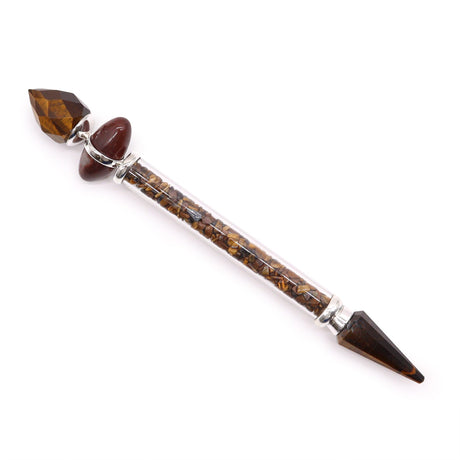
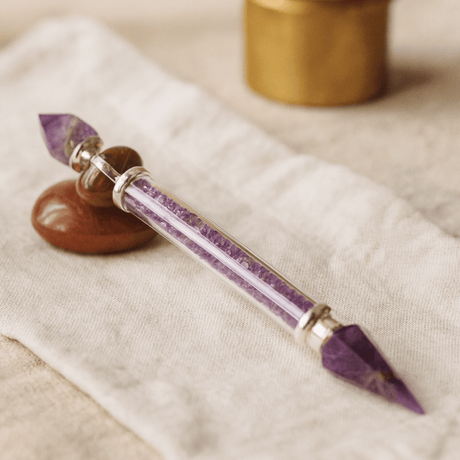
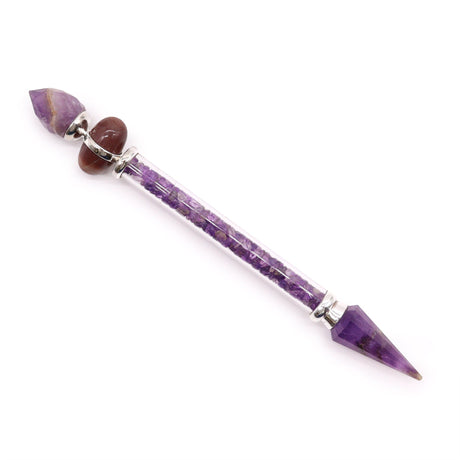
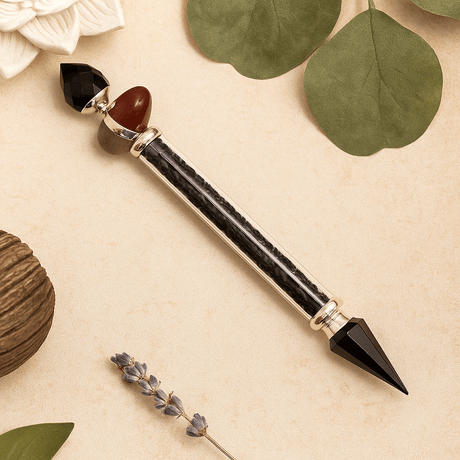
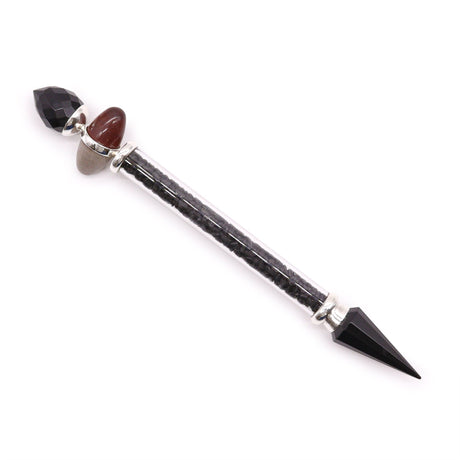
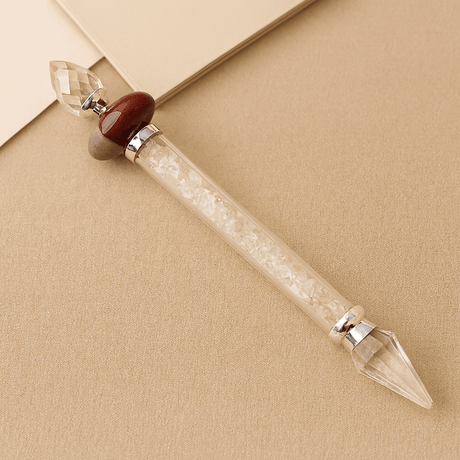
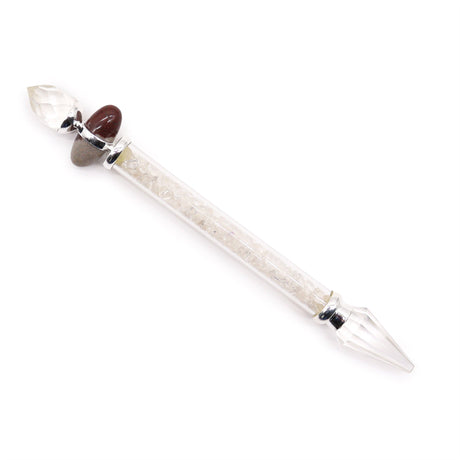
You do not need a complicated practice to live with a Shiva Lingam stone. Keep one on a windowsill, carry a small one in a pocket, or rest it on an altar beside a candle. Some pair it with meditation and mala beads for mantra work, or with crystal pendulums and crystal wands for practice when they want a more active tool. The Shiva Lingam sits within a wider world of natural healing crystals, and as one of the treasures made in India it carries the river and the tradition with it.
Held with attention and an open mind, the stone becomes what most ritual objects become: a small, steady invitation to slow down, to set an intention, and to return to the present. The work is yours. The stone simply keeps the note.