Some evenings call for a smaller kind of arrival. Not a long ritual, just one clear note that tells the room, and you, that it is time to slow down. A singing bowl does exactly this. One gentle strike, and the air seems to soften and widen. Sound opens, the breath lengthens, and attention settles into a calmer rhythm. It is a small pause you can hold in your hands.
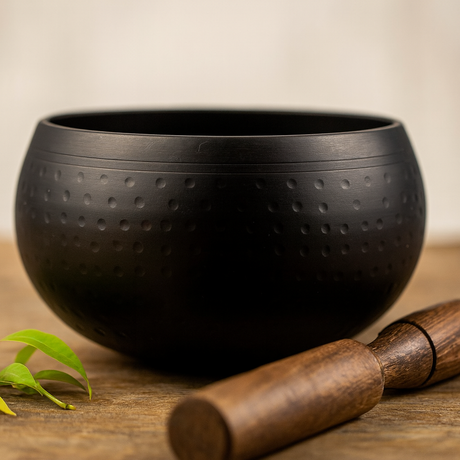
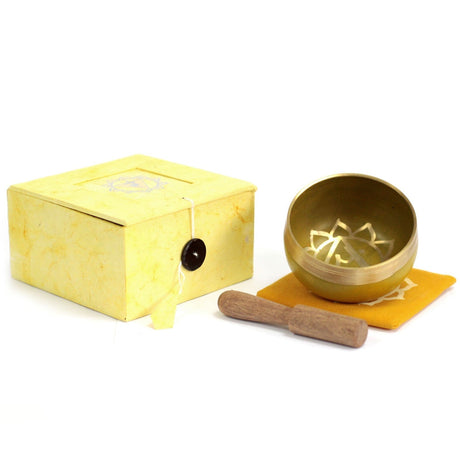
This is why we keep one within reach at SHAMTAM. Not as decoration, but as a companion for presence. A bowl like our 23cm Moss Green Tibetan Singing Bowl carries a warm, steady sustain and a reassuring weight in the palm. It helps the mind arrive, kindly and without rush.
What makes a singing bowl special
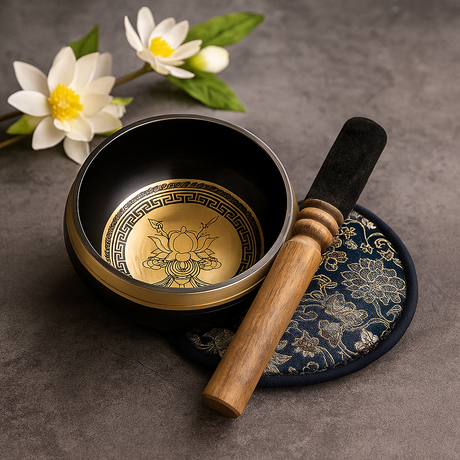
A singing bowl is a metal vessel that rings and sings when struck or circled with a mallet. Its overtones are long and layered. You hear them, but you also feel them. The sound becomes a tactile anchor, gathering scattered attention into a single, steady point.
Singing bowls are often called Tibetan or Himalayan. Their story is braided and, at times, misattributed. Popular imagery links them to ancient Tibetan monastic practice, yet the evidence points more clearly to artisans and metalwork lineages in Nepal and India, where bowls were used as everyday vessels and ritual objects alike. From mid-twentieth-century recordings to today's yoga and mindfulness spaces, the bowl's contemporary role has grown through a mix of tradition, craft, and new contemplative practice.
What remains constant is simple: a bowl invites quiet.
Why invite a bowl into your practice
A singing bowl offers both a cue and a cradle for attention. The clear tone signals begin, and its fading tail guides you into silence. Many people sense a softening of the body, a slowing of breath, a subtle release in the face and jaw. It is gentle, yet remarkably precise.
- Mark the beginning or end of a sitting
- Invite a slower, calmer rhythm in the body
- Carry the sound through a room as a small refreshing ritual
- Accompany a sound meditation at home
- Support an intention-setting ritual
Before you begin: a small moment
You do not need a perfect altar or a soundproof studio. A few caring details are enough to set the tone for stillness.
- Posture: Sit comfortably with an easy, upright spine, on a cushion or chair.
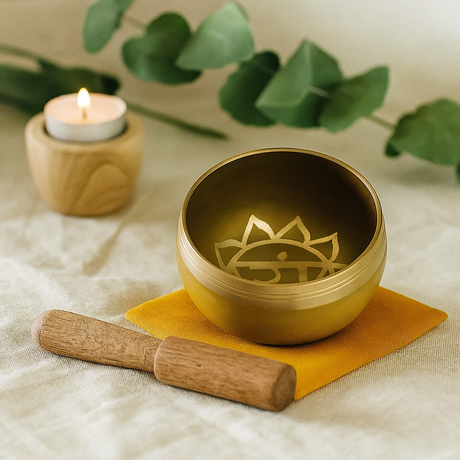
- Placement: Rest the bowl on your open palm or a soft cushion so the rim can vibrate freely.
- Breath: Take one slow inhale, one unhurried exhale. Let your shoulders drop.
- Intention: Name your wish for this sitting, even in one word: rest, clarity, kindness.
Let this be a space that welcomes you exactly as you are.
How to use a singing bowl: a step-by-step guide
Below is a simple method you can use with any quality brass bowl. We will refer to our moss-green bowl along the way, to give you a feel for the experience.
Step 1. Position the bowl
Hold the bowl lightly in your non-dominant hand. Keep the palm open and the fingers relaxed. Avoid gripping the sides, which can mute the vibration. Notice the cool brass. Feel the weight anchoring your attention.
Step 2. Choose your mallet
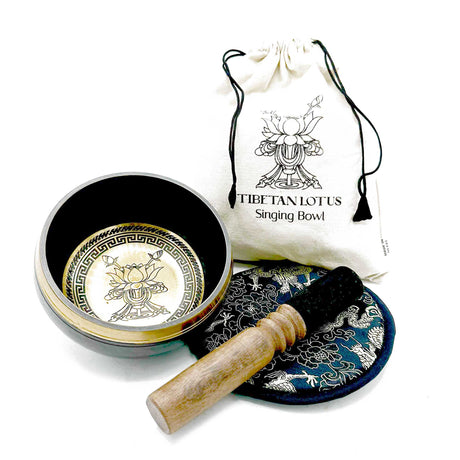
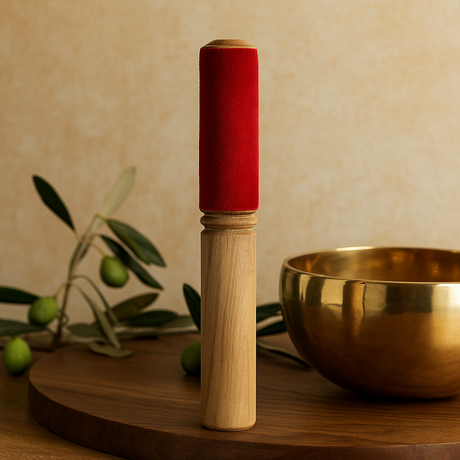
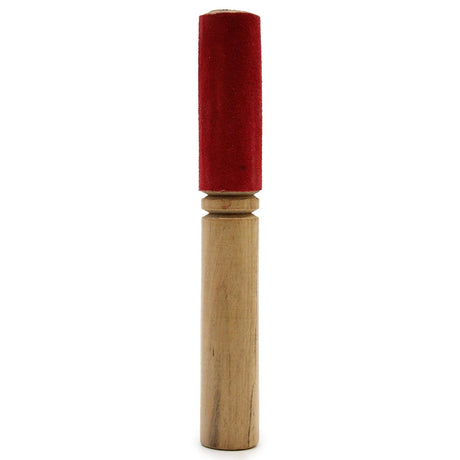
Most bowls come with a wooden or suede-covered mallet. A wooden mallet produces a bright, clear ring; suede tends to be warmer and softer. Either is lovely. Pick the mood you want to invite.
Step 3. Strike gently to awaken the tone
Tap the rim once, like touching the surface of water. With a warm brass bowl like the moss-green one, a clean bell-like tone rises and lingers. Allow it to bloom, hang in the air, then fade into quiet. One strike can be a ritual in itself.
Step 4. Make the bowl sing
After the strike, place the mallet against the rim and begin a slow, smooth circle. Keep even pressure. Move at the pace of a calm breath. The sound will gather gradually, as if ripples are widening in a still pond. If you hear scratching, soften your pressure and slow down.
Step 5. Match breath with sound
Inhale as the sound grows; exhale as it settles. The body meets the tone, then the mind meets the body. A small, steady loop forms: breath, sound, stillness.
Using the bowl during meditation
Many practitioners treat the bowl as a timing guide. Begin with a single strike, settle for a few minutes, then ring again whenever attention needs a gentle return. During a longer sit, you might let the bowl sing every few minutes, allowing each note to fade completely before the next. The first tone sets the container; the last tone opens the room again.
Teachers often ring once to start, once or twice during transitions, and three times to close. If you like to carry the sound through your home as a small refreshing ritual, walk slowly from room to room, touching each corner with sound.
Breath, body, and tone
Pairing the bowl with breath deepens focus. Try these simple patterns:
- Strike on an exhale and let the tone carry the rest.
- Begin a slow rim circle on the inhale and complete it on the exhale.
- After a strike, rest your hands and notice the vibration in your palm, your chest, the quiet inside your ears.
Let the sound be your focal point. Let the breath be your anchor. The two together create a quietly dependable rhythm. Some people like to deepen breathwork or yoga alongside the bowl, counting each round on a string of beads.
A note on timing and pacing
Less is often better. In group sessions, many facilitators ring a bowl every two to five minutes, or at natural turning points in the practice. A clear strike refocuses attention. A sustained sing invites depth. Silence between tones gives the body time to absorb the shift.
If you are new to bowls, give each note space to decay before playing again. Allow the last traces of shimmer to disappear into the room. This keeps the sound from becoming cluttered and preserves its ability to open the mind.
What the science suggests
People often describe feeling calmer and more centred after even a short sound meditation. A few studies have begun to look at why. In one small trial, a brief session with Himalayan bowl sounds before relaxation was associated with a greater easing of heart rate than relaxing in silence. A couple of observational studies have reported that people felt less tension, anger, and low mood after group sessions with metal bowls.
Brainwave studies add another layer. When listeners sit with a bowl's steady, low-frequency beat, recorded activity tends to shift toward the slower theta and delta ranges often linked with deep relaxation and inward focus. The evidence here is early and limited, but pointing the same way: bowl sound seems to help the body settle toward a quieter, more restful state. We hold to honest language about this. A bowl is not a cure or a treatment. The calm comes through your own attention and breath, with the tone as a steady place to rest them.
Choosing your mallet
Mallets shape the character of your bowl's voice. You can keep one or two, or build a small set over time. Below is a simple guide to common types and their feel.
| Mallet type | Material and feel | Sound qualities | Mood and use |
|---|---|---|---|
| Soft suede or felt | Very soft, cushioned head | Warm, rounded attack, long sustain, emphasises low overtones | Deeply calming, grounding, lovely for closing or evening |
| Medium rubber or padded | Medium firmness | Clear pitch, balanced harmonics, moderate sustain | Focused, steady, ideal for daily sitting |
| Hard wood or leather tip | Firm, bright contact | Crisp attack, shorter sustain, more shimmer | Energising, clarifying, helpful for opening or transitions |
| Heavier head on sturdy handle | Dense, weighty feel | Strong volume, rich low fundamentals | Powerful, enveloping, best in larger spaces |
If you are unsure, begin with a soft suede mallet for the most forgiving, mellow tone, then add a firmer striker for brighter cues when needed. Trust your ear. If a sound makes your breath ease and your shoulders soften, it is the right one for today.
Caring for your bowl
With a little care, a well-made bowl can serve for decades. Brass and bronze slowly develop a patina. Many of us love this lived-in look; if you prefer a gentle shine, simple upkeep is enough.
- Wipe after use: A soft, dry cloth to lift oils and fingerprints.
- Polish sparingly: A mild brass polish or a lemon-and-bicarbonate paste, then buff dry.
- Avoid harsh cleaners: No abrasives, no long soaks.
- Store kindly: Keep it dry, unstacked, and resting on a cushion or soft cloth.
If the tone ever sounds unusually rough or chatters, first check your technique: lighten the pressure and slow your circle. Try a different mallet. Clean the rim. If the trouble persists after a knock or fall, a skilled craftsperson can advise on repair.
The room is part of the instrument
Sound interacts with space. High ceilings and wooden floors invite a generous bloom. Carpets and heavy curtains soften and shorten the ring. Neither is better, simply different. In a lively room, play more slowly and allow longer fades. In a soft room, consider a firmer strike or a heavier mallet to keep the voice present.
When you find a spot where the bowl feels especially resonant, mark it with a small cushion and return to it. Over time, the space itself begins to feel familiar, like a chair worn to your shape.
Choosing your singing bowl
Each bowl in our collection is selected with intention:
- clean, resonant sound
- long sustain that fills a room gently
- stable, grounding weight
- craftsmanship that brings beauty and meaning to your rituals
Some are perfect for meditation corners, others for open spaces or group practice. All are chosen to support your moments of presence, clarity, and calm.


Gentle rituals you can try
Begin with three breaths. Strike once. Count five slow inhales and five slow exhales, eyes soft or closed. Strike again. Let the sound fade completely. Whisper a word you would like to meet more often today. Then move into your practice, or simply sit for a minute or two, hands resting, attention settled. End with one last ring and an easy bow to the bowl.
Or take a quiet walk through your home while the bowl sings. Hold it in one hand, circle the rim with the other, and pause at thresholds, corners, and shelves. To reset the energy of a room in your own way, you might light a stick of incense first and let the two move through the space together. Notice how even small rooms feel different after sound passes through them.
SHAMTAM's way with sound
At SHAMTAM we curate bowls and ritual items with care and patience. Our collection is multilingual and international, made by artisans across Nepal, India, Bali, and the UK, and packaged with an eye for gentleness. The aim is simple: to help you slow down, reconnect, and live with intention.
If you are new to singing bowls, begin with one that feels reassuring in the hand and easy on the ear. If you already play, consider a second mallet to widen the palette, or a cushion that lets the rim vibrate freely. You can also carry the singing tone with you from room to room, the way an old tradition walks sound through a home. Small shifts can make a familiar practice feel new again.
Bring a bowl into your home when you are ready for a quieter rhythm. One breath, one tone, one kind, attentive moment at a time.