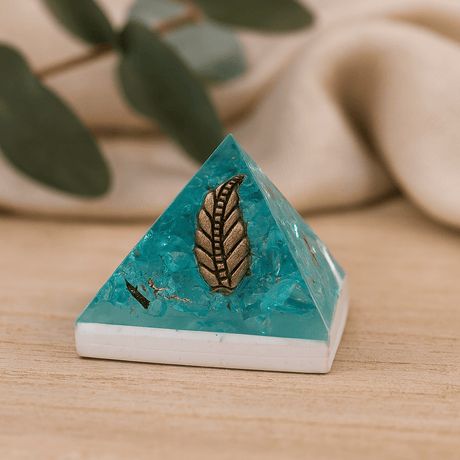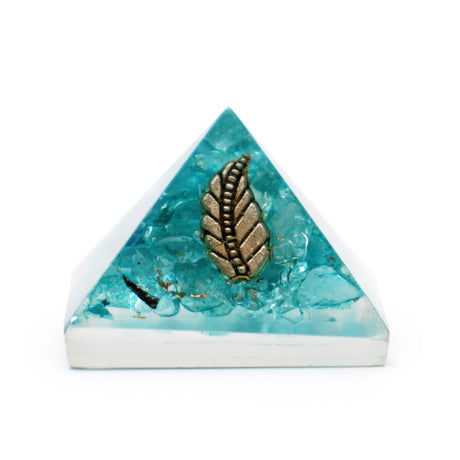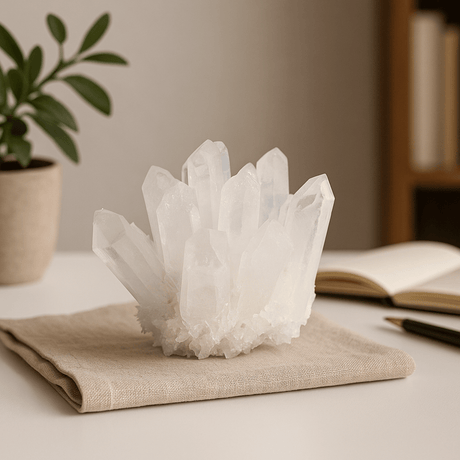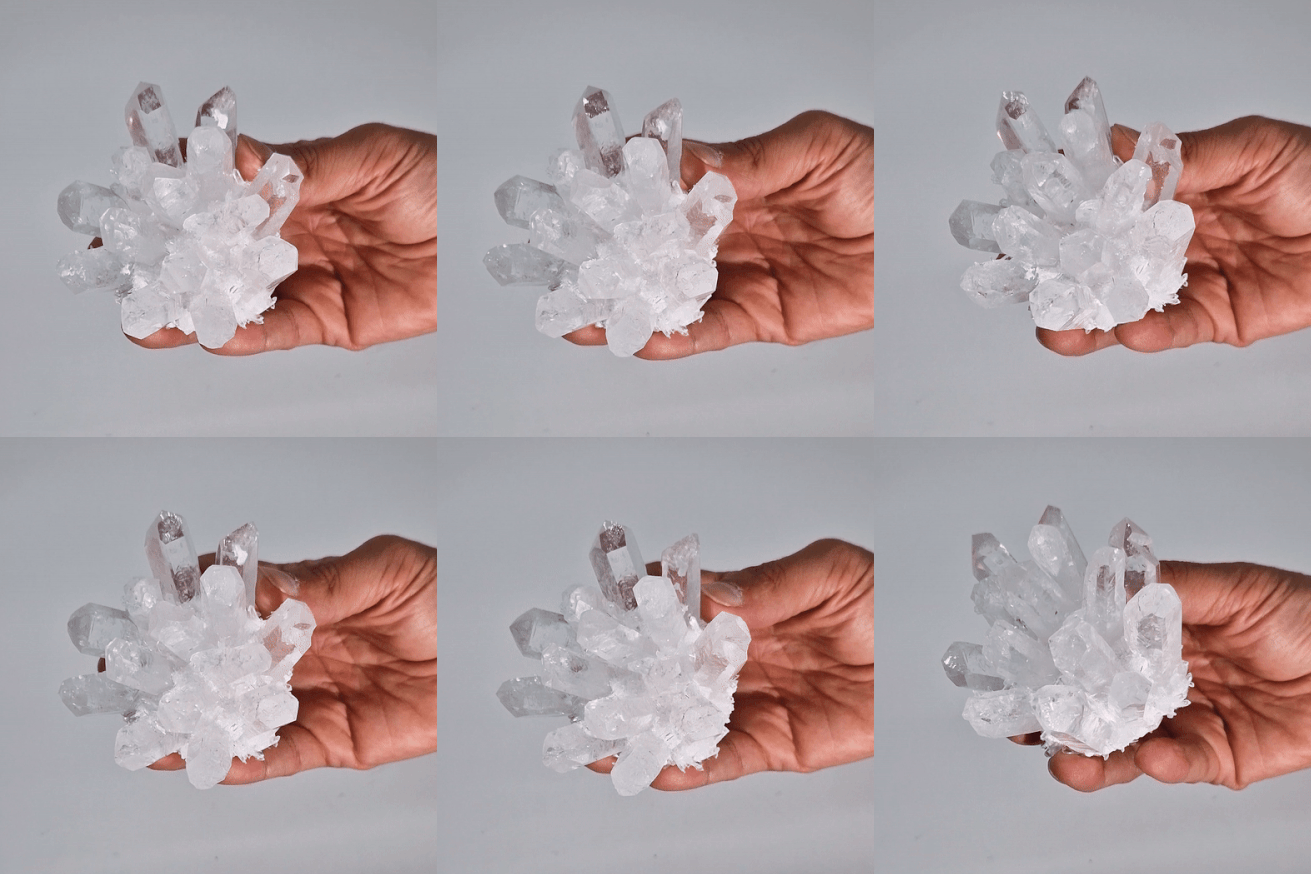
An orgone pyramid is a small, made thing: resin set with metal shavings and a crystal or two, often a quartz point and a coil of copper. People keep one on a desk, a windowsill, or a bedside table — not because it does any work on its own, but because a deliberate object in your eyeline can be a quiet cue to slow down. This guide looks at what an orgone pyramid actually is, where the idea came from, and how people use one as part of a calm corner or a daily practice.
What is an Orgone Pyramid?
Origins and History
The idea traces back to Wilhelm Reich, an Austrian doctor and psychoanalyst. He coined the term ‘orgone’ during his years in Oslo in the late 1930s and announced the concept after emigrating to the United States around 1939. From 1940 he began building what he called orgone energy accumulators — layered boxes of metal and organic material. In 1942 he established an estate in Rangeley, Maine, which he named Orgonon; an observatory followed in 1948. The site is now the Wilhelm Reich Museum.
Reich described orgone as a life energy he believed ran through living things and the wider world. Modern orgone pyramids borrow the same materials he used — metal and resin together — and shrink them into a small ornamental form.
Components and Construction
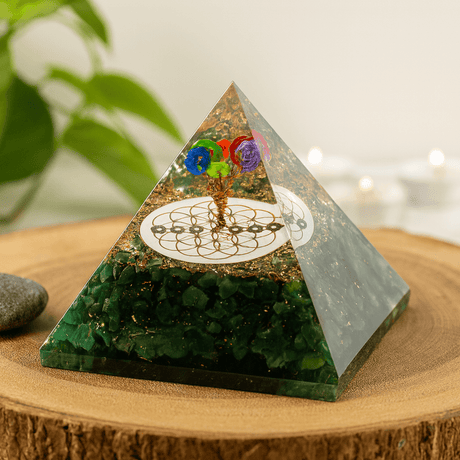
An orgone pyramid is built from a few plain materials. At its core is epoxy resin, which holds everything in suspension. Suspended in the resin are metal shavings or powders — usually copper, brass, or aluminium — chosen for the way they catch the light. A quartz point is often set inside, sometimes with a coil of copper wrapped around it.
The result is a layered, tactile object: stone, metal, and clear resin you can turn over in your hand. Quartz crystals are a common choice for the centre, and many makers add coloured stones to give each piece its own character.
How Orgone Pyramids Work
It is worth being honest here. There is no scientific evidence that an orgone pyramid generates or moves energy, and we would not want you to buy one expecting it to. What it offers is a focal point. The pyramid shape draws the eye upward; the stones catch the light; the object sits there, asking nothing of you but a moment of attention.
Used that way, it becomes a marker for an intention you choose — a small reminder to pause, breathe, and return to whatever you meant to keep close.
The Story Behind Orgone Energy
Wilhelm Reich’s Theory
Reich’s earlier work tied emotional and physical vitality to the free flow of life energy in the body. From there he came to believe he had found a distinct form of energy present in all living things, which he called orgone. His theory ranged widely — he linked it to weather, to plants, to human emotion — and it remained controversial throughout his life.
How the Theory Was Received
Reich’s work has inspired continued interest, but mainstream science never accepted it. He claimed his accumulators could aid cancer patients — a claim the scientific and medical communities rejected, and which the US Food and Drug Administration prosecuted as fraud. The court case led to the burning of his books and his imprisonment, casting a long shadow over the subject for decades.
So an orgone pyramid is best understood as a cultural and historical idea, not a proven one. That honesty is part of the appeal: you are holding an object with a story, not a piece of technology with measurable output.
Schumann Resonance Connection
Some enthusiasts draw a parallel between orgone energy and the Schumann Resonance — Earth’s natural electromagnetic frequency of roughly 7.83 Hz, sometimes called the ‘heartbeat of the Earth’. It is a real measurement. The link to orgone, however, is speculation rather than science, and we mention it only because you may come across it elsewhere.
Types of Orgone Pyramids
Orgone pyramids are made from resin, metal shavings, and crystals, and they come in many forms. The variation is mostly in the stones chosen and the shape and symbol set into the resin — so you can pick one that matches an intention you already hold.
Crystal Variations
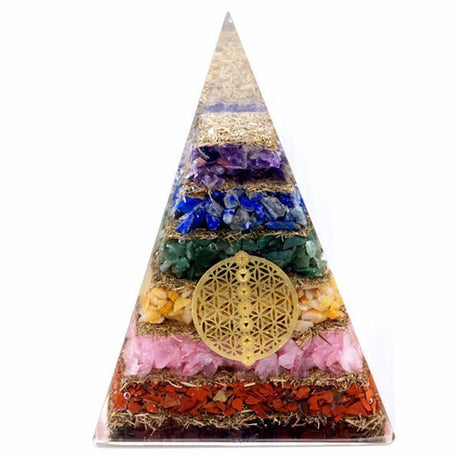
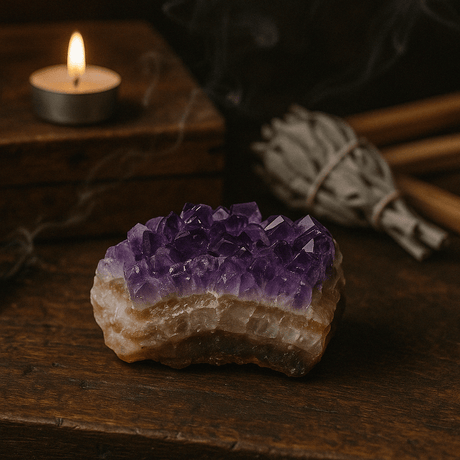
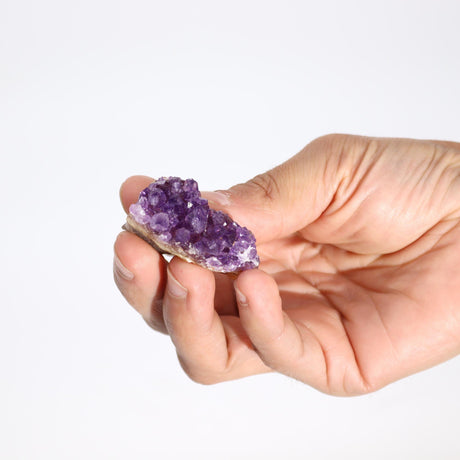
The crystals set inside an orgone pyramid give it its character. Quartz is the usual cornerstone. Amethyst brings a calming influence, while selenite has a cleansing effect in the traditions that use it. Rose quartz resonates with the heart chakra and is paired with warmth and compassion. Citrine is believed to attract abundance, and black tourmaline offers protection against negative energies in the same way. Choose by the theme you want to keep in mind, not by a promised effect.

Size and Shape Differences
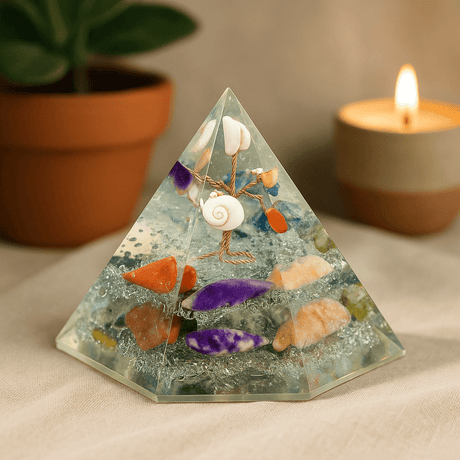
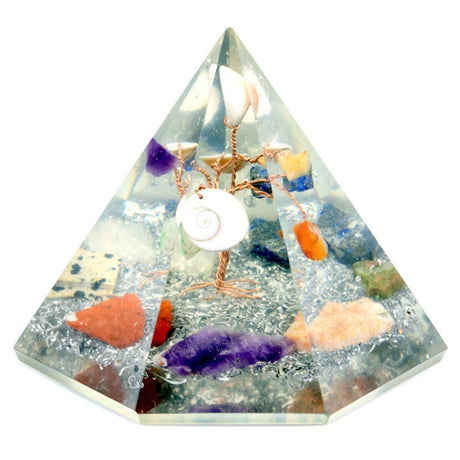
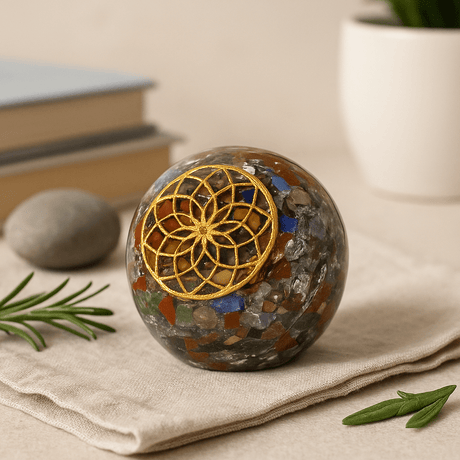
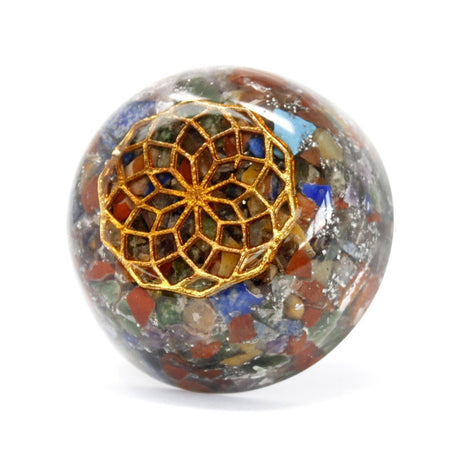
Pyramids range from small, pocketable pieces to larger ones suited to a bigger room. The size you choose tends to follow where you want to keep it — a desk corner, a shelf, a meditation nook. The pyramid is the classic shape, but you will also find domes and other forms.
Sacred Geometry Incorporations
Many orgone pyramids carry a sacred-geometry motif set into the resin — the Flower of Life, the Tree of Life, or proportions echoing the golden ratio. These patterns have a long decorative history across cultures, and they give each piece a focus point for the eye. Think of them as the design language of the object rather than a claim about how it works.

Ways People Use Orgone Pyramids
An orgone pyramid does not change a room. What it can do is hold a place in your day — a small, considered object you return to. Here is how people tend to fold one into ordinary life.
A Calm Corner
Many keep a pyramid where they already pause: a windowsill, a reading chair, the corner of a desk. The point is not what the object emits, but where it sits — in your eyeline at the moments you slow down. Set an intention as you place it, and let the spot become part of the ritual.
By the Desk or Router
Some people set an orgone pyramid near a screen or a router. There is no evidence it alters electromagnetic fields, and it is not a shield. Used well, it is simply a mindful cue — a prompt to look up, rest your eyes, and take a screen break. The reminder does the work, not the resin.
A Quieter Evening
Some keep a pyramid on the bedside table as part of a wind-down ritual — a small cue to put the phone down and let the day settle. It will not treat or cure anything; it simply marks the edge of the day, the way a candle or a cup of tea might.
Meditation and Focus
As a focal object, an orgone pyramid suits meditation and visualisation. Holding it, or resting your gaze on it, gives the attention somewhere to land. People who already meditate sometimes report steadier focus when they keep a familiar object in front of them — less about the stone, more about the anchor it offers.

In the Garden
A few gardeners like to tuck one into a planter — more as a small gesture of care for the space than for any measured effect. There is no evidence an orgone object changes how plants grow; it is a personal touch in a corner of the garden, nothing more.
How to Use an Orgone Pyramid
Where to Keep One
Choose somewhere you already pause and look — a bedside table, a windowsill, a desk corner, a meditation nook. Let the spot be deliberate. An orgone pyramid also carries an aesthetic appeal that suits a thoughtfully arranged shelf, so it earns its place as an object to look at, not only to hold.
Cleansing and Charging
Before first use, many people like to mark a fresh start. You can cleanse with herb smoke, rest the piece under moonlight, or sound a bowl beside it — one tradition among several, not the only way. You might Smudge with sacred herbs, bathe in moonlight, or use sound vibrations from a singing bowl. Smudging in particular is a specific Indigenous North American ceremonial practice, so it is worth approaching with that respect rather than treating it as a generic step. Whichever route you choose, the ritual is really about resetting your own attention; set the intention as you do it.
Wiping and Care
The resin is hard-wearing but can scratch, so wipe it gently with a soft, dry cloth and keep it off gritty surfaces. That is the whole of the upkeep.
Building It Into Daily Life
Give the pyramid a small, steady role. Keep it where you meditate, journal, or simply sit with a cup of tea. Hold it when you want a moment of focus. Set clear, honest intentions you actually want to return to — and let the object keep the note.
A Quiet Object, Honestly Held
An orgone pyramid is a beautiful, deliberate thing made of resin, metal, and stone. Reich’s theory was never accepted by science, and the pyramid is not a medical device, an EMF shield, or a cure for anything — we are honest about that. What it offers is a focal point for a practice you choose: a calm corner, a moment of attention, a little more stillness in the day.
If that draws you in, you might also like to explore the unseen energies that surround us — or rather, the everyday rituals and objects that help us slow down and pay attention.