A small brass lamp, cast by hand in the forests of central India, weighs roughly as much as a large apple. That weight is not incidental. It is the first thing the object teaches you.
What the Hand Finds First
Pick up a Dhokra diya and the weight arrives before anything else, a settled, unhurried mass that asks you to slow down simply by being held. The surface is not smooth. It carries the memory of the wax from which it was formed: slight ridges, a thumbprint pressed into the model weeks before the metal was poured, a texture that no machine could replicate because no machine made it. The colour is a warm, darkening gold, already beginning its long conversation with the air.
Set it on a desk and it does not disappear into the background the way a printed object does. It holds its ground. That is, I think, precisely the point.
My own practice has always included a flame, a diya on the altar at home, lit before japa, before the day properly begins. What I have noticed, over years of keeping this small ritual, is that the object matters less than the act of placing it with attention. But the object, when it is well made, makes the act easier. A thing with genuine weight and history is harder to ignore than a thing without either.
Bastar, the Lost Wax, and Why No Two Are the Same
Dhokra casting, also written Dokra, is one of India's oldest documented non-ferrous metalworking traditions, practised in the tribal belt of Bastar district in Chhattisgarh, and in clusters across West Bengal and Odisha. The Crafts Council of India and the Development Commissioner for Handicrafts have documented the tradition across these regions. In Bastar, the craft is hereditary, carried by the Ghasia community across generations in a landscape of dense forest and red laterite soil that is not, for the most part, on any tourist circuit.
The process is lost-wax casting, known in French as cire perdue: a clay core is built first, then wrapped in beeswax worked by hand into the final form. That wax surface, the ridges, the fingerprints, the slight asymmetries, becomes the object's permanent skin. A second layer of clay is applied over the wax, and the whole thing is fired. The wax melts out. Molten metal is poured into the void it leaves behind. When the outer clay is broken away, what remains is unique: the wax original was destroyed in the firing, so it cannot be repeated. Every piece is, in the most literal sense, a one-off.
The alloy used in many Bastar pieces is bell metal, typically a high-tin bronze, often 70-80% copper, with the remainder predominantly tin, though the precise ratio varies between communities and individual artisans. That high tin content is not arbitrary. It is the same composition used in temple bells across South and Southeast Asia, chosen for a specific acoustic reason: bell metal rings clearly and the sound decays slowly, sustaining longer than brass. Strike a Dhokra diya lightly and you may hear it, a faint, clear note that is the material doing what it has always done in ritual contexts: marking a moment, calling attention back. It is worth noting that not all Dhokra pieces use bell metal; some clusters work with brass or mixed alloys, and the acoustic quality varies accordingly.
The Structure of Three Minutes
The diya belongs to the tradition of puja, the daily practice of offering and attention that takes many forms across Hindu households and temples. In formal puja, lighting a flame, deepa prajwalana, is one of the sixteen classical offerings. But the gesture of lighting a flame to mark the beginning of focused work carries no doctrinal requirement. It is older than any single tradition's rules about it.
What puja's structure offers, stripped to its logic, is this: you place an object with intention (sthapana), you light a flame, and you return your attention to the present moment before moving on. Three gestures. Perhaps three minutes. The sequence is the practice; its value accumulates through repetition, not duration.
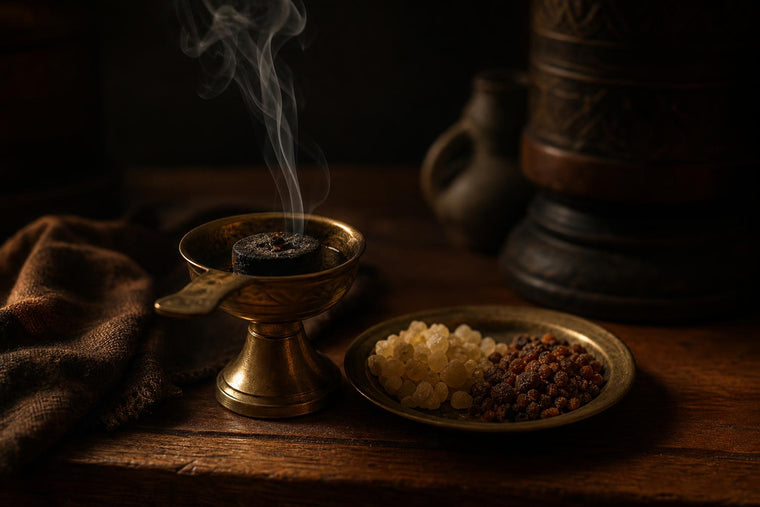
For a desk, this translates simply. Place the diya where it will be seen, not tucked to one side, not behind the monitor, but in the line of sight. Light it, or light incense to accompany the morning sequence if an open flame is not practical. Sit for one full breath before opening a screen. That is the whole practice. It is not productivity theatre; it is not a mood board. It is a small, repeated act of choosing where your attention goes before the day chooses for you.
Practices vary between communities and individuals, there is no single correct form. What the structure offers is a container, not a prescription.
Living with the Object, and Caring for It
Bell metal and brass develop a patina over time: a natural oxide layer, primarily copper oxide, that darkens the surface and deepens the colour. This is not damage. It is the record of use, the object's own biography accumulating on its skin. Many people find that a well-used Dhokra piece becomes more beautiful over years, not less.
When cleaning is needed, tamarind paste or a brief application of lemon juice and salt will lift tarnish without stripping the patina, provided it is rinsed promptly and thoroughly. Avoid abrasive polishes, they remove the oxide layer that gives the surface its depth, and they erase the texture the wax left behind. The goal is not to make the object look new. It was never meant to look new.
On the desk, the diya asks very little: a small reservoir of oil and a cotton wick if you light it, or simply its presence as a weight and a reminder if you do not. A selenite bowl to hold small objects nearby, a mala, a stone, a folded note, can extend the space without crowding it. The desk altar is not a collection. It is, at most, two or three objects that mean something, arranged so that the eye finds them easily.
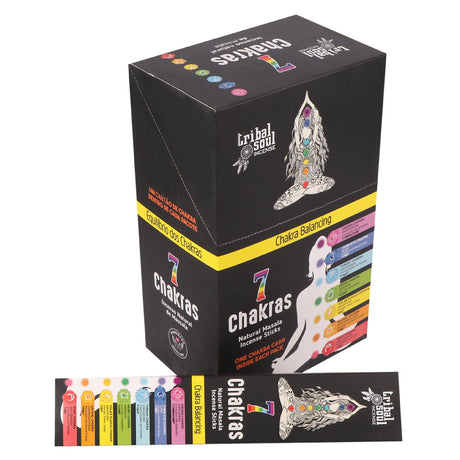
If you use a backflow burner for the desk, place it where the smoke will drift into your field of vision rather than away from it. The point is that you notice it. Noticing is the practice.
What Holds Its Ground
The work-from-home desk is, for many people, the place where the boundaries between effort and rest, between presence and distraction, have become genuinely difficult to locate. No object resolves that. But an object with real weight, real history, and a surface that carries the mark of a human hand can do something modest and useful: it can be harder to look past than the alternatives.
I keep returning to the idea that the altar, whether it is a formal puja space or a single lamp on a desk, is not about the objects on it. It is about the repeated act of placing them with attention, and then returning to that attention when the day pulls you elsewhere. The Dhokra diya does not do this work. You do. The object simply waits, with its particular weight and its slow ring, until you have a moment to remember that the work was yours to begin with.
A mala as a companion object beside the lamp, or palo santo to clear the air before sitting down, can extend the sequence if the practice grows. But the sequence can also stay at three minutes and one flame, repeated every morning, for years. That is enough. In many traditions, that kind of quiet repetition is considered the most serious practice of all.