A Herkimer diamond does not need a jeweller. It grows loose inside a small pocket of rock in Herkimer County, New York State, and comes out of the ground already pointed at both ends. Nothing further has to happen to it before someone can put it into someone else's hand.
A Stone That Finishes Itself
That is worth knowing before anything else, because it is unusual. Most quartz grows attached to a wall inside a cavity, one end fixed, the other free, and needs a cutter's attention to become the pointed shape people picture when they think "crystal". A Herkimer diamond grows free on all sides, with nothing to hold it against, so it finishes itself, double-terminated, without a hand ever touching it to make it that way.
That is also a good place to start with a first crystal as a gift, because most advice on giving one starts somewhere else entirely: with a single word attached to a single stone. Love for rose quartz. Calm for amethyst. Luck for aventurine. The stone stops there, wearing its adjective like a name tag, and the gift arrives with a meaning attached but no substance underneath it. A first crystal is worth more to the person receiving it when the giver can say one true thing about what the stone actually is, not only what it is supposed to do.
Four Stones, Shaped Differently
Rose quartz
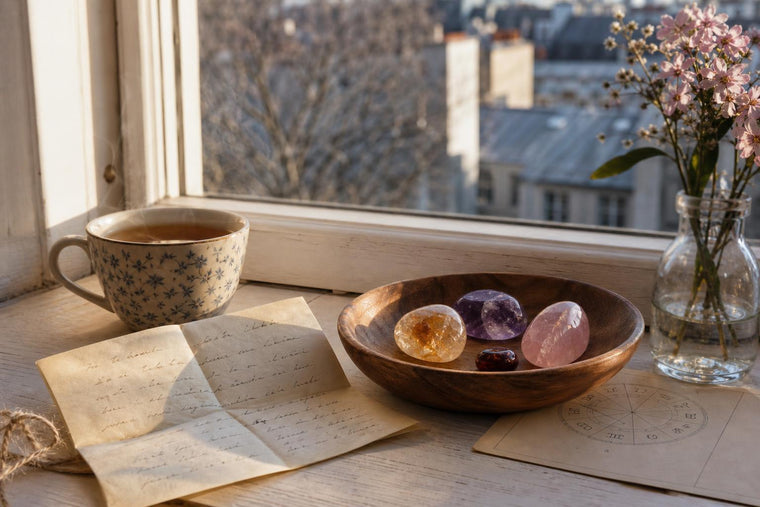
Rose quartz makes the same point in reverse. Its pink comes from trace elements running through ordinary quartz, but it almost never grows into a clean, pointed crystal the way quartz sometimes does. Most of it comes out of the ground as shapeless, cloudy material, from deposits including those worked in Brazil and Madagascar. The faceted rose quartz point sitting in a shop tray, the shape most people mean when they say "crystal", has usually been cut and polished into that form by a person, not found that way. A set of rose quartz tumbled stones is honest about this in its own quieter way: tumbling is still shaping, just a gentler kind, rounding rough material rather than faceting it into a point it never grew as on its own.
Once a stone's shape depends on someone's hand rather than only on how it grew, the more interesting question shifts from what the stone is to what shaped it. Colour turns out to be its own kind of shaping.
Smoky quartz
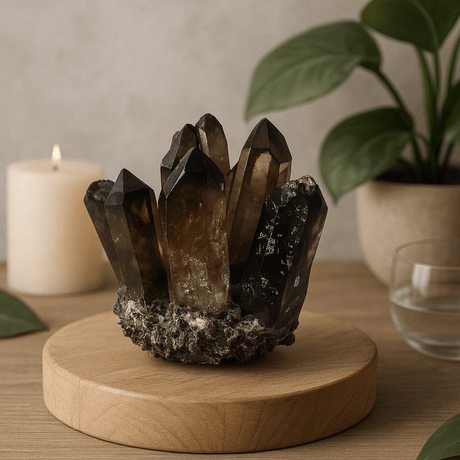
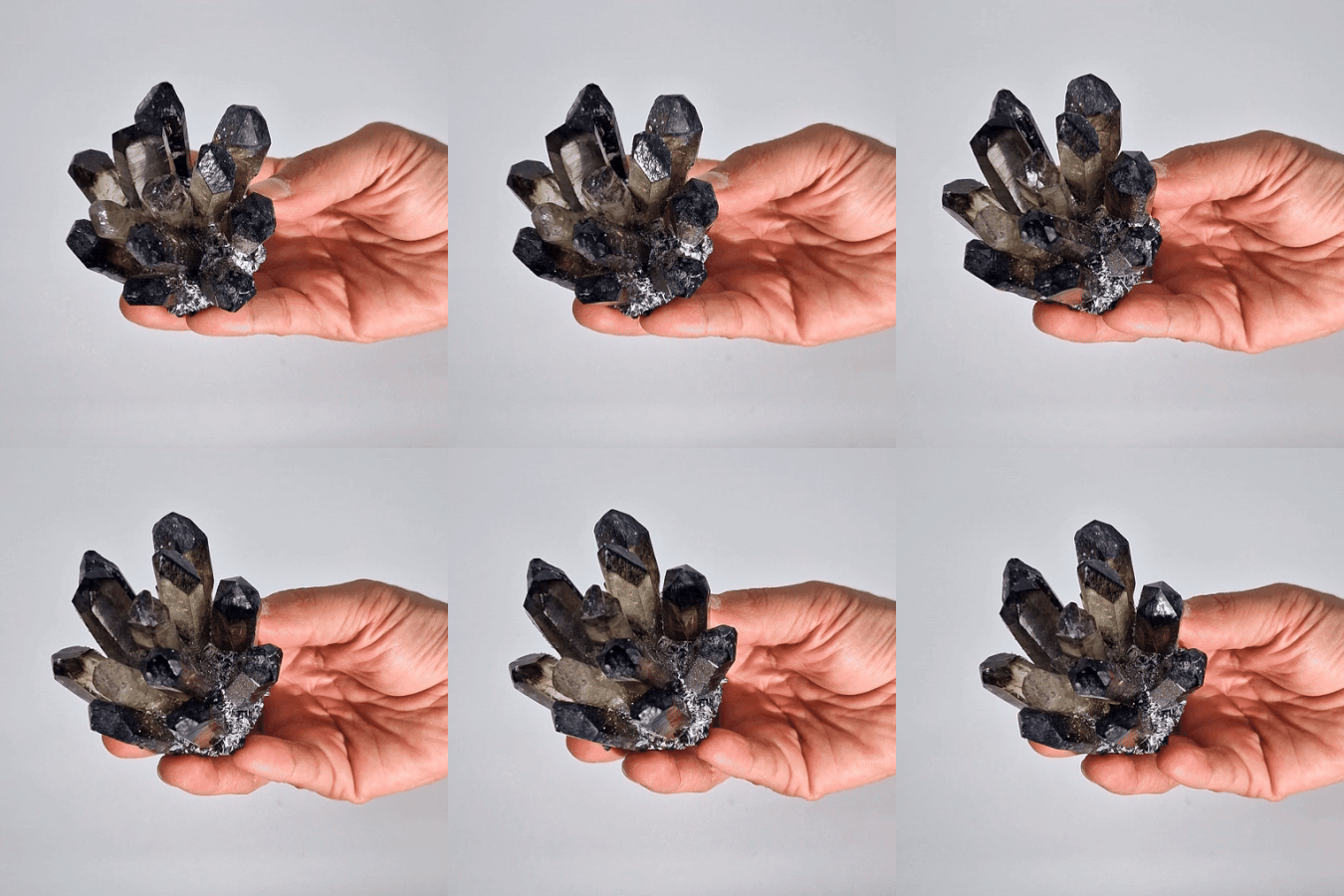
The grey-brown of smoky quartz is quartz altered from within: natural irradiation working on trace aluminium inside the crystal, over a stretch of geological time nobody can put a date to. In Scotland's Cairngorm mountains, quartz coloured this way has long been cut into kilt pins and brooches, closely enough tied to that landscape to earn its own local name there, cairngorm stone. Light did the colouring. A place lent it a name.
Aventurine
Aventurine's shimmer runs on the same logic, worked smaller. The soft, glittering effect across its surface, called aventurescence, comes from tiny flat inclusions of a mica called fuchsite scattered through the stone, each flake catching light at a slightly different angle. The odd part is the name: aventurine the mineral is named after aventurine glass, a copper-flecked glass associated with Murano, and not the other way round. An accident in a glassworker's furnace ended up lending its name to a stone that had nothing to do with any furnace at all.
Herkimer diamonds, again
Which brings the thread back to where it started. A rose quartz point was cut by someone. An aventurine's shimmer is on loan from a mineral that happened to form inside it. A smoky quartz owes its colour to light working on it from within, over a stretch of time no one can measure. A Herkimer diamond needed none of that: growing free inside its own pocket rather than clinging to a cavity wall, it simply finished itself, both ends pointed, nothing left to add. Sources vary on exactly when organised digging began in Herkimer County, but collecting stones there by hand runs back generations, which is itself a kind of quiet continuity worth knowing before handing one over.
How a First Crystal Is Actually Given
The gesture matters more than any guide most people reach for. Choose a stone for a reason you can actually name; not "it's supposed to bring calm" but something closer to the ground, such as "this one grows pointed at both ends without anyone shaping it" or "this colour is light doing its slow work, over time nobody can measure". Say that reason aloud when you give it, and put the stone directly into the other person's hand rather than leaving it wrapped, waiting to be freed before it can be held. A stone that arrives already in the palm asks to be felt before it is explained.
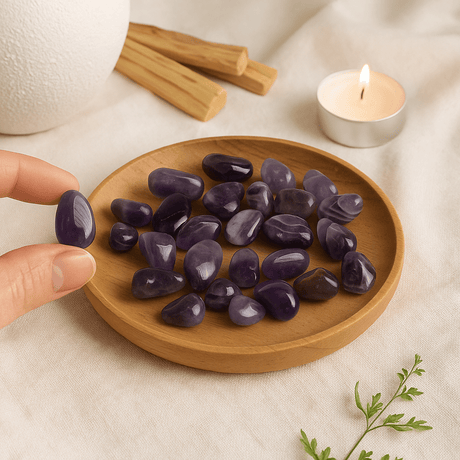
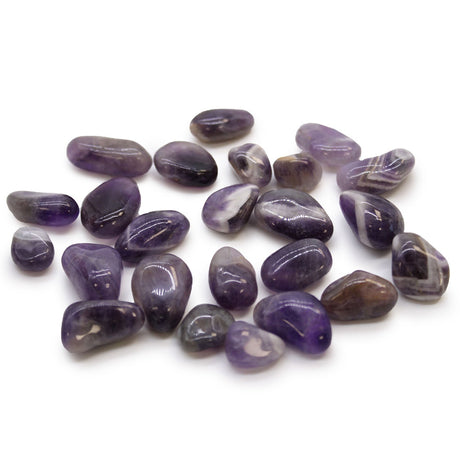
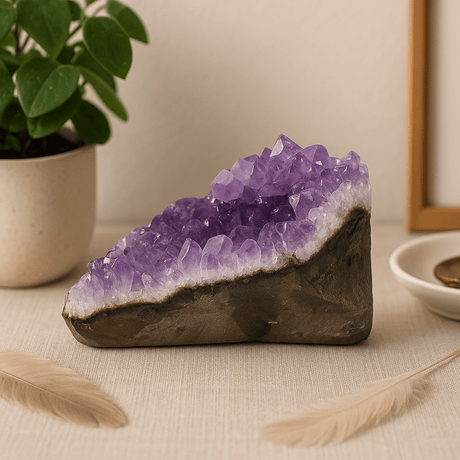
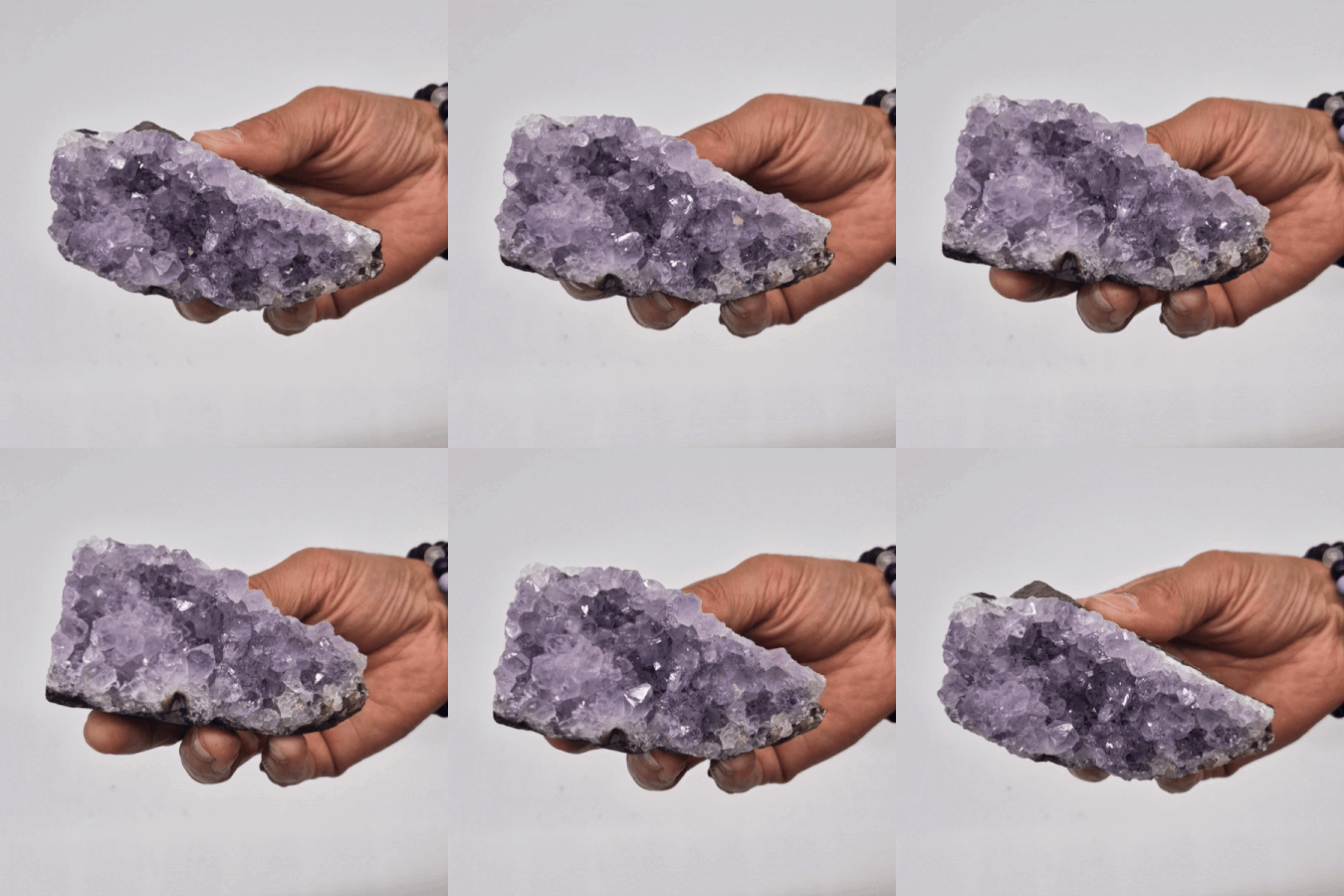
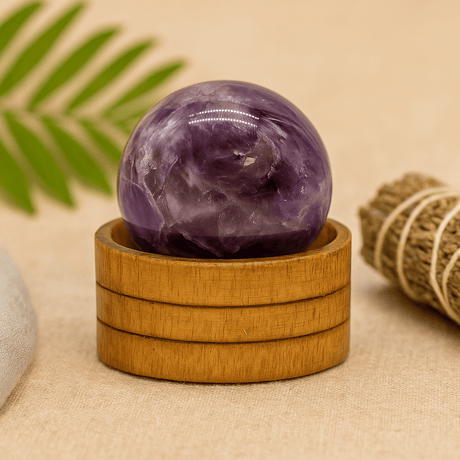
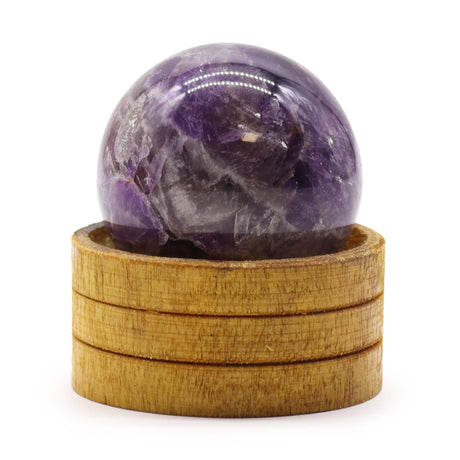
Weight and finish are worth a thought too, though neither matters more than the reason behind the choice. A small tumbled stone, light enough to sit in a pocket or a bag, suits a first gift in a way that a large piece such as an amethyst crystal standing cluster does not; a cluster like that grows as it stands, a group of natural points still attached to its own base rock, and asks to live on a shelf rather than in a hand. Both are honest about what they are. But a pocket-sized stone is easier to hand over, and easier for someone new to owning one to keep close in the first weeks of it.
What the Giving Actually Passes On
None of this makes the stone do anything. Nobody needs to believe a Herkimer diamond carries a particular fortune, or that rose quartz opens anything in particular, for the gift to still work as a gift: a small, real object, handed over with a reason attached to it instead of a slogan. What actually travels between two people in that exchange is attention, the giver having noticed enough about the stone to say something true about it, the receiver being handed something worth turning over more than once. That is a low bar and a high one at the same time. It asks almost nothing of either person, and it asks for exactly the kind of noticing that most gifts skip past entirely.