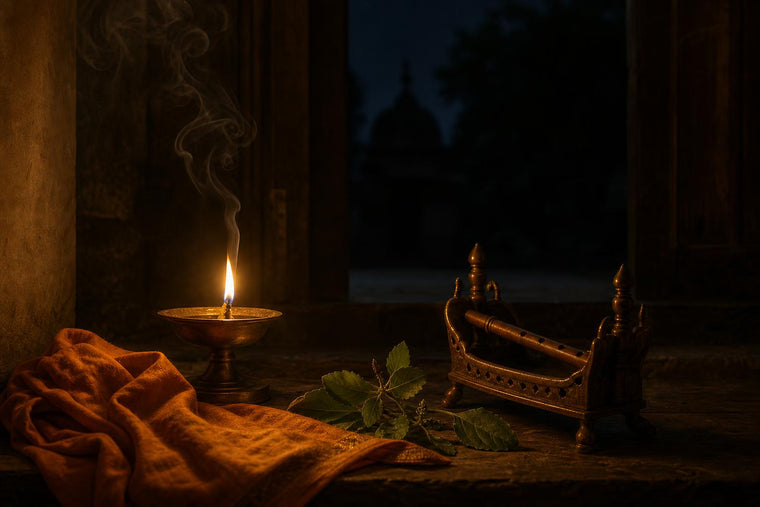
A small brass lamp, a breath, a stated intention. The first hour of work becomes something other than a scramble. The desk altar is one of the oldest domestic technologies in the world, and one of the most misunderstood.
The object before the screen
In Bengaluru's Chickpet market, the city's oldest commercial district, trading in brass goods and silk since the sixteenth century, you can buy a deepam for less than a cup of coffee. The lamp is no taller than a thumb. It holds a few millilitres of oil, a cotton wick, and, when lit, a flame that has been the centrepiece of the Indian domestic altar for at least two thousand years.
That object is worth thinking about before you arrange anything on your desk. Because the desk altar, as it appears in most lifestyle guides, has drifted a long way from what it actually is: not a curated surface of beautiful things, but a designated threshold, a place where you stop, orient yourself, and begin.
The difference between decoration and practice is not aesthetic. It is functional. A collection of crystals and candles arranged for visual pleasure is interior design. An altar is a place you return to with intention, every morning, and leave changed in some small way. The objects matter less than the returning.
A grounded history
The Sanskrit term for a domestic sacred space is puja sthana: a place of reverence. The tradition of maintaining such a space within the home is codified in ancient Indian household ritual manuals composed approximately 600–200 BCE, which describe the upkeep of a household sacred fire and a designated ritual area as part of ordinary daily life. This was not temple religion. It was household practice, woven into the rhythm of waking, cooking, and working.
The form has always been portable. Travellers carried a small image, a lamp, and a vessel for water — the minimum required to maintain a practice away from home. That portability is precisely what makes the desk altar coherent: it is not a diminished version of a temple shrine, but a continuation of a tradition that was always designed to travel with the person.
Across other traditions, the same instinct appears. The Japanese tokonoma — a recessed alcove in a room, holding a single scroll, a flower arrangement, or one carefully chosen object — became a standard feature of residential architecture in the fourteenth and fifteenth centuries, grounded in the aesthetic principle of ma: negative space, interval, the pause that gives meaning to what surrounds it. The Roman household maintained a flame for the domestic spirits who were believed to protect the home. The shared function, across cultures and centuries, is the deliberate marking of a threshold.
What belongs on it — and how to keep it alive
The minimum traditional elements of a simple daily practice are a lamp, an image or symbol of the chosen deity or principle, and water offered in a small vessel. Practices vary considerably between communities and lineages, but the principle of one primary object with supporting elements kept to a minimum is consistent across both traditional guidance and contemporary practice.
The reason is practical. A crowded surface asks nothing of you. When every inch is occupied, the eye slides over it and the mind follows. One anchor object — a deepam, a small sacred image, a stone that carries personal meaning — holds the attention in a way that seven objects cannot. Supporting elements: a stick of incense (the smoke understood in the tradition as carrying intention upward and clarifying the space), perhaps a small image or symbol, perhaps a vessel of water. Nothing more is required.
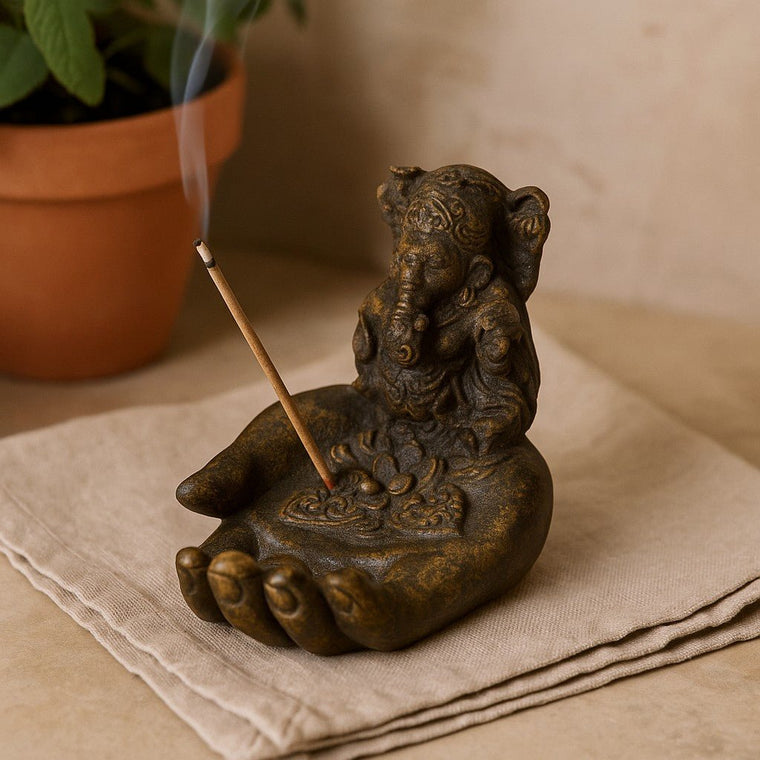
If incense is part of your practice, a single stick is enough. A holder keeps the surface clean and the ash contained, which matters when the altar sits beside a keyboard.
The orientation of the altar — traditionally facing east or the north-east corner in Vedic practice — is a convention, not a universal rule, and varies by regional tradition. Work with the space you have. The direction is less important than the consistency of returning to the same place.
An altar that is never touched becomes a shelf. The difference is maintenance: not elaborate maintenance, but the small, regular acts that signal that this surface is in use. In South Indian households, brass is traditionally cleaned with tamarind paste; the polishing is considered part of the practice, not a chore separate from it. The lamp is refilled. The water is changed. The incense ash is cleared. These are not interruptions to the ritual. They are the ritual — the ongoing attention that keeps the space alive.
If the altar starts to feel stale, the answer is almost never to add more objects. It is to return to the one-minute practice and do it more carefully.
The one-minute morning practice

In Hindu tradition, a sankalpa is a conscious intention stated at the beginning of a practice — aloud or silently — to orient the mind before action. It is not an affirmation. It is a declaration of purpose: why you are here, what you are beginning, what you are asking of yourself. It is the standard opening element of formal worship, though its logic is available to anyone.
The practice is simple. Before you open the laptop, before you check the phone, you come to the altar. You light the lamp or the incense. You touch the anchor object. You take one breath. And you state, silently or aloud, what you are beginning and why it matters. Thirty seconds. One minute at most.
The Stoics called their morning practice a deliberate attention to self — a review before the day began. Zen uses the act of cleaning as a threshold before sitting. The form varies; the function is the same. A pause that separates what came before from what you are about to do. The desk altar gives that pause a physical location.
My own japa practice — the daily repetition of a mantra with a string of prayer beads — begins the same way each morning: touch, breath, intention. The consistency of the gesture is, I think, most of what makes it work. The mind learns the cue. The cue becomes the threshold.
A place that is yours
The desk altar does not require a religion. It does not require a tradition you were born into, or a set of beliefs you have fully resolved. What it requires is the decision to designate one small surface as a place of intention, and to return to it, every morning, before the day takes over.
The deepam in Chickpet costs less than a cup of coffee. The practice it anchors costs nothing but attention. That is, in the end, what every altar in every tradition has ever asked for: not belief, not elaborate ritual, but the willingness to stop, for one minute, and mean what you are about to do.
Start with one object. Light it, or touch it, or simply look at it. State what you are beginning. Then begin.