A scent wardrobe is not a collection. It is a small, repeatable act of noticing: choosing, each morning or evening, what the hour actually asks for.
What a Wardrobe of Scent Actually Is
The word "wardrobe" is more precise than it first appears. Clothes are chosen for weather, occasion, the quality of light outside. Nobody wears a heavy wool coat in June simply because they own one. Scent can follow the same logic, and in many traditions it always has.
At its simplest, a scent wardrobe is three bottles: one for morning, one for evening, one for the days that fall between ordinary and ceremonial. That is enough to begin. The difference between a wardrobe and a collection is not the number of bottles but the intention behind reaching for one. A collection is arranged; a wardrobe is used.
The word attār (also spelled ittar) carries its own small history of travel. It derives from the Arabic 'itr, itself from a root meaning "to smell" or "fragrance," and it entered Persian and then Urdu and Hindi along the same trade routes that carried silk and spice. The word arrived with the practice: a way of working with aromatic oils that is older than the perfume counter and considerably more patient.
The Craft: Kannauj and the Deg-Bhapka Method
If there is a single place that grounds the attār tradition in something you can point to on a map, it is Kannauj, in Uttar Pradesh, recognised as India's traditional centre of attār production and the holder of a Geographical Indication tag for "Kannauj Perfume" granted by the Government of India. The city's perfumers have practised deg-bhapka hydro-distillation for centuries, and the method itself is worth understanding, because it explains why attār behaves differently on skin than anything you will find in a department store.
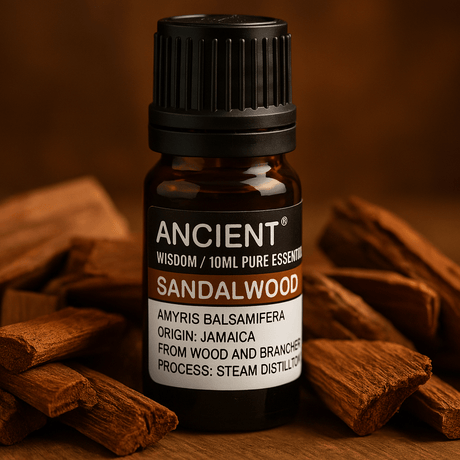
The deg is a copper still. Plant material and water are heated together over a wood fire; steam carries the volatile aromatic compounds upward through a bamboo pipe called the chonga and into a copper receiver (the bhapka) submerged in cool water. The distillate does not fall into alcohol. It falls directly into sandalwood oil as the base. The oil is both carrier and fixative, and because there is no alcohol to evaporate quickly, the scent opens slowly as body heat rises. It changes. It becomes, over an hour or two, something slightly different from what it was when you first applied it. That responsiveness is not a marketing claim; it is a consequence of the chemistry.
Mitti attār, distilled from baked earth, is among the rarer fragrances derived from an earth-based material. It captures petrichor, the scent of rain on dry ground, and is traditionally associated with the onset of monsoon, genuinely unusual in the world of perfumery, and one of the more difficult things to explain to someone who has not encountered it.
The honest complexity here is real. The Kannauj attār industry has contracted significantly in recent decades. Santalum album, the Mysore sandalwood historically used as the base oil, is now a protected species in India; its scarcity has driven prices sharply upward, and many producers have moved to Australian sandalwood or synthetic alternatives. The tradition is alive, but it is navigating pressures that did not exist a generation ago. The cheapest "oud" on the market is almost always synthetic. A label that reads "oud fragrance oil" is not the same thing as dehn al oud, which refers to pure oil distilled from agarwood. The distinction matters if you are building a shelf you intend to use for years.
The Calendar: Scent by Season and Hour
Traditional Indian perfumery did not treat scent as a fixed signature. It assigned fragrances to times of day and to seasons, and the logic behind those assignments is not arbitrary. It mirrors Ayurvedic thinking about the body's state at different hours: the quality of digestion, the balance of energies, the temperature of the skin.
Rose attār, traditionally distilled from Rosa damascena petals harvested in the early morning, when volatile oil content is considered highest, is a morning fragrance in North Indian perfumery. Musk-base attārs are associated with evening. Hina, a compound attār made from a blend of botanicals including henna flower and vetiver, is a winter fragrance, heavier and warmer than what the body wants in June. Mitti attār belongs to the first rains.
This calendrical logic is what most Western fragrance guides skip entirely. They organise by "fragrance family" (floral, woody, oriental, fresh) as though the nose operates independently of the season or the hour. The older approach assumes the opposite: that the body is already in a particular state, and that a well-chosen scent meets it there rather than overriding it.
I keep returning to this idea in my own practice. Incense follows a similar rhythm in a daily puja, certain resins for morning and others for evening, and the effect is less about the scent itself than about the small act of choosing. The choosing is the practice.
Building the Shelf: A Practical Guide
Start with two anchors. A morning scent tends toward the lighter and more clarifying: rose, lemongrass, petitgrain, clary sage, or a green attār. An evening scent can afford to be warmer and slower: vetiver, hina, a musk base, or something resinous. Add a third for transition or ceremony, the days that are neither ordinary nor festive but something in between.
Test on skin, not on paper. Paper tells you the top note; skin tells you the whole conversation. Apply a small amount to the inner wrist and wait. The first impression is not the final one.
Store attār away from light and heat, in tightly stoppered glass or metal containers. Exposure to air degrades the aromatic compounds over time. A well-stored attār does not expire in the way a cheap eau de toilette does; it deepens.
On reading labels: "dehn al oud" indicates pure oud oil distilled from agarwood, one of the most costly raw materials in perfumery. Agarwood forms only when Aquilaria trees are infected by fungal or microbial agents, producing a dark resinous heartwood in response, a process that cannot be reliably induced on demand, which is part of what drives the price. "Oud fragrance oil" on a label typically indicates a synthetic or blended product. Neither is dishonest if priced accordingly; the problem is when one is sold as the other. Resins such as benzoin and frankincense offer a more accessible entry into the resinous register, and their provenance is generally easier to verify.
A note on petitgrain: distilled from the leaves and twigs of the bitter orange tree rather than the blossom, it is one of the more underused morning oils, green and slightly woody, without the sweetness that makes some citrus fragrances feel thin by mid-morning.
The Shelf as a Record of Attention
A wardrobe you actually use changes slowly. A bottle empties. A mood shifts. A season returns and you reach for something you had almost forgotten. The shelf becomes, over time, a quiet record of where your attention has been.
The moment that matters is not the purchase or the arrangement. It is the small pause each morning or evening when you consider what the day asks for. That pause, brief, repeatable, easy to skip, is where the practice lives. The scent is the occasion for the pause, not the other way around.
Some traditions survive not because they are spectacular, but because someone quietly repeats them every morning.