There is a moment, just after a candle is lit, when the room seems to soften. The light steadies, the corners draw in, and whatever you were carrying has somewhere quieter to rest. Long before candles were a way to see in the dark, people lit them to mark a thought — a wish, a prayer, a beginning. This is a guide to candle colours and what each one has come to mean: not as a switch that changes your fortune, but as a gentle focus for your own attention.
Choosing a colour on purpose is a small, considered act. It gives the mind somewhere to settle while you sit with what you actually want — calm, courage, a fresh start. The work is yours; the colour simply keeps the note.
The history and meaning of candle magic
Lighting a flame to mark an intention is an old human habit, woven through many traditions. As early as around 3000 BCE, Egyptians made rushlights by soaking reeds in animal fat — these had no true wick, and beeswax candles came later. Flame was treated as something close to life itself, a small light extended towards the divine.
The ancient Romans are often credited with developing the wick candle — a candle with a true wick — before the Common Era, though Egyptian, Chinese and Japanese versions are cited too. Romans lit candles in their ceremonies; in the Celtic tradition, the festival of Imbolc was marked by lighting candles to welcome the returning sun in the dark of winter, a gesture of hope and renewal.
By the Middle Ages, candles were central to the rituals of the Christian church, standing for the light of God and the steadiness of faith. They were — and still are — used in ceremonies both public and private, as a way of holding prayer and turning attention towards something larger.
Today, practitioners of Wicca, Neo-Paganism and other contemplative paths still keep candles close. The flame marks out a quiet space and gives meditation a focal point. In these practices a colour is often chosen deliberately, each shade carrying its own associations — this is the thinking behind spell candles set aside for a particular intention.
Modern practice sometimes involves 'dressing' a candle by dressing candles with oils, or carving a word or symbol into the wax to anchor an intention. The colour becomes part of the same language — a way of naming, to yourself, what you have come to sit with. The colours become a silent language of attention, much as they do in crystal work.
You do not have to belong to any tradition for this to mean something. Many people who follow no religion at all keep a simple candle ritual purely as a moment of focus — a way to pause, to think clearly, and to mark what matters to them. We share the history here as context, not as doctrine. Take what resonates and leave the rest.
Candle colours and their meanings
White – the pure beginning
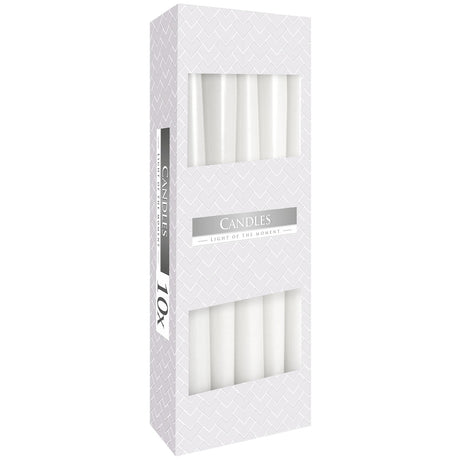
White candles are associated with clarity, calm and fresh starts, and in folklore are linked with the moon's pure light. Many people reach for white when they want to mark a new chapter — clearing a space, setting a clean intention, beginning again. White is also the traditional all-purpose colour: if you cannot find the exact shade you need, a white candle stands in for any of them. It is the natural first candle for anyone starting out.

Black – the protective veil
Black candles are quiet and steadying, the colour of the still night. In esoteric tradition they are used in protection rituals and in setting boundaries, and people light them while reflecting on what they would like to leave behind. Some keep one lit during divination as a focus for inward attention. As with every colour, the candle does not do the work — it holds the space while you do.

Red – the pulse of passion
In Western esoteric colour systems, red is linked with Mars — warmth, vitality, courage. People often choose a red candle when setting an intention around love, energy or finding the resolve to face something difficult. It is a colour for the times you want to feel more alive and more sure of yourself.

Green – the harbinger of harmony
Green carries the associations of the growing earth. Many use a green candle when setting an intention around growth, work, or steadiness in their surroundings, and it is the colour most often reached for when people want to attract abundance — not as a guarantee of money, but as a way of holding the thought of growth while you take real steps towards it. In Western correspondences green is sometimes tied to themes of restoration and balance.

Blue – the calm of the cosmos
In Western esoteric systems, blue is linked with Neptune and with stillness. It is traditionally associated with calm, reflection and quiet honesty, and people light a blue candle to settle the mind before meditation or simply to sit with a difficult feeling. It is a gentle colour — one to return to when you want to slow down rather than push forward.

Purple – the crown of consciousness
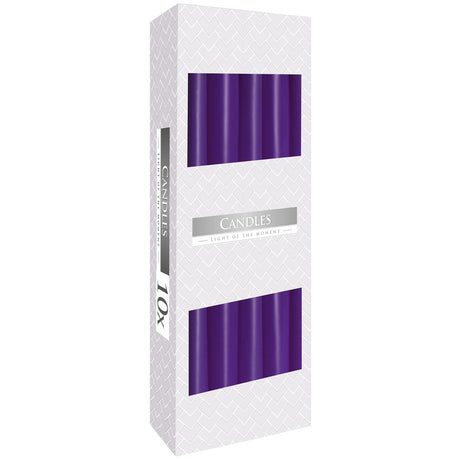
Purple is associated, in Western colour tradition, with Jupiter and with depth of awareness. People often light a purple candle to mark a longer meditation or a stretch of quieter, more reflective practice. It suits the moments when you want to step back and take a wider view.

Orange – the dance of delight
In Western correspondences, orange is linked with Mercury — movement, communication, momentum. It is a colour people reach for around creativity, ambition and getting unstuck, and it suits the start of a new project or a conversation you have been putting off. Bright and warm, it lifts the mood of a room.

Yellow – the spark of the sun
Yellow carries the associations of sunlight — clarity, focus, good cheer. People often choose a yellow candle when they want to think clearly, concentrate on something demanding, or simply bring a little brightness into the day. It pairs naturally with study, planning, and the work of getting your thoughts in order.

Pink – the embrace of empathy
In Western colour tradition, pink is tied to Venus and to gentleness. It is the colour of affection, friendship and self-kindness, and people light a pink candle when tending a relationship, mending a hurt, or simply being a little kinder to themselves. It is softer than red — warmth without the heat.

Brown – the foundation of the forest
Brown is the colour of soil and bark, and in Western correspondences is linked with Saturn and with grounding. People use a brown candle when they want to feel rooted — settling into a new home, finding stability, or reconnecting with the natural world. In folklore it is also associated with the steadier, earthbound concerns of daily life.

Gold and silver – the divine duo
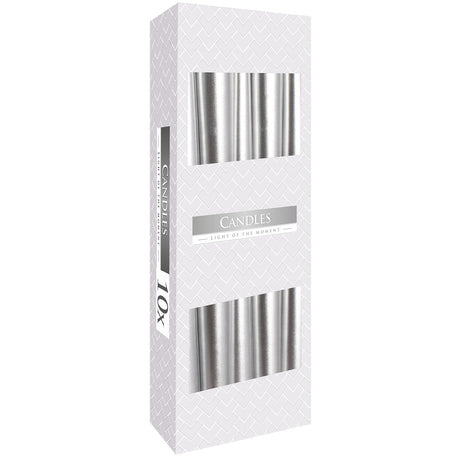
Gold carries solar associations — warmth, vitality, a sense of the wider whole — while silver is tied to the moon, to intuition and quiet reflection. Together they are often used to hold a balance: the bright and the soft, the active and the receptive. People light them side by side when they want a sense of wholeness in a practice rather than a single note.

Combining candle colours
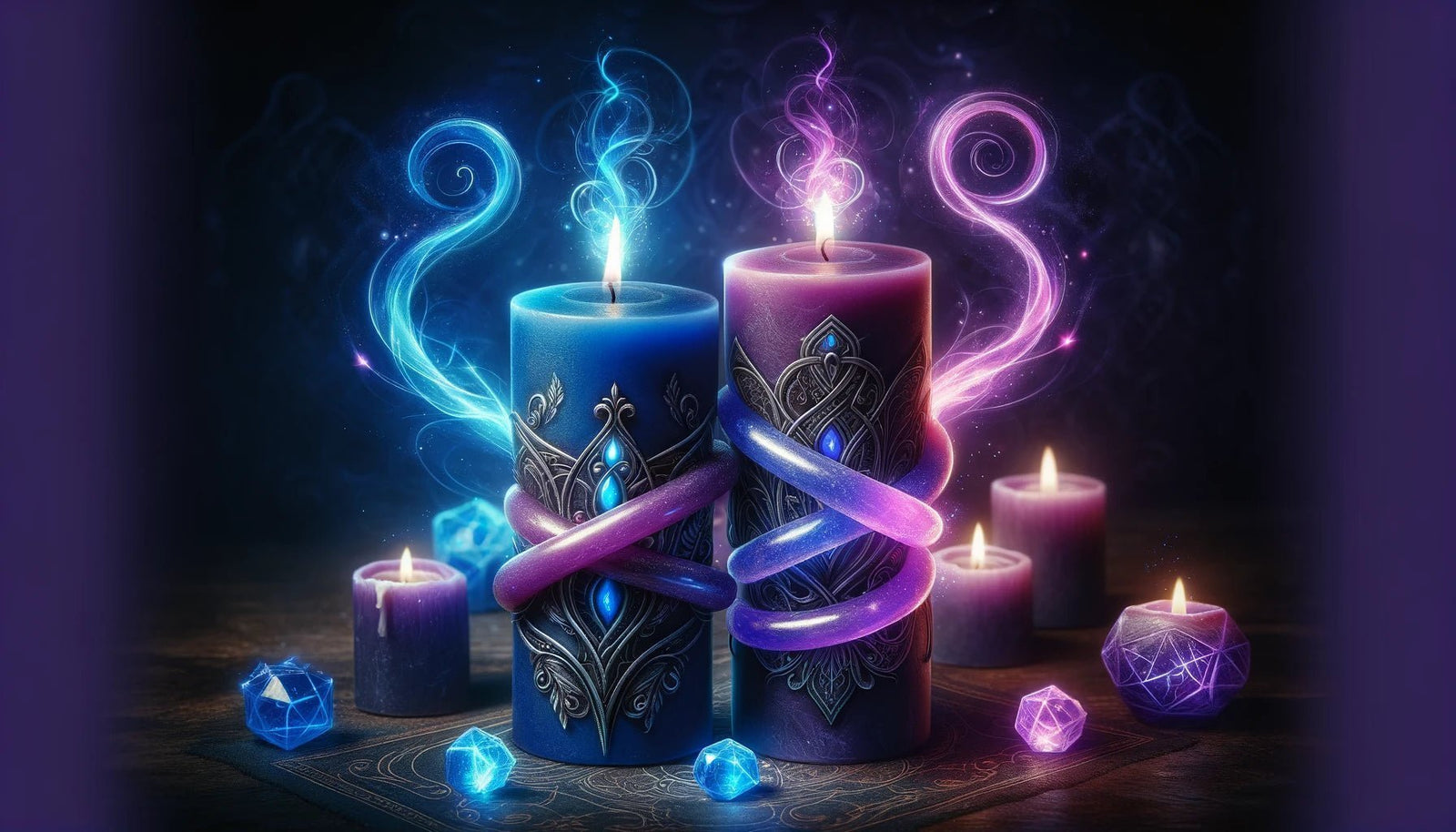
Some practices pair two colours, letting the associations sit alongside one another rather than relying on a single shade. The combination is simply a way of holding two threads of an intention at once. Here are a few that people commonly use.