Candle Colours and Their Meanings: A Complete Guide 🕯️

By Alex Pervov · 28 February 2024 · 12 min read

Candle Colors and Their Meanings: A Complete Guide 🕯️ - SHAMTAM

There is a moment, just after a candle is lit, when the room seems to soften. The light steadies, the corners draw in, and whatever you were carrying has somewhere quieter to rest. Long before candles were a way to see in the dark, people lit them to mark a thought — a wish, a prayer, a beginning. This is a guide to candle colours and what each one has come to mean: not as a switch that changes your fortune, but as a gentle focus for your own attention.

Choosing a colour on purpose is a small, considered act. It gives the mind somewhere to settle while you sit with what you actually want — calm, courage, a fresh start. The work is yours; the colour simply keeps the note.

The history and meaning of candle magic

Lighting a flame to mark an intention is an old human habit, woven through many traditions. As early as around 3000 BCE, Egyptians made rushlights by soaking reeds in animal fat — these had no true wick, and beeswax candles came later. Flame was treated as something close to life itself, a small light extended towards the divine.

The ancient Romans are often credited with developing the wick candle — a candle with a true wick — before the Common Era, though Egyptian, Chinese and Japanese versions are cited too. Romans lit candles in their ceremonies; in the Celtic tradition, the festival of Imbolc was marked by lighting candles to welcome the returning sun in the dark of winter, a gesture of hope and renewal.

By the Middle Ages, candles were central to the rituals of the Christian church, standing for the light of God and the steadiness of faith. They were — and still are — used in ceremonies both public and private, as a way of holding prayer and turning attention towards something larger.

Today, practitioners of Wicca, Neo-Paganism and other contemplative paths still keep candles close. The flame marks out a quiet space and gives meditation a focal point. In these practices a colour is often chosen deliberately, each shade carrying its own associations — this is the thinking behind spell candles set aside for a particular intention.

Modern practice sometimes involves 'dressing' a candle by dressing candles with oils, or carving a word or symbol into the wax to anchor an intention. The colour becomes part of the same language — a way of naming, to yourself, what you have come to sit with. The colours become a silent language of attention, much as they do in crystal work.

You do not have to belong to any tradition for this to mean something. Many people who follow no religion at all keep a simple candle ritual purely as a moment of focus — a way to pause, to think clearly, and to mark what matters to them. We share the history here as context, not as doctrine. Take what resonates and leave the rest.

Candle colours and their meanings

White – the pure beginning

White candles are associated with clarity, calm and fresh starts, and in folklore are linked with the moon's pure light. Many people reach for white when they want to mark a new chapter — clearing a space, setting a clean intention, beginning again. White is also the traditional all-purpose colour: if you cannot find the exact shade you need, a white candle stands in for any of them. It is the natural first candle for anyone starting out.

A lit white candle for candle magic, its calm flame symbolising purity and fresh beginnings

Black – the protective veil

Black candles are quiet and steadying, the colour of the still night. In esoteric tradition they are used in protection rituals and in setting boundaries, and people light them while reflecting on what they would like to leave behind. Some keep one lit during divination as a focus for inward attention. As with every colour, the candle does not do the work — it holds the space while you do.

A black candle glowing against a dark ground, used in protection rituals and candle magic

Red – the pulse of passion

In Western esoteric colour systems, red is linked with Mars — warmth, vitality, courage. People often choose a red candle when setting an intention around love, energy or finding the resolve to face something difficult. It is a colour for the times you want to feel more alive and more sure of yourself.

A burning red candle, its warm flame representing love, passion and vitality in candle magic

Green – the harbinger of harmony

Green carries the associations of the growing earth. Many use a green candle when setting an intention around growth, work, or steadiness in their surroundings, and it is the colour most often reached for when people want to attract abundance — not as a guarantee of money, but as a way of holding the thought of growth while you take real steps towards it. In Western correspondences green is sometimes tied to themes of restoration and balance.

A green candle alight, the colour traditionally tied to abundance, growth and prosperity rituals

Blue – the calm of the cosmos

In Western esoteric systems, blue is linked with Neptune and with stillness. It is traditionally associated with calm, reflection and quiet honesty, and people light a blue candle to settle the mind before meditation or simply to sit with a difficult feeling. It is a gentle colour — one to return to when you want to slow down rather than push forward.

A blue candle with a steady flame, associated with calm, healing and quiet reflection

Purple – the crown of consciousness

Purple is associated, in Western colour tradition, with Jupiter and with depth of awareness. People often light a purple candle to mark a longer meditation or a stretch of quieter, more reflective practice. It suits the moments when you want to step back and take a wider view.

A purple candle glowing softly, linked in candle magic to deeper awareness and meditation

Orange – the dance of delight

In Western correspondences, orange is linked with Mercury — movement, communication, momentum. It is a colour people reach for around creativity, ambition and getting unstuck, and it suits the start of a new project or a conversation you have been putting off. Bright and warm, it lifts the mood of a room.

An orange candle burning brightly, the colour of creativity, enthusiasm and fresh confidence

Yellow – the spark of the sun

Yellow carries the associations of sunlight — clarity, focus, good cheer. People often choose a yellow candle when they want to think clearly, concentrate on something demanding, or simply bring a little brightness into the day. It pairs naturally with study, planning, and the work of getting your thoughts in order.

A yellow candle alight, its sunlit glow associated with clarity, focus and joy

Pink – the embrace of empathy

In Western colour tradition, pink is tied to Venus and to gentleness. It is the colour of affection, friendship and self-kindness, and people light a pink candle when tending a relationship, mending a hurt, or simply being a little kinder to themselves. It is softer than red — warmth without the heat.

A soft pink candle burning gently, the colour of affection, friendship and self-kindness

Brown – the foundation of the forest

Brown is the colour of soil and bark, and in Western correspondences is linked with Saturn and with grounding. People use a brown candle when they want to feel rooted — settling into a new home, finding stability, or reconnecting with the natural world. In folklore it is also associated with the steadier, earthbound concerns of daily life.

A brown candle with a warm flame, tied to grounding, stability and a connection with nature

Gold and silver – the divine duo

Gold carries solar associations — warmth, vitality, a sense of the wider whole — while silver is tied to the moon, to intuition and quiet reflection. Together they are often used to hold a balance: the bright and the soft, the active and the receptive. People light them side by side when they want a sense of wholeness in a practice rather than a single note.

A gold and a silver candle lit side by side, representing solar and lunar energies in candle magic

Combining candle colours

Some practices pair two colours, letting the associations sit alongside one another rather than relying on a single shade. The combination is simply a way of holding two threads of an intention at once. Here are a few that people commonly use.

A lit white candle for candle magic, its calm flame symbolising purity and fresh beginnings
A black candle glowing against a dark ground, used in protection rituals and candle magic
A burning red candle, its warm flame representing love, passion and vitality in candle magic
A green candle alight, the colour traditionally tied to abundance, growth and prosperity rituals
A blue candle with a steady flame, associated with calm, healing and quiet reflection
A purple candle glowing softly, linked in candle magic to deeper awareness and meditation
An orange candle burning brightly, the colour of creativity, enthusiasm and fresh confidence
A yellow candle alight, its sunlit glow associated with clarity, focus and joy
A soft pink candle burning gently, the colour of affection, friendship and self-kindness
A brown candle with a warm flame, tied to grounding, stability and a connection with nature
A gold and a silver candle lit side by side, representing solar and lunar energies in candle magic
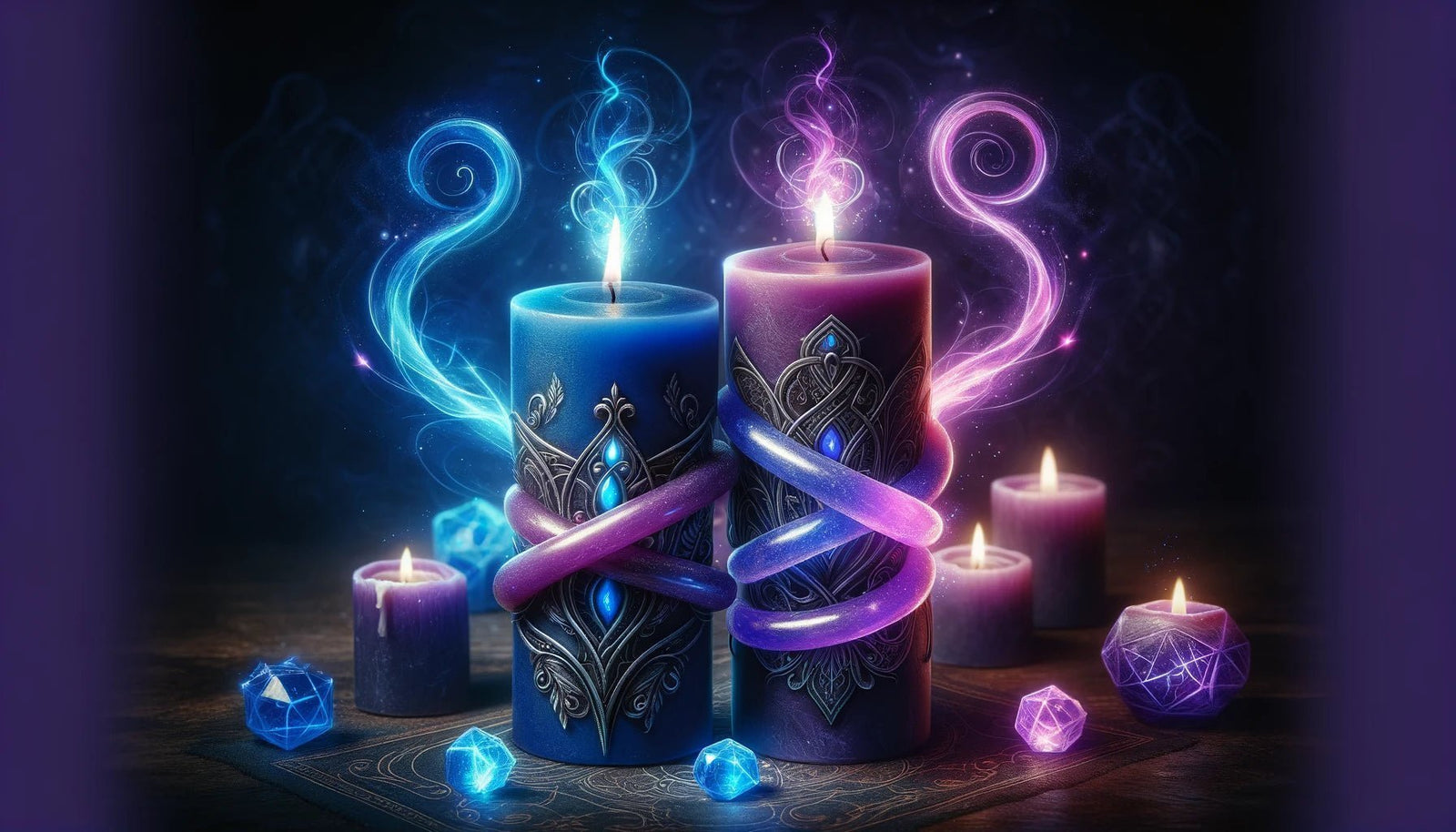
Two candles with intertwined flames in a serene scene, illustrating how candle colours are combined in ritual

Red and pink for love and warmth

Red and pink are often lit together when the intention sits somewhere between passion and tenderness — the warmth of feeling alongside the gentleness of genuine care. It is a pairing for relationships you want to tend with both heart and steadiness.

Black and white for balance and protection

Black and white set side by side hold the idea of balance — light and shadow, what you release and what you welcome. People use the pairing in moments of transition, or when they want to mark both letting go and beginning again.

Green and gold for growth and steadiness

Green for growth and gold for a wider sense of the whole are sometimes paired when the intention is around work and abundance — holding both the near-term effort and the longer view. As ever, the candles keep the note while you do the work.

Blue and purple for reflection and insight

Blue's calm and purple's depth are a natural pairing for quieter, more reflective practice — settling the mind, then sitting with it. Many keep this combination for meditation or for thinking something through slowly.

Yellow and orange for creativity and confidence

Yellow's clarity and orange's momentum make a bright, encouraging pair for creative work and the courage to begin. It suits the start of a project, or any moment you want to feel more capable and more clear.

Brown and green for grounding and growth

Brown for the soil and green for the sprouting seed make an earthy pairing for new beginnings — starting a family, planting a garden, launching something that needs both roots and growth.

Silver and blue for calm and dreaming

Silver, with its lunar associations, and blue, traditionally tied to calm and rest, are paired in quiet evening practice and in folklore around dreams. People use the combination to wind down, to reflect, and to mark the close of a day gently rather than abruptly.

Two candles with intertwined flames in a serene scene, illustrating how candle colours are combined in ritual

A simple candle ritual to begin with

A candle ritual is really just a few minutes of focused attention, given shape. Nothing here requires special tools — you can start with a single candle and a clear intention. Here is a gentle way in.

Set your intention

Before you begin, decide what you are sitting with. Keep it clear and specific — a wish for calm, for courage, for a fresh start. Writing it down, in the present tense, helps it feel settled. This is the heart of the practice; everything else simply supports it.

Choose your candle

Pick a colour that matches your intention using the guide above — and if you do not have the exact shade, a white candle does just as well. Size is a practical matter: a small candle suits a single sitting, a larger one suits an intention you want to return to over several days.

Prepare your space

Find somewhere quiet where you will not be disturbed. Many people like to smudge with sage or burn palo santo to settle a room before they begin; others prefer to cleanse a space with incense, or simply ring a bell. A plain cloth — white, black, or whatever feels right — gives the candle a steady place to stand.

Dress the candle, if you like

This step is optional. Some people anoint the candle with a little natural oil, such as olive or coconut, drawing it from the centre to each end while holding their intention in mind. It is a way of making the ritual more your own — not a requirement for it to mean something.

Carve your intention, if you like

Using a toothpick or a small knife, you can carve a word or a simple symbol into the wax. It is a quiet way of committing your intention to the candle before you light it. Again, this is an option, not a rule.

Light the candle

As you light it, give your full attention to your intention. Some say it aloud; some sit in silence. Let the flame become the thing you are looking at while your mind rests on what you have named.

Sit with it

While the candle burns, stay with your intention. Picture what you would like, as clearly as you can, and notice how it feels to imagine it. A few minutes is plenty. This quiet attention is the real point of the whole practice.

Close the ritual

Always keep an eye on a lit candle. A small one can be left to burn out safely if you can stay nearby; a larger one is usually burned for a set time each day until it is finished. When you put it out, many traditions prefer to snuff the flame rather than blow it — a gentle way of letting the moment settle rather than scatter. If blowing it out feels right to you, that is fine too; the meaning lives in your attention, not the method.

Afterwards

When the candle has fully burned, dispose of the remaining wax with a little care. Some like to mark the end of a ritual with a small, tidy gesture of their own. There is no single correct way.

A few gentle tips

  • Begin in a settled frame of mind. It is easier to focus when you are not rushing or anxious.
  • Some like to follow the moon. Many practitioners time rituals to its phases — new moons for beginnings, full moons for completion. It is a tradition people enjoy, not a lever that changes outcomes.
  • Trust the practice, not the wax. The value lies in the attention you bring, not in any power the candle holds on its own.
  • Keep a small journal. Noting dates, colours and intentions helps you notice what feels meaningful over time.

The point of a candle ritual is not in the flame but in the attention you give it — a few minutes set aside, on purpose, for something that matters to you. With a little practice it becomes a steady, grounding habit, less about results and more about presence.

A quiet close

A candle changes very little on its own. What it offers is a place to put your attention — a small, warm focus for whatever you have come to sit with. Whether you are drawn to the grounded steadiness of an earthy brown or the brightness of gold, choosing a colour on purpose is simply a way of taking your own intention seriously. Light it, sit with it, and let the few minutes be enough.

good to know

Questions & answers

Does the candle colour actually do anything, or is it just symbolism?
Think of the colour as a focusing device, not a switch. A green candle does not, on its own, bring money; what it does is hold your attention on the intention you have named — abundance, growth, a fresh start. The tradition pairs each shade with a theme so your mind has somewhere steady to rest while you sit with what you want to change. The work is yours; the colour simply keeps the note. Many people find that choosing deliberately — rather than lighting whatever is to hand — makes the few minutes feel more considered, and that small shift in attention is the real point.
I cannot find the exact colour I need. Can I use a white candle instead?
Yes. White is the traditional all-purpose stand-in, associated with clarity and fresh beginnings, and most practitioners treat it as a substitute for any colour when nothing else is to hand. Set your intention as clearly as you would with the matching shade — name it aloud or write it down — and the white candle carries it perfectly well. The colour guide is a helpful map, not a rule you can break.
How long should I let a candle burn during a ritual?
There is no fixed answer — it depends on the candle and the time you have. A small chime or spell candle can be left to burn out safely in one sitting if you can stay nearby. A larger candle is usually burned for a set stretch each day until it is finished, which suits longer-held intentions. Never leave any flame unattended, keep it clear of curtains and anything that catches, and trim the wick before each lighting so it burns evenly. Safety first, always.
Why are you not meant to blow a candle out?
It is a long-standing custom rather than a hard rule. Many traditions hold that blowing scatters the intention you have just gathered, so practitioners snuff the flame instead — with a snuffer, a small cup, or wetted fingers — to let the work settle rather than disperse. If blowing it out feels right to you, that is fine too; the meaning lives in your attention, not in the method. The custom is simply a gentle way of treating the moment with care.
Do I need oils, herbs and carving tools to begin, or can I start simply?
You can start with nothing but a candle and a clear intention. 'Dressing' a candle with a little natural oil, carving a word into the wax, or cleansing the room beforehand with sage or palo santo are ways to deepen the ritual and make it more your own — they are not entry requirements. Begin with what you have. As the practice becomes familiar, you can add the steps that feel meaningful and leave the rest.
Is candle magic tied to one particular religion?
No. Lit candles appear across Egyptian, Roman, Celtic and Christian traditions, and in modern Wiccan and Neo-Pagan practice — but the simple act of lighting a flame to mark an intention belongs to no single faith. We share this as cultural and historical context, not as doctrine. Many people who follow no religion at all keep a candle ritual purely as a moment of focus and quiet. Take what resonates and leave the rest; there is no wrong way in.
to carry the practice on

Companions for your ritual

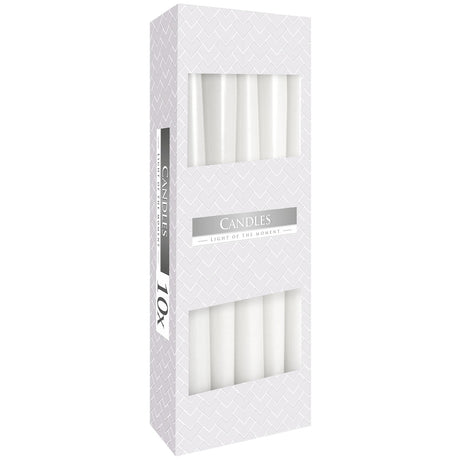
Taper Candles White 10 Pack - SHAMTAM.COM Taper Candle - White - SHAMTAM.COM
£1.36 off

Taper Candles White 10 Pack

(8)
Sale price £1295 Regular price £1431
In stock
View details

Pillar Candle Red 80 x 250 mm

Regular price £2445
In stock
View details
Dinner Candles 21 Pack Rustic Lime Green, Taper Candles Dinner Candles 21 Pack Rustic Lime Green
£12.79 off

Dinner Candles 21 Pack Rustic Lime Green

Sale price £3299 Regular price £4578
Very low stock
View details
Dinner Candles 21 Pack Rustic Sea Blue, Taper Candles Dinner Candles 21 Pack Rustic Sea Blue
£12.79 off

Dinner Candles 21 Pack Rustic Sea Blue

Sale price £3299 Regular price £4578
Very low stock
View details
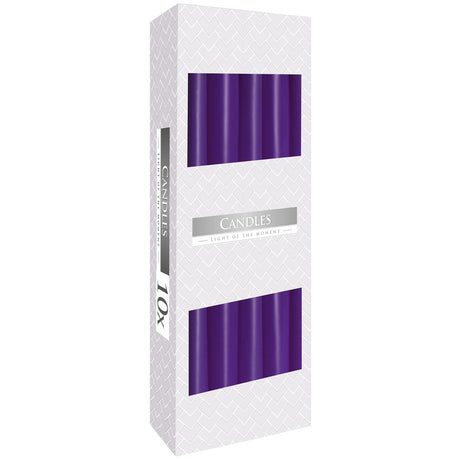
Taper Candles Lavender 10 Pack - SHAMTAM.COM Taper Candle - Lavender - SHAMTAM.COM
£1.36 off

Taper Candles Lavender 10 Pack

Sale price £1295 Regular price £1431
In stock
View details
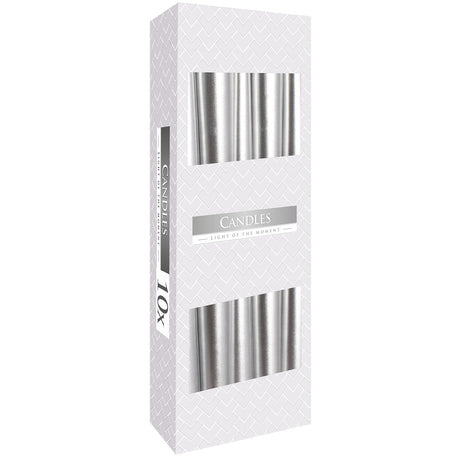
Taper Candles Metallic Silver 10 Pack - SHAMTAM.COM Taper Candle - Silver Metalic - SHAMTAM.COM
£3.13 off

Taper Candles Metallic Silver 10 Pack

Sale price £1595 Regular price £1908
In stock
View details
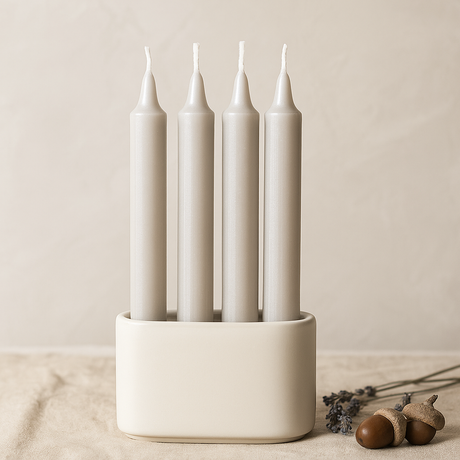
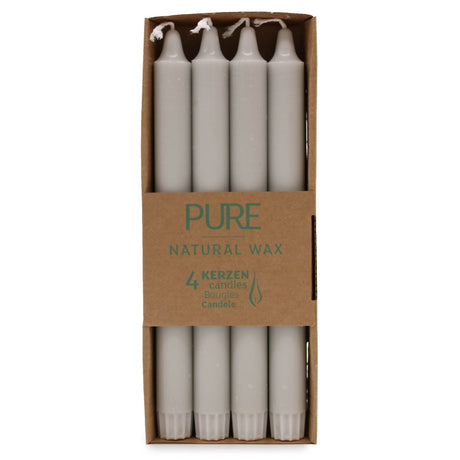
Dinner Candles Natural Wax Silver Grey 4 Pack, Taper Candles Pure Natural Wax Dinner Candle 25x2.3 - Silver Grey - SHAMTAM.COM
£4.57 off

Dinner Candles Natural Wax Silver Grey 4 Pack

Sale price £1895 Regular price £2352
Very low stock
View details

Pillar Candles Set of 4 Ivory 40x60mm

Regular price £895
In stock
View details
Crown Chakra Crystal Candle with Celestite and Selenite - SHAMTAM.COM Crown Chakra Crystal Candle - Sahasrara - SHAMTAM.COM
£3.46 off

Crown Chakra Crystal Candle with Celestite and Selenite

Sale price £1499 Regular price £1845
In stock
View details

Chakra Manifest Candles, Set of 7

(6)
Regular price £499
In stock
View details
Chakra Stones Set of 7 Small Rounded - SHAMTAM.COM Small Stones Chakra Set (Rounded shape) - SHAMTAM.COM
£6.07 off

Chakra Stones Set of 7 Small Rounded

Sale price £2699 Regular price £3306
In stock
View details

Palo Santo Incense Sticks 15g Satya

(1)
Regular price £165
In stock
View details
White Sage Smudge Stick With Lavender 22.5cm - SHAMTAM.COM White Sage & Lavender Smudge Stick 22.5cm - SHAMTAM.COM
£3.56 off

White Sage Smudge Stick With Lavender 22.5cm

Sale price £2299 Regular price £2655
In stock
View details
Wooden Candle Holder Small – White Gold, Candle Stand Small Candle Stand - White Gold - SHAMTAM.COM
£3.10 off

Wooden Candle Holder Small – White Gold

Sale price £1595 Regular price £1905
In stock
View details

Lavender Velvet Notebook – 80 pages – Believe Yourself

Regular price £1195
In stock
View details

Share this story