A single, narrow strip of Italian coastline supplies most of the world's true bergamot oil, and since 2001 the law has said so in writing. Here is what is actually in the bottle, and what to look for before you buy one.
The Fruit and Its Coast
Most bottles labelled bergamot trace back to one place: a coastal growing zone in the province of Reggio Calabria, at the southern tip of Italy, running roughly 100 kilometres along the Ionian Sea. The large majority of the world's true bergamot essential oil is pressed there, not from Italy in general and not from the wider region of Calabria as a whole, but from this one stretch of coast, where soil, sea air and generations of grafted trees keep one citrus growing in numbers it rarely reaches anywhere else.
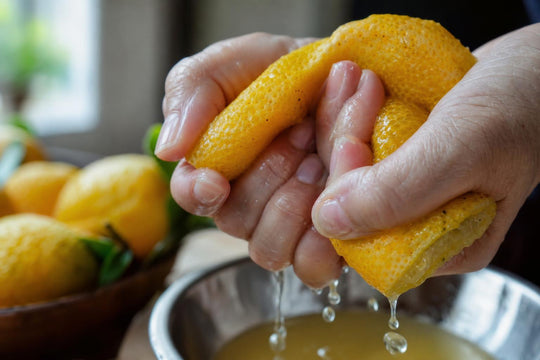
Citrus bergamia, the bergamot orange, is a fruit few people would recognise whole: pale green fading to yellow as it ripens, about the size of an orange, and too sour and bitter to eat with any pleasure. Botanists still argue over exactly how it came to exist; the most likely account treats it as a spontaneous hybrid or mutation involving bitter orange and lemon, thought to have arisen toward the end of the seventeenth century in the area now known as Reggio Calabria. Almost the entire value of the fruit lies in its peel. Growers harvest between November and February, while the fruit is still nearly ripe, and cold-press the peel to release the oil rather than distilling it with heat.
A Name Protected by Law
In 2001, the European Union granted Protected Designation of Origin status to "Bergamotto di Reggio Calabria - Olio essenziale". A PDO is not a marketing phrase; it fixes, in writing, where a product may be grown, how it must be extracted and how it may be certified and sold. For bergamot, that means the cultivation zone is defined, the cold-press method is specified, and only three recognised cultivars, Femminello, Castagnaro and Fantastico, qualify under the designation. A growers' and producers' consortium, the Consorzio di Tutela del Bergamotto di Reggio Calabria, was formally established to certify that oil sold under the name actually meets these terms. Reggio Calabria is also home to the Museo del Bergamotto, built around the region's working history with the fruit.
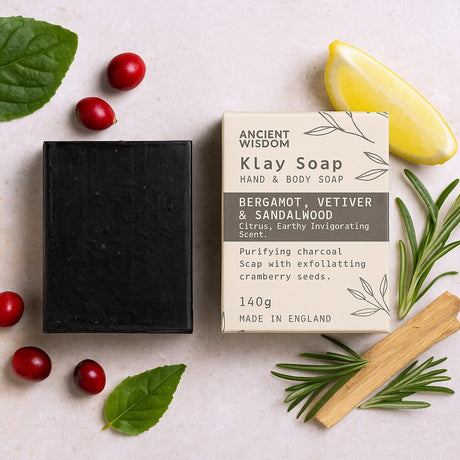
The paperwork has not settled everything, though. Much of the bergamot scent a person meets day to day, in soaps, colognes and scented candles worldwide, is a synthetic reconstruction rather than the true pressed oil the PDO describes; the law protects the name of the genuine article, not the smell of it in general, and the two are worth telling apart before buying either.
Reading the Label Before You Buy
Bergamot oil naturally contains bergapten, a compound that makes skin more sensitive to UV light after it has been applied. This is a real, checkable property of the oil, not a vague caution. It is also why a second, distinct product exists: bergapten-free bergamot oil, often labelled Bergamot FCF (furanocoumarin-free) or simply BF, made by re-processing the oil, commonly through fractional distillation, to remove most or all of the bergapten. A reputable supplier of bergamot oil states clearly on the label which version is in the bottle. If you intend to wear it on skin that will see daylight, that single word, FCF or BF, is worth reading before anything else about the scent.
Two Roads Out of Calabria
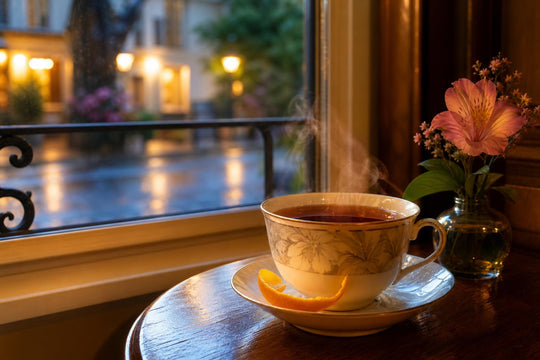
Bergamot oil left its home region by more than one route. It became a widely used ingredient in perfumery, and specifically a classic top note in eau de Cologne-style fragrances, traditionally paired with neroli and lemon. Its other well-known journey runs through tea. Earl Grey tea takes its name from Charles Grey, the 2nd Earl Grey, British Prime Minister from 1830 to 1834; the popular story attached to it, that a grateful Chinese diplomat gave him a bergamot-scented recipe after some act of rescue, is almost certainly a later invention. Historians consider a plainer explanation far more likely: bergamot oil was used commercially to round out or freshen lower-grade black tea, and several London tea houses, including Twinings and Jacksons of Piccadilly, have long claimed a hand in first blending it, tying the recipe to the Grey name more by association than by any single documented inventor.
One further point of confusion is worth clearing up. "Bergamot" also names an entirely unrelated North American plant, Monarda, sometimes called wild bergamot or bee balm, used for its own herbal tea. It shares only a similar scent and a common name with the Italian citrus, nothing more.
Storing and Using the Oil
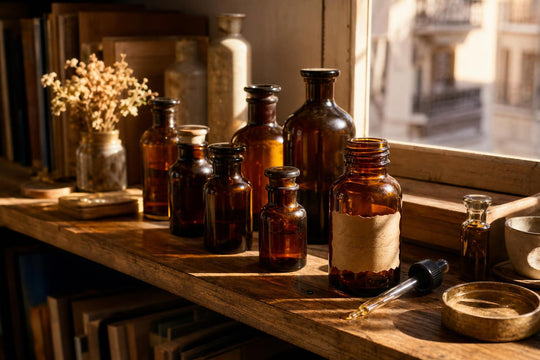
Citrus oils are among the least forgiving to store carelessly. Bergamot oxidises with exposure to heat and light, which is why it is bottled in dark amber or cobalt glass rather than clear. Kept away from direct sun and a warm windowsill, an unopened bottle holds its character reasonably well; once opened, it is worth treating as something with a working life rather than a permanent fixture of the shelf, much like other citrus oils pressed from peel rather than distilled from wood or resin.
None of this history does the work for the person holding the bottle. Some warm a few drops in a diffuser through an evening; others work it into handmade soap at the kitchen table, or add a note of it to a spray meant to lift a stale room. The oil brings its scent, its brightness, its particular lift; the choosing, the timing and the attention paid stay entirely the person's own. What travels through a room from an open bottle is only scent. The law, the consortium and the museum that keep the name honest stay behind in Calabria; what a person does with the bottle in front of them is the part of the story that is theirs to write.