Lavender is one of the friendliest scents to keep in a house: soft enough for a bedroom, herbal enough that it never turns sweet, and forgiving if you get a step wrong. The quickest way to fill a room with it is a diffuser or a lit candle; the way to make that scent hold for more than an afternoon is a different matter, and it has less to do with which hack you choose than with understanding why scent fades at all.
Lavender's oil sits in tiny glands on the flower itself, and those compounds are volatile: they evaporate at room temperature, faster still with heat and light. That single fact explains almost everything about keeping the smell of lavender in a house, from why a candle's throw fades by evening to why a sachet in a drawer goes quiet after a season. Fix the fading and the rest is simple: fill the room, make the scent last, keep dried lavender working, and store the oil so it doesn't spend itself in the bottle.
How to fill a room with lavender scent quickly
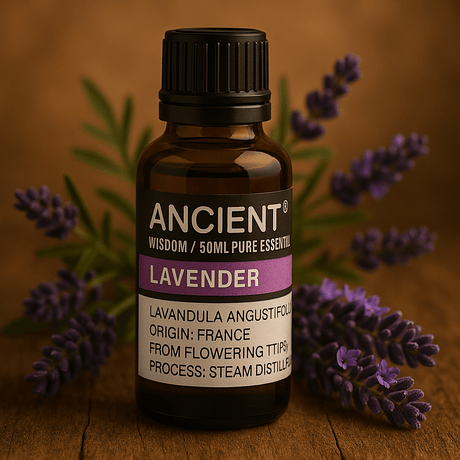
A few drops of lavender essential oil in a water diffuser will scent an average room within minutes; the steam carries the compounds efficiently and refreshes as it runs. A lit candle works almost as fast, though a wax-and-wick throw is gentler and covers a smaller radius than a diffuser. Either route calls for true lavender, steam-distilled from Lavandula angustifolia, the English lavender grown for its rounder, less camphorous scent. Quality varies noticeably from lavandin, a hybrid of Lavandula angustifolia and Lavandula latifolia bred for a higher oil yield, which is sharper and more medicinal and turns up more often in soap and mass-market sprays than in a bottle meant for a diffuser. For an evening in, our lavender candles and wax melts give the same quick lift without any dilution to measure.
How to make a lavender room or linen spray that actually lasts

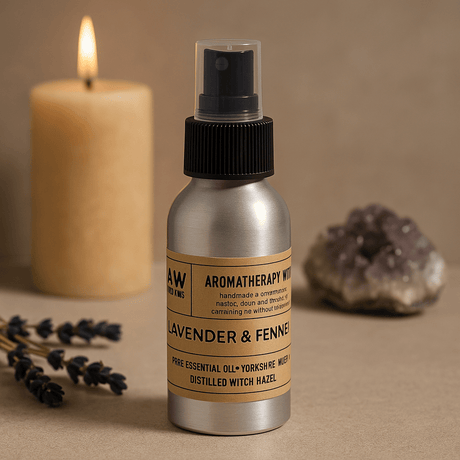
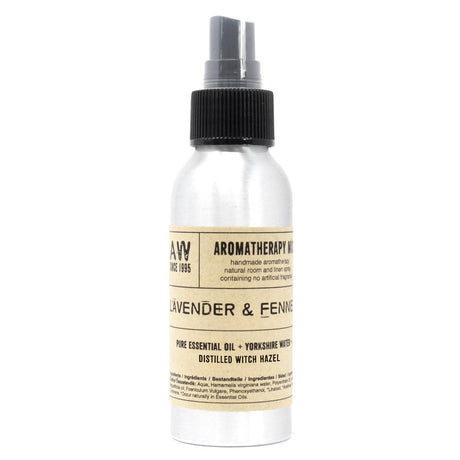
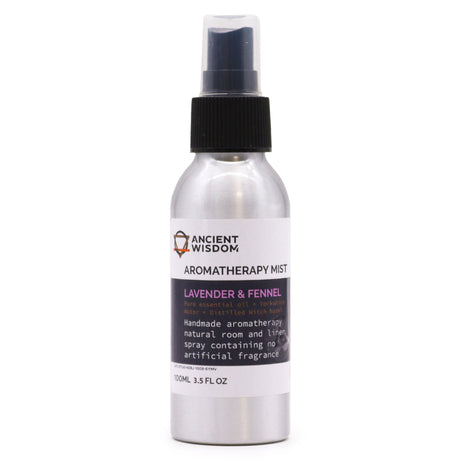
Lavender sits in perfumery as a herbaceous middle note, meaning it doesn't linger unsupported the way a base note such as sandalwood or vetiver does. A home-made spray of oil, water and a splash of witch hazel to disperse it will scent a pillowcase or a curtain within the hour, but how long that scent holds afterwards varies with the fabric and the strength of the mix: a room spray typically freshens the air for a few hours, while a spray worked into linen or a heavier weave can linger for a day or two, sometimes longer on wool. That isn't a fault in the mixing, it's simply what a middle note does on its own. Shaking the bottle before each use matters more than the exact ratio, since oil and water separate quickly. If you'd rather skip the measuring, our lavender room and linen spray is blended to hold a little longer across fabric, though the same volatility applies to any lavender spray in the end.
How to use dried lavender bundles and sachets around the house

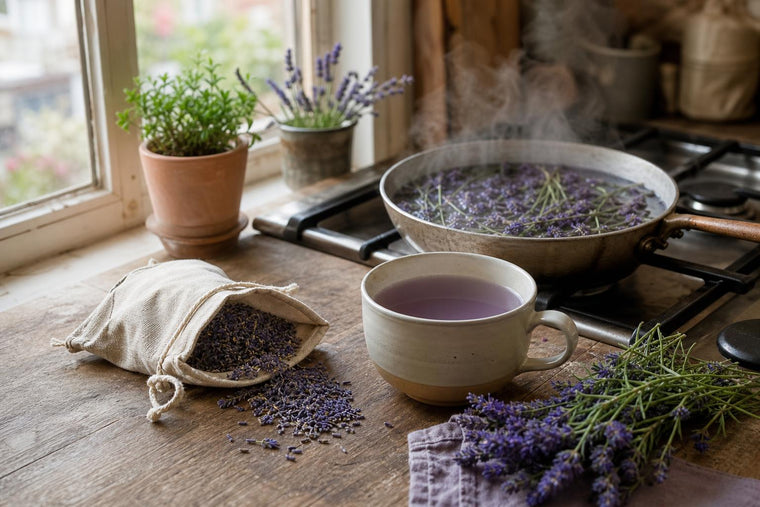
Dried lavender keeps its scent in tiny glands on the flower's surface, which is why a sachet that has sat untouched in a drawer for months smells fainter than a fresh one: the glands are simply intact and unbroken. Rolling the sachet between your palms, or giving a hanging bundle a firm squeeze, ruptures enough of those glands to release scent that has been sitting there all along; there's no need to replace it, only to handle it now and then. Bundles work well hung in a wardrobe or laid along a shelf, and a sachet tucked among linens does the same job in a smaller space. Our lavender sachets and wheat bags are made to be warmed as well as squeezed, which lifts the scent a little further still.
How to store lavender oil so the scent doesn't fade in the bottle

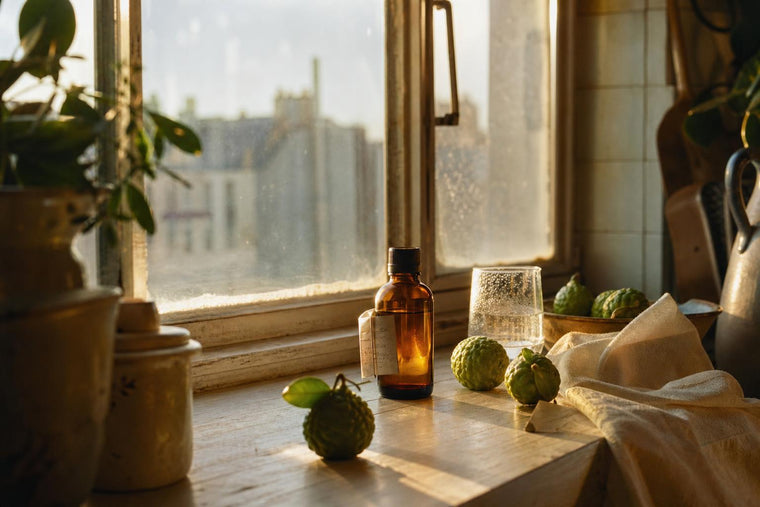
The same volatility that lets lavender fill a room works against it in storage. An essential oil bottle left open, warm or in direct sunlight will oxidise and fade over months rather than years; keeping the cap tight and the bottle in a cool, dark drawer or cupboard is one of the most effective habits for making it last, and the same rule holds for almost any essential oil, not lavender alone. How quickly any single bottle actually turns depends on things no label can tell you, how it was stored before it reached you, the batch's own chemistry, even how much air sits above the oil in a half-used bottle, so treat any timeframe here as a reasonable guide rather than a fixed rule. A bottle kept on a sunny windowsill for the look of it is, in scent terms, already spending itself.
What actually ruins a lavender scent, and what the label won't tell you
A label that says "lavender fragrance" rather than "lavender oil" is telling you something worth knowing: fragrance oil is a manufactured compound built to smell like the plant, and it is chemically distinct from oil that has actually been steam-distilled from the flowers. Neither is dishonest, but they behave differently in a room and on skin, and only the ingredient list, not the scent, will usually tell you which one you're holding. Simmering lavender on the stove, a hack that circulates often, barely holds up for the same reason a spray fades: heat pushes the volatile compounds out with the steam rather than letting them settle into the room, so the scent clears almost as quickly as it appeared. And a sachet or bundle left completely untouched for a season tends to smell fainter than one that's occasionally handled, however good the lavender inside it was to begin with.
Living with lavender day to day
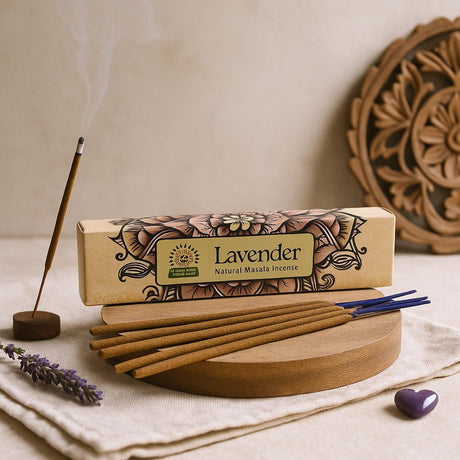
I keep incense and candles as part of a daily practice, and lavender earns its place among them for being undemanding: it never overwhelms a room, and it asks almost nothing except a little handling now and then. Provence, and the Valensole plateau in particular, is a well-known lavender-growing region, its fields typically harvested in July, but you don't need a French hillside to keep the plant's calm quality alive at home. What a bottle or a sachet needs, in the end, is not a stronger dose but a little attention paid to it now and then. The full lavender collection holds the oil, the spray, the sachets and the candles together, if it's easier to start from one true source than to gather them separately. What stays with a house isn't really the smell itself, in the end, but the small, repeated act of tending it: a bottle recapped, a sachet given a squeeze, a candle lit before the room needs filling rather than after.