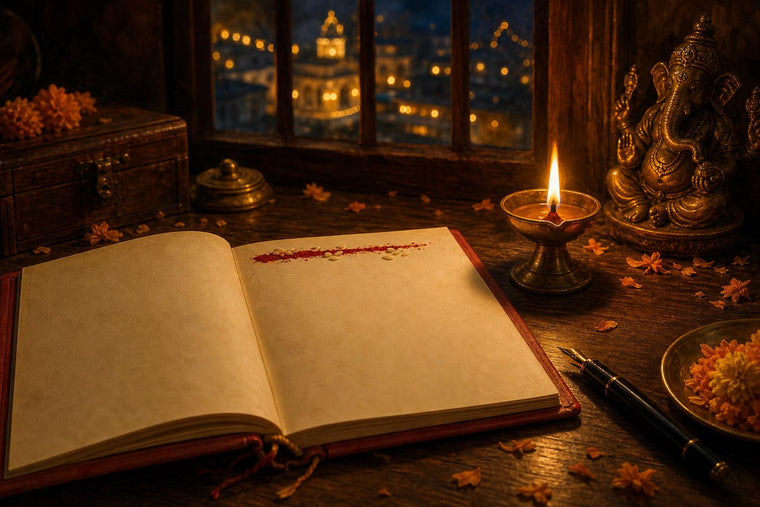
In the early 1900s, the incense trade that grew up in and around Bangalore went by a name that never made it into any museum label: oodabathies, literally "blowing fumes". It is a plain, workmanlike word for an industry that made something delicate. I think of it most mornings, when I strike a match for a single stick in my own home in Bengaluru, not far from where that trade first organised itself.
A Trade Called "Blowing Fumes"
According to trade histories of the period, the making of incense sticks in Bangalore turned into a proper industry during the 1900s, and the people who ran it called the business oodabathies. The Maharaja of Mysore is recorded as having taken a direct interest, patronising both the production of the sticks and their promotion abroad; the kingdom is remembered as giving them as gifts to foreign visitors, a small piece of diplomacy built on a rolled length of bamboo and scented paste. At the British Empire Exhibition in Wembley, London, incense from the Mysore tradition received a certificate of merit, the sort of quiet, checkable recognition that rarely turns up in a general history of "ancient incense".
That trade never really stopped. In the mid-2000s the Government of India gave Mysore Agarbathi a Geographical Indication tag, the same category of protection given to Darjeeling tea, recognising both the documented history and the local availability of the raw materials the trade depends on. The tag protects a name and a method, though it cannot fence off a trade that has long since spread past Karnataka's own borders; how much of what now carries the Mysore name is still rolled by hand in the city itself is genuinely hard to pin down. A short drive from where most visitors to Bengaluru look stands a factory founded in the city in 1916 as the Government Sandalwood Oil Factory, built to extract and export sandalwood oil. The company that runs it today, Karnataka Soaps and Detergents Limited, was formed later, in 1980, and still produces sandalwood-based agarbathis. The sandalwood note rising from a stick anywhere in the world can, in a good number of cases, be traced back to a working factory rather than to anything as vague as "ancient tradition".
One Stick, Most Mornings
My own practice is plainer than any of that history. Most mornings, before the day properly starts, I light one stick and sit for a while with my rudraksha mala for japa, letting the smoke do what it does, which is not much beyond marking that a particular kind of attention has begun. What I did not know for a long time is that the stick in my hand had a reasonable chance of having started its own life not far from where I now live. Bengaluru remains one of India's major centres of the hand-rolled agarbatti trade, the ordinary stick sold by the packet in households across the country and shipped to kitchens and altars well beyond it.
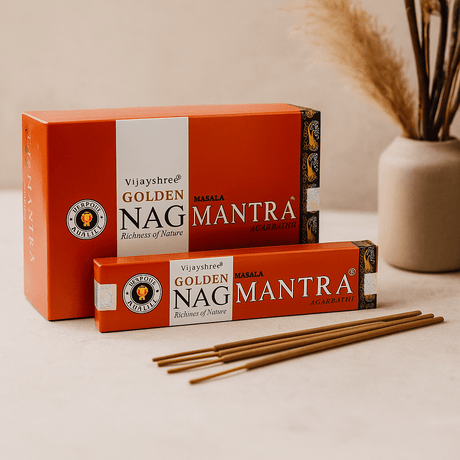
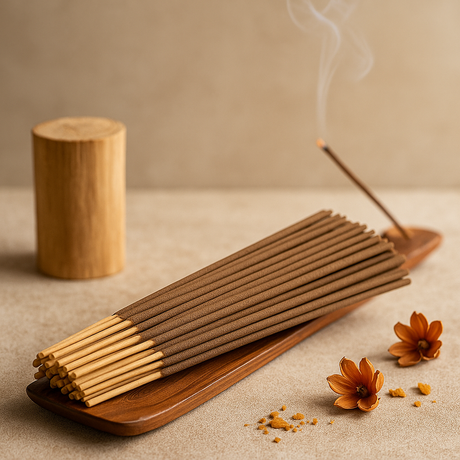
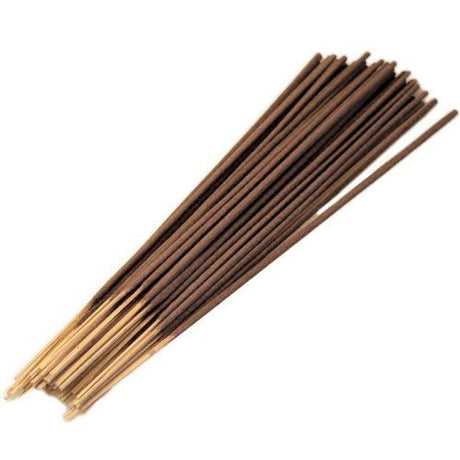
Underneath the scent, the stick itself is a fairly plain piece of craft. A length of bamboo forms the core; it is coated in a paste of charcoal or joss powder, bound together with a natural gum called jigat, and finished with the fragrance itself, commonly sandalwood, rose or jasmine. Some sticks are rolled by hand, artisan by artisan, the paste worked down the bamboo in a practised motion; others come off a machine. Neither method makes the object more or less real. A single stick burns for roughly twenty to forty-five minutes, depending on its length and how densely the paste is packed, which is one reason the trade never settled on a single standard size.
Two Words for the Same Smoke
The Hindi word for the object, agarbatti, is built from two plainer words: agar, a fragrant wood or aromatic material, and batti, a stick. It names exactly what it is. The English phrase for the same object, joss stick, has a far stranger route. Despite its close association with Chinese temple practice, "joss" is not Chinese in origin at all. It traces back to the Portuguese deus, meaning god, which passed into Javanese in the sixteenth century as dejos, and from there entered Chinese Pidgin English as joss, describing a figure of a deity. The compound "joss-stick" itself is recorded in English by the early nineteenth century, a surprisingly late arrival for a word so often assumed to be ancient.
Lighting One, Without a Chart
None of this changes what a stick is actually for on an ordinary morning, and I have never found much use for a chart that tells me which note to burn at which hour. In the Chinese incense-offering practice known as jingxiang, sticks are traditionally held in both hands before an altar and lit in odd numbers, three or five, since odd numbers carry a yang association; my own habit is quieter and far less prescribed, usually just the one. A sandalwood incense stick works for this as well as anything I have burned, not because the wood performs some effect on the room, but because the smell is specific enough to notice, and noticing is most of the point.
The stick itself tells you when that attention is done. Its last inch burns faster than the first, the ash falls in short grey curls rather than one long piece, and the smell that settles afterwards is thinner than the smoke while it was burning, closer to the plain wood than to the fire. That last curl of ash, more than the striking of the match, is what I have come to watch for: it is the part of the stick that cannot be rushed, made by a stick that most likely began, like a great many others, not far from Bengaluru at all.