There is a particular kind of quiet that arrives when you put down your phone, light a candle, and turn over a single card. No prediction, no verdict – just an image to sit with, and a moment to notice where you actually are. The Osho Zen Tarot was made for exactly that: a tool for daily reflection rather than a window onto the future. This is a gentle introduction to the deck, what makes it unusual, and how to begin a small practice of your own.
An introduction to the Osho Zen Tarot
In the rush of daily life, small moments of stillness become a quiet necessity. Mindfulness is one way back to them – a way of being present rather than always a step ahead of yourself. The Osho Zen Tarot Cards offer one route in: a deck designed not to foretell, but to invite reflection.
Unlike a traditional tarot deck, these cards take a contemporary, contemplative approach. Each one is less a forecast and more a mirror – an image and a single keyword to pause over, holding up the present moment so you can look at it more honestly.
Beyond predictions
The Osho Zen Tarot is not a tool for predicting the future. The cards are mirrors that reflect the present moment. As you sit with the art, the symbols and the keyword on each card, the practice becomes a form of mindfulness. It is not about foresight; it is about a deeper connection with the now.
A holistic outlook
With this deck, reflection becomes a whole-of-life practice. The cards weave Zen sensibility together with Osho's outlook, offering prompts that reach past the surface of a question and ask you to look a little further in.
What are Osho Zen Tarot Cards?
Origins and philosophy
The Osho Zen Tarot was created by Ma Deva Padma, a disciple of the Indian mystic Osho. It is more a reflection of Osho's unconventional outlook than a conventional deck. Osho was a spiritual teacher known for provocative talks, who encouraged people to question inherited norms and to live with authenticity and joy. Drawing on Eastern contemplative thought alongside Western psychology, the deck carries that outlook into its imagery – offering a quiet path towards self-awareness through the language of the cards.
How these cards differ from a traditional deck
Where conventional tarot leans towards prediction, the Osho Zen Tarot shifts the emphasis. Each card is a snapshot of the present – a mirror reflecting the energies at play in your life right now. The point is not divination, but embracing the now.

Understanding the deck
The Osho Zen Tarot has 79 cards, divided into the Major and Minor Arcana. The Major Arcana speaks to broad life themes; the Minor Arcana to the texture of everyday life. Each card carries a name, a number, an image and a keyword, and each one is an invitation to look a little closer at where you are.
How the deck is structured
The Major Arcana
The Major Arcana holds 23 cards, each one a doorway into a larger theme. Departing from traditional tarot, the deck renames many familiar cards to suit its contemplative outlook. For instance, the Magician becomes Existence, the Sun becomes Innocence, and the World becomes Completion. A unique 23rd card, The Master, carries Osho's message of awareness and liberation.
The Minor Arcana
The Minor Arcana is made up of four suits – Fire, Clouds, Water and Rainbows – echoing the elements of nature. Each suit explores a facet of being: Fire for creativity and passion, Clouds for thought and intellect, Water for emotion and feeling, and Rainbows for the physical and material.
A few Major Arcana cards
-
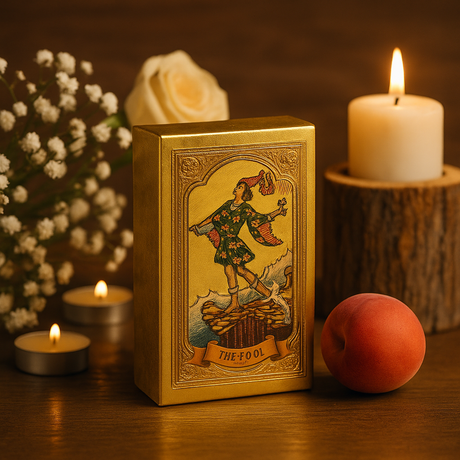
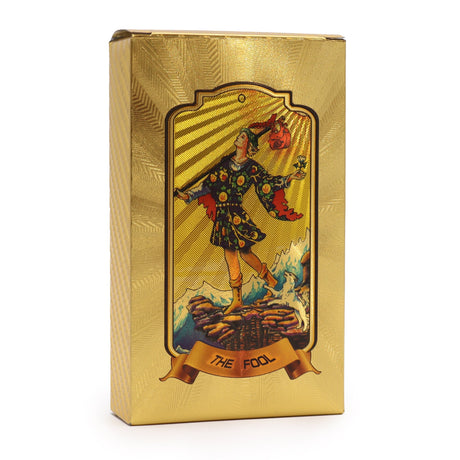
The Fool (0) – the openness, curiosity and playfulness we are born with; a fresh start.
-
Existence (1) – aliveness, awareness and consciousness; a quiet celebration of being here at all.
-
Inner Voice (2) – an invitation to listen to your own intuitive, steadying sense of guidance.
-
Creativity (3) – the inventive, original spark; making something from nothing.
-
The Rebel (4) – courage, independence and freedom; questioning the norms that hold you small.
-
No-Thingness (5) – emptiness and stillness; a peaceful settling beyond ego and mind.
A few Minor Arcana cards
-
Ace of Fire – a spark of enthusiasm, a new idea catching light.
-
Two of Clouds – Friendliness – meeting another, and yourself, with an open hand.
-
Three of Water – Celebration – joy shared; gratitude that wants to dance.
-
Four of Rainbows – The Miser – what we cling to, and the freedom there is in letting go.
-
King of Fire – warmth and vision; the quiet confidence that draws others in.
-
Queen of Clouds – clear, considered thinking; the mind at its most discerning.
-
Knight of Water – tenderness and feeling; the heart as a way of knowing.
-
Page of Rainbows – steadiness and care; the patience that sees things through.

Preparing for a reading – a gentle plan
-
Set the scene – Establish a serene space where it is easy to settle. Dim the lights, light a candle or play something soft, creating an atmosphere that fosters a sense of tranquillity.
-
Connect with your deck – Hold the cards for a moment, allowing your energy to merge with theirs. Shuffle gently, keeping your question or intention quietly in mind.
-
Centre yourself – Take a few moments to settle. Breathe in slowly, breathe out, and let the day's distractions loosen their hold. A few rounds of breath are often enough to bring you back to centre yourself.
-
Choose your spread – Pick a layout that suits your question. A simple three-card spread for a quick reflection, or something fuller for a longer sit – let your own sense lead.
-
Hold your question – Bring your question to mind clearly. A well-framed question gives you a sharper prompt for your own reflection.
-
Stay with your first response – As you turn each card, notice your immediate feelings. Your own response is the most honest part of the reading.
-
Reflect and journal – Afterwards, take a little time with what came up. Reflect and journal the thoughts, feelings and any small insight. Writing it down is where much of the value settles.
Tips for reading the deck
-
Stay open – The deck rewards an open mind. Come to a reading receptive, and let the images speak before you reach for a fixed meaning.
-
Read the symbols – Sit with the symbolic language of each card. The imagery is rich; small details often carry the most.
-
Notice the relationships – Consider how the cards in a spread sit together. The way they relate adds another layer to what you are reflecting on.
-
Stay present – Let the reading itself be a moment of mindfulness. Being fully there is half the practice.
-
Lean on the guidebook – The companion book offers Osho's reflections on each card, a useful second voice as you find your own reading.
-
Hold meanings lightly – Let interpretations unfold rather than fixing them in advance. Each reading is its own moment.

A quiet invitation
The Osho Zen Tarot is less a deck than a small daily ritual – a way to pause, look honestly at the present, and let an image hold up a mirror. There are no secrets to unlock and no future to read. There is only this moment, and your own response to it.
If you would like to explore the depths of your being at your own pace, the deck is a good companion for the work – an invitation to pause, in this fast-paced world, and simply notice where you are.