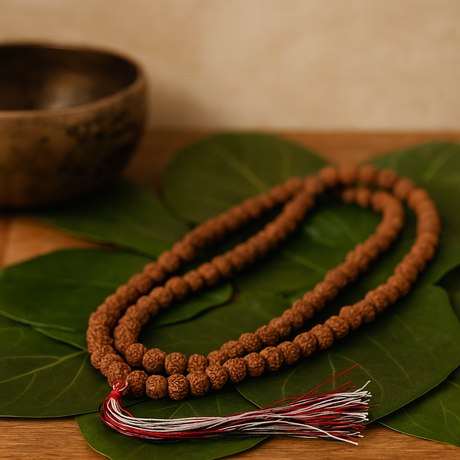
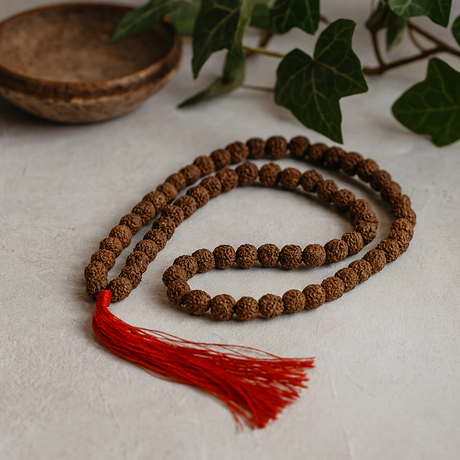
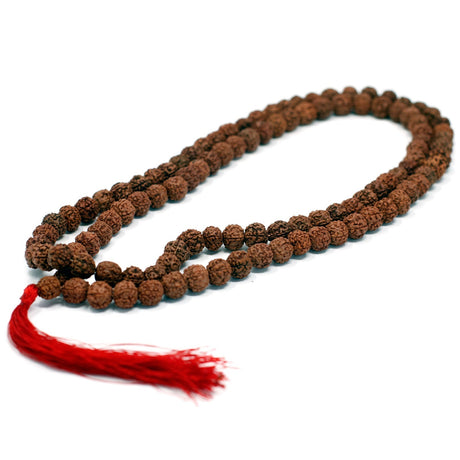
Hold a rudraksha bead between your fingers and the first thing you notice is the texture, rough grooves running top to bottom, a small irregular weight that warms slowly to your skin. Long before it carries any meaning, it is simply a seed, pleasant to turn over while you breathe. That is where its quiet usefulness begins.
For a very long time, rudraksha beads have been strung into prayer malas and worn close to the skin by sages and seekers across the Indian subcontinent and the Himalayas. They are not ornaments in the ordinary sense, nor are they a remedy. They are a touchstone, something to return to when the day pulls you in a hundred directions, a small reminder to slow down and come back to the present.
Worn as a rudraksha mala for meditation or kept as a single bead in a pocket, these seeds invite a gentler pace. The work is still yours to do. The bead just holds the note, so you remember to pick the practice back up.
Ancient Stories, Living Tradition
The story of rudraksha is woven into Hindu mythology. As the legend is told, Lord Shiva, moved by compassion for all living beings, shed tears of mercy that fell to the earth and grew into the rudraksha tree. The beads are its seeds, and in that telling, each one carries the memory of that compassion.
The name itself comes from this story: 'Rudra', a name for Shiva, and 'aksha', meaning eye or tear. We share this as heritage and legend, a beautiful account of how a tradition came to value a humble seed, rather than as a claim about how the world works.
Botanically, the tree is Elaeocarpus ganitrus, which grows in the Himalayan foothills of Nepal, India and Indonesia, in the cool mountain air where earth meets sky. The seeds it drops are what become the beads.
Rudraksha appears in ancient texts such as the Shiva Purana and the Padma Purana, and the beads have been worn by sages and seekers for thousands of years. Those scriptures describe them as aids to meditation and as objects of devotion, a way of keeping the sacred close in daily life. We pass this on as cultural context, not as a promise of what a bead will do.
Reading the Beads: Types of Rudraksha
Part of the appeal of rudraksha is the natural variety. Each bead is divided by vertical lines called mukhi, or faces, usually somewhere between one and twenty-one. Different traditions associate each count with a different quality. We share those associations as heritage, a way of naming an intention you want to keep close, not a switch that changes your life on its own.
One Mukhi: Clarity and Focus
The rarest and most revered, the single-faced bead has a smooth, almost unlined surface. In tradition it is linked with the Sun and with clarity of purpose. Practitioners wear it as a reminder to keep things simple and stay pointed at what matters.
Two Mukhi: Harmony and Balance
Associated with the union of Shiva and Shakti, the two-faced bead is traditionally connected with harmony and emotional balance. Many wear it as a quiet prompt to soften in their relationships and to listen before they react.
Three Mukhi: Creativity
Linked with Agni, the element of fire, the three mukhi is traditionally associated with creativity and self-expression. Artists and writers have long favoured it, worn less as a spark and more as a reminder to keep showing up to the work, day after day.
Four Mukhi: Learning and Communication
Connected in tradition with Brahma, the four-faced bead is associated with learning, memory and clear speaking. Students and teachers often choose it as a cue to settle the mind and pay attention.
Five Mukhi: The Everyday Bead
The most common and the usual starting point, the five mukhi represents the five elements. It forms the heart of most rudraksha malas and is a natural first choice, versatile, easy to live with, and well suited to a daily practice.
Six to Twenty-One Mukhi: Rarer Beads
Higher mukhi beads grow rarer, each with its own traditional association, the six mukhi often linked with emotional steadiness, the higher counts reserved for particular practices. These are usually chosen by people already settled into a practice who feel drawn to a specific bead.
What the Beads Offer in Practice
We won't make medical or scientific claims for rudraksha, it is a contemplative and devotional object, not a remedy, and no bead is a substitute for medical care. For practitioners, the value is in the daily practice the bead supports. That is a smaller promise, and a truer one.
A Tactile Anchor for Meditation
This is where rudraksha earns its place. A mala becomes a natural counting tool: the textured surface gives your fingers something real to rest on, and that simple physical contact keeps the mind from drifting into yesterday's regrets or tomorrow's worries. Move one bead, take one breath, return. The bead does not still the mind for you, but it gives the mind somewhere to come back to.
A Cue to Slow Down
Worn against the skin through the day, a bead becomes a small, familiar object you can reach for. Many people find that touching it is enough to remind them to pause and breathe. The calm comes from the practice you build around it, not from the bead itself, but a good reminder, kept close, is worth a great deal.
A Steadier Outlook, Slowly
Worn over time alongside a steady practice, the bead becomes part of how you mark the day, a thread of continuity. Some people describe a gradual shift towards more patience and a little more resilience when things get hard. We frame this honestly: it is the practice doing the work, with the bead as its quiet companion.
Choosing Your Bead
Choosing a rudraksha is part guidance, part intuition. The traditional associations give you a starting frame, but the most important factor is how a particular bead feels in your hand.
Begin with an Intention
Start by naming what you are reaching for. After general practice and a daily anchor? A five mukhi is the natural place to begin. Drawn to a creative project? The three mukhi has long been the artist's companion. Let the intention guide the choice, you are choosing a reminder, not delegating the work.
Size and Comfort
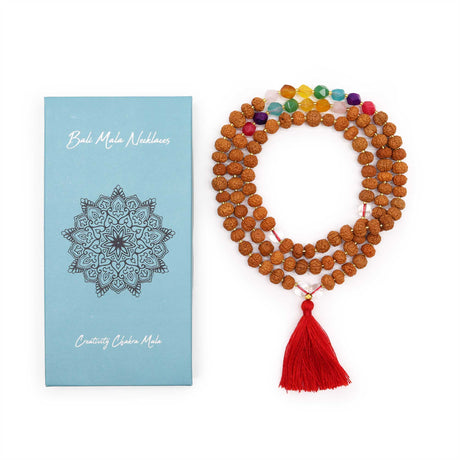
Beads come in many sizes, from small 6 mm seeds that string into a full mala to large 25 mm specimens worn singly. Think about how you'll wear yours: a larger bead makes a striking single pendant, while smaller beads sit comfortably in a 108-bead mala you can count through.
Knowing a Genuine Bead
A genuine rudraksha feels naturally heavy and dense for its size, with a rough, organic surface and mukhi lines that run clearly from top to bottom. Small irregularities in shape are a sign of a real seed, not a flaw, uniform, perfectly smooth beads are the ones to question.
You may have heard the old test of dropping a bead in water to see if it sinks. It isn't dependable, dry, genuine beads can float, and weighted fakes can sink, so we'd put more trust in the signs above: defined mukhi lines, natural irregularity, and a seller who treats the bead as more than stock. For rare or valuable beads, X-ray and laboratory certification give documented proof of authenticity.
Trust Your Hands
Beyond any checklist, let your own sense lead. The right bead tends to feel settled in the hand, easy to return to, easy to keep close. There is no wrong choice here, only the one you'll actually use.
Caring for Your Rudraksha
Looking after your beads keeps them beautiful, and the small ritual of care can deepen your relationship with them. None of it needs to be complicated.
When They First Arrive
A new bead benefits from a gentle rinse in clean water and a little time to dry. Some practitioners like to rest fresh beads in soft daylight or overnight under the moon, a quiet way of welcoming them into your practice and setting an intention for how you'll use them.
Wearing Them Day to Day
Tradition suggests wearing rudraksha against the skin, and many people put theirs on during morning practice, setting an intention for the day. The beads can be worn continuously, but take them off for soapy baths, chlorinated pools and harsh cleaning products, strong detergents strip the natural oils that keep them lustrous.
Regular Maintenance
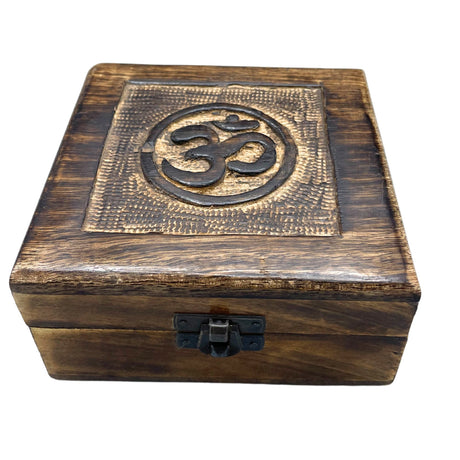
Now and then, clean the beads with plain water and a soft brush, gently clearing dust from the grooves. Let them dry naturally, and a tiny amount of natural oil, sesame or coconut works well, keeps the surface lustrous. When you're not wearing them, rest them somewhere clean and quiet; a cloth or a small wooden box is plenty.
Mantra and the Mala
Rudraksha and mantra practice sit naturally together. The bead gives your hands something to do while your attention rests on a repeated word or sound, the two support each other.
Two Simple Starting Points
The most accessible mantra for any rudraksha is 'Om Namah Shivaya', the five-syllable phrase that honours the divine within all existence. Simpler still is 'Om' on its own, the primordial sound that, repeated slowly, gives the mind something steady to settle on. Either works; the point is the returning, not the perfection.
Traditional Seed Mantras
Each type of rudraksha has traditional seed mantras, or bija mantras, associated with it. We list a few here as part of the heritage, not as instructions for an outcome:
One Mukhi: 'Om Hreem Namah'
Two Mukhi: 'Om Namah'
Three Mukhi: 'Om Kleem Namah'
Four Mukhi: 'Om Hreem Namah'
Five Mukhi: 'Om Hreem Namah'
Chant them quietly and without strain, letting the rhythm settle. The aim isn't volume or pace, it's a steady, sincere repetition you can return to.
Building a Practice
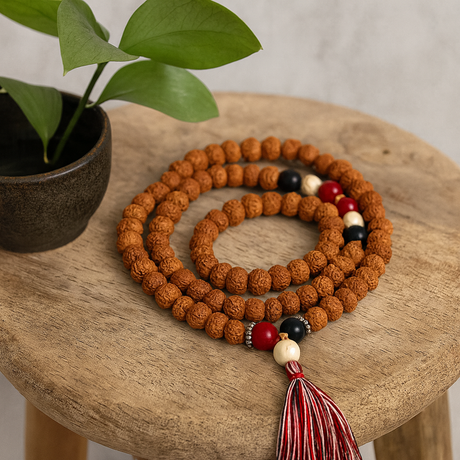
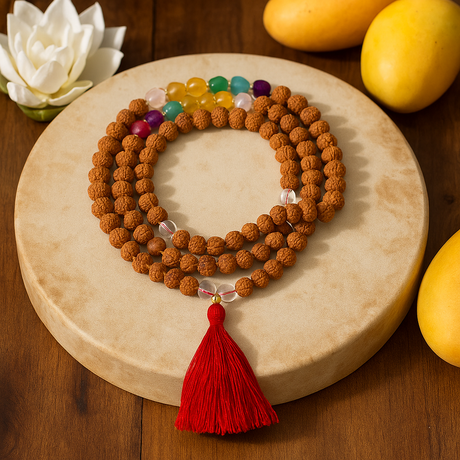
A full japa mala of 108 beads, plus a larger 'guru' bead, makes one round of 108 repetitions. Begin with a single round and extend it only as it feels natural. Consistency matters more than length, five honest minutes a day does more than a long session now and then.
Buying from a Source You Trust
As rudraksha has grown more popular, imitations have appeared alongside the real thing. The physical signs already covered, natural weight, rough organic surface, clearly defined mukhi lines, small irregularities, will see you right for everyday beads.
Genuine beads also tend to feel cool at first touch, warming to the body as you wear them, a small, living quality that plastic never quite manages. For rare or expensive beads, ask about X-ray analysis or laboratory certification.
Most of all, buy from a seller who understands what the bead means and describes each one honestly. Every SHAMTAM piece is chosen with care, so you know what you're holding before it arrives.
Rudraksha in Modern Life
Rooted in old tradition, rudraksha has found a comfortable place in contemporary mindful living. People weave it into the ordinary day, at the desk, on the commute, in a few quiet minutes before sleep.
Meditation and Mindfulness
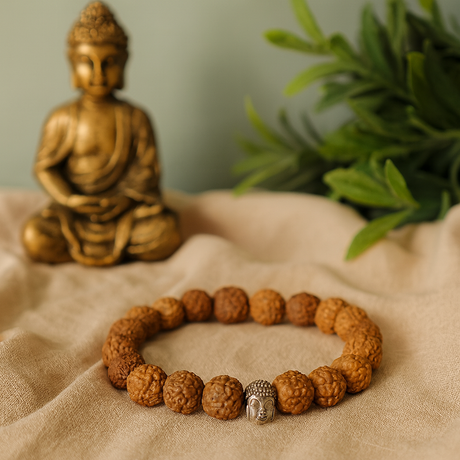
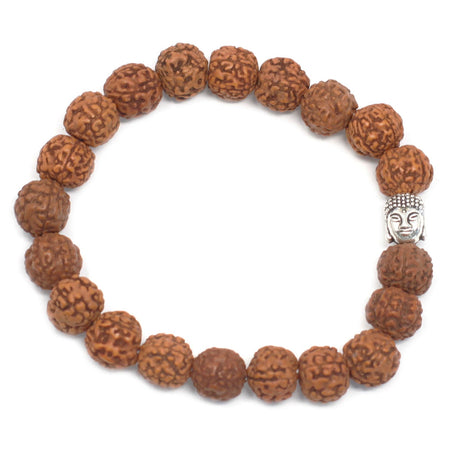
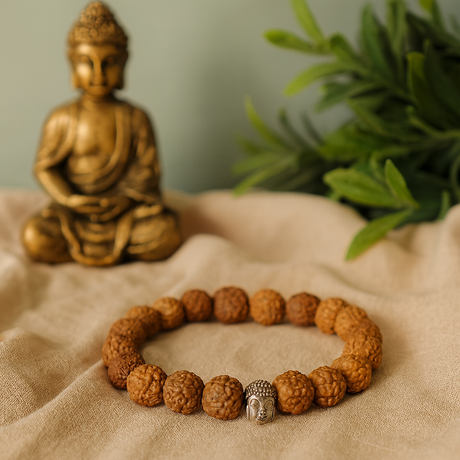
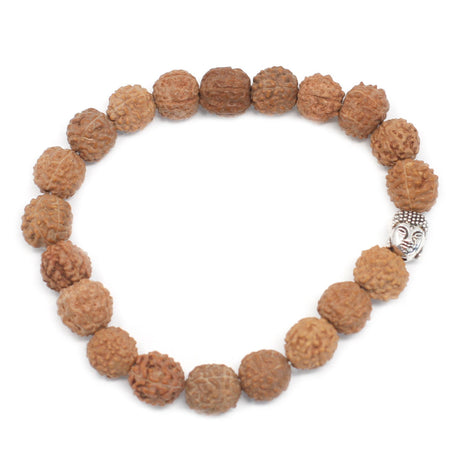
Many people who meditate use a rudraksha mala as a focusing tool, finding that the feel of the beads keeps attention from wandering. Worn through the day, a single bead becomes a portable reminder for conscious living, touch it, pause, take a breath, carry on. A simple rudraksha bracelet worn against the skin makes that reminder easy to keep close.
Alongside Other Practices
Some who follow holistic practices keep rudraksha close as part of a wider routine for slowing down. This is never a replacement for medical care, but as one element among many, the bead can complement other ways you look after yourself. The same is true of spiritual mantra bracelets, worn as a daily cue to return to your intention.
A Place in Modern Jewellery
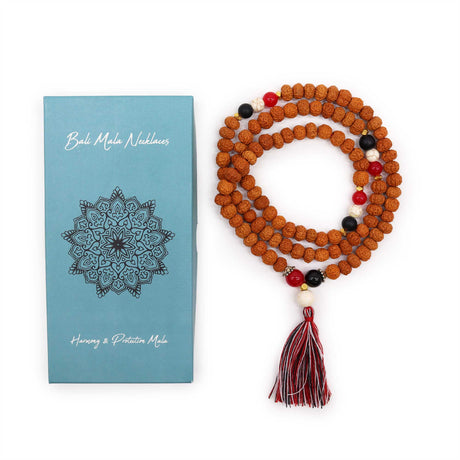
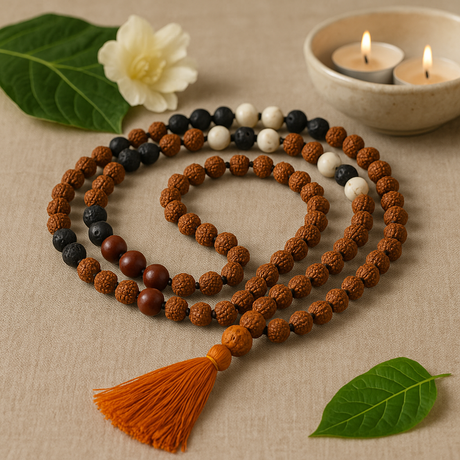
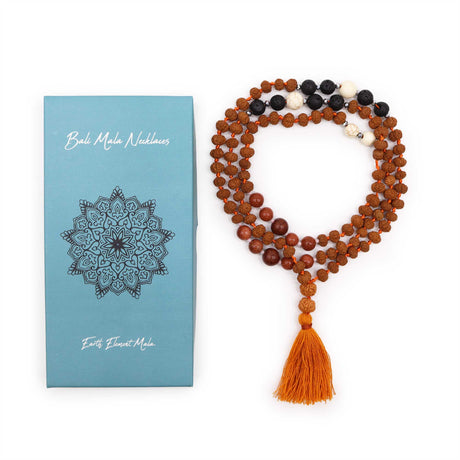
Contemporary makers are pairing rudraksha with other natural materials, lava stone, wood, gemstones, in pieces that honour the tradition while suiting modern taste. A mala that combines rudraksha with lava stone and amethyst is a lovely example: the seed still at the centre, the design built outward from there, so a daily practice can also be something you're glad to wear.
An Honest Word on Rudraksha and Science
You'll find a great deal written online that dresses devotional claims in scientific language, talk of energy fields, biofields, and effects on the body. We won't repeat any of it. There is no sound evidence behind those claims, and SHAMTAM makes no scientific or health claims for rudraksha.
What we can say honestly is this: rudraksha is a contemplative and devotional object with a long cultural history, and its real value lies in the practice a person builds around it. That is more than enough.
Building a Small Collection
As your relationship with rudraksha grows, you may feel drawn to add to it. That's a natural part of a deepening practice, best done slowly, and for a reason.
Start Simple
Most people begin with a five mukhi bead or a simple five mukhi mala, getting to know how it feels to practise with it before exploring further. That first mala is a solid foundation, and often all you need for a long while.
Expand Mindfully
With time, you might add a bead for a particular intention, a three mukhi when you're pouring yourself into creative work, say. Let each addition feel purposeful rather than acquisitive. The collection grows because the practice grows, not the other way round.
Beyond the Seed
Many practitioners keep gemstone malas alongside their rudraksha, a carnelian or amethyst mala for a different mood, a navagraha mala drawn from the nine-planet tradition as a conscious way of holding an intention. These broaden the practice; they don't predict anything. The choice, and the meaning, stay with you.
Rudraksha in Your Sacred Space
Even when you're not wearing them, your beads can have a home. A small altar, a windowsill, a quiet corner, somewhere they rest between wears becomes a place that draws you back to your practice.
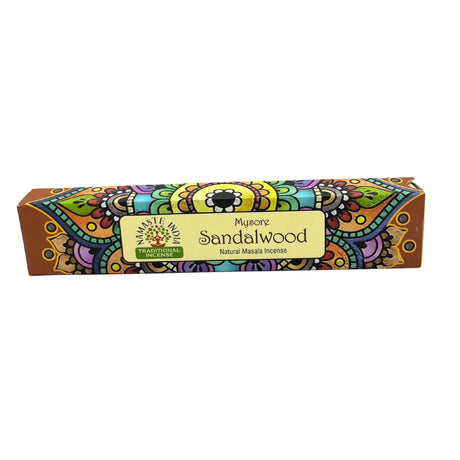
Many people gather their rudraksha alongside other companions for stillness, a Tibetan singing bowl alongside your mala to open and close a session, incense for your meditation corner, or crystals for your altar and sacred space. Sandalwood sits especially well with rudraksha, both for scenting the room and as the gentle oil that keeps the beads lustrous; a few sandalwood beads for daily practice make a natural companion. If you're gathering the tools to set up an altar, let it grow slowly, one meaningful object at a time.
In the legend, rudraksha is born of Shiva's tears, so a hand-carved Shiva figure makes a fitting centrepiece for an altar where the mala lives, a quiet nod to the story the bead carries.
Living with Sacred Intention
Rudraksha offers something simpler than the claims often made for it: a tangible thread to a long wisdom tradition, and a small, steady tool for a calmer, more present day. Worn as a single bead or counted through a full mala, it asks only that you keep returning to your practice.
The change rudraksha supports is not the dramatic, instant transformation promised by quick-fix thinking. It is the gentle, sustainable kind that comes from doing a small thing consistently, sitting again tomorrow, breathing again now. The bead doesn't deliver that. You do. It just keeps the note.
However you come to rudraksha, for meditation, for a steadier rhythm, or simply because the beads are beautiful to hold, meet them with curiosity and care. The rarity of the bead matters far less than the sincerity of your intention and the consistency of your practice. Among the small objects for a calmer daily ritual, a rudraksha mala is one of the most enduring, and one of the easiest to begin with today.