Exploring Different Systems of Astrology: Which One Resonates with You? 💫

By Alex Pervov · 5 June 2024 · 14 min read

Exploring Different Systems of Astrology: Which One Resonates with You? 💫 - SHAMTAM

Long before astrology became a question you ask on a first date, it was a way of reading the rhythm of the year. People watched the sky to know when to sow, when to harvest, when to marry. The same stars that guided a planting season now turn up in birthday memes and morning horoscopes. Some of us ask a new acquaintance for their sign before we ask their name; some of us plan a quiet holiday around a full Moon. Whatever your relationship with it, astrology endures because it offers a language for paying attention.

There are many astrological traditions, and each reads the same sky in its own dialect. In this piece we wander through the best known of them — Western, Vedic, Chinese, Horary and Kabbalistic — looking at where they came from, how they differ, and what each one studies. We hold them all the same way: as frameworks for reflection and self-awareness, a lens for noticing something true about yourself. The choosing is always yours. The stars are a prompt, never a verdict.

Western (‘Traditional’) Astrology

Western astrology, often called ‘Traditional astrology’, is the system most familiar across the Western world. It leans on the Sun sign — determined by the Sun’s position on the date of birth — and the zodiac. Its roots lie in Babylonian sky-watching over 2,000 years ago, formalised by Greek astronomers such as Claudius Ptolemy, whose Tetrabiblos appeared in the 2nd century CE. That work shaped how the Western tradition reads the chart, and much of its framework has carried through to today. Many modern Western astrologers stress that the chart describes tendencies, not a fixed fate — a portrait of leanings, with the choosing left to you.

The system reads ten celestial bodies, the lunar nodes and the asteroid Chiron, alongside calculated points such as Black Moon Lilith and Selena, hypothetical bodies like Proserpina, and the Arabic Parts (Lots) such as the Part of Fortune.

Western and Chinese astrology share a thread: both anchor to the moment of birth and use twelve symbols to carry meaning. But each is its own practice. Western astrology centres on the relationship between the Earth and the Sun. Its Tropical Zodiac measures the Sun’s position against the Earth’s seasons and the tropics — the Tropic of Cancer and the Tropic of Capricorn.

The Western zodiac holds 12 signs. You will find a zodiac fragrance oil for each one in our collection — a small, scent-led way to keep your own sign close:

These signs map to the positions of the constellations relative to the Earth, and take their names from figures in Greek mythology. People born under the same sign are often said to share certain leanings. Those born under Pisces (19 February to 20 March), for instance, are described as drawn to solitude, music, romance and spiritual themes, and as having little patience for criticism, cruelty or know-it-alls. Read it as a sketch to try on, not a label to live inside.

The Western astrological calendar follows the Earth’s orbit around the Sun, with the vernal equinox (around 20 March) marking the start of a new astrological year. With day and night in near-equal balance, this moment is held as the true beginning of the year in astrology. The Roman calendar set 1 January as the start of the civil year, but that date carries no astrological weight. Here, the first sign, Aries, opens around the equinox, and the rest follow in turn.

Planets play a leading role in Western astrology, standing for fundamental motivations in the human psyche. The system also reads two lunar nodes — the north (ascending) node and the south (descending) node — though the planets are considered more telling.

Western astrology also names four elements, with each sign tied to one:

  • 💧 Water signs are guided by emotion.
  • 🌎 Earth signs are practical.
  • 🔥 Fire signs are spontaneous.
  • 🌬️ Air signs are cerebral.

If you would like to sit with your sign’s element — rather than feel ruled by it — one quiet way is to light a sign-matched candle while you journal. Our crystal candles for your sign pair a scent with a small gemstone, a gentle cue for the qualities you want to cultivate.

Western astrology illustration with the twelve zodiac symbols set against a starry night sky and constellations

Vedic Astrology (Jyotish)

Vedic astrology — also known as Jyotish, or Hindu astrology — is a tradition rooted in India. Its roots reach back to the ancient Vedic period; the horoscopic system used today took shape over the centuries that followed. Grounded in the sacred texts known as the Vedas, it is marked by its focus on karma and the idea that our past actions shape our present circumstances. The term ‘Vedic astrology’ was popularised by the astrologer David Frawley.

Karma

  • Central to the tradition, karma refers to the actions of past lives held to shape one’s current reality.
  • The planets are seen as the karmas of the soul, read as influencing both bright and difficult turns.
  • Vedic astrology offers practices to work with these karmic patterns — easing difficulty, encouraging growth.

Tools and Practices

  • Reflective techniques. Vedic astrology uses yogas (planetary combinations) and dashas (planetary periods) that practitioners read as cycles or seasons of life — a lens for reflection on timing, rather than fixed prediction.
  • Remedies. These include mantras, gemstones, affirmations, yoga and Ayurvedic practice. In this tradition, remedies such as mantras or gemstones are chosen to suit the individual chart, which is why practitioners recommend consulting a knowledgeable astrologer rather than self-prescribing.

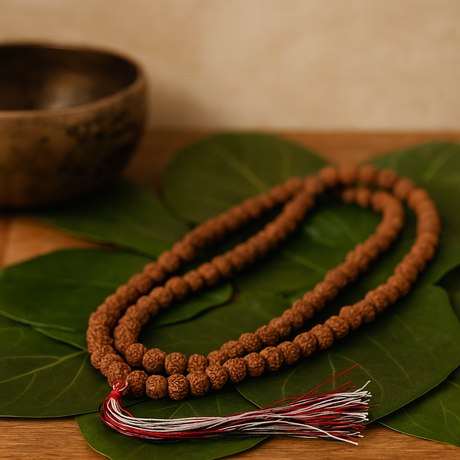
Mantra practice has a tangible companion in mala beads for daily practice — the traditional thread of 108 beads for counting repetitions — while crystals and gemstones give the stone side of the tradition something you can hold.

Zodiac System

  • Sidereal Zodiac. Where Western astrology uses the Tropical Zodiac, Vedic astrology uses the Sidereal Zodiac, anchored to the actual positions of the stars.
  • Precession of the equinoxes. Vedic astrology accounts for the slow precession of the equinoxes, adjusting the zodiac by roughly one degree every 72 years to keep its astronomical positions true.

Planetary Periods

  • Dashas. Vedic astrology works with planetary periods called dashas, read as the changing seasons of a life.
  • Sub-periods. Each dasha is divided further into sub-periods lasting up to three years — a finer grain for reflecting on timing, themes and the chapters of one’s life.

Chart Calculation

  • Vedic astrology takes a holistic approach that historically drew on related interpretive arts such as palmistry and numerology.
  • Birth chart. The natal chart is calculated much as in Western astrology, but differs notably in interpretation and use.
  • Janam Kundali. One of the tradition’s central customs is the Janam Kundali, a birth chart drawn soon after a baby arrives. It maps the planetary positions at the exact time and place of birth, read as a kind of cosmic blueprint for the life ahead — a way to consider character, the seasons of a life and its likely challenges. In Indian tradition, the Janam Kundali is often consulted at milestones such as marriage; within this framework it is read as a map of karmic patterns. In this tradition it is understood to reflect the imprint of past-life karma and how it colours the present.

Purpose and Philosophy

  • Light and influence. Jyotish translates as ‘science of light’, a study of how light moves through all things.
  • Cosmic connection. The tradition rests on the idea of bandhu — the teaching that, in this view, humans are children of the cosmos.
  • Working with the chart. According to Vedic teachings, practices such as mantra and gemstones are used to work consciously with one’s path, rather than to dictate it.

For those drawn to the heart of this tradition, our spiritual statues and idols offer a serene focal point for stillness — an object for meditation and reverence, honouring the heritage the tradition holds.

Taken as a whole, Vedic astrology offers a rich and considered way of reflecting on the sky’s patterns and a life’s rhythms — ancient wisdom carried into a practice of attention.

What is the Difference Between Vedic and Western Astrology?

Both are well-established systems, and both speak in familiar terms — signs, houses, planets. Yet they part company in meaningful ways. The very idea of a ‘house’, for instance, is read quite differently in Vedic and in classical Western astrology.

  • Planets. Both systems share seven classical planets (the Sun, Moon, Mars, Mercury, Jupiter, Venus and Saturn). Western astrology also reads Uranus, Neptune, Pluto and a host of minor comets and asteroids, which Vedic astrology generally sets aside. In their place, Vedic astrology gives weight to Rahu and Ketu, the karmic points. And where Western astrology centres on the Sun, Vedic astrology looks first to the Moon’s position in the signs.
  • Aspects. In Vedic astrology, with its sidereal signs, aspects are read as asymmetrical. Western astrology calculates aspects by geometric angle, treating them as symmetrical.
  • Charts. Western astrology works mainly from the natal chart. Vedic astrology draws on the natal chart too, but adds lunar and sixteen harmonic charts for a more layered reading of different facets of a life.

These differences mark out two distinct ways of reading the same sky — each offering its own insight, neither the single ‘correct’ map.

Vedic astrology Jyotish illustration showing planetary symbols beneath a star-filled Indian night sky

Chinese Astrology

Chinese astrology is an old and intricate system that reads the sky quite differently from the Western tradition. According to legend, the Chinese calendar was devised by the mythical ‘Yellow Emperor’ around 2600 BCE, while another account places its origins in the Zhou dynasty.

The Chinese zodiac consists of twelve animal signs:

  • 🐁 Rat
  • 🐂 Ox
  • 🐅 Tiger
  • 🐇 Rabbit
  • 🐉 Dragon
  • 🐍 Snake
  • 🐎 Horse
  • 🐐 Goat
  • 🐵 Monkey
  • 🐓 Rooster
  • 🐶 Dog
  • 🐷 Pig

In one popular legend the animals were summoned for a great race — told variously of the Jade Emperor or the Buddha — and the order in which they arrived set the sequence of the signs.

Western astrology illustration with the twelve zodiac symbols set against a starry night sky and constellations
Vedic astrology Jyotish illustration showing planetary symbols beneath a star-filled Indian night sky
Chinese astrology illustration with the twelve animal signs over a traditional landscape of mountains and a calm river
Horary astrology illustration featuring a detailed astrological chart and houses beneath a constellation-filled sky
Kabbalistic astrology illustration with Hebrew letters and the Tree of Life sefirot among celestial bodies

Unlike Western astrology, which reads the position of the stars against the date of birth, Chinese astrology assigns its animal signs to years rather than months.

The Five Elements

Chinese astrology works with five elements: Fire, Earth, Water, Wood and Metal.

  • 🔥 Fire is drawn to excitement.
  • 🌎 Earth craves security.
  • 💧 Water is open to deep emotional bonds.
  • 🪫 Wood loves to explore.
  • 🔗 Metal is considered orderly.

These elements weave through the animal signs to form a 60-year cycle.

Influence of the Lunar Calendar

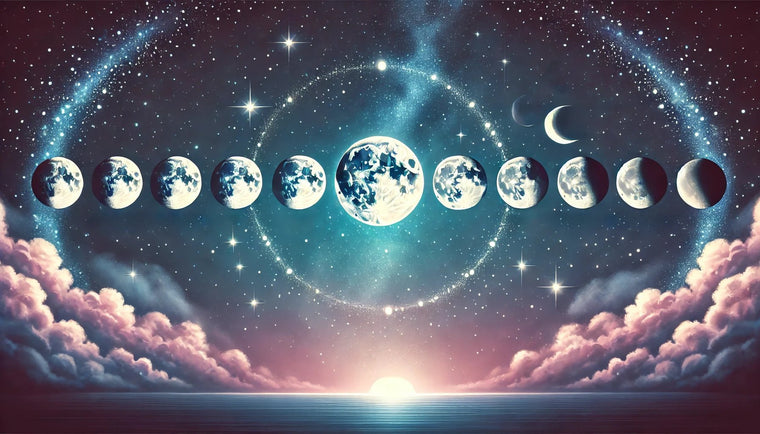
The Chinese calendar follows the turning of the Moon, with the lunar phases carrying real significance.

  • New Moon. Said to seek out new environments.
  • Waxing Moon. Known for hard work.
  • Full Moon. Diplomatic by nature.
  • Waning Moon. Drawn to peaceful surroundings.

Differences from Western Astrology

  • Chinese astrology assigns signs by birth year rather than birth month.
  • It reads five elements where Western astrology reads four, with different meanings and influences.
  • It leans on the Moon’s phases rather than the Sun’s position, unlike the solar focus of Western astrology.

Chinese astrology offers a rich framework for reflecting on character through the interplay of animal signs, elements and lunar phases. Steeped in myth and tradition, it sits beside the Western system as a different — and quietly complementary — portrait of the same person.

Chinese astrology illustration with the twelve animal signs over a traditional landscape of mountains and a calm river

Horary Astrology

Horary astrology is a focused branch of the art that sets out to consider a specific question by casting a chart for the exact moment the question is asked. It has its roots in the Hellenistic Greek tradition and was developed into a formal system by medieval Arab and Persian astrologers from the 8th to 9th centuries, before spreading widely through Europe in the Middle Ages. Reading a horary chart calls for an experienced astrologer, as the interpretation rests on a deep grasp of astrological principles and technique.

  • Specific questions. Horary astrology is used to explore a particular question put by the person asking.
  • Casting the chart. A chart is drawn for the precise moment the question is asked and for the location of the asker.
  • The moment itself. Horary works from the premise that the moment a question is asked is itself meaningful — practitioners read the chart of that moment for insight into the question, with the choosing left to the asker.

Importance of Houses

  • Angular houses. The most significant houses in horary astrology are the angular ones (1st, 4th, 7th and 10th). Planets placed here are read as gaining strength and influence.
  • Succedent and cadent houses. The houses that follow the angular ones carry less weight. Planets in succedent houses are read as moderate in influence; those in cadent houses, considerably weaker.

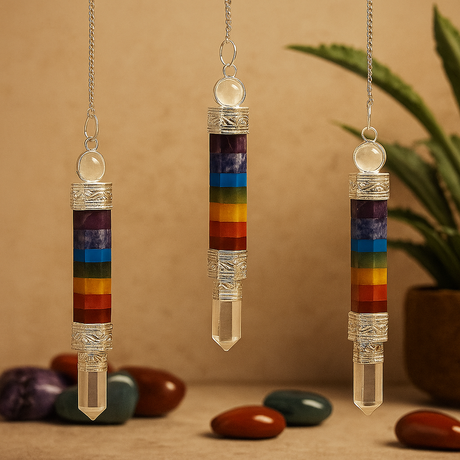
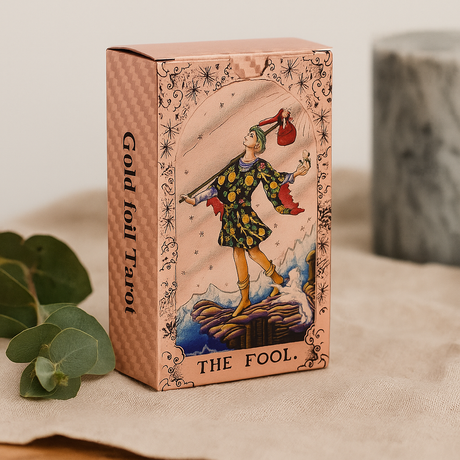
Reading a horary chart well asks for real skill. The astrologer studies the chart to offer insight and reflection drawn from the planetary positions and the meanings of the houses. If the idea of pausing on a single question appeals to you, a pendulum offers a hands-on way to do the same — a quiet tool for sitting with a question and listening to your own intuition. You will find ours among our tarot and oracle decks and divination tools, alongside incense for ritual and reflection to mark the moment.

Horary astrology is a precise and singular practice, offering a considered reading of a specific question through the planetary positions at the moment it is asked. It draws attention to the placement of the houses and the strength of the planets — a focused way of thinking through a question, with the answer always something you carry forward yourself.

Horary astrology illustration featuring a detailed astrological chart and houses beneath a constellation-filled sky

Kabbalistic Astrology

Kabbalistic astrology, also known as Jewish astrology, is a mystical tradition within Judaism that seeks to understand the role of the Creator in human existence. Jewish astrological thought is ancient — its foundations appear in the early-medieval Sefer Yetzirah and in the 12th-century works of Abraham Ibn Ezra — and was later woven into the Kabbalistic tradition that flowered in the 16th century. Blending several strands and approaches, it is less a single body of knowledge than a family of related ideas.

Key Concepts

  1. Foundations.
    • Sefirot. Kabbalistic astrology rests on the ten sefirot, the elements of the Tree of Life in Kabbalah.
    • Ibn Ezra’s book. This foundational text aligns the planets with biblical events in chronological order, beginning with the Garden of Eden.
  2. Interaction with the Hebrew alphabet.
    • 22 letters. Each of the 22 letters of the Hebrew alphabet is linked to a particular zodiac sign.
    • Meditation. By meditating on each letter and reflecting on its meaning, one is said to connect with the energy of the corresponding sign.
  3. Solar and lunar cycles.
    • Dual cycles. Kabbalistic astrology reads both the cycles of the Sun and of the Moon when interpreting astrological influence.
  4. Beyond the horoscope.
    • Transcending the stars. A distinctive teaching of this tradition is that one can rise above the influence of the stars and step beyond the limits of the chart — agency, here too, remaining firmly with the person.

Purpose and Philosophy

  • Role of the Creator. The central aim is to reflect on the Creator’s place in human life and in the universe.
  • Mazal (destiny). Also called mazal or mazalot — ‘zodiac’ or ‘destiny’ — this strand reads a person’s birth chart through a Kabbalistic lens.

Kabbalistic astrology offers a contemplative way of reflecting on existence and meaning, weaving astrological ideas together with Kabbalistic teaching. It draws a thread between the Hebrew alphabet, the celestial cycles and inner growth — and holds, gently, that a person is always more than their chart. The Tree of Life sits at its heart; for anyone drawn to carry that symbol, our spiritual bracelets and pendants render it in stone as a quiet, wearable reminder.

Kabbalistic astrology illustration with Hebrew letters and the Tree of Life sefirot among celestial bodies

Which One Resonates With You?

We have wandered through five traditions — Western, Vedic, Chinese, Horary and Kabbalistic — each reading personality, timing and our place in the cosmos in its own way. Western astrology turns to the Sun and a tropical zodiac; Vedic astrology looks to the Moon and the karmic points within a sidereal one; Chinese astrology counts in animal years and five elements; Horary listens to a single moment; Kabbalistic astrology reads the letters and the sefirot.

None of them is the ‘true’ map, and none decides anything for you. The most useful system is simply the one whose imagery helps you notice something honest about yourself — and then choose how to respond. The work is always yours; the chart is good company along the way.

If you would like to bring a little of that company into your day, you might keep an altar cloth for laying out cards or a pendulum, a chakra crystal set for quiet reflection, or simply a candle to light while you sit with a question. None of these changes your fate — they are conscious tools, not magic switches. They give a practice somewhere to land: a scent, a texture, a small ceremony that returns you to the present. Name what you are reaching for, and let the object hold the note while you do the living. 💫

good to know

Questions & answers

What is the difference between Western and Vedic astrology?
They start from the same sky but read it differently. Western astrology uses the tropical zodiac, tied to the Sun and the seasons, and leans on your Sun sign. Vedic astrology (Jyotish) uses the sidereal zodiac, anchored to the actual positions of the stars, and gives the Moon and the karmic points Rahu and Ketu more weight. Think of them as two languages describing one landscape — neither is the single 'correct' map. Many people simply read whichever speaks to them more clearly.
Which astrology system is the most accurate?
There is no system that has been shown to predict events, and we would never claim one does. Accuracy is the wrong question; resonance is the better one. Western, Vedic, Chinese, Horary and Kabbalistic astrology each frame self-reflection through a different cultural lens. The most useful system is the one whose imagery and language help you notice something true about yourself and choose how to respond. The agency stays with you, never with the chart.
I only know my Sun sign — is that enough to start?
It is a perfectly good doorway. Your Sun sign is the part most Western horoscopes lean on, and reading about its element — Fire, Earth, Air or Water — is an easy first step into the bigger picture. If you grow curious, a full birth chart adds the Moon, the rising sign and the planets for more texture. Start small, stay curious, and let it deepen at your own pace.
How can I bring astrology into daily life without it becoming superstition?
Treat it as a prompt for reflection rather than a forecast to obey. Use the new and full Moon as gentle markers to pause and set an intention. Read your sign's themes as questions to sit with, not instructions to follow. A small ritual helps — a zodiac candle lit while you journal, a fragrance oil chosen for the mood you want to invite. The practice does the work; the object simply keeps you company and marks the moment.
What does it mean that Chinese astrology uses five elements instead of four?
Western astrology sorts its twelve signs into four elements — Fire, Earth, Air and Water. Chinese astrology works with five — Fire, Earth, Water, Wood and Metal — paired with twelve animal signs assigned by birth year rather than birth month. The two systems are counting different things, which is why your Western element and your Chinese animal can feel like two separate portraits of the same person. Read together, they add depth rather than contradiction.
Are zodiac candles, oils and crystals meant to change my fate?
No, and we are careful never to suggest they do. These are conscious tools, not magic switches. A zodiac fragrance oil, a crystal bracelet or an altar cloth gives a practice somewhere to land — a scent, a texture, a small ceremony that returns you to the present. The tradition pairs the object with intention: name what you are reaching for, and let the object hold the note while you do the living.
to carry the practice on

Companions for your ritual

Aries Zodiac Fragrance Oil 10ml

Regular price £444
In stock
View details
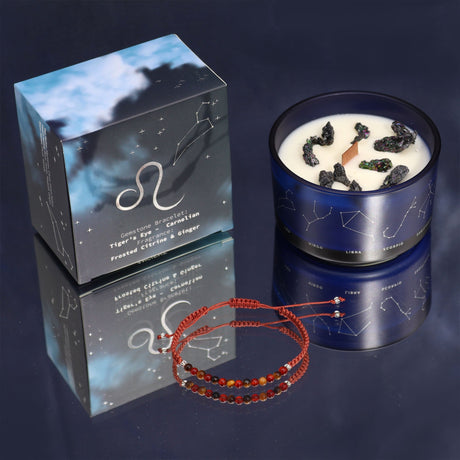
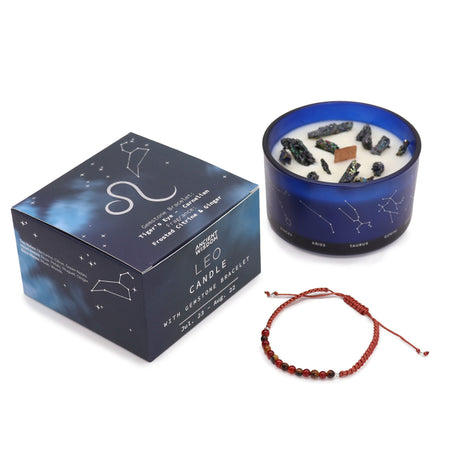
Leo Zodiac Crystal Candle and Gemstone Bracelet Set - Frosted Citrine & Ginger Fragrance with Tiger's Eye and Carnelian for Empowerment - SHAMTAM.COM Leo Zodiac Crystal Candle and Gemstone Bracelet Set - Frosted Citrine & Ginger Fragrance with Tiger's Eye and Carnelian for Empowerment - SHAMTAM.COM
£6.11 off

Leo Zodiac Candle and Bracelet Set 2 Piece

Sale price £1999 Regular price £2610
In stock
View details
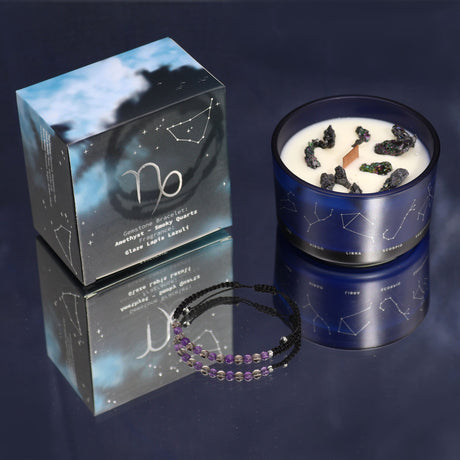
Capricorn Zodiac Crystal Candle & Gemstone Bracelet Set - Amethyst & Smoky Quartz for Grounding & Focus - SHAMTAM.COM Capricorn Zodiac Candle Bracelet 2-Piece Amethyst Smoky Quartz
£6.11 off

Capricorn Zodiac Candle Bracelet 2-Piece Amethyst Smoky Quartz

Sale price £1999 Regular price £2610
In stock
View details
Aquarius Bath Fizzers Zodiac Set 2 - Pack - SHAMTAM.COM Set of Zodiac Bath Fizzers with Horoscope - Aquarius - SHAMTAM.COM
£0.86 off

Aquarius Bath Fizzers Zodiac Set 2-Pack

Sale price £1099 Regular price £1185
In stock
View details

Arruda Zodiac Gemstone Crystal Incesne – Pisces

Regular price £360
In stock
View details

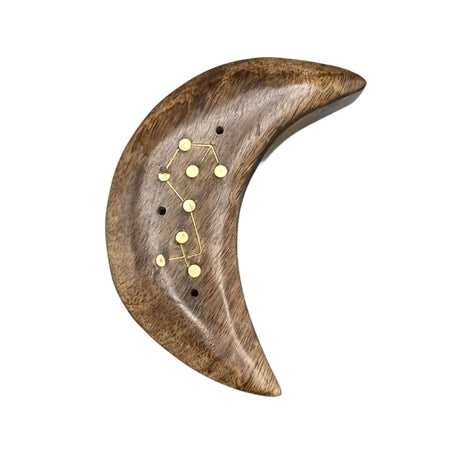
Incense Burner, Brass Zodiac Sign Moon – 12 Pack

Regular price £799
In stock
View details
Medium Enamelled Box – You are Stardust, Decorative Box Medium Enamelled Box – You are Stardust
£0.21 off

Medium Enamelled Box – You are Stardust

Sale price £1299 Regular price £1320
In stock
View details
108 Bead Mala - 9 Planet Astro - Japa Mala - SHAMTAM.COM 108 Bead Mala - 9 Planet Astro - Japa Mala - SHAMTAM.COM
£4.65 off

Japa Mala 108 Beads, 9 Planet

Sale price £2595 Regular price £3060
In stock
View details

Rudraksha Japa Mala, 108 Beads

Regular price £999
In stock
View details
108 Bead Mala - Carnelian Japa Mala - SHAMTAM.COM 108 Bead Mala - Carnelian Japa Mala - SHAMTAM.COM
£6.82 off

Carnelian Japa Mala, 108 Beads

Sale price £3095 Regular price £3777
In stock
View details

Shiva Lingam Stone 3 Inch Narmada River

Regular price £1195
In stock
View details
Gomati Chakra Tree with Rudraksha Beads, 45 Stones - SHAMTAM.COM Handcrafted Gomati Chakra Stone Tree with Rudraksha Beads - 45 Sacred Stones for Prosperity & Spiritual Protection - SHAMTAM.COM
£0.21 off

Gomati Chakra Tree with Rudraksha Beads, 45 Stones

Sale price £1299 Regular price £1320
In stock
View details
Buddha Statue Set 2 - Piece Om Symbol Grey Black - SHAMTAM.COM Buddha Feng Shui Set - Om - Grey & Black - SHAMTAM.COM
£15.91 off

Buddha Statue Set 2-Piece Om Symbol Grey Black

Sale price £6995 Regular price £8586
Low stock
View details
Chinese Zodiac Animal Shot Glasses, 25ml, 12-Piece Set, Shot Glasses Set Chinese Zodiac Animal Shot Glasses, 25ml, 12 - Piece Set - SHAMTAM.COM
£11.05 off

Chinese Zodiac Animal Shot Glasses, 25ml, 12-Piece Set

Sale price £3095 Regular price £4200
In stock
View details
Solid Brass Feng Shui Yin-Yang Zodiac D6 Dice Solid Brass Feng Shui Yin - Yang Zodiac D6 Dice - SHAMTAM.COM
£1.25 off

Solid Brass Feng Shui Yin-Yang Zodiac D6 Dice

Sale price £1195 Regular price £1320
In stock
View details
Amethyst Crystal Dowsing Pendulum with Silver Chain - SHAMTAM.COM Pendulum - Amethyst - SHAMTAM.COM
£0.94 off

Amethyst Crystal Dowsing Pendulum with Silver Chain

(6)
Sale price £1499 Regular price £1593
In stock
View details
7 Chakra Crystal Pendulum 3-Piece Joint 7 Charka 3 Piece Joint Pendulum - SHAMTAM.COM
£1.54 off

7 Chakra Crystal Pendulum 3-Piece Joint

Sale price £1499 Regular price £1653
In stock
View details
SHAMTAM Ancient Witch Pendulum Divination Cloth - All Seeing Eye - Black & Blood Red
New arrival
View details
Amethyst Tree of Life Pendant Necklace - SHAMTAM.COM Tree of Life Necklace - Amethyst Crystal Gemstone - SHAMTAM.COM
£3.82 off

Amethyst Tree of Life Pendant Necklace

Sale price £2099 Regular price £2481
In stock
View details
Tiger Eye Pendant Necklace Tree of Life - SHAMTAM.COM Tree of Life Necklace - Tiger Eye Crystal Gemstone - SHAMTAM.COM
£3.82 off

Tiger Eye Pendant Necklace Tree of Life

Sale price £2099 Regular price £2481
In stock
View details
Four Section Tarot Box with Card Holder, Tarot card Box Four Section Tarot Box with Card Holder
£4.45 off

Four Section Tarot Box with Card Holder

Sale price £2795 Regular price £3240
In stock
View details
Rose Gold Moon Phase Tarot Deck with Guidebook Rose Gold Foil Tarot Card Set Moon Phase With Booklet
£1.01 off

Rose Gold Moon Phase Tarot Deck with Guidebook

Sale price £1699 Regular price £1800
In stock
View details

Velvet Drawstring Jewellery Pouch, Black 12x8cm

Regular price £499
In stock
View details
Brass Moon Phase Wind Chimes Indian Handcrafted Enchanting Brass Moon Phase Wind Chimes - Handcrafted Indian Celestial Decor for Relaxation & Mindfulness - SHAMTAM.COM
£5.50 off

Brass Moon Phase Wind Chimes Indian Handcrafted

Sale price £2795 Regular price £3345
In stock
View details
Amethyst Crystal Pendant Healing Hands - SHAMTAM.COM Amethyst Pendant Healing Hands Crystal Gemstone - SHAMTAM.COM
£2.79 off

Amethyst Crystal Pendant Healing Hands

Sale price £1899 Regular price £2178
In stock
View details

Share this story