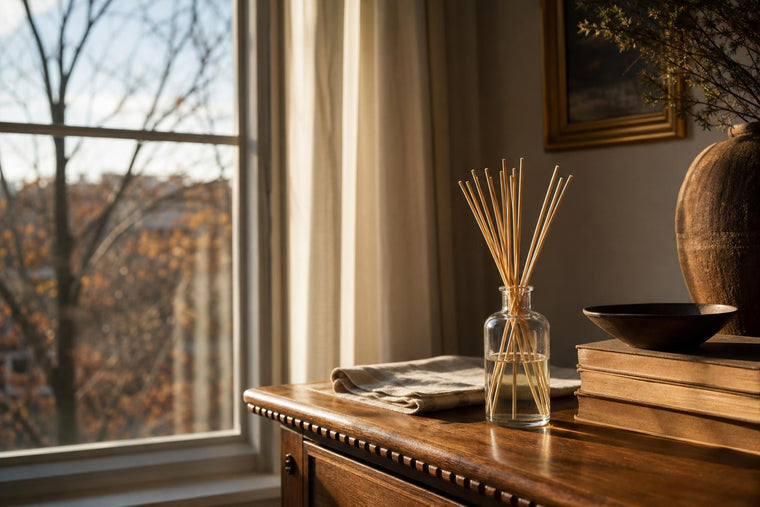
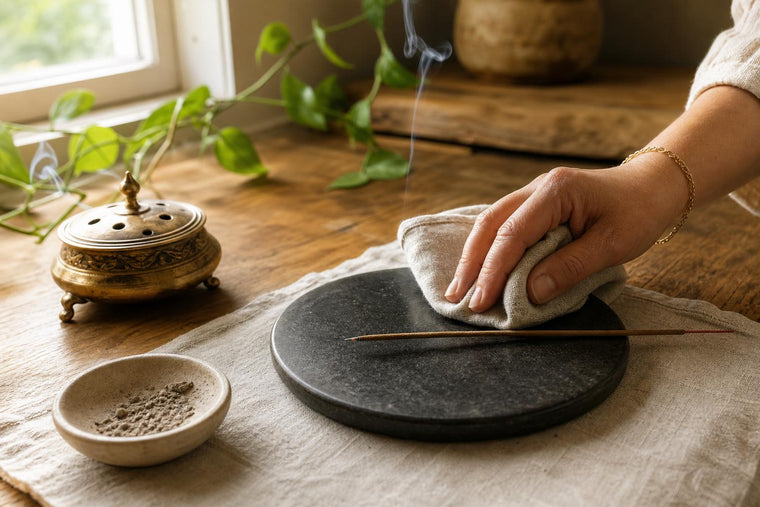
A stick of incense carries two kinds of information: what it smells like, and what actually went into it. Sage and citrus is one of the oldest combinations on the shelf, sold from temple stalls to spa reception desks, and it is almost never explained.
Each December, growers along a narrow stretch of Italy's Ionian coast near Reggio Calabria press the rind of a small, bitter orange grown commercially in only a few other places. The oil that comes off that harvest is sharp, green-gold, faintly floral, and it has scented colognes, teas and incense for three centuries. That is one half of the fragrance. The other half is where the confusion usually starts.
A stick labelled "sage and citrus" brings to mind, for most buyers, the pale grey-green leaves bundled and burned in a smudging ceremony. But the plant most likely sitting inside that stick has probably never grown in the chaparral where the ceremonial sage does. Three different plants share the English word "sage", and which one is actually in your hand changes what the object in front of you really is.
Three Plants, One Name
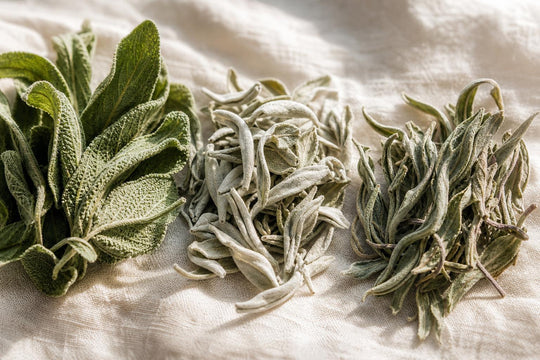
The genus name Salvia comes from the Latin salvare, "to heal" or "to save", and all three plants carry that root. Salvia apiana, white sage, grows wild in the coastal chaparral and dry scrub of Southern California and Baja California. The Chumash have traditionally used its leaves and stems as food, and the Cahuilla traditionally harvested its seed for pinole and gruel and brewed a root tea used in postpartum care; several tribes also used the seed, placed in the eye, to help remove a foreign speck, a use with an odd European echo in clary sage seed put to exactly the same job.
Salvia officinalis is the common Mediterranean garden sage, the one growing in kitchen pots across Europe; the Greeks and Romans associated it with wisdom and a clear mind, in keeping with its healing name. Salvia sclarea, clary sage, is native to the northern Mediterranean and has long been cultivated in Provence. Its medicinal use is recorded as far back as the fourth century BCE by Theophrastus, and again in the first century CE by Dioscorides and Pliny the Elder. Its common name comes from the Latin clarus, "clear" or "bright", and in the Middle Ages it was known as oculus Christi, the eye of Christ, for use as an eyewash. Unlike its two cousins, clary sage contains no thujone, the mildly psychoactive compound found in both white and common sage.
Put plainly: a shop-bought sage-and-citrus stick is, in the great majority of cases, scented with clary or common sage oil, not with the white sage of the Californian chaparral at all.
The Citrus Half: A Coast in Southern Italy
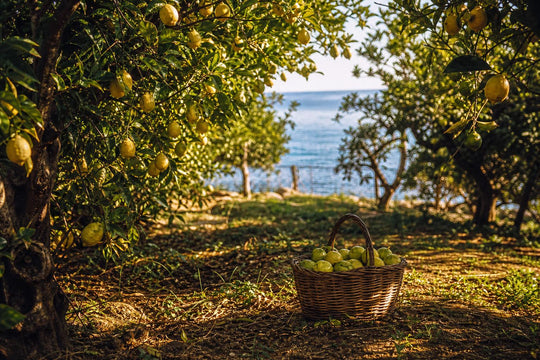
Bergamot orange began as a spontaneous mutation of a lemon or a bitter orange, first identified in the area around Reggio Calabria. It has been cultivated there commercially since at least the eighteenth century, and Calabria is widely considered the principal source of the world's bergamot oil today, still pressed from the rind, historically against a natural sponge, through the winter harvest months, though smaller commercial groves also exist elsewhere, in Ivory Coast, Argentina and Brazil among them, none rivalling Calabria's scale. In 1709, Johann Maria Farina, an Italian-born perfumer who had settled in Cologne, is credited with creating the first Eau de Cologne, built in part around that oil, naming it for his adopted city and giving bergamot its first great fame far from the coast that grew it; the name he chose eventually became the generic word for any citrus-and-herb splash, an odd second life for a Calabrian harvest. The same oil is the reason Earl Grey tea smells the way it does.
Bergamot sits within a wider citrus family that a shop now sells apart from one another, from a single bottle of Lemon Essential Oil to a fuller shelf of citrus oils, each carrying its own version of the same brightness that first travelled north from Calabria three hundred years ago.
How the Stick Is Actually Made
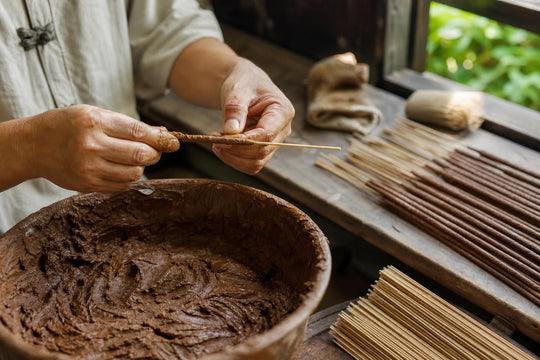
Incense has been part of my own daily practice for years, and the question of how the stick in my hand was actually made is one I came to slowly. The great majority of commercial incense worldwide, sage-and-citrus blends included, is hand-rolled in India using the masala method: a paste of natural gums, charcoal and fragrance oils worked by hand onto a bamboo core. Nearly every stick sold under that description, including the sage and citrus incense sticks lining most shelves, is made this way, a manufacturing lineage entirely separate from a loose smudge bundle, which is unbound dried leaf with no core at all. Both get called "sage" in ordinary speech. They are made in different countries, by different hands, using entirely different techniques, and it is worth knowing which one you are actually holding.
What the Scent Is Said to Carry
None of this history stops sage and citrus from meaning something. The Greeks and Romans reached for sage as a symbol of clarity and a settled mind, in keeping with the healing sense buried in its own name, and citrus has long been the scent people turn to when they want a room, or a moment, to feel lighter. A tradition can offer an intention without promising an outcome: the scent carries an old association with clear thought, and the person lighting it decides whether that quality is one they are asking the moment to hold. Nothing in the stick does that work on its own. What changes the room is the pause before you strike the match, not the smoke itself.
Choosing With Care
Clary sage and common garden sage are field crops, grown for the purpose in Provence and across the Mediterranean much as lavender or thyme are grown. White sage is different: much of what reaches the wider market is still wild-harvested from its native chaparral, and rising demand has raised a documented concern among botanists and some Indigenous communities about the pressure this places on wild Salvia apiana populations. A loose smudge stick pulled from that wild supply sits under a different set of considerations to a cultivated clary or garden sage grown deliberately for incense, and a shopper who wants to think about that difference can find smudge sticks sold plainly as what they are, rather than folded into a vaguer word. The citrus half asks nothing of the kind: bergamot has been a cultivated Calabrian crop since long before Farina ever bottled it, pressed each winter from fruit grown for exactly this purpose.
Most incense gets struck without a second thought, one habit among many in a day full of them. Knowing what is actually in your hand turns the half-second of striking a match into something closer to attention than routine. That is a small thing. It is also, in the end, the only part of the ritual that was ever really yours to do.