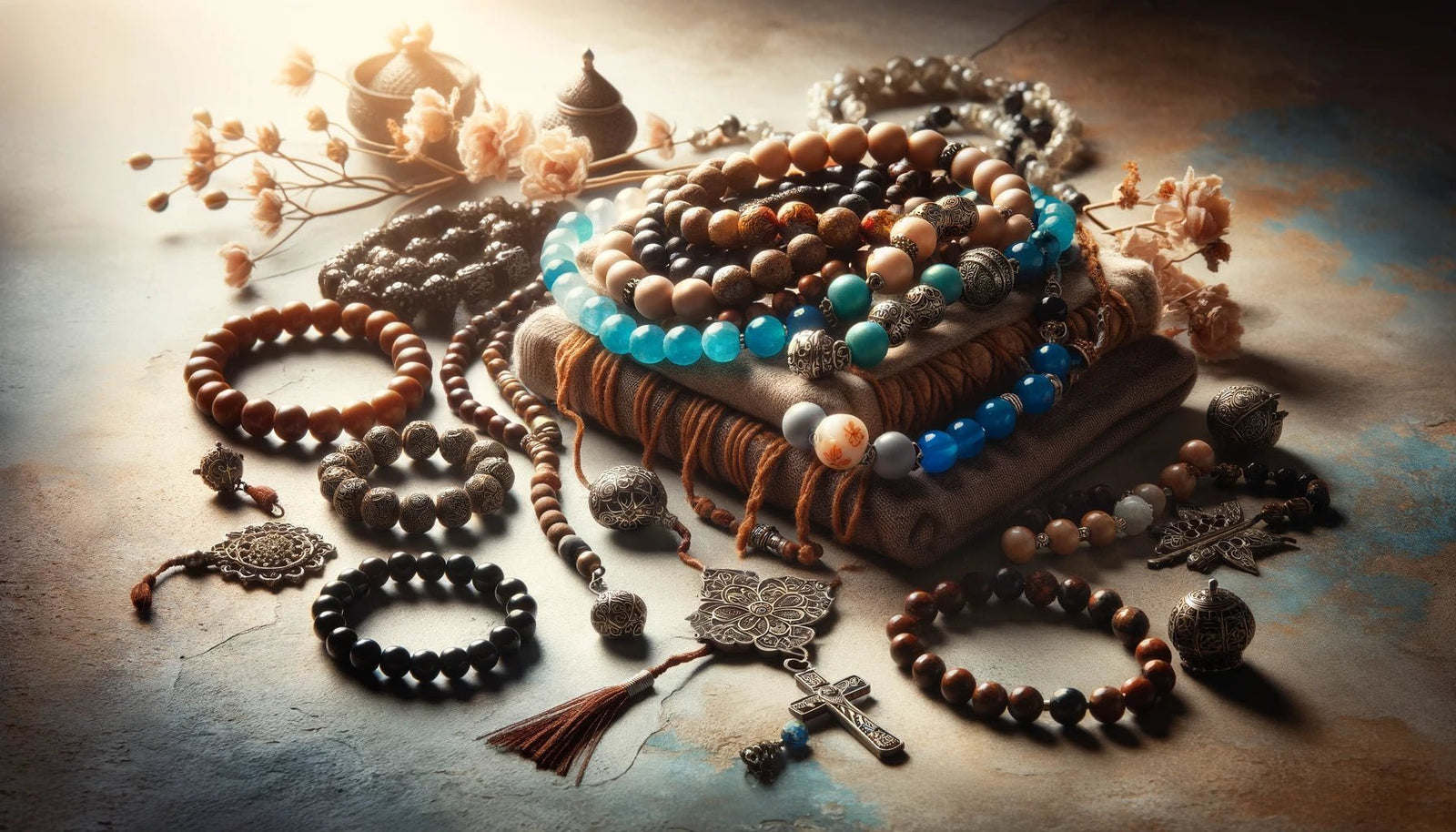
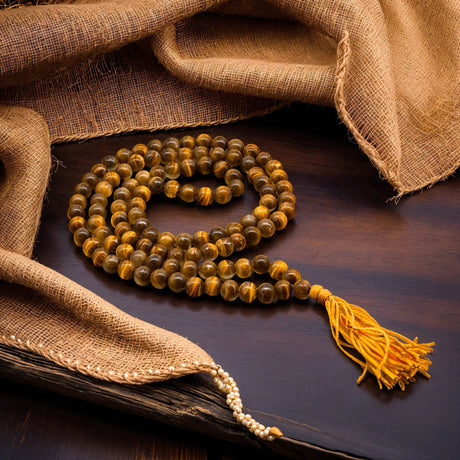
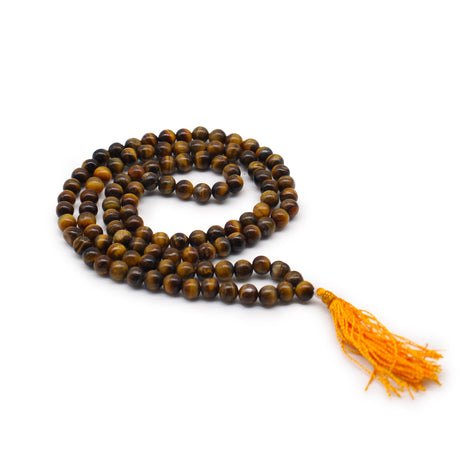
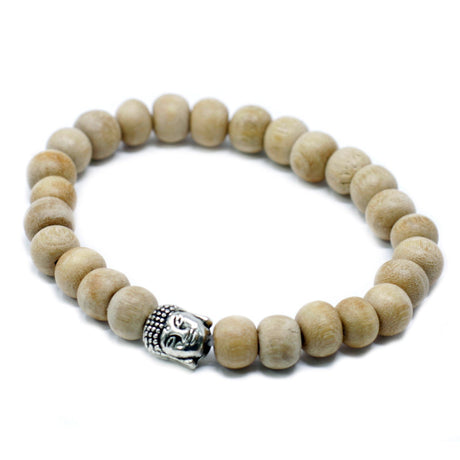
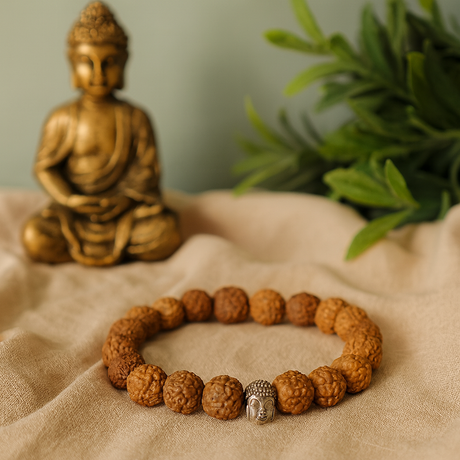
There is a quiet logic to a string of beads. One bead, one breath, one repetition — and then the next, and the next, until the counting falls away and only the rhythm remains. Across the world and across centuries, people have reached for the same simple object to steady a wandering mind: a strand held between the fingers, moved one bead at a time. This is a slow tour through that shared habit — the traditions that shaped it, the materials it is made from, and the gentle way it is still used today.
What are prayer beads?
Prayer beads are a string of beads, usually made of wood, seeds, or gemstones. They are used to count repetitions of prayers, mantras, or invocations.
The movement is the point. Sliding one bead to the next with each phrase gives the hands something to do and the mind a rhythm to follow — a tactile anchor that many people find calming and easy to return to.
Origins and etymology of prayer beads
The exact origins of prayer beads remain a little mysterious. Archaeological evidence points to very old beginnings, with beads found at sites in Mesopotamia and the Indus Valley.
-
Ancient beginnings. Beads are among the earliest human ornaments. Ostrich-eggshell beads found in Africa have been dated back some 10,000 years. Over time, cultures everywhere shaped beads from stone, shells, clay, and more.
-
The word and the ritual. The word ‘bead’ carries its own history. It comes from Old English bed / gebed, meaning a prayer; the word for the prayer transferred to the small objects used to count prayers said. One of the earliest images of strung beads in a ritual setting comes from a fresco at Akrotiri on Santorini (ancient Thera), Greece, dating to the 17th century BC — which some see as a distant ancestor of prayer beads.
-
Indian roots, wider travels. The historical trail leads to India, where beads appear in Hindu prayer and meditation from around 500 BC. Buddhism, with its deep roots in Hindu practice, is thought to have taken up the same habit and carried it across Asia. As people and ideas moved, the concept travelled with them and settled into many traditions around the world.
From India the practice spread on to the Middle East, Japan, and China. In Greece, a plainer name — ‘worry beads’ — reflects how the same object came to be used simply for comfort and calm.
The structure of prayer beads
Designs vary from tradition to tradition, but most prayer beads share a few common parts.
-
The string. The thread that holds the beads stands for the continuity of faith and devotion.
-
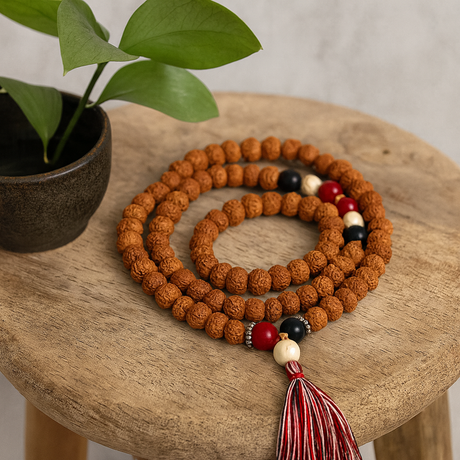
The spacer beads. Larger or distinct beads separate groups of counting beads, helping to keep track of repetitions.
-
The counter or marker bead. A single bead often marks the end of one cycle of prayer.
-
The tassel or pendant. A decorative tassel or pendant may be added, carrying its own meaning within a given tradition.
Prayer beads in world religions
Judaism
Judaism does not traditionally use prayer beads. Many Jews instead touch the knots of the tzitzit on the tallit (prayer shawl) at set points during prayer. Some individuals adopt beads personally, but there is no canonical Jewish bead.
Christianity
The Rosary, the best-known Christian prayer bead, is made up of five decades (sets) of ten beads each. Catholics use it for meditative prayer, reflecting on the mysteries of the faith. Other Christian traditions have their own forms, such as the Anglican chaplet or the Orthodox prayer rope (chotki).
Islam
Muslims use the Tasbih, a strand of either 99 or 33 beads.
Ninety-nine is the most common count. The beads recall the 99 names of Allah, each one a reminder of an attribute of God. Strands of 33 beads can be told three times to reach 99 — a form often kept for particular practices or simply by preference.
The Tasbih is used for dhikr, the remembrance of God. Practitioners repeat short phrases such as ‘Subhanallah’ (Glory be to God) or ‘Allahu Akbar’ (God is Great), the beads keeping count and the mind on the words, drawing the worshipper closer to the divine as their tradition understands it.
Bahá’í Faith
Bahá’ís use a strand of 95 beads (or 19 with counters) to recite ‘Alláh-u-Abhá’ ninety-five times each day, as ordained in their scripture.
Hinduism
The japa mala, a ‘garland of prayer’, is the most common Hindu prayer bead, usually carrying 108 beads. The number 108 holds deep significance, read in many traditions as a reflection of the cosmos, of planetary cycles, or of the 108 Upanishads (ancient sacred texts).
Japa malas are used for chanting mantras — sacred syllables or phrases — and for meditation on a chosen deity. Moving the beads between the fingers helps hold the attention steady.
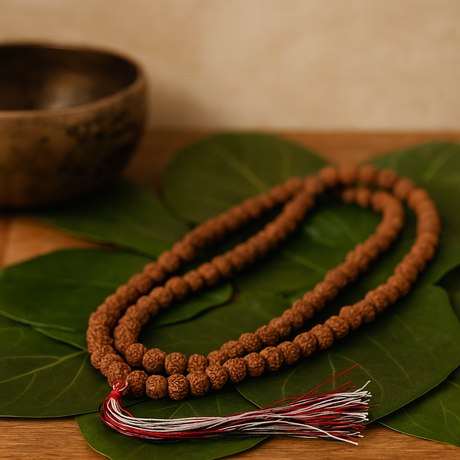
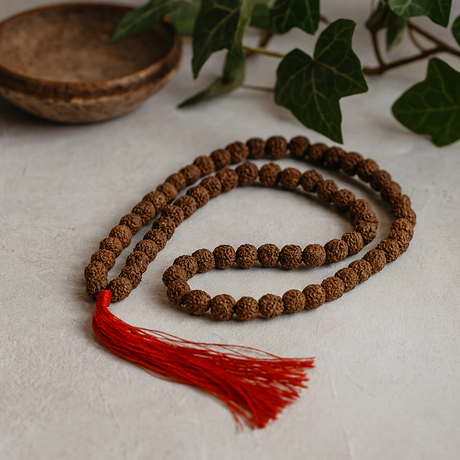
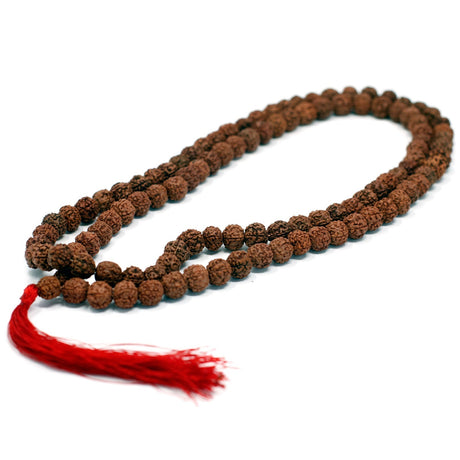
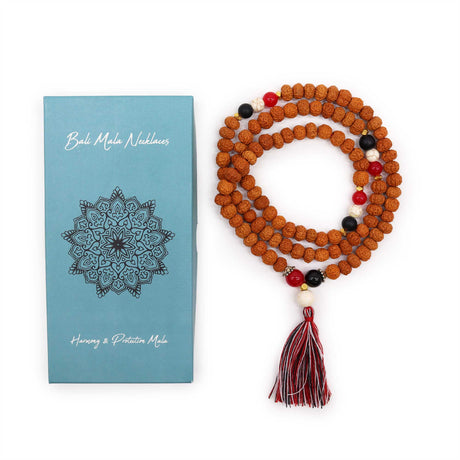
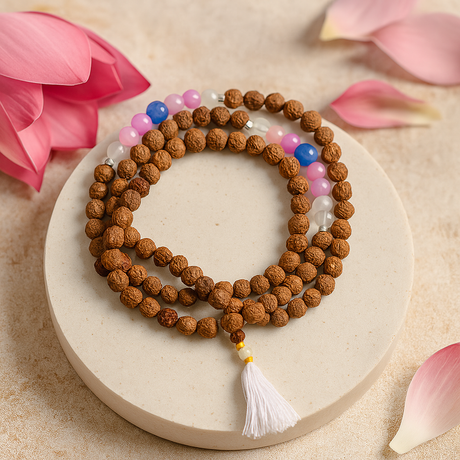
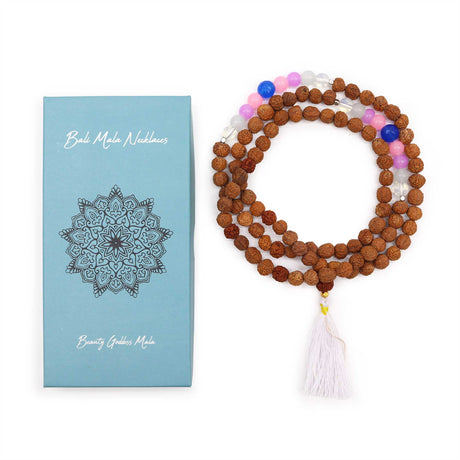
Japa malas can be made from many materials: rudraksha seeds (held sacred), tulsi (holy basil) wood, gemstones, or lotus seeds. Each material is said to carry its own meaning within the tradition.
Buddhism
Like the Hindu japa mala, Buddhist malas usually have 108 beads and are used for chanting mantras, focusing meditation, and counting prostrations.
While 108 is the most common count, some malas have 27 beads, told four times to reach 108. There are also wrist malas with fewer beads, made for constant wear and discreet, everyday practice.
As in Hinduism, Buddhist malas come in many materials — sandalwood, lotus seeds, gemstones, and Bodhi seeds, which are associated with awakening.
The meaning behind the number 108
The number 108 holds a rich and many-sided place in the world of prayer beads, especially in Hinduism and Buddhism. The readings below are shared as cultural and historical context, not as settled fact.
One traditional idea draws on the night sky. It holds that the Sun sits roughly 108 Sun-diameters from Earth, and the Moon roughly 108 Moon-diameters from Earth — a ratio early astronomers could estimate without instruments.
Within Hinduism, 108 is read further still: as the number of marmas, or vital points in the body, and as the number of Upanishads, the ancient texts of esoteric knowledge. Chanting a mantra 108 times is, in this tradition, said to mark a complete cycle of practice.
Buddhist traditions hold the number in equal regard, where it is said to represent the 108 earthly attachments one works to release on the path. Reciting a mantra 108 times is seen as a way to loosen those attachments, one bead at a time.
Materials used for prayer beads
The material a strand is made from carries meaning across traditions.
Seeds and fruit stones
-
Lotus seeds. Linked with purity, awakening, and spiritual growth, lotus seeds appear in prayer beads across several Buddhist traditions.
-
Sandalwood. Known for its soft, calming fragrance, sandalwood beads are valued as an aid to focus and quiet during meditation.
-
Tulsi (holy basil). Sacred to Vaishnavas (devotees of Vishnu) and a symbol of devotion and purity, tulsi wood is a favourite choice for japa malas.
-
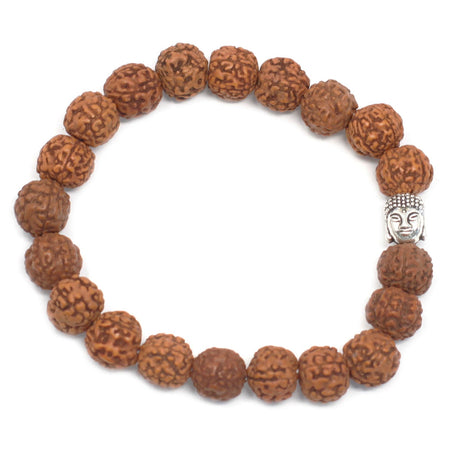
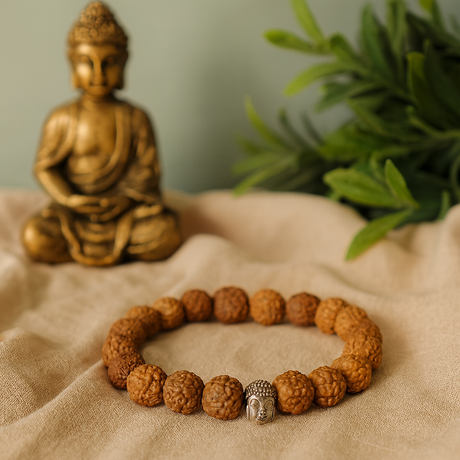
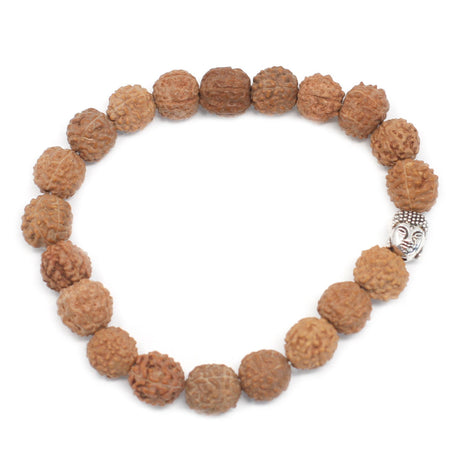
Rudraksha Seeds. Held sacred in Hinduism, these seeds are said to be the tears of Lord Shiva. Often strung into japa malas, they are associated with auspiciousness and spiritual growth.
-
Abrus precatorius (Indian liquorice). Found in some Hindu malas, these red seeds are said to symbolise the removal of obstacles and the granting of wishes.
-
Job’s tears. Used across many cultures, these hard, bead-like seeds stand for strength, perseverance, and the meeting of challenges.
-
Bodhi seeds. Associated with the Buddha’s awakening beneath the Bodhi tree, these seeds are common in Buddhist malas and stand for awakening and release.
-
Vayanjanti seeds. Said in some traditions to offer protection and ward off harm, these seeds are often used for prayer beads.
-
Ritu grains. Small and black, these seeds are linked with inner calm and used in some prayer-bead traditions.
Other materials
-
Pearls. Associated with purity, wisdom, and compassion in many traditions, pearls lend a calm, reflective quality to a strand.
-
Bone. Less common today, bone beads were used in some cultures and have stood for strength or a connection to ancestors.
Hindu traditions: beads and beliefs
Within Hinduism, the choice and handling of prayer beads reveals quiet distinctions between the Vaishnava and Shaiva traditions.
Vaishnavas, devotees of Vishnu, hold tulsi wood (holy basil) to be the most sacred material for a japa mala. Tulsi is revered for its purifying qualities and believed to be especially dear to Lord Vishnu. Vaishnavas traditionally avoid the index finger when telling the beads — it is associated with the ego — often keeping the mala in a small pouch so the finger stays free, as a mark of respect for the sacred wood.
Shaivites, followers of Shiva, hold rudraksha seeds in high regard. Said to be the tears of Lord Shiva, these seeds are treated as auspicious and used widely in Shaiva strands. Like Vaishnavas, Shaivites avoid the index finger when telling the beads — it is associated with the ego — and move the mala with the thumb and middle finger. These small customs show the rich web of symbolism that surrounds prayer beads.
Different names for prayer beads
The names for prayer beads change from culture to culture, each carrying its own sense.
-
Japa mala (Hinduism & Sikhism). ‘Japa’ means recitation or chant; ‘mala’ means garland.
-
Tasbih / Tesbih (Islam). From the Arabic tasbih, meaning the glorification of God.
-
Masbaha / Misbaha / Mesbah (Islam). All naming a string of beads, with the spelling shifting by region and language.
-
Rosary (Christianity). From the Latin rosarium, meaning rose garden — a nod to the beauty and devotion of the prayers.
-
Chaplet (Christianity). Used for various Christian bead traditions, often with fewer beads than the Rosary.
Using prayer beads across traditions
Beyond their materials and designs, prayer beads serve as everyday tools to focus the mind during prayer and meditation in many religions.
Hinduism
-
Japa mala practice. Hindus traditionally use the japa mala seated in a quiet posture. The mala is held between the thumb and middle or ring finger, and a mantra is recited gently with each bead. The movement of the beads and the focus on the words become an anchor for meditation.
-
Historical origins. Evidence places the use of japa malas in Hindu prayer and meditation around 500 BC. Early scriptures such as the Bhagavad Gita mention japa — the repetition of mantras — as a path of practice.
Buddhism
-
Mantra recitation and prostrations. As in Hinduism, Buddhists use the mala for chanting mantras and focusing meditation. It may also count prostrations — full-body bows — during devotional practice.
-
Counting cycles. While 108 repetitions are common, some traditions use malas with multiples of 108, allowing longer cycles of mantra or prostration to be counted.
Islam
-
Dhikr (remembrance of God). Muslims use the Tasbih for dhikr, the remembrance of God. Short phrases such as ‘Subhanallah’ (Glory be to God) are recited while the beads move between the fingers, keeping count and holding the attention on the words.
-
Early use. Historical accounts place the use of prayer beads in Islamic practice around the 8th or 9th century AD. Not named in the Quran, the practice grew in popularity as a way to support dhikr and personal devotion.
Christianity
-
The Rosary. Catholics use the Rosary for a particular meditative prayer centred on the mysteries of the faith. Each bead marks a specific prayer or point of reflection.
-
Other Christian traditions. Beyond Catholicism, other denominations keep their own forms. Anglicans may use beads with set counts for designated prayers, and Eastern Orthodox Christians often use a prayer rope (chotki) for repeated prayer.
These examples show the many ways prayer beads are used across traditions. Different as the applications are, they share a purpose: to help practitioners focus their prayer and feel closer to the divine as their own tradition understands it, settling into a state of calm or quiet awareness.
Using prayer beads in your daily practice
Specific practices vary, but here are some gentle ways to bring beads into an ordinary day — one small thread among other ritual goods for daily practice.
-
Choose your beads. Pick a strand that resonates with you — the material, the number of beads, and any meaning it holds for your tradition.
-
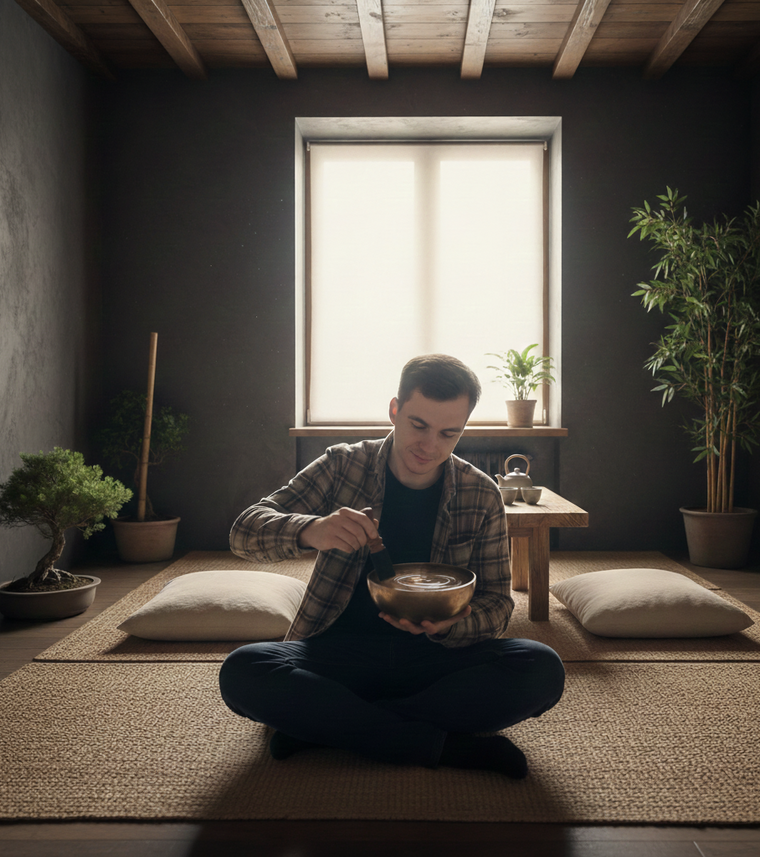
Find a quiet space. Make a calm spot, free of distraction. Sit comfortably with the beads in your hands.
-
Set an intention. Take a moment to centre yourself and name your purpose. Is it meditation, prayer, or the recitation of a mantra?
-
Move mindfully. As you recite your prayer, mantra, or affirmation, move the beads gently between your fingers, resting your attention on the touch and the rhythm of the breath.
-
Close the cycle. When you reach the final bead, pause to notice your intention and whatever feelings have surfaced.
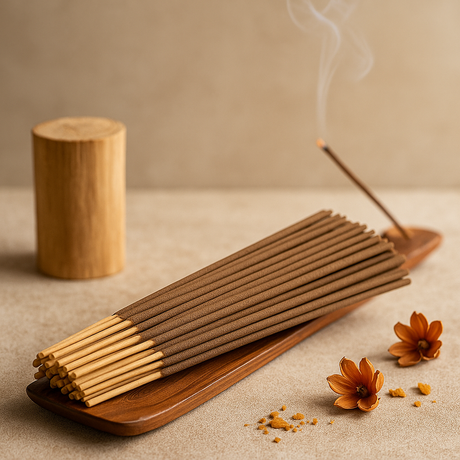
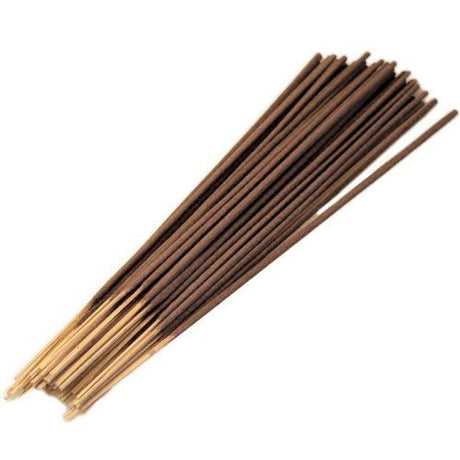
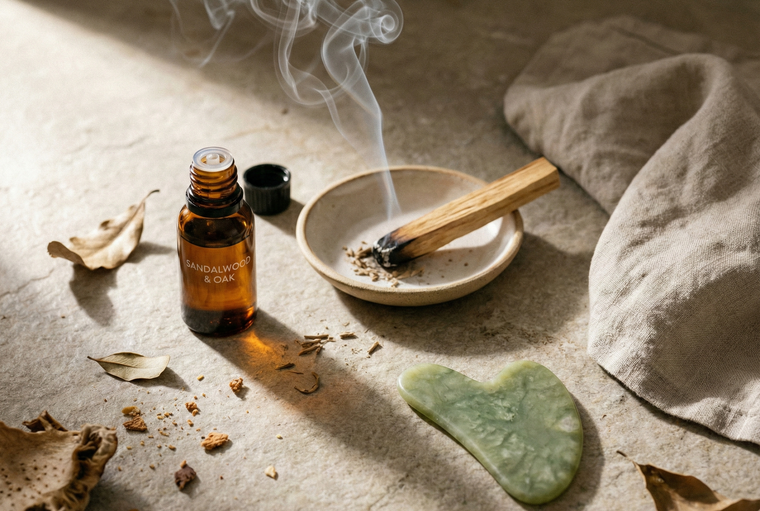
Scent often deepens a seated practice: many people light a little sandalwood incense or keep a calming fragrance during meditation nearby, alongside other tools for meditation and prayer.
Conclusion
Prayer beads cross cultures and languages, yet the gesture stays the same: one bead, one breath, returned to again and again. Used for meditation, prayer, or the quiet counting of a mantra, they ask little and give a steady rhythm in return — a small, tactile companion for whatever practice you choose to keep.