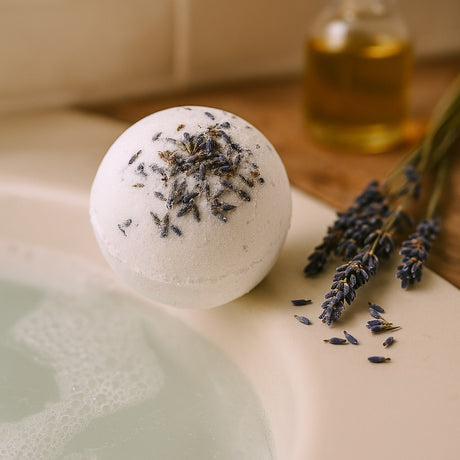
A magnesium salt from a Surrey field, tradition says, once stopped cattle drinking. What actually turned that bitter spring into a product you can buy today was not the cattle but a physician working forty years later, and the question that matters now is not whether the salt works, but what a bath is actually for. This piece takes both stories seriously enough to be honest about them.
The spring, the physician and the patent
Epsom sits in Surrey, and the salt takes its name from a mineral spring found on the common there. Tradition, recorded in written accounts that only begin around the 1640s, holds that a farmer noticed his cattle refusing to drink from the spring some decades earlier, put off by its bitterness; no contemporary account from the supposed date of 1618 survives to confirm it, so this belongs with tradition rather than witnessed fact. What the water contained is not in doubt. The bitterness came from magnesium sulfate, magnesium, sulfur and oxygen bound into one compound, chemically unrelated to the sodium chloride in table salt or the mixed minerals of sea salt. It stayed a curiosity of one Surrey spring until Nehemiah Grew, a physician and Fellow of the Royal Society, analysed the water and published a treatise on the salt it contained in 1695 and again in 1697, then took out a royal patent to manufacture it. That patent, not the cattle, is the real origin of the salt on a shelf today: the moment a local mineral became a marketable product with a name and an owner. Epsom grew into a fashionable spa town on the spring's reputation as a purgative, and the Epsom salt sold now is the direct descendant of Grew's patented purging salt, minus the purging most people now have in mind.
Practical notes, honestly given
- A commonly given household amount is around two cups, roughly 300 to 500g, per standard bath; the Birmingham project used 400 to 600g, two or three times a week.
- If sleep is the aim, timing matters more than quantity: one to two hours before bed, water warm rather than scalding, is what the sleep research actually measured.
- Epsom salt and Dead Sea salt are not the same thing: Dead Sea salt is chiefly magnesium chloride and potassium rather than magnesium sulfate, so swap one for the other knowing you are swapping the mineral, not just the label.
- Anyone pregnant or managing a condition such as diabetes should check with a doctor before adding anything, salt included, to a hot bath.
What actually happens in the bath
The case for skin absorbing meaningful magnesium from a bath is thin. Dr Jesse Bracamonte, a family medicine physician with the Mayo Clinic, makes the simpler point directly: a warm bath eases tight muscles and general tension whatever is dissolved in it, salt or no salt. Dr Nicholas Theodosakis, a dermatologist at Massachusetts General Hospital and Harvard Medical School, goes further, arguing skin is built to keep things out rather than draw them in, and doubts a soak in Epsom salt delivers a real physiological effect. A small, non-peer-reviewed University of Birmingham project did find raised blood magnesium and sulfate after bathing in a strong solution across a handful of healthy volunteers; independent reviewers have not treated that as settled, so it counts as early and interesting rather than proof. Swallowed rather than bathed in, magnesium sulfate is a different matter: it draws water into the gut and acts as a laxative, with side effects such as bloating for anyone who takes it that way without medical advice, and none of that happens through the skin of someone lying in a bath.
What does measurably happen is a change in core body temperature. A 2019 systematic review and meta-analysis led by Shahab Haghayegh at the University of Texas at Austin looked across the existing research on warm-water bathing before bed and found that water around 40 to 42.5 degrees Celsius, taken one to two hours before sleep, was linked to falling asleep roughly ten minutes faster on average, with better sleep quality reported too. Warming the skin draws blood to the surface, and the drop in core temperature that follows mimics the dip the body makes as it heads towards sleep. The salt plays no part in that effect, scented or not; the water and its timing do the work Grew never measured. What the salt does instead is smaller and more honest: a Himalayan salt bomb dropped in for its pink dust, or a plain, unscented soak, is an object you measure into the water and watch dissolve, and that minute of attention is what marks this bath apart from a rinse taken standing up with a phone in one hand.
What Grew couldn't have known
Nehemiah Grew filed his patent in 1698, convinced the water itself was medicine. He was wrong about the mechanism and right about the instinct: something in that Epsom spring was worth bottling and taking home. Three centuries on, the chemistry he chased has mostly dissolved under scrutiny, and what's left standing is the part he couldn't have measured — the ten minutes before bed when a person stops and does one deliberate thing with their hands.
That's a modest inheritance from a man who thought he'd found a cure. But it's a real one. A sleep researcher in Texas and a physician in Epsom, four hundred years apart, both ended up pointing at the same window of time before sleep, for different reasons and by different evidence. Neither of them was talking about salt. They were talking about what a person does with an hour they could otherwise lose to a screen.
The bath doesn't need Grew's chemistry to be worth running. It needs someone to run it, measure the salt in, and stay long enough to notice the water going cold.