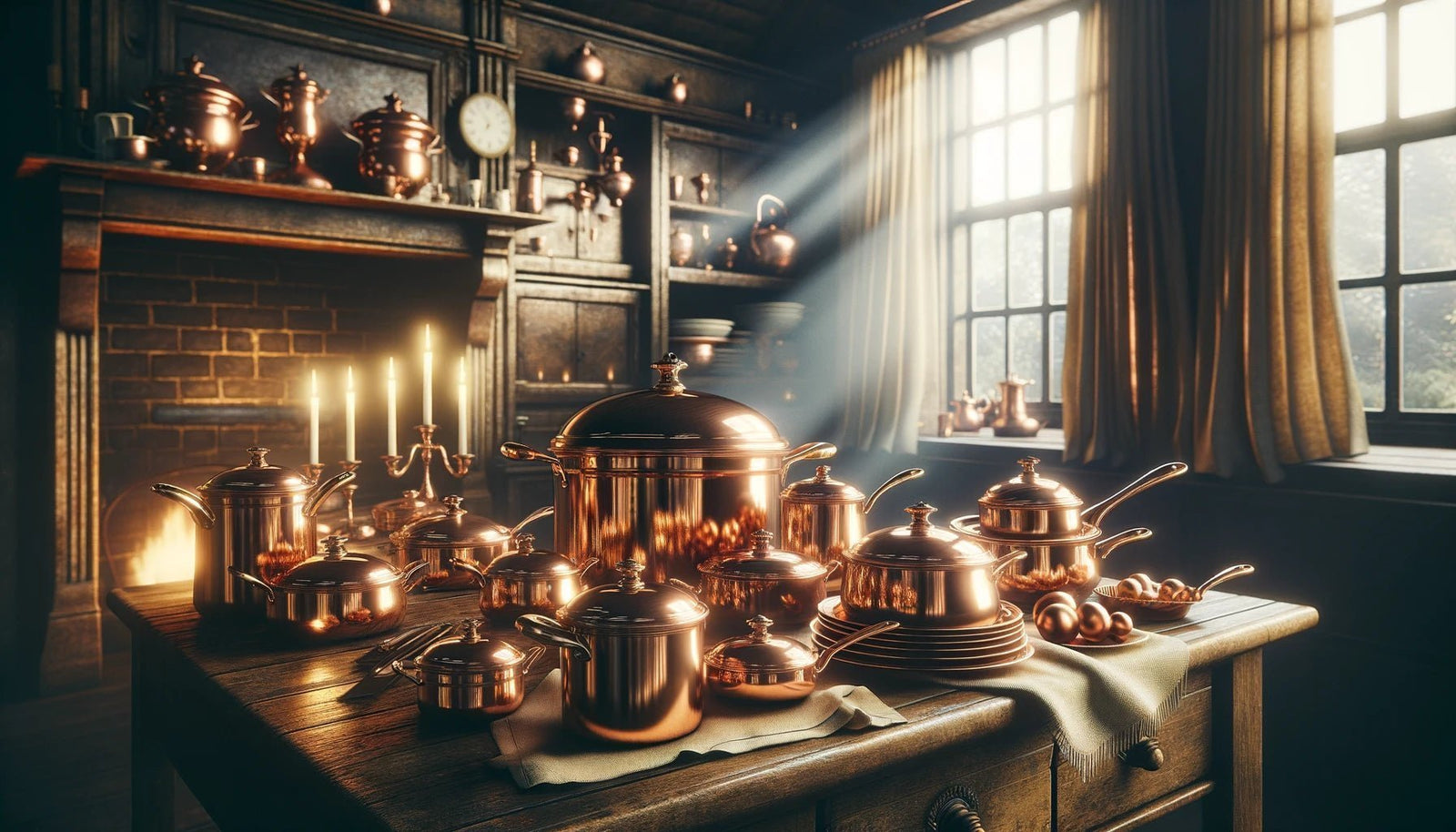
There is a particular warmth to copper. It catches the morning light and holds it, a reddish glow that softens a kitchen and makes a room feel lived-in. People have cooked with it for thousands of years, and the reasons are quiet ones: it conducts heat beautifully, it ages into a deep patina, and it asks to be looked after. This is a slow material in a fast world. Below, the history of copper in the kitchen, how it actually works, an honest note on copper and the body, and how to care for it so it keeps its glow.
Copper in the Kitchen, Through Time
Copper is a naturally occurring reddish metal, and our relationship with it runs deep. Evidence of copper use dates back roughly 10,000 years. One of the oldest pieces, a small pendant from Northern Iraq, is estimated at around 8700 B.C. It is worth being precise here: that early find is an ornament, cold-hammered for adornment, not a cooking pot. Copper was worn and shaped into tools long before it was beaten into vessels for the hearth.
Cookware came later. Around the era of the Roman Empire, copper pots became prized possessions in wealthy households. Skilled coppersmiths emerged, working the metal into ever more intricate and useful shapes. The same qualities we value today, durability, even heat, made it the material of choice for elaborate cooking.
By the 19th century, France had taken centre stage. Mauviel, established in Normandy in 1830, remains a leading name in European copper cookware to this day, carrying that tradition of craftsmanship into professional kitchens. Copper has stayed in those kitchens for the same reasons it first earned its place: it behaves well over a flame, and it lasts.
If you are drawn to copper for its glow and its weight rather than its use over a hob, the metal lives on in quieter forms. At SHAMTAM you will find a copper bowl etched with the Tree of Life, the same warm metal, turned toward the altar and the windowsill rather than the stove.

How Copper Cookware Works
What makes copper special in the kitchen comes down to one thing: heat. Copper conducts heat far better than stainless steel, many times over, which is why cooks have reached for it for millennia. Warmth spreads across the whole surface of the pan rather than pooling in hot spots, so a gentle simmer stays gentle and a sear stays even.
Two things follow from this.
- Precise control. Copper responds quickly when you change the flame, so a gentle simmer or a high sear is yours to dial in.
- Good browning. Even heat and that fast response make ideal conditions for caramelisation, browned meat, slow caramelised onions, richer flavours.
Copper and the Body: A Note on the Nutrient
It is worth separating two ideas that often get tangled together. Copper is an essential mineral. In the diet it plays a part in iron absorption, energy production, and enzyme function. These are facts about dietary copper, the small amounts we take in through food.
They are not, however, benefits the cookware delivers. Most copper pots are lined with tin or stainless steel, so food rarely touches the copper at all. The metal does the cooking; the lining touches the meal. It is a quiet distinction, but an honest one.
There is a similar caveat worth making about copper's antimicrobial reputation. Copper does show some level of natural antimicrobial activity, copper surfaces may reduce the growth of certain bacteria and fungi. But three things are worth keeping in mind:
- Heat works against it. The effect is strongest at cooler temperatures; the high heat of cooking tends to negate it.
- The lining changes the picture. Because cookware is usually lined, food touches the tin or steel, not the copper, so the property applies more to bare copper surfaces, such as handles, than to the cooking surface itself.
- Cleaning still matters most. Washing hands, utensils, and surfaces does the real work of a safe kitchen.
Treat it as a small footnote, then, rather than a reason to buy. We would choose copper for its warmth and its even cooking, not as a health claim.

Looking After Copper
Copper asks for a little more care than other cookware. The reward is a lifetime of pieces that stay both beautiful and useful, the kind of objects you keep, and pass on.
- Cleaning. Warm soapy water and a soft sponge for everyday use. Skip abrasive scrubbers and harsh detergents, which scratch the surface. A paste of white vinegar and salt lifts stubborn marks.
- Polishing. Regular polishing keeps the shine. Shop polishes work, or make your own from lemon juice and salt. Copper also deepens to a warm patina over the years, whether you polish it bright or let it age is yours to choose.
- Tin lining. Many copper pots carry a tin lining. Tin is a softer metal that reacts with acidic foods, and over time it wears down. A tinsmith can re-tin the pot, a small, traditional act of repair that keeps it in use.
That copper-and-tin pairing is older than the kitchen. The same alloy sings in our hand-beaten brass singing bowls, where copper and tin are worked by hand into a bowl that resonates rather than cooks. It is a reminder that this metal has always lived in more than one room of the home.

Tips for Cooking With Copper
- Preheat gently. Copper heats quickly, so a short preheat is plenty.
- Choose soft utensils. Wooden or silicone tools instead of metal, which scratches the surface. The same slow, deliberate spirit suits the rest of a mindful kitchen, a hand-carved mortar and pestle, a wooden spoon worn smooth with use.
- Go easy on acid. Even with a tin lining, avoid cooking highly acidic foods such as tomatoes for long stretches, which wears the tin over time.
There is something about cooking with copper that slows the morning down, much like brewing a teapot to slow the morning down or unhurried minutes inside the wider tea ritual. If you are building a kitchen that feels considered, our objects for a mindful kitchen sit alongside this spirit, and a little incense to scent the room while you cook turns the routine into something closer to ritual.
Copper as a Living Material
Copper is beautiful and copper is practical, and the two are not in tension. It carries heat evenly and gives a cook real control, which is why it has stayed in kitchens for so long. It does need looking after, but less than its reputation suggests, and the care is part of the pleasure. Tended well, it keeps both its use and its glow for decades.
Beyond the hob, that reddish warmth earns copper a place anywhere you want a room to feel grounded. A bowl on a windowsill, the hum of struck metal, the warm glow of metal and candlelight on a winter evening, these belong to the same family of warm-toned things. If you are drawn to that mood, our warm-toned pieces for a grounded home, our candles for the same warm light, and our ritual and altar bowls carry copper's glow into the quieter corners of a home.