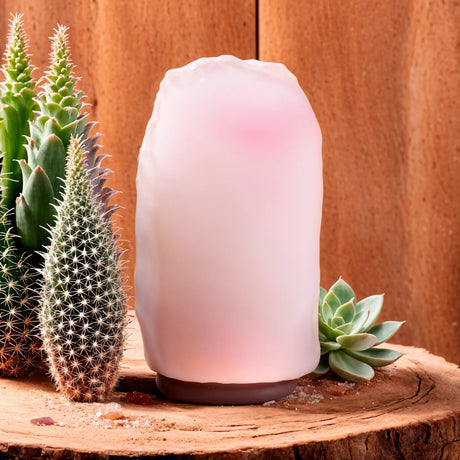
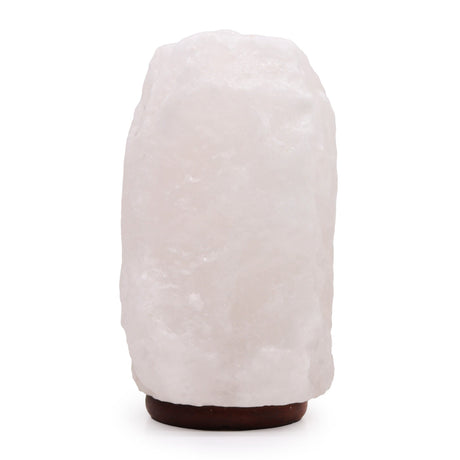
There is something quietly grounding about cooking on a slab of ancient earth. A Himalayan salt block asks you to slow down, to pay attention, to treat a simple meal as something worth a little time. It will not hurry, and that is rather the point of it.
The salt was laid down in ancient seabeds more than 500 million years ago, and is hand-carved from mineral deposits in the Khewra Salt Mine in the Salt Range of Pakistan. By the time it reaches a kitchen it has travelled a very long way, and brought its rosy colour with it. We tend to think of a tool like this as a bridge between the old and the everyday: a way to make even a plain supper feel considered, and to set a gentler mood around the table.
Whether you are entirely new to salt-block cooking or quietly building a practice around it, this guide walks you through what is worth knowing.
What is a Himalayan salt block?
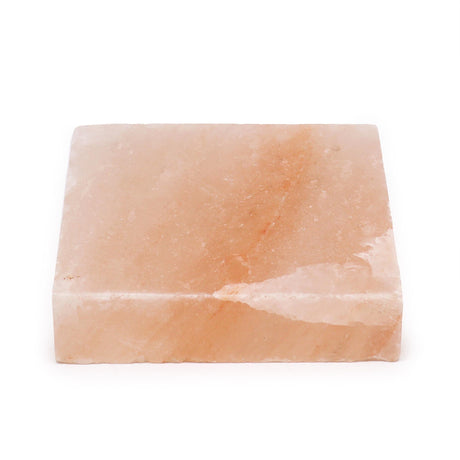
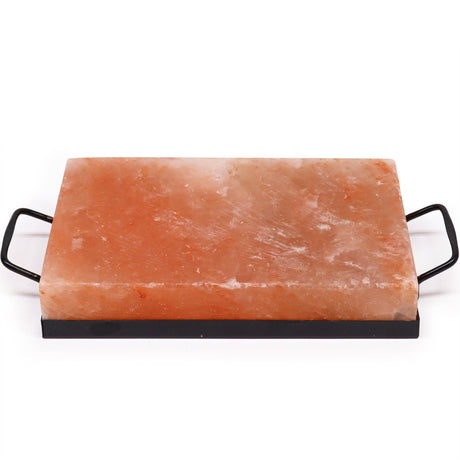
A Himalayan salt block, also called a salt plate or salt slab, is a thick, flat piece of pink Himalayan salt. Most weigh between 3 and 12 kilograms. Each one is hand-carved from crystallised salt that formed where ancient sea beds were folded into the rock over hundreds of millions of years.
Unlike processed table salt, pink salt carries a complex blend of trace minerals, including the iron that lends it its rose-pink hue. It is this mineral character, rather than any single additive, that gives a salt block its colour and its rounded, layered seasoning.
What makes these blocks so useful for cooking is their heat retention. A properly heated salt block can reach well above 250°C and hold that warmth for a long time, giving you a natural cooking surface with no synthetic coatings or non-stick chemicals.

Why cook on a Himalayan salt block?
Subtle, rounded flavour
A salt block does not make food taste sharply salty the way a sprinkling of table salt does. Because the surface is dry and dense, only a delicate amount of mineral salt transfers to the food. The result is a rounded, nuanced seasoning that lifts natural flavours rather than overpowering them, which is especially lovely with fresh vegetables, paneer, tofu and fruit.
A mineral character all its own
The same trace minerals that give pink salt its colour also give it a slightly different taste from refined salt: softer, more complex, a little less one-note. This is a matter of flavour and character, not nutrition. A salt block is no substitute for a balanced diet, and it was never meant to be. What it offers is a more interesting seasoning and a more considered way to cook.
A surface that keeps itself clean
Salt holds very little moisture, so very little can grow on a dry, well-stored block. Many cooks clean theirs without soap at all: wipe it down, scrape away any residue, dry it thoroughly. It is a low-fuss surface to live with, as long as you keep it dry and treat it gently.
Versatility across temperatures
This is where salt blocks quietly shine. The same block can be heated to searing temperatures for grilling and sauteing, chilled in the freezer to serve cold dishes, or set out at room temperature as a striking presentation platter. One tool, a genuinely wide range of uses.
A slower, more intentional way to cook
Cooking on a salt block asks for patience. You cannot rush the heating, and you have to stay present and deliberate while you do it. In a kitchen that usually rewards speed, that is a gentle invitation back to slowness and care. The block does not work any faster for being hurried, and neither, on a good evening, do we.
How to use a Himalayan salt block: step by step
Heating your salt block (the step that matters most)
The single most important rule of salt-block cooking is this: heat it slowly. Rushing can crack or even shatter the block. Think of it as a small practice in patience; the block will repay your care with years of use.
On a gas hob: begin on the lowest setting and let the block warm for 15 minutes. Move up to medium-low for another 15 minutes, then to medium for 15 more. If you plan to sear at high heat, keep raising the temperature gradually until the block is where you want it. The whole process takes roughly 40 to 60 minutes.
On a grill (charcoal or gas): set the block on a cold grill, then light it. Let the block warm gradually as the grill comes up to heat. This is one of the most forgiving methods, because the ambient heat naturally rises slowly, which makes the grill a lovely place to start if you are new to this.
In the oven: place the block in a cold oven, set your target temperature, and let the two heat together. This suits roasting vegetables and baking.
A note on electric and induction hobs: because these elements cycle between hot and off rather than offering continuous, even heat, they can cause thermal shock. On a standard electric hob, set a metal ring or trivet between the element and the block to help diffuse the heat. Induction generally is not recommended unless you use an induction-compatible interface disc.
How to test for readiness: drop a little water onto the heated block. If it sizzles and evaporates almost at once, the block is ready. You can also hold your hand about 15 cm above the surface; you should feel a strong, radiating heat.
Cooking on the block
Once the block is properly heated, the cooking itself is intuitive. Lay your ingredients straight onto the surface and let the block do the work. A few guiding principles help.
Keep food dry. Pat vegetables, paneer, tofu or fruit with a clean cloth before they meet the block. Excess moisture creates steam, which cooks unevenly and draws out more salt than you may want.
Do not overcrowd. Give each piece room. Crowding lowers the surface temperature and stops things searing properly. Cook in batches if you need to; another small invitation to mindful patience.
Use thin, even cuts. Because the heat comes from direct contact with the block, thinner slices cook more evenly and take on better colour and texture.
Very little oil is needed. A properly heated salt surface is naturally somewhat non-stick. A light brush of oil on the food, never on the block, is plenty.
Serving cold and at room temperature
Chill your salt block in the fridge for at least two hours, or the freezer for one, then use it as a serving platter for fresh fruit, sliced vegetables, cheese, sushi, carpaccio, or even scoops of sorbet. The cold block keeps food chilled at the table while lending that same gentle mineral seasoning.
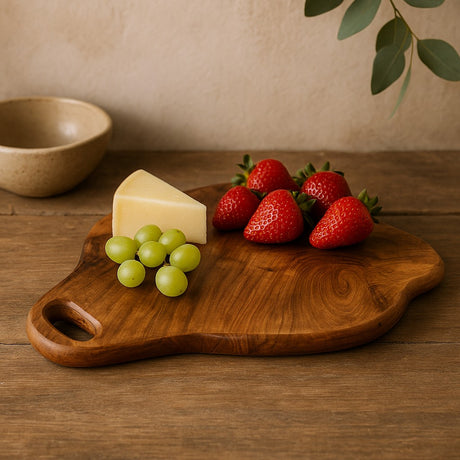
At room temperature it makes a beautiful charcuterie and mezze board, the pink hue of the salt turning a simple spread into an effortlessly elegant one.
What to cook on a Himalayan salt block
The pleasure of salt-block cooking is how readily it adapts. A few ideas to start from:
Vegetables and greens, thinly sliced courgettes, asparagus spears, pepper strips, mushrooms and sweet potato rounds all develop a lovely caramelised edge on a hot block. The mineral seasoning suits naturally sweet vegetables especially well.
Paneer and tofu, pressed and sliced into even pieces, paneer and firm tofu sear beautifully, taking on a lightly salted crust while staying soft within.
Fruit, this is where the block tends to surprise people. Grilled peach halves, pineapple rings and watermelon slices take on a complex sweet-savoury note. A chilled block, meanwhile, is wonderful with fresh mango, berries and citrus.
Flatbreads and naan, a heated block makes a fine rustic tawa for quick-cooking flatbreads, leaving a subtle mineral finish.
Something sweet, use a chilled block to serve chocolate truffles, sliced fruit tarts or sorbet. The faint salt contrast lifts sweetness in a way that feels natural rather than forced.
Caring for your salt block
A well-kept Himalayan salt block can serve you through dozens, even hundreds of meals. The whole of it comes down to gentle, attentive care.
Cooling down. Never plunge a hot block into water or set it on a cold surface. Let it cool completely at room temperature, ideally over several hours or overnight. Thermal shock is the most common cause of cracking.
Cleaning. Once fully cool, scrub the surface with a slightly damp sponge or brush. Skip the soap: it can soak into the crystalline surface, and a dry, well-stored block needs little more than wiping down. For stubborn residue, use a gentle scraper or a paste of bicarbonate of soda and water.
Drying. Dry the block straight away and thoroughly with a clean towel. Salt dissolves in water, so the less moisture it meets the better. Store it somewhere dry and well-ventilated, never sealed in plastic, where trapped humidity slowly erodes it.
Letting it age. Over time your block will take on its own character: slight shifts in colour, a little surface texture, the occasional small fissure. None of it affects how the block cooks. We think of it as a patina of shared meals, much as a well-used wooden board earns its marks.
Tips for longevity
A few more habits will help your block serve you for years.
Season it before its first use by heating it slowly three or four times, each time to a slightly higher temperature. This tempers the crystal structure and lowers the chance of cracking.
Always set a heat-resistant mat or trivet beneath the block while you cook, both to protect your surfaces and to let air circulate underneath.
Alternate hot and cold uses with care, giving the block time to settle to room temperature in between. Avoid going straight from freezer to hob, or the other way around, without a full return to room temperature first.
And if your block does eventually crack, there is no need to despair. The smaller pieces still make lovely serving plates and grilling planks, or can be grated over food as a finishing salt.
Choosing the right salt block
When you are looking for a salt block, a few things are worth weighing.
Thickness. A block at least 3.5 to 5 cm thick holds heat well and resists cracking. Thinner slabs are better kept for cold serving only.
Colour. A deep, even pink or amber hue generally points to a denser mineral content. Some blocks carry white veining, which is entirely natural and does not affect how they cook.
Surface. Look for smooth, even faces with few visible fracture lines. Small natural inclusions are normal; large cracks may hint at a weaker structure.
Source. Genuine Himalayan salt comes from the Khewra Mine in Pakistan. Look for sellers who are open about where their salt comes from and who care about ethical, sustainable mining, the same things that matter to us at SHAMTAM.
A final thought
Cooking on a Himalayan salt block is, at heart, an act of trust: in ancient materials, in simple methods, in the quiet wisdom of slowing down. It asks us to step away from the rushed and the over-processed and to return to something elemental.
We see this as rather more than a kitchen trend. It is a small, real way to bring a little śānti, peace and inner calm, into the ordinary rhythm of making and sharing food. When we cook with intention, with tools that honour the earth and with the patience that honours ourselves, even the simplest meal becomes something to savour.
The block sits naturally among mindful kitchen essentials, and it keeps good company. Pour an after-dinner toast from Himalayan salt shot glasses made of the same rosy salt, carry the glow of the material into the room with Himalayan salt lamps, or meet it again in the bathroom in salt deodorant stones and mineral-rich bath soaks. Round off a long, slow supper with a slow tea ritual, and remember that a salt block, with all its character and quiet usefulness, also makes a thoughtful gift.
We hope this guide invites you to explore the quiet ritual of Himalayan salt-block cooking, one unhurried meal at a time.