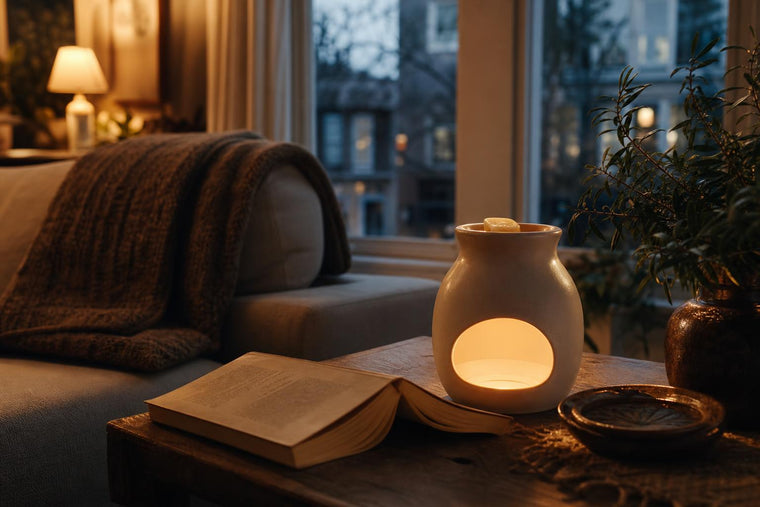
Slow living isn't about doing everything at a snail's pace. It's about choosing the speed of your own days, keeping the busy week, the city flat and the work you love, while building small pockets of calm into the hours you already have. Here is a gentle, five-step way in, the kind a friend might talk you through over a slow cup of tea.
The idea has a clear beginning. Carlo Petrini founded Slow Food in 1986, after protesting the opening of a McDonald's by the Spanish Steps in Rome. What started as a stand for unhurried, local, well-made food has grown into a whole way of living, one that now touches how we work, shop, rest and talk to one another.
Most of us know the feeling of being caught in constant doing, with little room left for being. Slow living offers a quiet way out. It doesn't ask you to leave anything behind; it asks you to notice what's already here, and to take it at a pace that suits you. The shift is from chasing outcomes to staying with the journey.
What follows are five practical steps for building a slower, more conscious routine, beginning with the basics and moving on to small daily habits. The aim is lasting change without the overwhelm.
Understand the heart of slow living
Life moves quickly. Slow living gives you a chance to step back and find meaning in ordinary days. This isn't a passing trend, it's a change in how you hold your time, your priorities and your relationships. That's why it tends to last.
What is slow living?
Slow living is a more thoughtful, mindful approach to daily life. You don't rush through tasks simply to be productive. You do things at your own pace, which lets you connect with each moment and feel its weight.
At its heart is a mindset, one that helps you build a more meaningful and conscious life, in step with your own values. It doesn't mean doing everything slowly. It means finding the right speed, choosing quality over quantity, and putting first the things that matter to you.
The idea grew out of the Italian Slow Food movement, founded by Carlo Petrini in 1986 in protest at fast-food culture. What began as a single demonstration has become something far wider, a way of thinking that shapes work, relationships, shopping and the way we speak to each other.
The philosophy behind a slower life
A few principles work together in slow living:
- Mindfulness and presence, give your full attention to what you're doing, rather than running on autopilot. A little focused breathing each day is a simple place to begin.
- Intentionality, make conscious choices about your time and energy.
- Quality over quantity, value deep experiences over having a great deal of things.
- Connection, build a closer relationship with yourself, with others, and with nature.
This way of thinking quietly challenges the idea that being busy is the same as being successful. You learn to step off autopilot and make room to think and to understand yourself a little better. The author Brooke McAlary puts it well: 'This isn't a race with a start and finish line. This is slow, imperfect, intentional and evolving.'
The slow movement also values sustainability and a sense of place. People sometimes use the backronym SLOW, Sustainable, Local, Organic, Whole. These threads support both care for the environment and personal wellbeing, and they pair naturally with a wish to choose fewer, better things that truly last.
Why it's more than just doing things slowly
It's easy to assume slow living means doing everything slowly. In truth, it's about finding the right speed for each thing.
Carl Honoré, who writes and speaks often about the slow movement, describes the difference between 'good slow' and 'bad slow'. Good slow is choosing to ease off for a better result. Bad slow is being stuck in a traffic jam. Speed works the same way: some things are better done quickly, while rushing through the rest means missing them altogether.
Slow living fits many kinds of life. You don't need to leave the city or give up your job to try it. These principles can soften a busy week whether you live in a city or a quiet town. Success and productivity still matter, they simply come to mean something shaped by what you value.
Technology has a place here too. The point is to use it mindfully, so it helps rather than pulls you away. On Instagram, the #SlowLiving hashtag has millions of posts, a sign of how widely these ideas have spread, even if there's a gentle irony in scrolling for slowness.
Lived this way, slow living lets you experience more of your day through closer attention. It isn't only about cutting stress; it's about finding joy and meaning in everyday moments again.
Step 1: Practise mindfulness every day
Mindfulness is the foundation. Training yourself to stay present opens a little space between a thought and a reaction, a useful counterweight to a culture that runs on urgency. If you're new to slow living, start here, with small daily practices that gently change how each moment feels.
Begin with mindful breathing or a short meditation
Breathing is the simplest doorway to presence, and the most powerful. You need nothing special, only your attention and your breath. Start with mindful breathing or a short meditation, five minutes a day. Short, regular sessions tend to settle in better than the occasional long one. Choose a comfortable space where you feel safe without distractions, a spot by a window, or outdoors, works well.
Here's a simple practice. Sit comfortably, with a spine that's upright but not rigid. Take three slow breaths, in through the nose, out through the mouth. Then let the breath find its own rhythm, watching your chest and belly rise and fall. Your mind will wander; it always does. Each time, bring your attention back to the breath, without judgement.
Before you reach for your phone in the morning, set an intention. Ask yourself: 'How would I like to show up today?' or 'What quality of mind do I want to strengthen?' Setting an intention links the quiet of practice to the rest of the day, a bridge between sitting still and living.
Be present during everyday tasks
Slow living doesn't mean adding more to your day. It means giving full attention to what you already do. We move through showering, brushing our teeth or washing up on autopilot. These are chances for a kind of stealth mindfulness, engaging the senses fully.
In the shower, notice the temperature of the water, the scent of the soap, the feel of it on your skin. Your mind may drift to tomorrow's meeting or yesterday's conversation. Gently bring it back to what you can feel right now. Ordinary moments become small openings to be present.
A walk offers the same. Rather than fixing on the destination, use all your senses, the light, the birdsong, the air on your skin. Even a short pause between tasks can reset you and bring you back to now.
The mindfulness teacher Laura Malloy notes that staying present during routine activities 'can help you become less forgetful about recent actions like whether you locked the front door, turned off the stove, or took your medicine.'
Use journaling to reflect and slow down
Journaling sits well alongside other practices. It gives you room to catch a thought and turn it over. Writing slows the mind, and it leaves a record of your inner life you can return to. If you'd like to use journaling to reflect and slow down, a plain notebook is all you need.
Start with five to ten minutes of unfiltered writing a day. The privacy of a journal lets you be honest, no need to mind grammar, spelling or how it reads. Make it your own space, with only the rules you choose.
Over time, journaling helps you notice the patterns that support your values and the ones that quietly work against them. Try setting a few intentions for the week, then reflecting on them in the evening. If gratitude is what you're after, write down the moments you felt it, and the ones you let pass.
Kept up, this builds a steady awareness of where your time and attention actually go. That awareness is what lets you make choices in keeping with a slower life, not just what you did, but how you felt about it.
Breathing, presence in daily tasks, and reflective journaling together make a strong foundation. Consistency matters far more than intensity as your relationship with time begins to change.
Step 2: Simplify your environment
A calm, uncluttered space shapes a calmer state of mind, and makes a slower life easier to live. When you simplify your surroundings, you create room to be present, much as a few quiet minutes of breathing clears the mind, a tidy space opens a little peace into the day.
Declutter with intention
Letting go of what you don't use makes room for what you do, and a home feels lighter for it. Most of us go a bit 'clutter blind', so used to our things that we stop seeing how they weigh on us. Research links clutter with stress, scattered focus and distraction.
The KonMari method offers a thoughtful way in: sort by category rather than by room. You'll spot duplicates quickly and make clearer choices about what to keep. Many people find that deciding by what they genuinely value gives them confidence. A quick tidy to clear your space can be the gentlest start.
Decluttering comes down to weighing what you gain by keeping something against what you gain by letting it go. Often it reaches past objects, into commitments and relationships that no longer fit the life you're building.
Before you begin, ask yourself: 'How much is enough?' Picture the home you'd like, without first looking at what you already own. The question sets a clear line, and a reason to keep things simple.
Reduce consumption and waste
Clearing space tends to sharpen your eye for what you buy. Many people uncover little collections of barely used things, make-up, kitchen gadgets, the trail of half-thought purchases. Noticing the pattern is the first step toward more conscious consumption.
Households throw away more than we realise. A few small habits can ease that:
- Buy staples in bulk, in reusable containers.
- Use cloth bags for loose produce to cut down on packaging.
- Choose good reusable items, a water bottle, a set of cutlery.
- Plan meals to waste less food and make shopping simpler.
- Compost food scraps and garden waste, which can make up to about a third of what a household throws out.
These habits shift the focus from acquiring things to valuing experiences, in keeping with a slower life, and lighter on the world.
Choose sustainable and lasting items
Slow living leans toward things that last. One well-made piece, kept for years, asks far less of the planet than a string of short-lived ones. A quality item made from natural materials may cost more at first, yet serve you a decade or more with a little care.
Look for materials such as:
- Organic cotton and linen for bedding and clothes.
- Hemp, which needs little water and gives back to the soil.
- Recycled materials that spare new resources.
- Lyocell or Tencel, made from tree pulp with few pesticides.
Secondhand marketplaces and charity shops are good places to give existing pieces a second life, often nearly new, at a fraction of the price. When you do buy new, look for makers whose sourcing you can trust. The aim isn't to buy more eco-friendly things; it's to choose fewer, better ones that genuinely suit a slower life.
Step 3: Create a slower daily routine
Our days are shaped by routine more than we tend to notice. A rushed morning can tip the whole day off balance, while a gentler rhythm helps it run calm. You don't need a dramatic overhaul, only a more mindful way to hold your hours.
Wake a little earlier to avoid the rush
An early start hands you the reins from the first moment. The quiet hours before the day's demands let you ease in, as the sleep expert Dr Nerina Ramlakhan often notes. Suddenly there's time for the things we say we can never fit, tea, the sunrise, a proper breakfast.
A good morning often begins the night before. Lay out clothes, prepare what you can, and tidy a little before bed, so the morning asks less of you.
New rhythms take time to settle, research suggests, on average, a couple of months rather than the oft-quoted 21 days. Give yourself room and let it bed in at its own pace. In time the body usually adjusts, drawing you toward sleep a little earlier.
Build in buffer time between tasks
Buffer time is a quiet shield against the day's small complications. Those planned gaps between activities smooth the transitions, stop one delay from snowballing into the next, and give a schedule room to breathe.
A little slack absorbs the unexpected, the surprise call, the thing that won't load. Adding 15 to 20 per cent to your estimates keeps the day on its feet when something goes sideways.
To make buffer time work for you:
- Leave 15-minute gaps between meetings.
- Take a moment to shift between work and home.
- Set aside quiet blocks for thinking.
- Step away from back-to-back commitments.
Buffer time isn't wasted; it's where you reset. A short pause is room enough to stretch, breathe, or come back to the present before the next thing begins.
End your day with a calming ritual
Evenings invite us to slow down as the world quietens. A gentle evening routine tells the body and mind that it's time to rest, a kind of release valve for the day's tension. You might end your day with a calming ritual of your own.
Start by drawing a clear line between work and personal time. Close the laptop, set the phone aside, and let the day's tasks go. That small handover helps you cross gently into the evening.
A few gentle rituals to try:
- A quick tidy, to clear your space.
- Slow sips of something warm.
- A few lines about your day in a journal.
- Turning the lights down to help sleep come naturally.
These aren't extra chores. They're your time to wind down, small ways to honour your own rhythm and bring a little more peace to the close of the day.
Step 4: Disconnect to reconnect
In a world this connected, our devices are forever reaching for our attention, and that pull works against a slower life. Constant pings build a low hum of urgency that's hard to live calmly inside. A first step toward the quiet slow living offers is to balance screen time with offline time.
Limit digital distractions
Your phone holds useful clues about your own habits, and the data can guide real change. A pared-back home screen and fewer notifications make it easier to stay focused. Try creating no-phone zones in parts of your home, the bedroom and the dining table especially. And give your sleep some protection: ease off bright screens in the hour before bed.
It helps to notice what nudges you back to the screen. Built-in tools like Apple's Screen Time or Google's Digital Wellbeing can monitor and limit use. Small boundaries like these slowly shift the relationship from mindless scrolling to purposeful use.
Schedule regular digital detoxes
Daily limits work well alongside longer screen-free stretches. A break over a meal or an evening walk can grow into something longer. These planned disconnections loosen the pull of the screen and let the relationship reset on its own.
Some people find a weekly 'Technology Shabbat' restorative, a full 24 hours away from screens, a term popularised by the filmmaker Tiffany Shlain. It's not for everyone, but many return to their days feeling clearer for it. (Worth saying separately: long hours rarely help. One well-known study found output actually falls once people work beyond about 50 hours a week, a reminder that rest and good work go together, not against each other.)
Use the time you free up for things you love
Screen-free hours leave room for the slower pleasures. With a little time back, you might:
- Spend time in nature, a walk in a park or wood lifts the mood and eases tension.
- Make something, painting, photography or writing lets you share your own view of things.
- Move gently, yoga, stretching or a soft walk reconnects you with your body.
- Sit quietly, a real book or a journal helps you think without the digital noise.
Unplugging isn't about giving things up. It's about making space for what matters, relationships, reflection, the natural world, the quiet centre of a slower life.
Step 5: Embrace rest and the things you do for joy
Rest isn't merely a pause between efforts. It's a part of slow living in its own right. We've been taught to read rest as laziness, yet the body and mind need this downtime to do their best work.
Understand the value of rest
Even short breaks tend to sharpen the work you come back to. Recovery time guards against the kind of burnout that frays relationships, mood and focus. Rested, you simply show up with more to give, at work and at home.
Explore atelic pastimes, a walk, a sketch, a song
Atelic activities, the things we do purely because we enjoy them, matter for the mind. Unlike goal-driven tasks, a walk, a sketch or a piece of music has no finish line. The pleasure is in the doing, and it lasts.
These pastimes help us stay close to our feelings and present in the moment. One study found that twenty minutes in nature can lower cortisol, the stress hormone, noticeably, a gentle way to ease the day's tension. Practitioners call what these activities create 'spaciousness': mental and emotional room to breathe.
Let go of productivity guilt
Productivity guilt, that nagging sense you haven't done enough, can quietly undo a slower life. It tells you you're falling short whenever you aren't producing, and often it leads nowhere but stuckness.
Self-compassion helps here. Treat yourself as you would a good friend. Rest does its own work: it lets you recover, and it keeps burnout at bay. Seen as something worth doing rather than an indulgence, rest honours your own nature and the natural rise and fall of your energy.
Conclusion
Slow living is a real shift, from a hurried, depleting pace toward something gentler and more sustainable. None of it asks for a dramatic change. It begins with mindfulness, which grounds you in the present, and grows from there into spaces and routines that support your intentions rather than scatter them.
Buffer time lets you move through the day with more ease. Time away from screens reconnects you with what matters, people, places, your own inner life. And rest stops being a luxury; it becomes part of how you keep well.
Slow living bends to fit your life. You don't have to change everything at once. Start with one small thing that resonates, and build from there, five quiet minutes in the morning, a tech-free dinner, a pause between tasks. Any one of them can begin to reshape your relationship with time.
Slow living doesn't mean crawling through life. It means finding your own rhythm. In time you may notice that doing less makes room for more, that the moments which used to feel rushed become chances for joy and connection.
Keep in mind that this is about progress, not perfection. Some days will fall into step with a slower life; others will pull you back to old habits. Notice it without judgement, and simply return to the practice. Slow living teaches patience, and a little kindness toward yourself.
Your path is your own. Each mindful step brings you closer to a life that feels not just manageable, but genuinely alive.
FAQs
What is slow living, and how might it help me?
Slow living is a more intentional, mindful approach to daily life. It emphasises quality over quantity and keeps you close to what truly matters to you. People often find it brings less stress, a steadier sense of wellbeing, and more fulfilment in ordinary moments, without giving up a busy week or a job you love.
How do I start practising mindfulness day to day?
Begin small: five minutes of mindful breathing, full attention during a routine task like showering or eating, and a few minutes of journaling to reflect. Consistency matters more than intensity, so start gently and let the practice grow at its own pace.
What are some practical ways to simplify my space?
Start by decluttering one category at a time. Buy only what you need, and lean toward sustainable, long-lasting items. Weigh the value of each thing you own, and let go of what no longer serves you. The result is usually a calmer, more organised home.
How do I slow my daily routine without losing productivity?
Wake a little earlier to avoid the rush, build buffer time between tasks to ease the transitions, and end the day with a calming ritual. Breaks and rest often improve output rather than reduce it, research links overlong hours with falling productivity. Focus on the quality of the work, not the number of hours.
How can I disconnect from technology and reconnect with myself?
Set boundaries, no-phone zones at home, for instance. Schedule regular digital detoxes, starting short and building up. Then spend the freed-up time on things that nourish you: a walk in nature, a real book, or a creative pastime you enjoy.