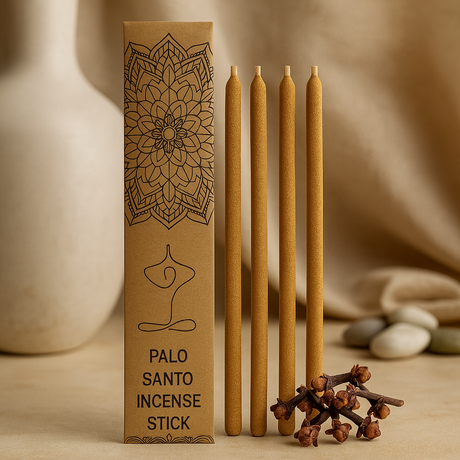
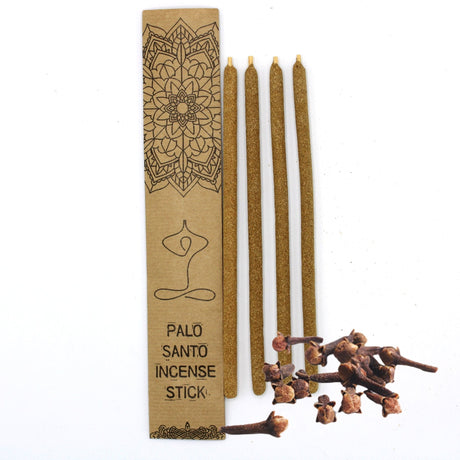
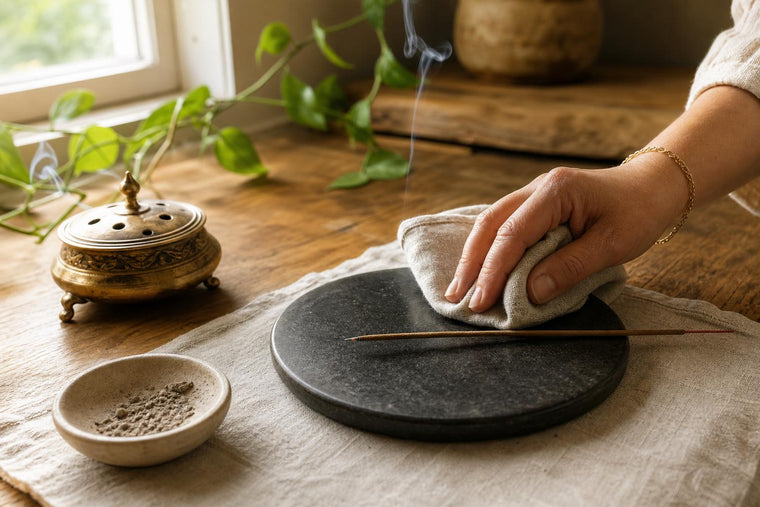
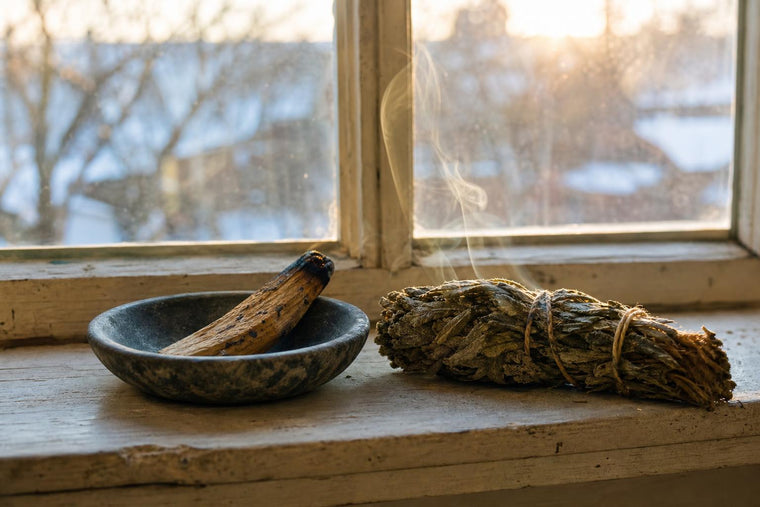
There is a Japanese word for the practice of paying attention to incense, and it is not "to smell." Kōdō, the art of appreciating incense as tea ceremony and flower arranging are arts, calls the act monko: literally, "to listen to incense." Nobody chose that word by accident. It assumes, correctly, that a nose left with one unchanging note will eventually stop hearing it, the way an ear tunes out a fan running in the next room. If you have ever lit a candle, caught its scent for the first ten minutes, and then genuinely could not smell it an hour later, you have already lived the problem this word was built to describe. Kōdō did not treat that fading as a flaw to fix. It built an entire practice around it.
Listening, Not Smelling
What monko names, biology explains without much mystery. The receptor neurons lining the inside of your nose respond strongly to a new smell and then, if that smell keeps arriving unchanged, their response quietly weakens. Somewhere past that, the brain stops flagging a signal that carries no new information. It is not a fault. It is closer to triage: your attention is a limited resource, and a smell that has already told you everything it is going to tell you gets filed away so you can notice the next thing that might matter. Kōdō's choice of "listening" over "smelling" fits this rather well, because it treats the nose as something that habituates the way an ear does, and asks the practitioner to work with that fact rather than fight it.
A Tired Nose Is Not a Blind One
This habituation that kōdō calls listening rather than smelling has a narrow reach, and knowing its edges matters more than knowing its name. It is scent-specific. A nose that has stopped registering the candle you lit an hour ago will usually catch the coffee on the stove, the rain outside, or a different candle entirely, without delay. That is the tell that nothing is actually wrong with your sense of smell. True anosmia, a broader loss of smell that does not lift when a new scent enters the room, is a different and much less common thing. If you can smell almost anything else in the same ten minutes that the candle has gone quiet, you have adaptation, not loss, and the two should never be confused for each other or treated with the same worry.
The Trail You Cannot Smell Yourself
The same narrowness is what makes the next part so easy to misread. Someone else walking into your room a few minutes later will often smell the candle you have stopped noticing at all. Perfumery has a specific word for the part of this that has nothing to do with your tired nose: sillage, French for a boat's wake, describing the trail a scent leaves behind a person or in a room after they have passed through, or simply after enough time in it. Your scented candle is still doing exactly what it did an hour ago. The air still carries it. What has changed is only the instrument reading it, and that instrument happens to be attached to you. It is worth testing rather than assuming: ask someone who has just walked in what they smell, before deciding the candle itself has gone stale.
How Perfumers Reset Their Attention
Once you know the trail is real and only your own reading of it has dulled, the question becomes practical: how do you reset the reading. People whose work depends on a reliable nose, perfumers, incense-testers, anyone assessing scent for a living, deal with this constantly and have a simple answer for it. They interrupt one smell with a different, neutral one before returning to judge the first. A perfumer's own forearm, warmed and familiar, works for this. So do a handful of plain coffee beans kept on the bench. Neither is magic; a second, unrelated scent gives the nose's receptors something genuinely new to respond to, which breaks the pattern of "nothing has changed" that caused the fatigue in the first place. My own habit, most mornings, is to light incense before I sit for japa, and I notice the same thing there: by the second minute the scent has already faded from attention, and the only way back to it is to step out and return, not to sit and strain.
Short Returns, Not One Long Sitting
Kōdō arrived at the same answer long before any perfumer had a bench to work from, and gave it a rule rather than a workaround. It never asked its practitioners to sit through one long burning, waiting for a scent that only fades further the longer it runs. It asked for short returns: come to the smell, leave it, come back. Each return is a fresh hearing, not a continuation of one that has already worn thin, and the rule works exactly the same way for a candle at your desk as for incense on an altar. If a scent seems to have stopped working, leave the room for a few minutes rather than for the evening; the receptor response recovers surprisingly quickly, and most people find the scent back, sharp as before, the moment they walk back in. Keep something plain and unscented nearby, a strip of card, a patch of open air by a window, so you always have a way to reset before deciding a new scent has failed. Whether you burn a soy wax candle with a wooden wick, move through a shelf of aromatherapy oils and incense, or reach for a room spray as that clean interruption between the two, the instruction stays the same: don't judge a scent from inside one unbroken hour with it.
In a formal kōdō gathering, this is not left to good intentions. Each listener takes no more than three breaths from the incense burner before passing it on to the next person, then waits their turn to receive it again. The nose is deliberately handed away before it can tire, rather than left to prove how long it can hold attention. That is the method in full, stripped of ceremony: not a longer sitting, but a shorter one, repeated.