Dreamcatcher
A dreamcatcher is a small hoop with a woven web, first made by the Ojibwe people of North America. Mothers and grandmothers hung them over babies' cradles; tradition says the web holds bad dreams and lets good ones pass. From the 1960s it spread among many Native nations, and from there around the world.
- People
- Ojibwe (Anishinaabe), North America
- Ojibwe name
- asabikeshiinh, spider
- Hung traditionally
- over a baby's cradleboard

As a gift

Shop Dreamcatcher
- Double Cotton Bedspread Wall Hanging Dreamcatcher Black White Cotton
 India 5.0 (1)£22.99Members: +£1.25 back
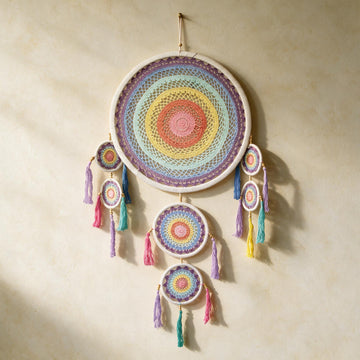


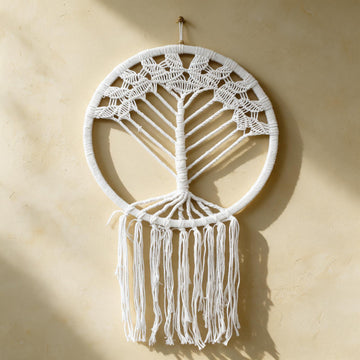

 Turkey

 India

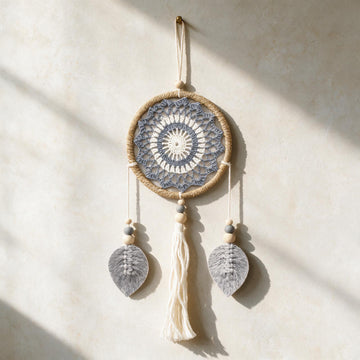


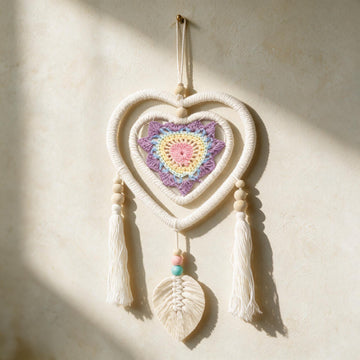


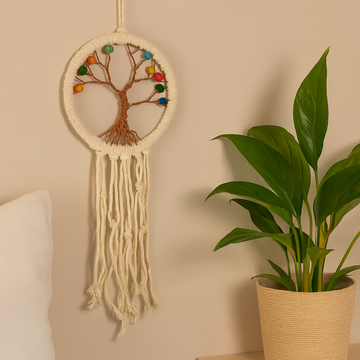
A small practice
- Before bed, put the phone away and sit on the edge of the bed for a minute.
- Look at the web and let the last thought of the day settle into it.
- Lie down and leave the thought there until morning.
Frequently asked questions
What is the meaning of a dreamcatcher?
In Ojibwe tradition the web on the hoop holds bad dreams, which fade with the morning light, and lets good dreams pass through to the sleeper.
Where should you hang a dreamcatcher?
Above the bed or near the bedroom window, where morning light reaches it. Traditionally it hung over a baby's cradleboard.
Is it cultural appropriation to have a dreamcatcher?
Views differ among Native people. What most ask for is respect: know where it comes from, do not present it as your own tradition, and buy from Native makers when you want an authentic piece.
Do dreamcatchers have feathers?
Traditional ones may carry a single feather. Many modern dreamcatchers use beads, threads or small wooden charms instead.
Sources: Wikipedia, Dreamcatcher; National Museum of the American Indian, Dreamcatcher (Great Lakes, 1970s)