Sit with one long, sounded OM and something shifts. The breath slows. The room seems to widen. Before it is a symbol on a pendant or a panel on a wall, OM is a sound you make with your own body — a small daily ritual of attention rather than anything done to you. In this piece we follow it inwards: where the syllable comes from, what its familiar curves are said to mean, how it is chanted through the body, and how to begin your own quiet practice. If you keep spiritual goods and ritual objects near where you sit, this is the story behind one of the oldest of them.
The origin of OM
OM, also written Aum, is more than a sound. It is a symbol that carries deep meaning in Hindu and yogic tradition. In Hindu tradition, OM is revered as the primal sound from which the cosmos is said to arise — a single syllable held to hold the whole.
Its story is a weave of history, language, and devotion, which is part of why it sits so near the centre of so many practices.
Where did OM come from?
People have traced the roots of OM for a very long time. The Upanishads — among the oldest and most influential of the Hindu texts — offer several threads. They connect OM to words meaning ‘yes’, ‘let it be so’, and to the sense of urging or reaching towards something.
Some scholars look further back, to languages older than Sanskrit. The Indologist Asko Parpola has proposed a Dravidian borrowing: in the Jaffna Tamil of northern Sri Lanka, the word for ‘yes’ is close to it. It remains a hypothesis rather than settled fact — but a careful and well-argued one.
OM in the Upanishads
It is in the Upanishads that OM comes fully into focus. They describe it as the ‘cosmic sound’ — a syllable that gathers everything from the making of the world to the essence of life into one resonant note. The texts return to it again and again, treating it not as decoration but as the seed of all sound.

Understanding the symbol of OM
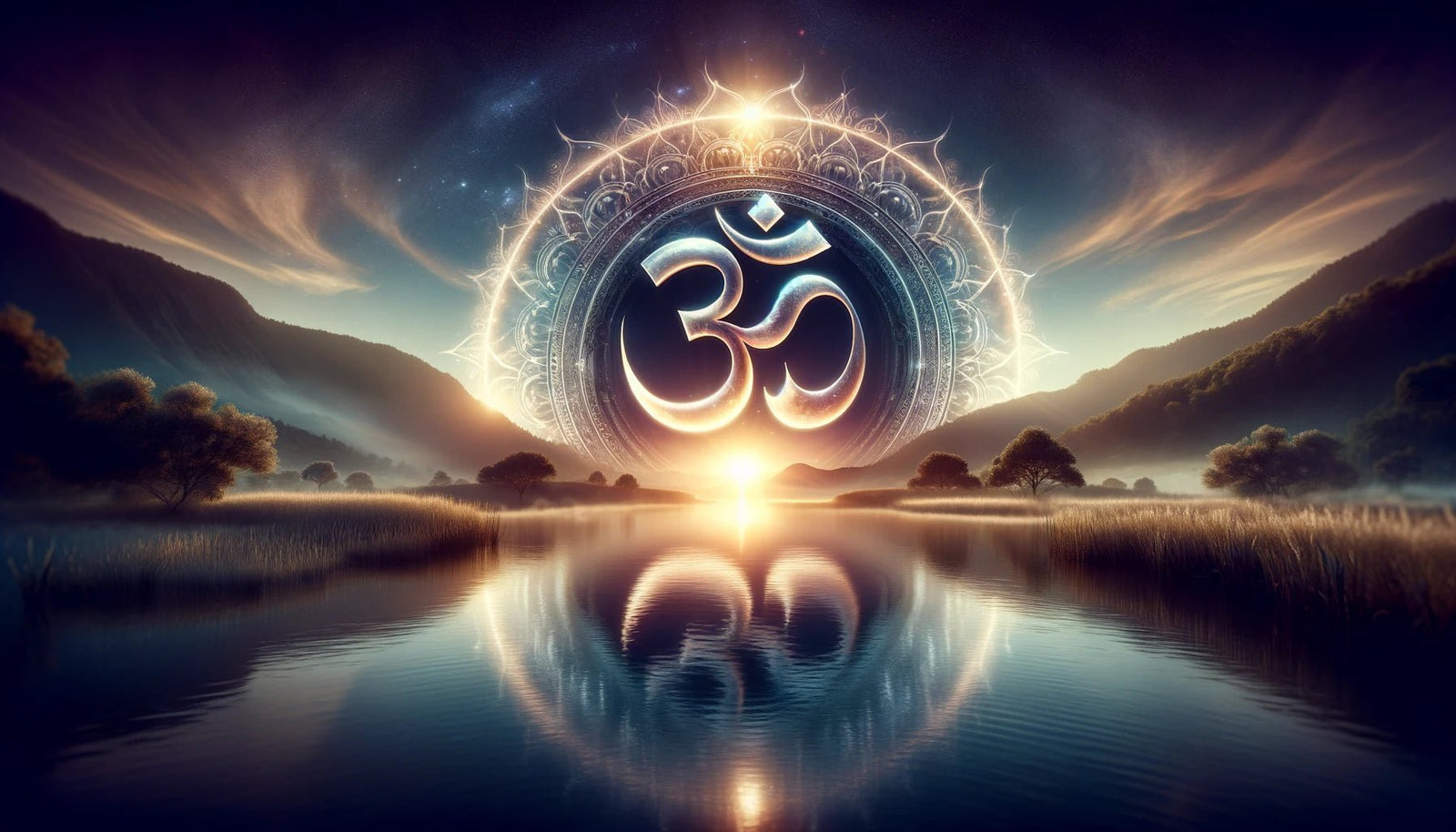
The OM symbol folds a great deal of meaning into a few curves and a dot. Read slowly, it becomes a small visual map of consciousness — the waking world, the dreaming mind, and what lies quietly beneath them both.
The design and its meanings
The symbol is built from several parts, each with its own reading. At a glance it may look simply beautiful, but tradition gives every stroke a place:
- The large lower curve — the waking state (jagrat), where you move through your everyday world.
- The middle curve — the dream state (swapna), the realm of desire and imagination.
- The upper curve — the deep-sleep state (sushupti), where dreams dissolve and the mind grows still.
- The dot, or bindu — the absolute, the fourth state (turiya): the quiet ground in which the other three are said to rest.
- The crescent beneath the dot — Maya, the veil of illusion that tradition says keeps us from resting in that ground.
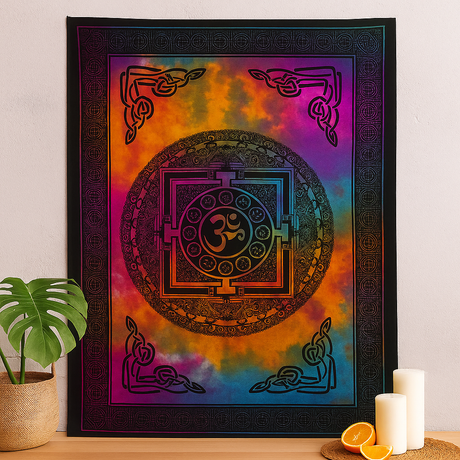
Seen this way, the symbol is less a motif and more a small diagram of the journey inward — which is why it appears on so many OM-symbol pieces and other meaningful objects. A printed panel can keep the symbol you have just decoded in view in your own space.

The symbolism of OM
When you chant OM, tradition holds that you are sounding the essence of existence itself. The symbolism rests on two simple things:
- The A-U-M sounds — these three tones map to the waking, dreaming, and deep-sleep states. They are read, too, as the whole arc of a life: arising, unfolding, dissolving, and what is said to lie beyond.
- The silence after OM — as much a part of the chant as the sound. This pause stands for turiya, the settled state beyond the three. It is a reminder that under the noise of a day there is a quiet worth returning to.
How to chant OM: a guide to connection
Chanting OM is not about getting it right. It is about intention and attention — a steadying ritual you bring yourself to, rather than a sound that performs anything on your behalf. Approached with care, it can become a quiet anchor in a practice.
The journey through the chakras
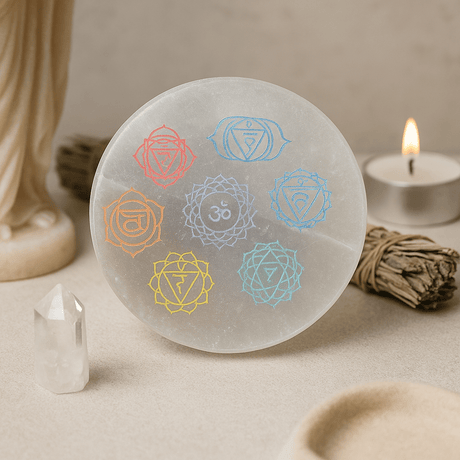
Picture the body as a pathway for attention, with seven main energy centres along the spine, each linked in yogic tradition to a different aspect of being. The chant is often used to guide the energy through the seven chakras, from the base of the spine to the crown — moving awareness gently up through the body. You are not commanding anything; you are using the sound as a thread to follow inward.
Starting your chant
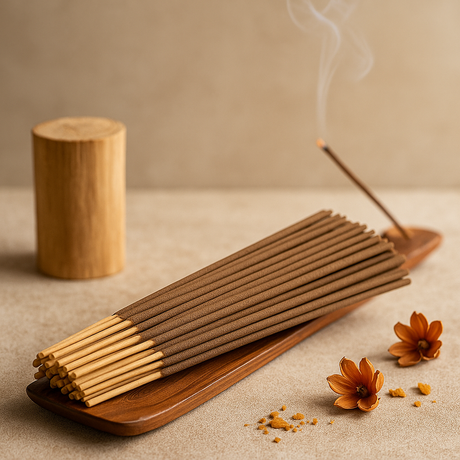
- Find your space — choose a quiet spot where the day’s distractions fall away and you can turn inward. A little incense to settle the space before you begin can mark it as somewhere you pause.
- Posture matters — sit comfortably with your spine straight, leaving a clear passage for breath and sound.
- Breathing in — take a slow, deep inhale and let yourself settle before the first sound.
- The sound of creation — feel the ‘A’ begin low in the belly, near the base of the spine, and let it open the journey upward.
- Sustaining the sound — move into the ‘U’, carrying it up through the chest, throat, and the space between the brows, feeling the resonance rise.
- The final dissolution — close on the ‘M’, a long hum that, with the breath, dissolves softly at the crown — and then rest in the silence before the next round.
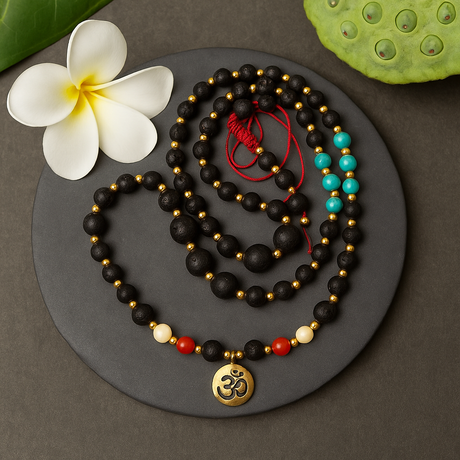
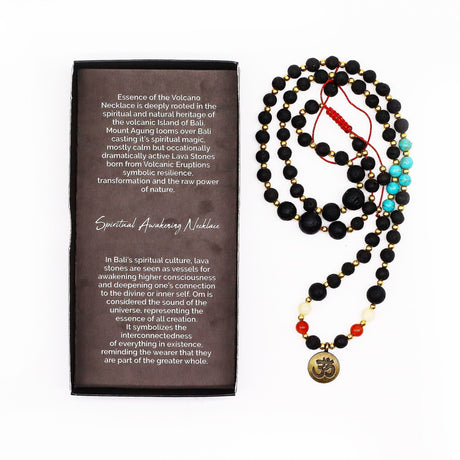
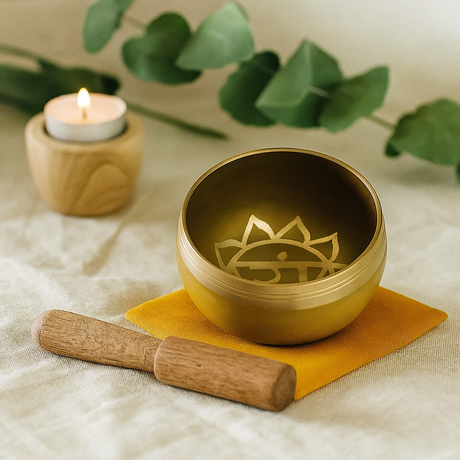
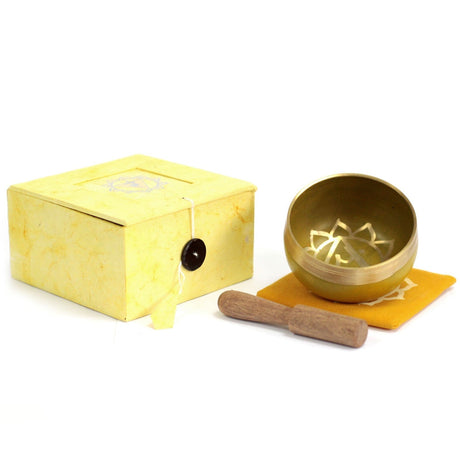
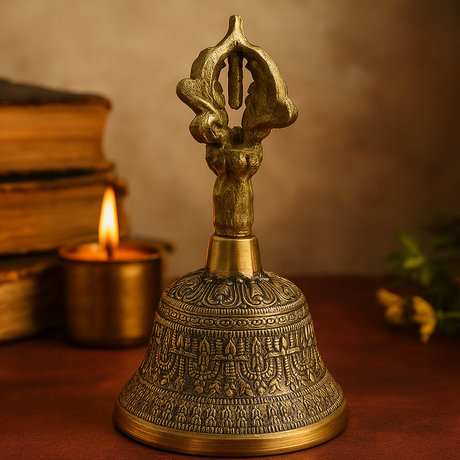
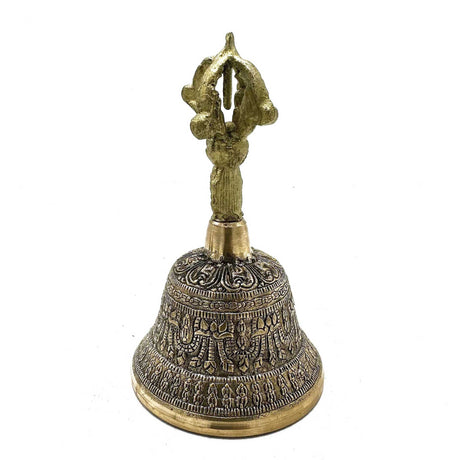
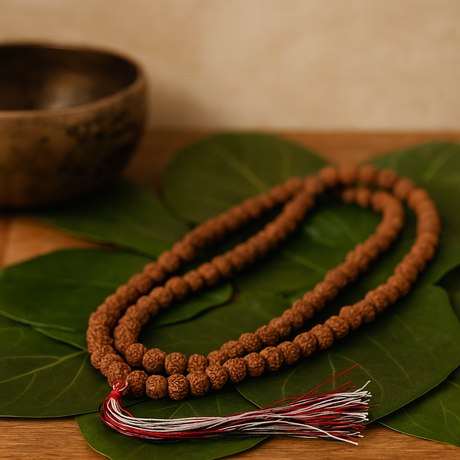
Some people like a mala to count your rounds, the traditional 108 beads keeping the hands settled and the mind on the chant. Others bring a singing bowl to open and close a sitting, or a set of bells to mark the silence that follows. None of it is required — these are simply tools for sound and vibration practice that help build the ritual.
Embracing the practice
Chanting OM for around 15 minutes, in a voice that is strong yet gentle, can deepen a meditation and leave a real sense of calm. The value lives not in the technique but in your sincerity and your willingness to stay present. Begin with five unhurried minutes if that feels easier — the steadiness builds over time.

What we know, honestly
Many people find that slow, sustained humming settles the breath and quietens a busy mind — a steadying ritual rather than a cure. There is growing research interest in chanting and relaxation, though the picture is far from settled.
One often-cited example: a small 2011 pilot study at NIMHANS in Bangalore observed quieter activity in some emotion-regulating regions of the brain while volunteers chanted OM, and the authors raised the possibility of a link to the vagus nerve. It is early, single-study evidence — suggestive, not conclusive. We would rather say less and say it plainly: OM is a tool you work with, not a force that works on you. The benefit lives in the attention you bring.
The importance of intention
The intention behind the chant matters as much as the technique. A clear, sincere intention gives the practice its shape — name quietly what you are sitting for, then let the sound carry it. Approached with a settled heart and a focused mind, OM becomes less a thing you produce and more a way of returning to the present.

A sound to return to
In the long hum of OM, tradition hears the rhythm of the cosmos and, beneath it, the quiet of one's own attention. The syllable bridges the everyday and the contemplative — not by unlocking a secret, but by giving the mind a single, steady place to rest. Chant it for a few minutes, sit in the silence that follows, and let it become a small daily ritual that brings you back to the present. Some like to wear the OM symbol day to day as a quiet reminder of that same return. However you keep it near, the practice is yours — the sound is only the thread.