Some marks have followed us for thousands of years. A looped cross scratched into a temple wall. A five-pointed star. A wheel, a lotus, an eye. They turn up across cultures that never met, drawn by people trying to hold a large idea — life, balance, protection, renewal — in a shape small enough to carry.
This is a quiet walk through twenty-nine of them. Not a ranking, and not a promise: a symbol does not act on the world by itself. What it does is hold a note. You choose one, you keep it close, and it becomes a reminder of an intention you have named. The work stays with you. Read these as cultural and historical context — lenses for reflection — and see which ones speak to you, each a beacon of wisdom carried down through time.

Infographic design by DealsDaddy, a voucher-code website.
1. Ankh (Egyptian Symbol of Life)
The Ankh — a cross with a loop at the top — is one of the oldest Egyptian symbols of life and eternity. It appears in tomb paintings and temple carvings, held in the hands of gods as a sign of the breath of life itself. More than five thousand years on, the shape still reads clearly.
Today it adorns jewellery and art, worn less as decoration than as a small daily reminder of vitality and continuity. The Ankh reminds us of our connection to the past and to the life force people have always tried to name.

2. Pentagram (Five-Pointed Star)
The Pentagram — a five-pointed star, often drawn within a circle — has roots in ancient Mesopotamia, later adopted by the Pythagoreans in Greece, who read mathematical and philosophical meaning into its proportions. In many later traditions its points stand for the four elements of earth, air, fire and water, crowned by spirit.
In modern Wiccan and pagan practice it is widely recognised as a symbol of faith and the natural order. It is traditionally worn or kept as a sign of protection — a focus for the wearer's intention rather than a force acting on its own.

3. Yin Yang (Taoist Symbol of Balance)
The Yin Yang holds two halves in one circle — light and dark, soft and firm, each carrying a seed of the other. It speaks to the way seemingly opposite forces are bound together and depend on one another.
The concept of yin and yang is ancient, rooted in early Chinese thought; the familiar circular symbol we know today was formalised much later, around the eleventh century. Its calm endures in modern mindfulness and contemplative practice, guiding individuals towards balance in life — the reminder that wholeness includes its opposite.

4. Flower of Life (Sacred Geometry)
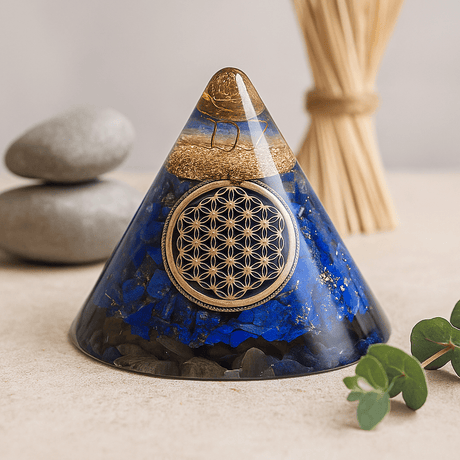
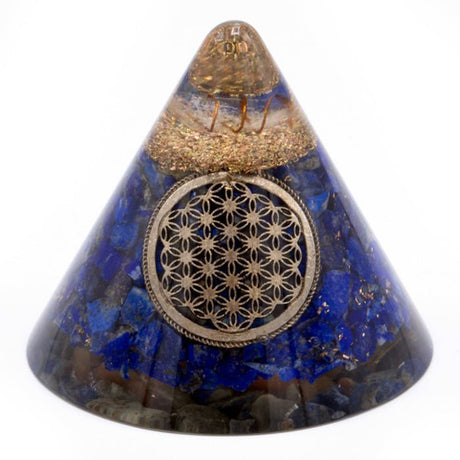
The Flower of Life is a pattern of evenly spaced, overlapping circles that fold into a flower-like grid. It turns up across many cultures as a way of picturing how everything connects — a visual shorthand for life unfolding from a single point.
The motif appears at the Temple of Osiris in Abydos, Egypt, though its exact age there is debated. In contemporary practice it is often used as a focus for meditation. Many feel this sacred pattern is a blueprint of creation — a quiet geometry to rest the eye and the mind upon.

5. Ouroboros (The Eternal Cycle)
The Ouroboros — a serpent devouring its own tail — comes down to us from Egyptian and Greek traditions as an image of the eternal cycle. End meets beginning; nothing is finally lost, only turned again.
It appears often in alchemical texts, where it stands for the round of life and death and for transformation that never truly stops. As a symbol it invites a long view: that endings and beginnings are the same edge, seen from different sides.

6. Eye of Horus (Protection and Insight)
The Eye of Horus has its origins in ancient Egypt, where it was associated with protection, royal power and wellbeing. In myth the eye is wounded and made whole again, which is partly why it came to stand for restoration as well as watchfulness.
Today it is often kept as a protective talisman for protection and insight, a thread between ancient belief and modern life. It is traditionally worn as a symbol of protection — held alongside the wearer's own attention, not in place of it.

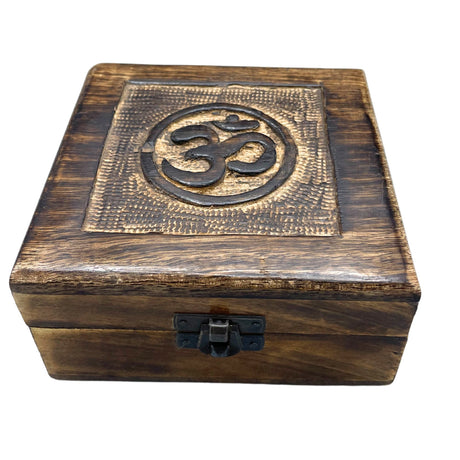
7. Om (Sacred Sound of the Universe)
Om is a sacred syllable in Hinduism, Buddhism and Jainism — often described as the sound of creation, the vibration underlying everything. Its roots trace back to ancient India, where it opens and closes prayer and recitation.
In meditation and yoga, chanting Om connects practitioners to a higher consciousness and to a sense of the whole. Spoken slowly, it is less a word than a settling — a way to gather attention before practice begins.

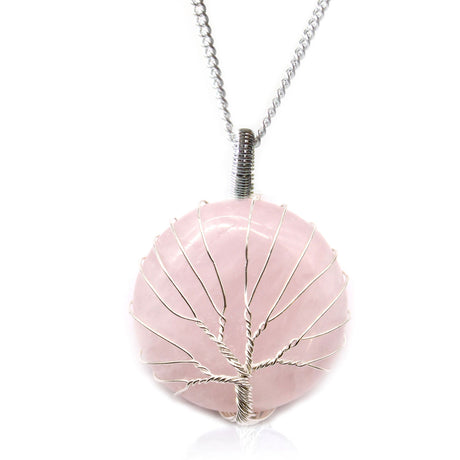
8. Tree of Life (Interconnection of All Life)
The Tree of Life appears in many cultures and faiths, picturing how earth, the spirit world and the heavens are bound together. Roots below, branches above, one trunk between — it makes the idea of connection something you can see.
Modern spiritual practice often returns to it as a way to reflect on how the physical and the unseen relate. However you read it, the Tree of Life reminds us of our universal connection — that nothing grows entirely alone.

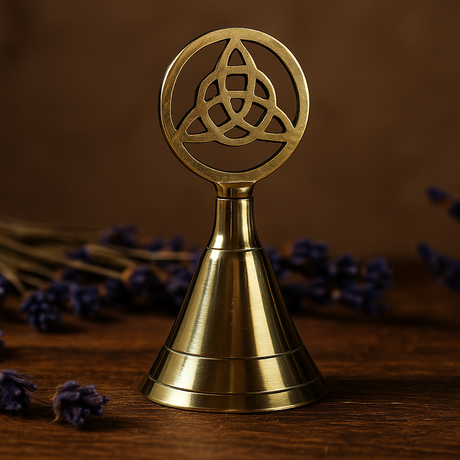
9. Triquetra (Celtic Knot of Continuity)
The Triquetra, or Trinity Knot, comes from Celtic and Norse art — three interlaced arcs with no clear beginning or end. It speaks of continuity and of things bound together in threes.
Both Christian and pagan traditions have read their own triads into it: mind, body and soul; earth, sea and sky. Today it adorns jewellery and art as a sign of unbroken, cyclical life and the interweaving of what seems separate.

10. Hexagram (Star of David)
The Hexagram, known as the Star of David in Judaism, is formed of two interlocking triangles. It is most strongly associated with Jewish identity and faith, though six-pointed stars appear in many older contexts too.
One traditional reading sees the upward and downward triangles as the meeting of opposites — fire and water, the heavenly and the earthly. In that sense it is often described as a bridge between realms, the physical and the spiritual held in one shape.

11. Mandala (Cosmic Diagram)
Mandalas come from Hindu and Buddhist traditions — intricate, symmetrical designs that picture the universe and the self radiating from a centre. The eye is drawn inward, ring by ring, towards the still point.
They are widely used as meditation tools, the symmetry helping to settle a busy mind. Today they also appear in art therapy and quiet creative practice — a way to slow down and look closely at one thing.

12. Swastika (Symbol of Auspiciousness)
Long before the twentieth century, the swastika was — and in many places still is — a symbol of good fortune in Hinduism, Buddhism and Jainism. It stands for the sun, prosperity and the turning cycle of life, and appears in temples, doorways and festival art across Asia.
Its appropriation by the Nazi regime was a violation of that meaning, not its origin. We name both honestly here: the older, peaceful sense is the true one, and it is the only sense we celebrate. Context is the only respectful way to write about a symbol with two such different histories.

13. Caduceus (Commerce and Communication)
The Caduceus — two snakes wound around a winged staff — belongs to Hermes in Greek myth, the messenger god of commerce, eloquence and negotiation. It is a symbol of exchange and of balancing opposing forces to reach agreement.
It is often mistaken for a medical emblem, but the true symbol of medicine is the single-snake Rod of Asclepius. Worth knowing the difference: read rightly, the Caduceus speaks to communication and the careful meeting of two sides, not to healing.

14. Phoenix (Rebirth and Renewal)
The Phoenix, the mythical bird that rises from its own ashes, appears in Greek, Egyptian and Chinese traditions as an image of rebirth and resilience. What burns away is also what begins again.
It speaks to the experience of coming through a hard season and finding something renewed on the other side. As a symbol it carries hope without denying the fire — rising is part of the story, but so is the ash.

15. Alchemy Symbols (Transformation)
The symbols of medieval alchemy describe, on the surface, the turning of base metals into gold. Read more deeply, they were always about inner change too — the slow purification of the self, gold standing in for wisdom.
Rich with history, these marks still draw people interested in transformation as a practice rather than a single event. They frame growth as patient work — heat, dissolve, refine, repeat — a metaphor that outlasted the laboratory.

16. Vesica Piscis (Sacred Geometry of Creation)
The Vesica Piscis is formed where two circles of equal size overlap, their centres each touching the other's edge. The almond shape between them has long been read as a symbol of creation — the meeting of two worlds, physical and spiritual.
It is a foundational figure in sacred geometry, often described as the birth of light, form and consciousness from union. In contemporary practice it stands for unity and possibility: from two, something new is made.

17. Labyrinth (Journey and Spiritual Growth)
A labyrinth is not a maze — there are no wrong turns. It is a single winding path that always leads to the centre and back out again, an image of life's journey and of pilgrimage.
Found in ancient cultures and in the floors of old cathedrals, it is still walked today as a moving meditation. Step by step, the path does the thinking for you; you simply follow it inward and out, and let the mind quiet.

18. Triskelion (Progress and Personal Growth)
The Triskelion — three interlocked spirals turning from a shared centre — is an ancient sign of movement and progress. Its roots reach back to the Neolithic era, and it became prominent in Celtic culture.
The threefold spin suggests forward motion: cycles of growth that move on rather than simply repeat. For many it is a quiet encouragement to keep going — to treat change as a direction, not a disruption.