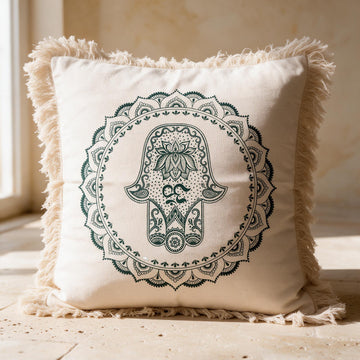
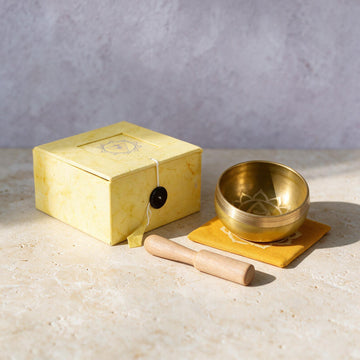
A spiritual symbol is a shape that carries an idea small enough to hold: life for the Ankh, protection for the Hamsa, the sound of creation for Om, balance for the Yin Yang. Below are thirty of them, with where each comes from and what it has traditionally meant. A looped cross on a temple wall, a five-pointed star, a wheel, a lotus, an eye: they turn up in cultures that never met, drawn by people who wanted to keep a large thought within reach.
In brief
- 30 symbols from Egyptian, Hindu, Buddhist, Taoist, Celtic, Jewish, Christian and pagan traditions, each with its origin and its traditional meaning.
- Choose by what you are working towards: renewal (Phoenix, Spiral), balance (Yin Yang), grounding (Tree of Life), protection (Hamsa, Nazar).
- The tradition pairs a symbol with a practice: name your intention, keep the shape where you will see it, and let it hold the note. Pendants, statues and wall pieces for most of them are on our symbols page.
 Symbols & altar836 pieces
Open →
In this guide 31
- 1Ankh
- 2Pentagram
- 3Yin Yang
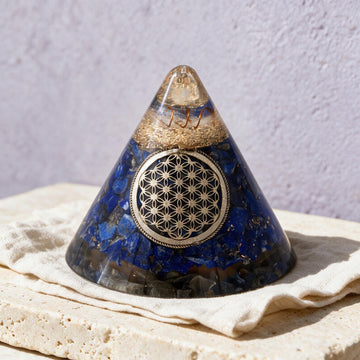
- 4Flower of Life
- 5Ouroboros
- 6Eye of Horus
- 7Om
- 8Tree of Life
- 9Triquetra
- 10Hexagram
- 11Mandala
- 12Swastika
- 13Caduceus
- 14Phoenix
- 15Alchemy symbols
- 16Vesica Piscis
- 17Labyrinth
- 18Triskelion
- 19Hamsa
- 20Lotus
- 21Chakras
- 22Dharmachakra
- 23Spiral
- 24Sigils
- 25Merkaba
- 26Horned God
- 27Triple Goddess
- 28Nazar
- 29The Cross
- 30Endless Knot
- 31How to keep one symbol close
| Symbol | From | Traditionally means |
|---|---|---|
| 1Ankh | Ancient Egypt | life and eternity |
| 2Pentagram | Mesopotamia, Pythagorean Greece; modern paganism | the four elements crowned by spirit |
| 3Yin Yang | Early Chinese (Taoist) thought | balance of opposites |
| 4Flower of Life | Sacred geometry; Abydos, Egypt | how everything connects |
| 5Ouroboros | Egyptian and Greek; alchemy | the eternal cycle |
| 6Eye of Horus | Ancient Egypt | protection and restoration |
| 7Om | Hinduism, Buddhism, Jainism | the sound of creation |
| 8Tree of Life | Many cultures and faiths | earth, spirit and heaven bound together |
| 9Triquetra | Celtic and Norse art | continuity, things in threes |
| 10Hexagram | Judaism; older six-pointed stars | the meeting of opposites |
| 11Mandala | Hindu and Buddhist traditions | the universe and the self around one centre |
| 12Swastika | Hinduism, Buddhism, Jainism | good fortune, the sun |
| 13Caduceus | Greek myth (Hermes) | commerce and communication |
| 14Phoenix | Greek, Egyptian, Chinese | rebirth and renewal |
| 15Alchemy symbols | Medieval alchemy | inner transformation |
| 16Vesica Piscis | Sacred geometry | creation, the union of two |
| 17Labyrinth | Ancient Crete; cathedral floors | the path, pilgrimage |
| 18Triskelion | Neolithic; Celtic culture | progress and growth |
| 19Hamsa | Middle East, North Africa | protection, blessing |
| 20Lotus | Hindu and Buddhist traditions | purity and awakening |
| 21Chakras | Indian yoga and tantra | seven centres, from spine to crown |
| 22Dharmachakra | Buddhism | the Buddha's teaching, the path |
| 23Spiral | Nature; Neolithic art | growth that widens |
| 24Sigils | Ceremonial magic; modern witchcraft | one intention, made into a mark |
| 25Merkaba | Jewish mysticism; modern esoterica | the divine chariot |
| 26Horned God | Wicca, modern paganism | the wild, the turning seasons |
| 27Triple Goddess | Neopaganism | maiden, mother, crone; the moon |
| 28Nazar | Turkey, the Mediterranean and beyond | protection from envy |
| 29The Cross | Christianity and older cultures | where heaven and earth meet |
| 30Endless Knot | Tibetan Buddhism | wisdom and compassion interwoven |
-
1
Ankh
Egyptian symbol of life
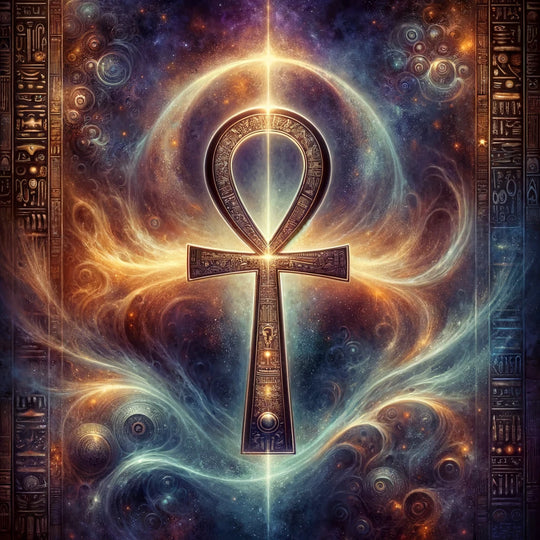
The Ankh, a cross with a loop at the top, is one of the oldest Egyptian signs for life. In tomb paintings the gods hold it by the loop and offer it to the nose of a pharaoh: the breath of life, given as a gift. The hieroglyph for "life" is the same shape, so for an Egyptian scribe the symbol and the word were one thing.
More than five thousand years on, the shape still reads at a glance. Today it is worn mostly as a pendant, a small daily reminder of vitality and of how far back the wish to name the life force goes.
 Ankh Pendant Silver Plated 45cm CordSee it →
-
2
Pentagram
The five-pointed star
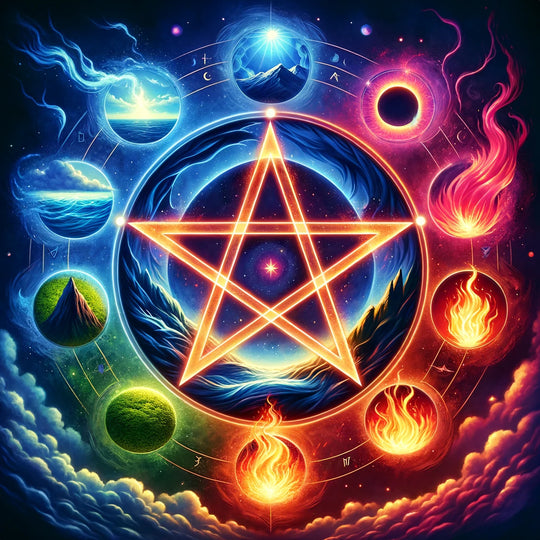
The Pentagram, a five-pointed star often drawn inside a circle, appears on Mesopotamian seals and was later taken up by the Pythagoreans in Greece, who prized its proportions: every line cuts the others in the golden ratio. In many later traditions its five points stand for earth, air, fire and water, crowned by spirit.
In modern Wiccan and pagan practice it is a sign of faith and of the natural order, worn or set on an altar as a mark of protection and a focus for the practitioner's intention.
 Pentagram Incense Holder Polished Aluminium 11.5cmSee it →
-
3
Yin Yang
Taoist symbol of balance
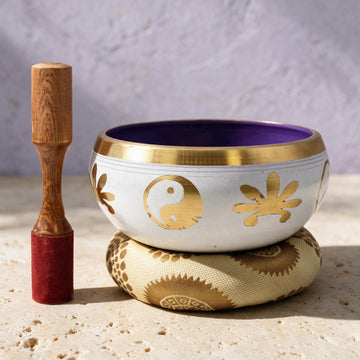
The Yin Yang holds two halves in one circle, dark and light, soft and firm, each carrying a dot of the other. The point is in the dots: nothing is wholly one thing, and each force already contains the seed of its opposite.
The idea of yin and yang is ancient Chinese thought; the round diagram came much later, first in Song dynasty China around the eleventh century, and its familiar swirling form later still. It remains one of the clearest pictures of balance anyone has made, which is why it travels so easily from philosophy books to tattoos to incense holders.
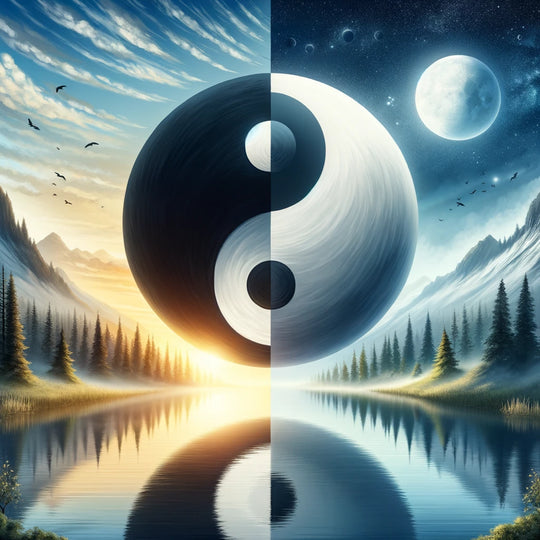
 Palo Santo Holder Teak Wood Yin Yang TeardropSee it →
-
4
Flower of Life
Sacred geometry
The Flower of Life is a grid of evenly spaced, overlapping circles that fold into six-petalled flowers. Draw one circle, set the compass point on its edge, draw again, and the pattern grows by itself: a picture of life unfolding from a single point.
The motif appears at the Temple of Osiris in Abydos, Egypt, though how old those drawings are is still debated, and Leonardo da Vinci sketched it in his notebooks. Today it is used as a focus for meditation and as a pattern to rest the eye on.
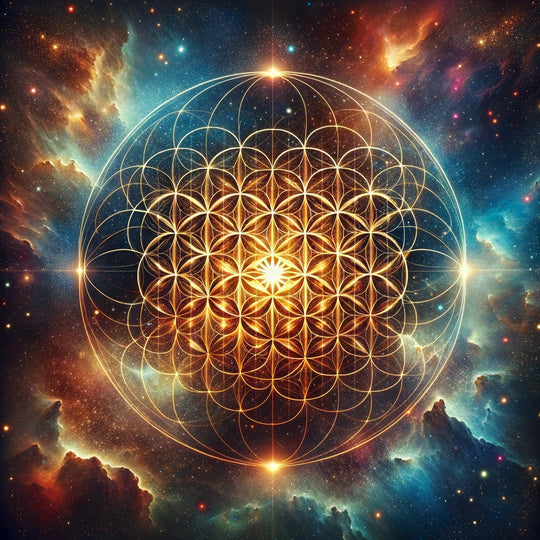
 Essential Oil Diffuser Necklace Flower of Life 25mmSee it →
-
5
Ouroboros
The eternal cycle
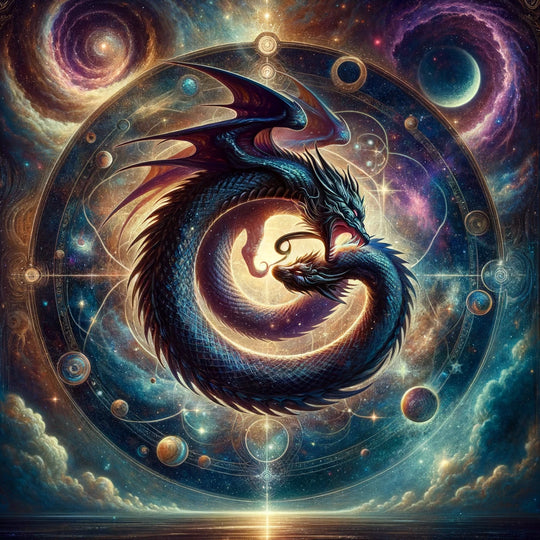
The Ouroboros, a serpent swallowing its own tail, first appears in Egypt, on a shrine in the tomb of Tutankhamun, and passes through Greek writing into alchemy. End meets beginning; nothing is finally lost, only turned again.
In alchemical manuscripts it stands for the round of life and death and for change that never stops. It asks for a long view: endings and beginnings are the same edge, seen from different sides.
-
6
Eye of Horus
Protection and restoration
The Eye of Horus comes from ancient Egypt, where it was linked with protection, royal power and good health. In the myth, Horus loses his eye fighting his uncle Set, and in one telling the god Thoth makes it whole again, which is why the sign came to mean restoration as much as watchfulness.
Egyptians set it into amulets for the living and wrapped it with the dead. People still wear it as a protective sign, a way of keeping their own attention awake.
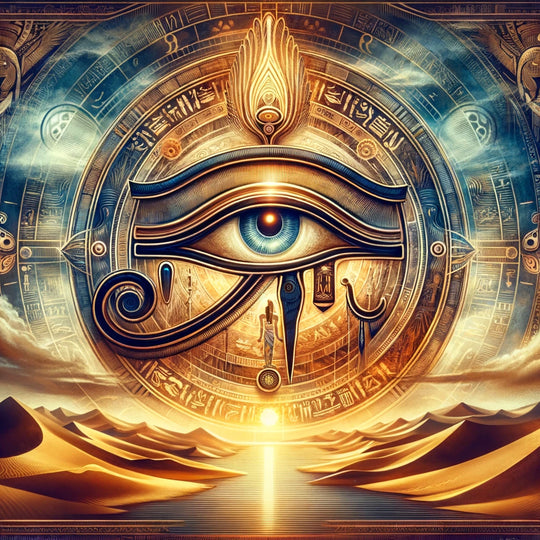
 Eye of Horus Pendant Silver Plated 45cm Cord IoliteSee it →
-
7
Om
The sacred sound
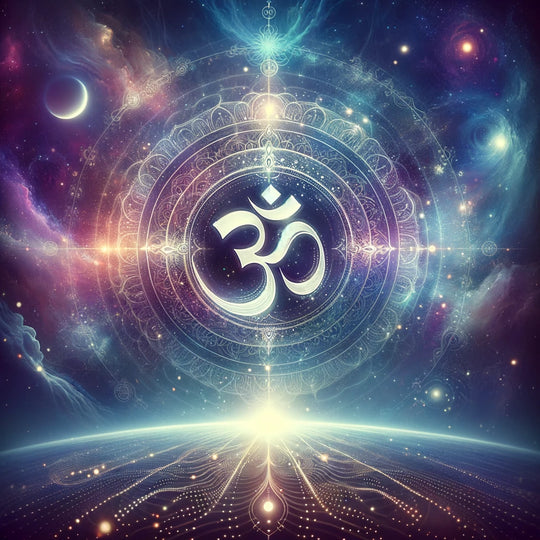
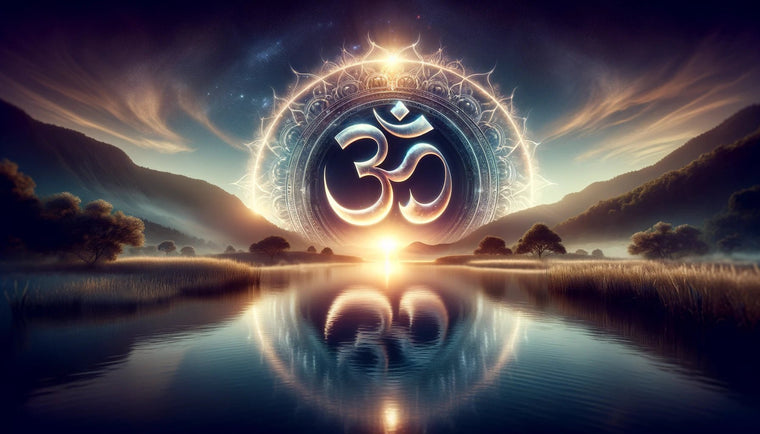
Om is a sacred syllable in Hinduism, Buddhism and Jainism, described in the Upanishads as the sound of all that is. It opens and closes prayers and recitations, and in Sanskrit it is written with a single sign, ॐ, the one most people now recognise.
Spoken slowly it has three sounds, A, U and M, and a silence after them. Chanted at the start of yoga or meditation, it gathers the attention before anything else begins. Our longer piece on the meaning of Om goes further into the syllable.
 Incense Holder Polished Aluminium Om Round 11cmSee it →
-
8
Tree of Life
Everything connected
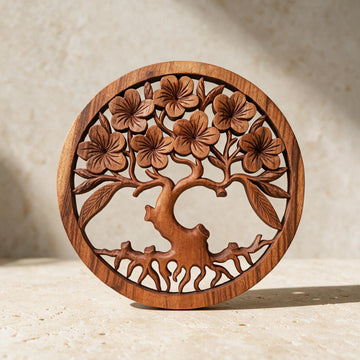
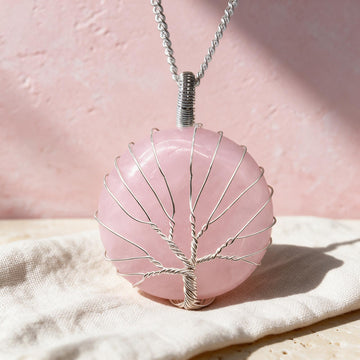
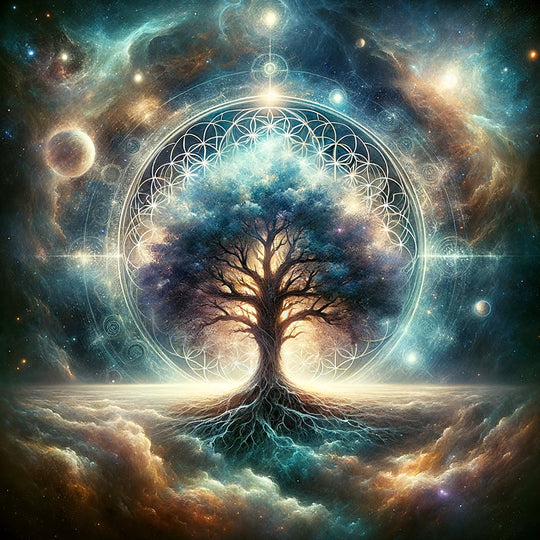
The Tree of Life appears in many cultures and faiths: Yggdrasil in Norse myth, the Kabbalah's diagram of ten spheres, the tree in the Garden of Eden, the Bodhi tree under which the Buddha sat. Roots below, branches above, one trunk between, it makes the idea of connection something you can see.
That is why it hangs on so many walls: one picture of earth, the unseen and the heavens held together, and of nothing growing entirely alone. More in our guide to the Tree of Life.
 Tree of Life Wall Art, Cotton ClassicSee it →
-
9
Triquetra
The Celtic knot of three
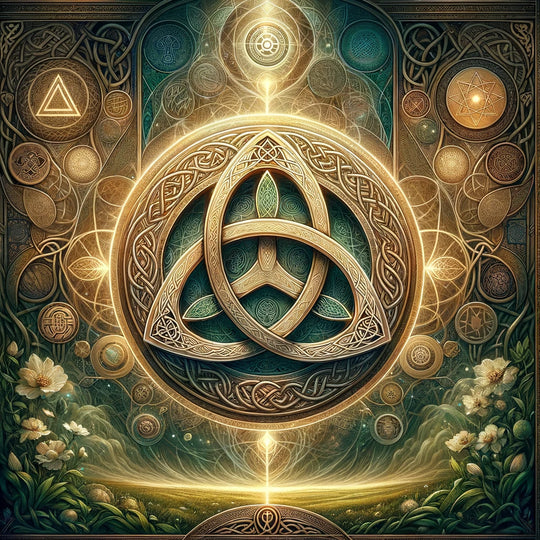
The Triquetra, or Trinity Knot, is three interlaced arcs with no beginning and no end. It is carved on Norse rune stones and drawn in the margins of Celtic gospel books such as the Book of Kells.
Christian and pagan readers have each found their own threes in it: Father, Son and Holy Spirit; maiden, mother and crone; land, sea and sky. Today it is worn as a sign of continuity, of separate things woven into one.
 Brass Altar Bell, Triquetra Celtic Ritual ChimeSee it →
-
10
Hexagram
The Star of David
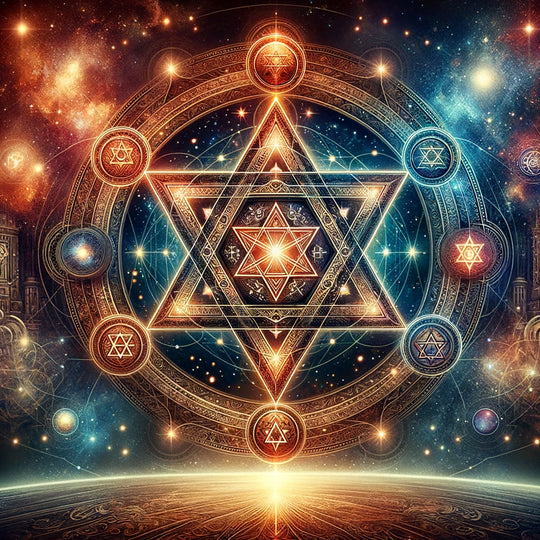
The Hexagram is two interlocking triangles. As the Star of David, or Magen David, it is the best-known sign of Jewish identity and faith. Six-pointed stars are older than that use, though: they appear in Hindu yantras and in medieval Islamic and Christian decoration.
One traditional reading sees the upward and downward triangles as fire and water, heaven and earth, meeting in one shape.
-
11
Mandala
A map of the universe
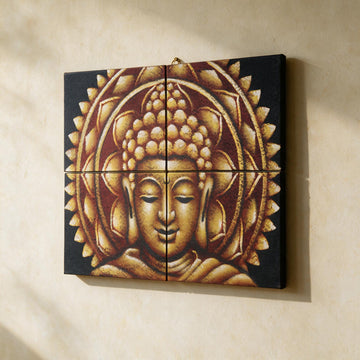
Mandala is Sanskrit for "circle". In Hindu and Buddhist traditions it is a symmetrical diagram of the universe and the self, drawn around one centre. Tibetan monks build them grain by grain from coloured sand over days, then sweep them away: the making is the practice.
The eye travels inward, ring by ring, towards the still point, which is why mandalas are used for meditation and, more recently, for colouring and art therapy. Our guide to mandalas and their meaning covers the forms and how to use one, and the nine yantras are their geometric cousins.
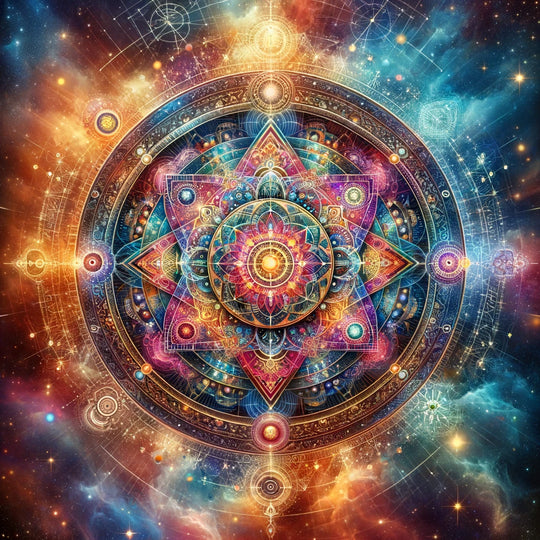
 Mandala Canvas Wall Art Set of 4 30x30cmSee it →
-
12
Swastika
The sign of good fortune
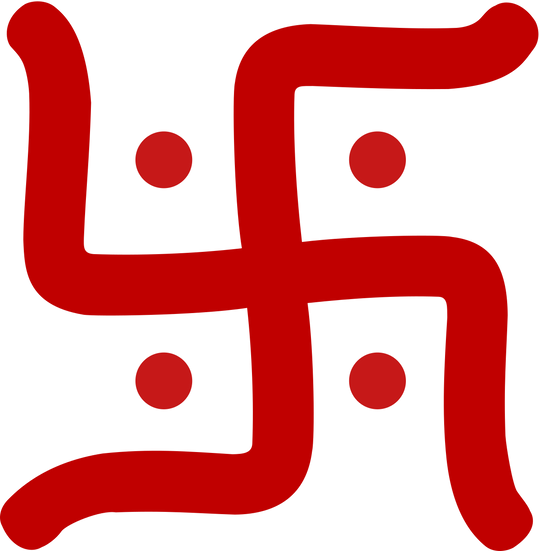
The word comes from the Sanskrit svasti, "well-being". For thousands of years the swastika has been a sign of good fortune in Hinduism, Buddhism and Jainism, standing for the sun and the turning cycle of life. It is painted on doorways, drawn in rangoli at festivals and written on the first page of new account books at Diwali.
Its appropriation by the Nazi regime was a violation of that meaning, not its origin. In Asia the older sense never went away, and it is the only sense this list is about.
-
13
Caduceus
Commerce and communication
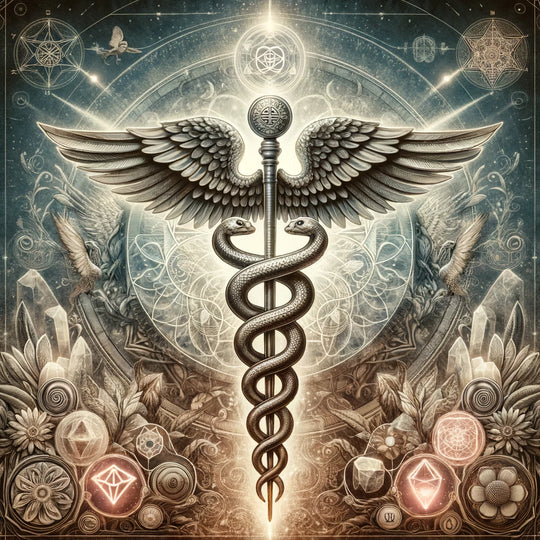
The Caduceus, two snakes wound around a winged staff, belongs to Hermes, the Greek messenger god of trade, speech and negotiation. It is a sign of exchange and of two sides brought to agreement.
It is often printed on ambulances by mistake. The emblem of medicine is the Rod of Asclepius, a plain staff with a single snake. The Caduceus speaks of messages and meetings.
-
14
Phoenix
Rebirth and renewal
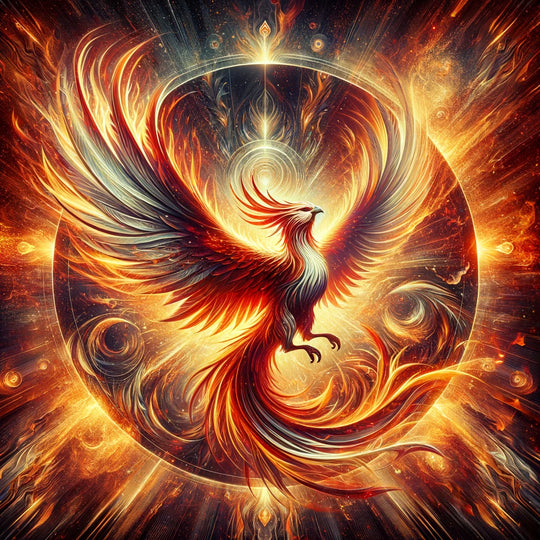
The Phoenix is the bird that burns and rises from its own ashes. Herodotus heard of it from Egyptian priests, who linked it with the sun city of Heliopolis; China has its own fenghuang, a bird of peace and good rule.
It speaks to coming through a hard season and finding something renewed on the other side. It carries hope without denying the fire: the rising is part of the story, and so is the ash.
-
15
Alchemy symbols
Transformation
The signs of medieval alchemy record, on the surface, how to turn base metals into gold: a circle with a dot for gold and the sun, a crescent for silver and the moon, triangles for the four elements. Read more deeply, they were always about inner change too, the slow refining of a person, with gold standing in for wisdom.
They frame growth as patient work: heat, dissolve, refine, repeat. Carl Jung spent years on these manuscripts for exactly that reason.
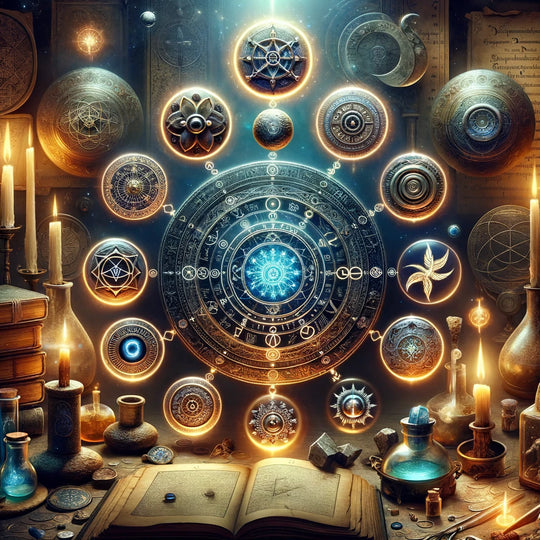
 Iconic Classic Tote Bag, Luna Alchemy Wheel, Black 6ozSee it →
-
16
Vesica Piscis
The shape where two circles meet
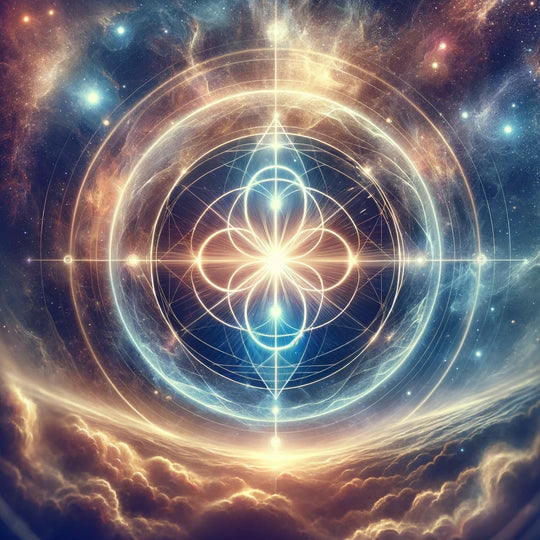
The Vesica Piscis forms where two equal circles overlap, each centre resting on the other's edge. The almond between them is the outline of the early Christian fish sign, and medieval masons framed saints and doorways inside it.
In sacred geometry it is the first step towards the Flower of Life, a picture of creation from union: from two, something new is made.
-
17
Labyrinth
One path in, one path out
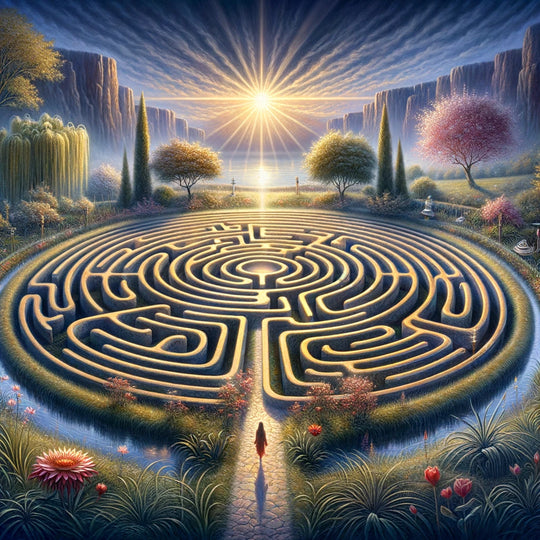
A labyrinth is not a maze. There are no wrong turns: one winding path always leads to the centre and back out again. The classical seven-circuit design is stamped on coins from Knossos in Crete, and an eleven-circuit version is set into the floor of Chartres Cathedral, where it is still walked by visitors and pilgrims.
It is still walked as a moving meditation. The path does the deciding for you; you follow it inward and out, and the mind settles by itself.
-
18
Triskelion
Progress and growth
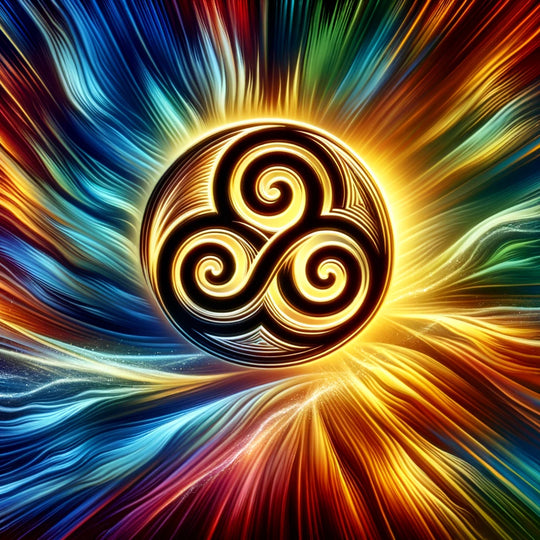
The Triskelion, three spirals turning from a shared centre, is carved inside the passage tomb at Newgrange in Ireland, which is older than the pyramids at Giza. Later it became a mark of Celtic art, and three running legs still fly on the flag of the Isle of Man.
The threefold spin suggests forward motion: cycles that move on as they turn. It is a sign for treating change as a direction.
-
19
Hamsa
The hand of protection
The Hamsa is an open palm with the thumb and little finger turned outward, often with an eye set in the middle. It comes from the Middle East and North Africa and is shared across faiths: the Hand of Fatima to many Muslims, the Hand of Miriam to many Jews.
It is hung by the front door or worn at the throat to turn aside the evil eye, and given to newborns and newlyweds as a blessing. Fingers up, it is read as a shield; fingers down, as an open hand of welcome. We keep a whole shelf of hamsa hands, from wall art to incense holders.
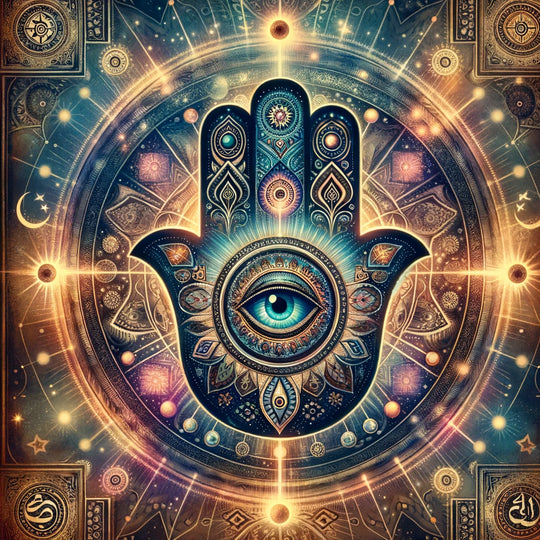
 Hamsa Wall Art, Handbrushed CottonSee it →
-
20
Lotus
Purity and awakening
The Lotus roots in mud, rises through dark water and opens clean at the surface. In Hindu and Buddhist art the gods and the Buddha sit or stand on it: Lakshmi holds one, Brahma is born from one, and the Buddha's first steps are said to have left lotuses behind them.
That rise from murk to bloom is its whole meaning. Difficult ground is often where the rising begins.
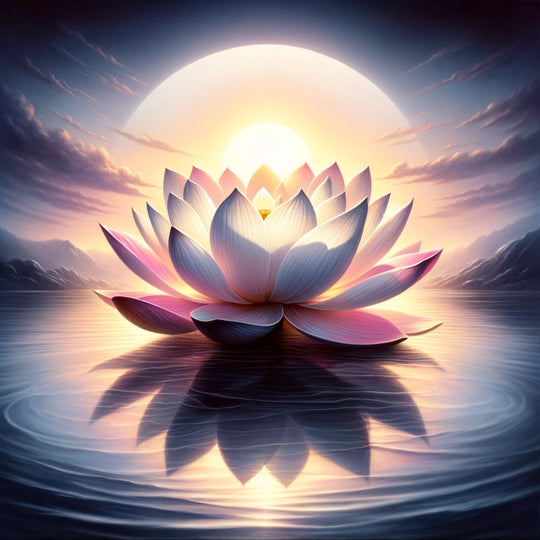
 Singing Bowl Set Lotus FlowerSee it →
-
21
Chakras
Seven centres, from spine to crown
The chakras ("wheels" in Sanskrit) come from Indian yoga and tantra. The seven-centre map most people know, from the root at the base of the spine to the crown of the head, each with its colour and its lotus of petals, was set out in a sixteenth-century text and spread to the West in the twentieth.
In yoga and meditation the chakras are a map for attention: a way to notice where you feel tense, open or scattered, and to bring the breath there. Each centre has its own page in our guide to the seven chakras.
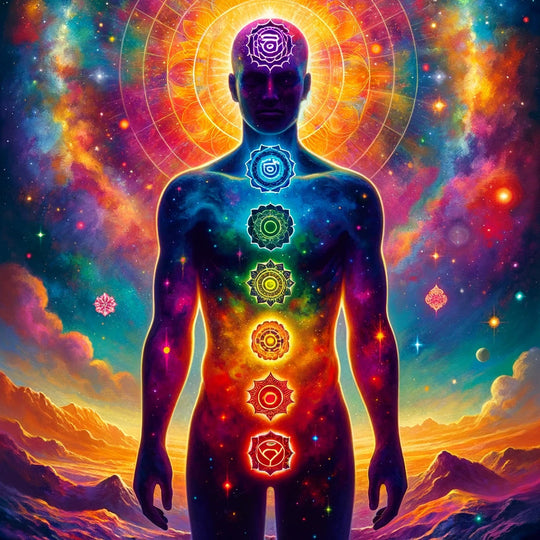
 7 Chakra Gemstone Bracelet Cedarwood BeadsSee it →
-
22
Dharmachakra
The wheel of the teaching
The Dharmachakra, the Wheel of Dharma, stands for the Buddha's teaching. His first sermon at Sarnath is called "turning the wheel", and the eight spokes are read as the steps of the Eightfold Path. Emperor Ashoka carved it on his pillars, and a 24-spoked version sits on the flag of India today.
In statues the Buddha shows it with his hands: both at the chest, thumbs and forefingers in circles, the gesture called the Dharmachakra mudra.
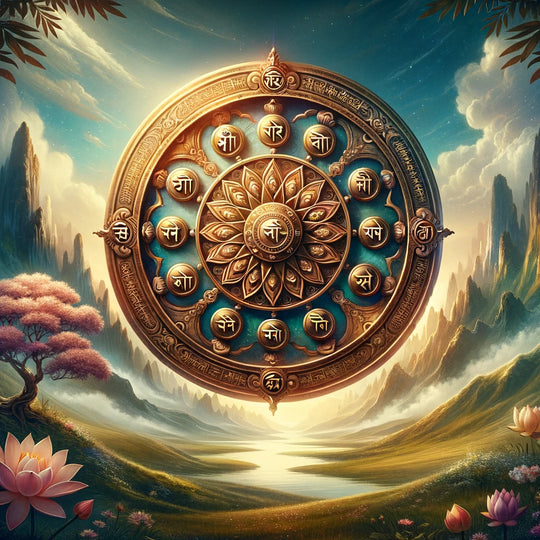
 Buddha Statue in Dharmachakra Mudra, Hand-Carved Suar Wood 60cmSee it →
-
23
Spiral
Growth that widens
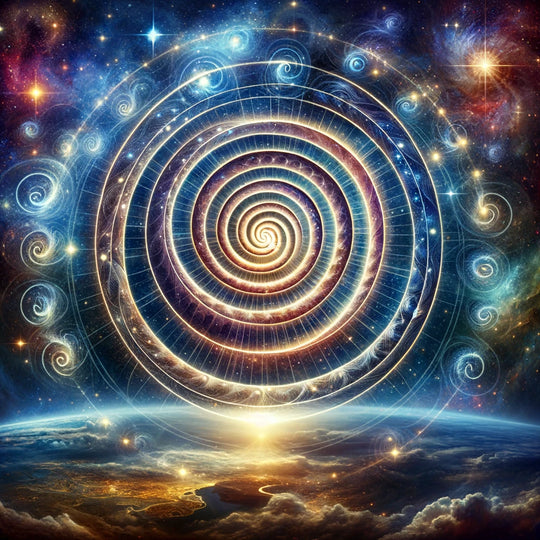
The Spiral is everywhere in nature, in shells, galaxies and the curl of a fern, and it is one of the first marks people carved: Neolithic spirals cover stones across Ireland and Malta. It grows from a centre without ever quite returning to where it began.
That is how change often feels: a circling that gains a little ground each time round. Coming back to a familiar place does not mean standing still.
 Selenite Wand Double Terminated Spiral 16 cmSee it →
-
24
Sigils
One intention, one mark
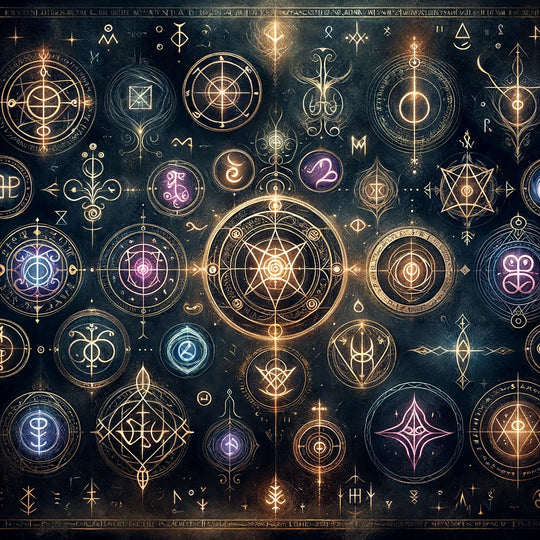
A sigil is a symbol made for a single purpose. Medieval grimoires gave each angel and spirit its own seal; in the early twentieth century the artist Austin Osman Spare turned the idea into a personal practice: write your aim as a sentence, strike out the repeated letters, and fold what remains into one mark.
It is alive in modern witchcraft and journalling alike. Making one forces you to say clearly what you want, and the mark keeps that sentence with you afterwards.
-
25
Merkaba
The chariot
Merkabah is Hebrew for "chariot". In Jewish mysticism it names the throne-chariot of Ezekiel's vision, and the oldest Merkabah texts describe the mystic's ascent through heavenly palaces towards it.
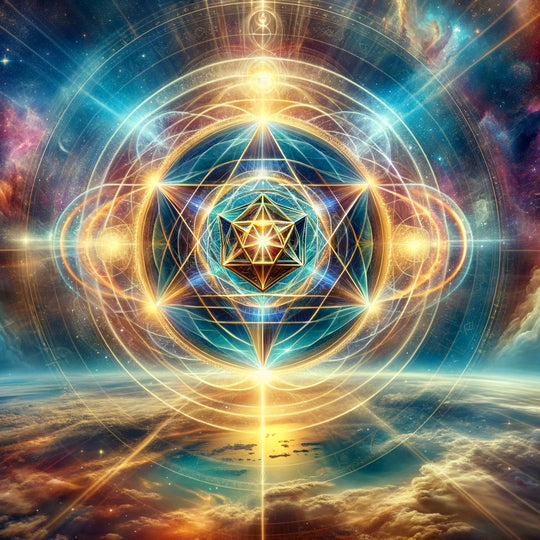
The star tetrahedron now sold under the name, two interlocking pyramids pictured as a body of light, is a modern esoteric reading of the old word. As geometry it is striking, and its symmetry suits a pendulum.
 Merkaba Star Crystal Pendulum, Assorted GemstonesSee it →
-
26
Horned God
The forest and the seasons
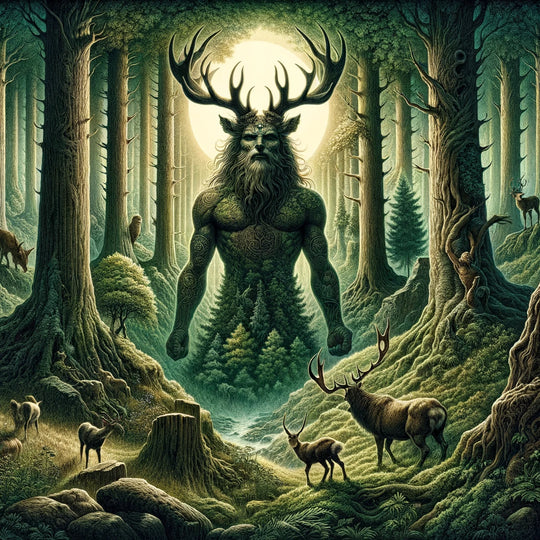
In Wicca and modern paganism the Horned God is the male face of nature: the wild wood, the hunt, the turning year. Practitioners often link him with older figures such as the Celtic Cernunnos, the antlered god on the Gundestrup cauldron.
He is born, dies and returns with the seasons, a figure for birth, death and rebirth as rhythms of the earth and the body.
-
27
Triple Goddess
Maiden, mother, crone
The Triple Goddess is drawn as a full moon between a waxing and a waning crescent. In neopaganism the three moons stand for maiden, mother and crone, the divine feminine across a whole life.
Each phase has its own gift: the freshness of beginnings, the fullness of bearing and tending, the wisdom of looking back. The sign honours every stage of a life, the last as much as the first.
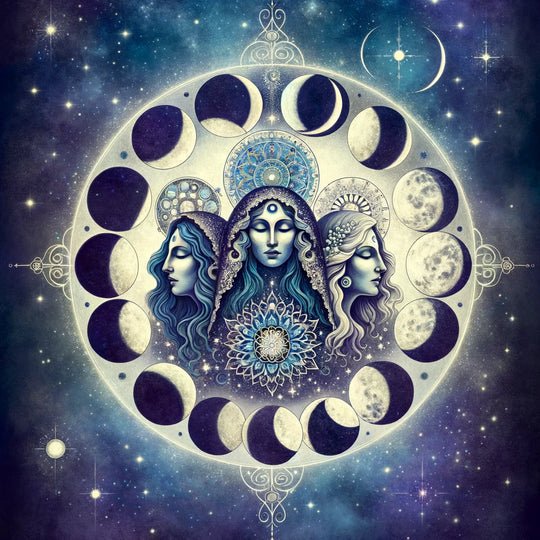
 Triple Moon Solid Brass Ritual Altar BellSee it →
-
28
Nazar
The blue eye against envy
The Nazar is the blue glass eye of Turkey, Greece and the eastern Mediterranean, made in concentric rings of dark blue, white, light blue and black. It is meant to catch the evil eye, the harm thought to come from an envious look, before it reaches you.
You see it over doorways, on cradles, in cars and on key-rings. Tradition holds that when a Nazar cracks, it has done its job, and you replace it. Our evil eye shelf holds the bracelets, charms and burners.
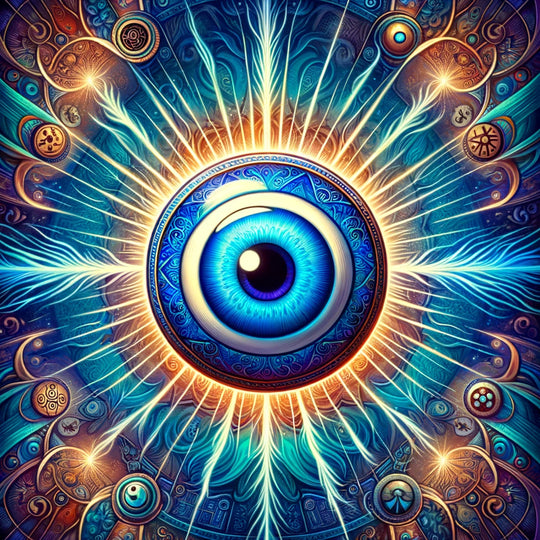
 Evil Eye Nazar Enamel Incense Burner Mango WoodSee it →
-
29
The Cross
Where two lines meet
The cross is the central sign of Christianity, standing for the death and resurrection of Christ. As a shape it is far older: equal-armed crosses mark Bronze Age rock art and sun wheels, the vertical and the horizontal meeting at one point.
Through its long history it has carried sacrifice, love and redemption. As a plain mark it speaks to the place where the everyday and the sacred touch.
 Turquoise Stretch Beaded Bracelet With CrossSee it →
-
30
Endless Knot
Wisdom and compassion interwoven
The Endless Knot, shrivatsa in Sanskrit and pal be'u in Tibetan, is one of the eight auspicious symbols of Tibetan Buddhism. Its lines pass over and under one another and never come to an end.
It is read as the meeting of wisdom and compassion, and as a picture of how every cause is tied to its effect. You will find it painted above doorways, printed on prayer flags and knotted into small charms.
 Buddha Statue with Endless Knot 2-Piece Set, Green Albasia WoodSee it →
How to keep one symbol close
A symbol earns its place by being seen. One you look at every day does more for an intention than ten in a drawer.
- Read where the symbol comes from and respect the tradition it belongs to.
- Write down, in one sentence, what you are working towards.
- Keep the symbol where you will see it daily: on your wrist, on your desk or by the door.
- Look at it once a day and remember that sentence.
What you will need
The symbol itself. To give it a place: a box to keep it in, a holder for a stick of incense and a pair of tingsha to mark the start and the end.


 Next: Mandalas: Their Meaning, Significance and UseRituals · 4 min read
 India