There is a quiet kind of focus that comes from sitting with a single shape. A diagram drawn from precise triangles, a circle of lotus petals, a dot at the very centre. You are not asked to believe anything. You are asked, gently, to look — and to let your attention settle where the design points. This is the heart of the yantra: not a charm that acts upon you, but an instrument that holds your attention while you do the quieter work of arriving.
A Yantra (यन्त्र), drawn from the Tantric traditions of India, literally translates to “machine” or “instrument” — a device that holds and channels. These geometric diagrams serve several purposes at once: deity worship in temples and homes, a focal point for meditation, and, in Hindu astrology and tantric texts, they are regarded as carriers of subtle or symbolic power. They sit among the world’s oldest potent carriers of meaning and intention — objects whose value lives in what we bring to them.
Yantras appear across Hinduism, Jainism, and Buddhism, which makes them a quiet cornerstone of practice in these traditions. Some scholars point to the Baghor stone — a naturally triangular, ochre-marked sandstone from the Son valley in India, dated by some researchers to the terminal Upper Palaeolithic (roughly 9,000 years before the present era) — as a possible early precursor of yantra-like Shakti worship. The link is debated, but it hints at how old this geometric language of the divine may be.
The essence of a yantra
In the tradition, a yantra is a visual representation of the universe’s divine energy. Practitioners turn to particular yantras for particular themes: to support meditation, to hold an intention around protection from negative influences, or to focus the mind on abundance and success.
Each yantra is associated with a deity, and woven from geometric shapes and mantras that radiate from a central point — the bindu — symbolising unity with the cosmos. The most renowned of all, the Sri Chakra or Sri Yantra, is held to embody the form of the goddess Tripura Sundari, with elements representing Shiva, illustrating the totality of existence.
Traditionally, a yantra is inscribed on paper, metal, or any flat surface, and kept as a talisman or as part of devotional practice. What follows are nine of the best known, each with its own theme — and a gentle note on how the tradition uses it.
The Sri Yantra is considered the most auspicious of all yantras, an image of the cosmic order and the interplay of masculine and feminine divine energies. Its design holds nine interlocking triangles — four pointing up for Shiva, five pointing down for Shakti — interlacing into 43 smaller triangles around the central bindu. It is traditionally used as a focus for spiritual practice, for a sense of harmony, and to settle the mind on abundance and contemplation.
-
Traditionally associated with: spiritual focus, a feeling of harmony, and steadying the attention.

2. Kuber Yantra
Dedicated to Lord Kuber, the treasurer of the gods, the Kuber Yantra is, in the tradition, associated with abundance and the careful stewardship of resources. Rather than a magnet that pulls wealth toward you, it is used as a focus for intentions around financial wellbeing — a steady reminder to look after what you have as much as to grow it. Many turn to it when they want to attract wealth and abundance in the older sense of that phrase: cultivating, not conjuring.
-
Traditionally associated with: abundance, prudent management of resources, and a settled relationship with money.

3. Kanakdhara Yantra
The Kanakdhara Yantra is dedicated to Goddess Lakshmi and is steeped in the imagery of flowing gold. It draws on the “Kanakdhara Stotram,” a hymn in which Lakshmi is asked to release a stream of gold over the earth. In the tradition, the diagram is used as a focus for intentions around prosperity, and practitioners often turn to it during long stretches of financial difficulty — not as a promise, but as a way of keeping faith and focus while they do the work.
-
Traditionally associated with: a hopeful focus during lean times, openness to new opportunity, and gratitude for what flows in.

4. Mahalaxmi Yantra
The Mahalaxmi Yantra honours Goddess Mahalaxmi, who presides over wealth, fortune, and prosperity in Hindu tradition. It is used as a focus for intention and gratitude around abundance, and is held to be especially auspicious during festivals like Diwali, when households turn their attention to the year ahead. Treat it as the tradition does — an emblem to gather your hopes around, rather than a mechanism that delivers them.
-
Traditionally associated with: Diwali devotion, gratitude, and a positive frame of mind toward work and prosperity.

5. Ganesha Yantra
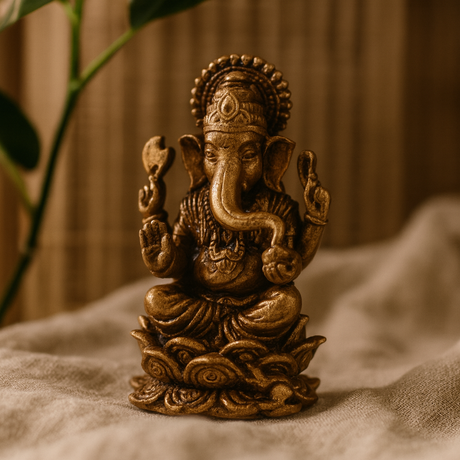
The Ganesha Yantra carries the spirit of Lord Ganesha, the remover of obstacles. Because Ganesha is honoured at the start of things, this yantra is traditionally turned to at the beginning of new ventures and beginnings — a way of setting a clear intention before you begin. You might sit with it on the morning you start something that matters, and name, simply, what you hope to bring to it.
-
Traditionally associated with: new beginnings, fresh ventures, and setting a clear intention at the outset.

6. Lakshmi Yantra
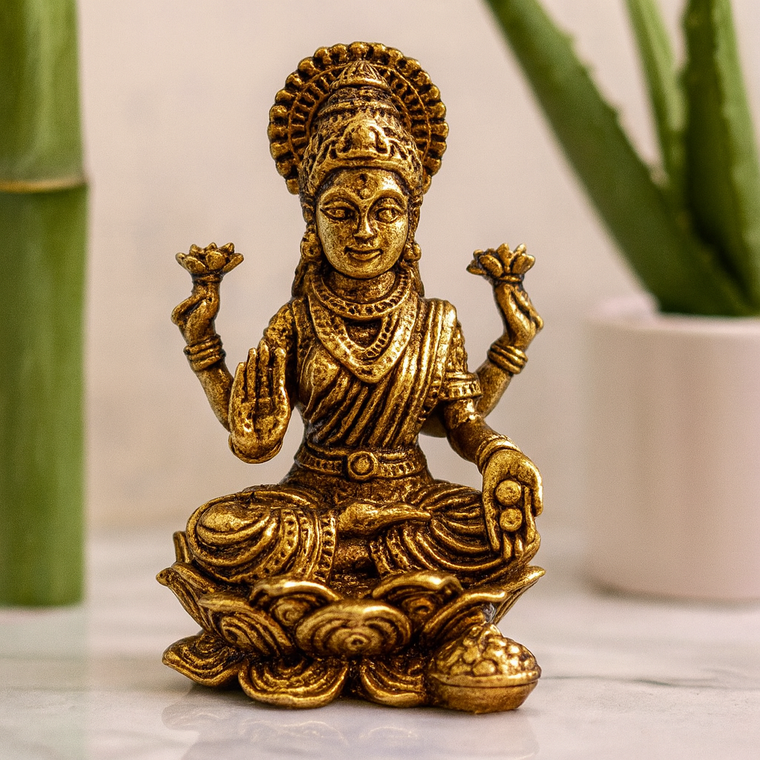
The Lakshmi Yantra venerates Goddess Lakshmi, the embodiment of wealth, prosperity, and abundance. In the tradition it is used to focus attention and intention on abundance and gratitude — a daily reminder of what you are working toward, rather than a switch that turns fortune on. It is especially revered during Diwali, the festival of lights, when households welcome Lakshmi with lamps, offerings and a clean, ordered home.
-
Traditionally associated with: gratitude, a sense of plenty, and the Diwali rituals of light and welcome.
7. Vaibhav Yantra
The Vaibhav Yantra is another diagram linked, in the tradition, with prosperity and steady abundance. It is used to focus the mind on growth and on the patient, practical effort that supports it — a focal point for someone working to improve their circumstances, kept somewhere they will see it each day. The work stays with the person; the yantra simply keeps the note.
-
Traditionally associated with: a focus on steady growth, perseverance, and keeping a long-term goal in view.

8. Navagraha Yantra
In Vedic astrology, the Navagraha Yantra represents the nine celestial bodies — the Navagraha — which the tradition holds to influence human life. It is traditionally used as a meditative focus for working consciously with the cycles and influences these planets symbolise, rather than as a tool that controls them. Think of it as a framework for reflection: a way of considering where you are in life’s seasons, and choosing how to meet them.
-
Traditionally associated with: reflecting on life’s cycles, a sense of balance, and meeting change consciously.

9. Vastu Yantra
In Vastu Shastra — the Indian tradition of space and architecture — the Vastu Yantra is placed to harmonise a space according to the five elements: earth, water, air, fire, and space. Practitioners often position it in the north-east of a home or workspace. It is used to bring a sense of balance and calm to a space, the way a well-kept room or a quiet corner can change how it feels to be there.
-
Traditionally associated with: a sense of order and calm in a space, and a more considered home.

How to read a yantra: shape and symbol
A yantra is a layered piece of design, and each element carries meaning. Reading these is part of what turns sitting with a yantra into a contemplative act rather than simply looking at a picture.
The bindu and the geometry
-
Bindu (the central point). The core of the yantra, representing the main deity and the origin of the universe. It may be a dot, a small circle, or — in yantras like the Linga Bhairavi — a linga. The bindu is the source from which creation unfolds.
-
Triangles. Fundamental to most yantras: pointing downward for the feminine principle (Shakti), upward for the masculine (Shiva), together illustrating the union of these primal forces.
-
Hexagrams. Formed by overlapping triangles, representing the integration of male and female divine aspects.
-
Circles. Often signify manifestation, holding the cosmic and spiritual realms within their bounds.
-
Lotus petals. Symbolise purity and unfolding awareness, their number — anywhere from two to over a thousand — carrying its own meaning.
-
Outer square. Stands for the material world and the four cardinal directions, grounding the design, with gateways on each side opening inward.
Colour, sound and meaning
-
Colours. Colour in a yantra is symbolic, not decorative. White signifies purity (sattva), red activity and passion (rajas), and black stillness or inertia (tamas) — the three gunas, or qualities of nature.
-
Mantras. Sanskrit inscriptions within the yantra act as “thought forms,” and in the tradition are understood as channeling specific energies through sound vibrations. They are considered essential to bringing a yantra to life in practice.
Placing and activating a yantra
In the tradition, placing and using a yantra is itself a considered act — less about getting it right than about treating the object with care and attention. Here is how the practice is usually described.
-
Consecration (Pran Pratishtha). Before a yantra is placed, it traditionally undergoes a consecration ceremony, said to “awaken” it. The ritual involves the chanting of specific mantras and offerings to the associated deity.
-
Activation. Practitioners then recite mantras connected to the yantra’s deity — a way of aligning the object with the intention it is meant to hold. This is where the practice, not the diagram, does the work.
-
Placement. Drawing on Vastu Shastra, a yantra is usually given a quiet, undisturbed spot — a puja room, a small altar, or a sacred space within the home or office. Directional alignment is part of the heritage too; the Sri Yantra, for instance, is often placed facing east.
-
Orientation. Wealth-themed yantras are traditionally faced north, the direction associated with Kuber; those for knowledge and clarity face east, towards the rising sun. Treat these as part of the tradition and a way to make placement feel considered, rather than a rule to obey exactly.
If you are drawn to the broader world of ritual objects, the same conscious-tool spirit runs through ritual worship and meditation with incense, and through the divine energies channelled in a yantra as readers experience them through stones and gemstones — each an anchor for attention, never a substitute for it.
Choosing your yantra
There is no single correct yantra. Each is tied to a deity and a theme, and the gentlest way to choose is to notice which theme speaks to where you are right now — beginnings, abundance, balance, calm in a space. A yantra is a focal point. Its value comes alive in the attention and intention you bring to it. Choose the one whose theme speaks to where you are, and let it anchor a small daily practice: a few unhurried minutes, your gaze soft on the bindu, and a quiet word naming what you are working toward. The diagram keeps the note. The rest is yours. 🙏🏻