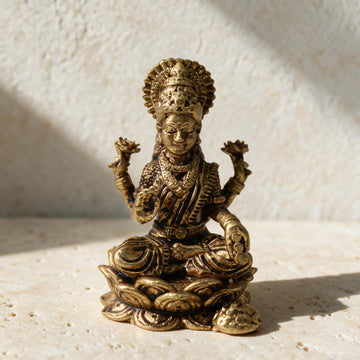
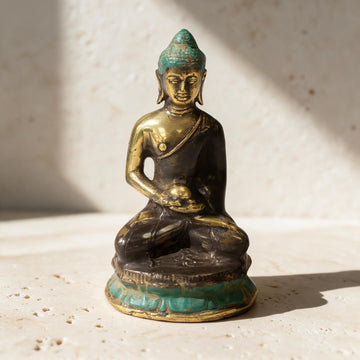
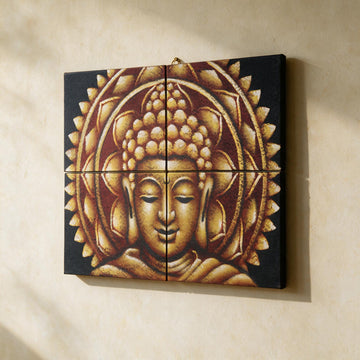
A yantra is a sacred geometric diagram from the tantric traditions of India, used as a focus for meditation and for the worship of one deity: interlocking triangles, circles and lotus petals inside a square with four gates, all drawn around a central point, the bindu. The word means "instrument". The nine best known are the Sri, Kuber, Kanakdhara, Mahalakshmi, Ganesha, Lakshmi, Vaibhav, Navagraha and Vastu yantras, each pictured below with its deity and theme.
In brief
- The nine yantras, what each one is for and what it looks like.
- How to read any yantra: the bindu, the triangles, the petals, the square, the colours.
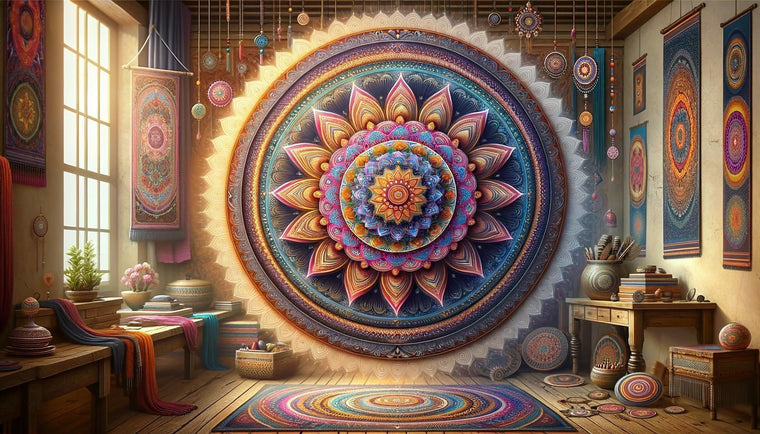
- How a yantra is placed and used in a ten-minute gazing practice, trataka. Yantras are close cousins of the mandala; mandala art and plates are on our mandala shelf.
 Mandala122 pieces
Open →
In this guide 11
| Yantra | Deity | Used for |
|---|---|---|
| 1Sri Yantra | Lalita Tripura Sundari | meditation on the whole of creation; harmony, abundance |
| 2Kuber Yantra | Kuber, treasurer of the gods | keeping and growing wealth with care |
| 3Kanakdhara Yantra | Lakshmi | hope and steadiness in lean times |
| 4Mahalakshmi Yantra | Mahalakshmi | prosperity; Diwali worship |
| 5Ganesha Yantra | Ganesha | new beginnings, clearing obstacles |
| 6Lakshmi Yantra | Lakshmi | gratitude and plenty at home |
| 7Vaibhav Yantra | Vaibhav Lakshmi | steady growth; kept with a Friday fast |
| 8Navagraha Yantra | the nine planets | reflection on the cycles of Vedic astrology |
| 9Vastu Yantra | Vastu Purusha | balance in a home, by the five elements |
-
1
Sri Yantra
The queen of yantras
Nine interlocking triangles, four pointing up for Shiva and five pointing down for Shakti, cross to form 43 smaller triangles around the bindu, ringed by lotus petals of eight and sixteen and an outer square with four gates. It is the form of the goddess Lalita Tripura Sundari and a map of creation unfolding from one point, worshipped in the Sri Vidya tradition and at Shankara's monasteries, where Sri Chakras of metal or stone sit in the shrines. Drawing one accurately is a famous geometric puzzle: the triangles must meet exactly at their points.

-
2
Kuber Yantra
For keeping wealth well
Dedicated to Kuber, treasurer of the gods and guardian of the north. Its grid is a magic square: the numbers in every row, column and diagonal add up to 72. It is kept facing north, by a safe, a till or a desk where accounts are done, as a reminder to look after what you have as carefully as you grow it. Kuber is worshipped with Lakshmi on Dhanteras, two days before Diwali.

-
3
Kanakdhara Yantra
The stream of gold
Named after the Kanakadhara Stotram, the hymn the young Adi Shankaracharya is said to have sung to Lakshmi when a poor woman gave him her last dried amla fruit; the goddess answered with a rain of golden fruit on her house. The yantra is kept by those going through a lean stretch, as a focus for hope and for the work of getting through it.

-
4
Mahalakshmi Yantra
For Diwali
The great form of Lakshmi, goddess of wealth and fortune. Households install or clean the yantra before Diwali, when the house is swept, the door left open and lamps lit on every sill so that Lakshmi can find her way in, and worship it through the year with a flower and a lamp on Fridays, her day.

-
5
Ganesha Yantra
For beginnings
Ganesha is invoked before anything else, so his yantra belongs to the start of things: a new home, a business, a course of study. Sit with it on the morning you begin and name what you hope to bring to the work. More on him in our Ganesha guide.

-
6
Lakshmi Yantra
Plenty at home
A simpler yantra of Lakshmi, kept in the home shrine as a daily reminder of gratitude and of what you are working towards. Our guide to the fifteen great deities tells her story, and Kuber's.
-
7
Vaibhav Yantra
Steady growth
Linked with Vaibhav Lakshmi, the form of the goddess worshipped in a popular Friday fast, the Vaibhav Lakshmi vrat, kept for eleven or twenty-one Fridays. The yantra is the focus of that practice: patient effort, kept in view week after week.

-
8
Navagraha Yantra
The nine planets
The nine grahas of Vedic astrology, Sun, Moon, Mars, Mercury, Jupiter, Venus, Saturn and the lunar nodes Rahu and Ketu, set in a grid of nine squares. It is a frame for reflecting on the cycles of a life and choosing how to meet them, and many Indian temples have a Navagraha shrine beside the main one. Our guide to systems of astrology sets out the Vedic one.

-
9
Vastu Yantra
For the home
In Vastu Shastra, the Indian tradition of building and space, a home is balanced by the five elements: earth, water, fire, air and space. The Vastu Yantra is placed in the north-east, the corner of water and of prayer, to keep that balance where the layout of a house cannot be changed. Our piece on Vastu Shastra covers the directions room by room.


How to read a yantra
| Element | Stands for |
|---|---|
| Bindu, the central point | the deity, and the point from which creation unfolds |
| Triangle pointing down | Shakti, the feminine, the creative power |
| Triangle pointing up | Shiva, the masculine, pure consciousness |
| Six-pointed star | the two joined, Shiva and Shakti in union |
| Circles | the cycles of creation, the boundary of the sacred space |
| Lotus petals | unfolding awareness; the number of petals carries meaning |
| Outer square with four gates | the material world, the four directions and the way in |
| White, red, black | the three gunas: sattva (clarity), rajas (activity), tamas (stillness) |
Each yantra also has its mantra, often written into it in Sanskrit; the two are worshipped together, the yantra as the deity's form and the mantra as its sound. Ten chants are in our mantra guide.
How to place and use a yantra
- Place it on an altar or a clean wall at eye level, in a quiet spot. The Sri Yantra is usually set facing east; wealth yantras face north, Kuber's direction.
- Consecrate it, if you follow the tradition. In temples a yantra is installed with the prana pratishtha rite and its mantra; at home many simply clean it, offer a flower and a lamp, and chant the mantra once.
- Gaze, trataka. Sit an arm's length away with a lamp or candle beside it. Rest your eyes on the bindu, let the shapes go soft around it, and keep the gaze there for five to ten minutes. When the eyes tire, close them and watch the after-image.
- Return to it daily. A yantra works through the attention you bring to it; a few minutes each morning is the whole of the practice.
What you will need
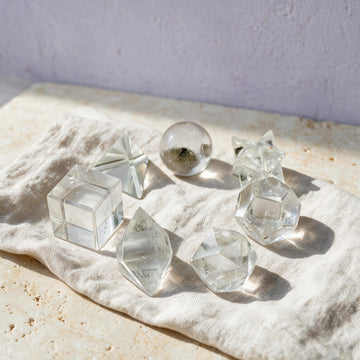
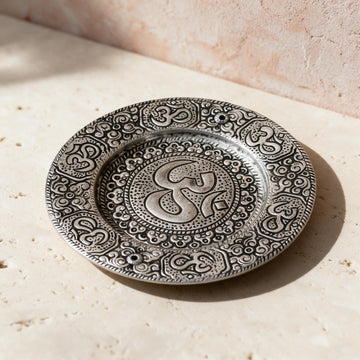
We do not sell yantras themselves; for the gazing practice, a plate engraved with sacred geometry gives the eye the same centre to rest on.


 Next: OM: The Profound Meaning Behind the Sacred SoundRituals · 7 min read


 India