Amethyst has been carried, worn, and set into rings of authority for longer than most of us realise. What every tradition that reached for it had in common was not a belief in the stone's independent power, but a recognition that the person needed something to hold while they did the harder work themselves.
The Name Before the Stone
The Greek word amethystos means, literally, "not intoxicated", from a- (not) and methyskein (to make drunk). That etymology is not decorative. It tells us that the oldest surviving fact about amethyst is not its colour or its geology but its purpose: people reached for it when they wanted to hold a quality they found difficult to hold alone. Clarity over fog. Stillness over excess. The name encodes the intention.
Pliny the Elder recorded this association in his Naturalis Historia (Book 37, completed around 77 CE) and noted, even then, that the belief was already widespread and attributed to earlier sources. That makes Pliny the earliest surviving written attestation in the Western tradition, and it places the stone's sobriety symbolism well before the Roman world. No one invented this meaning recently. It arrived already old.
That is the thesis this piece holds: amethyst is not a passive charm. Every tradition that reached for it, Greek, Roman, Vedic, medieval Christian, asked the person to do something first. The stone accompanied an intention. It did not replace one.
Where Amethyst Comes From
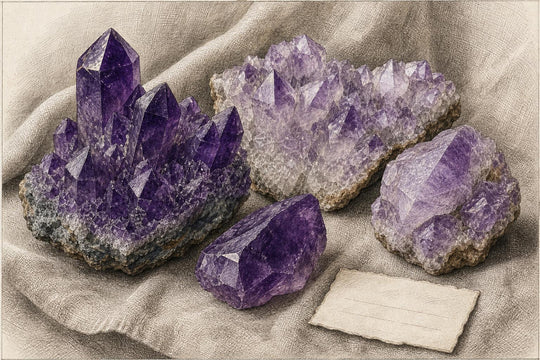
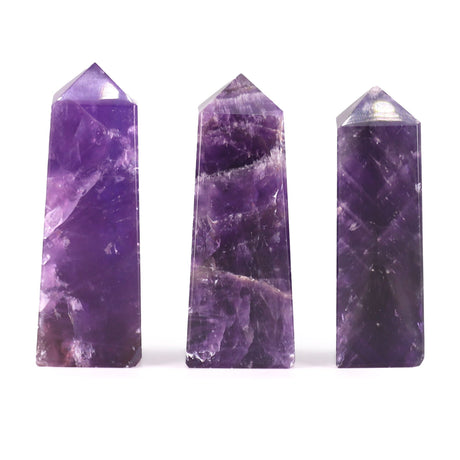
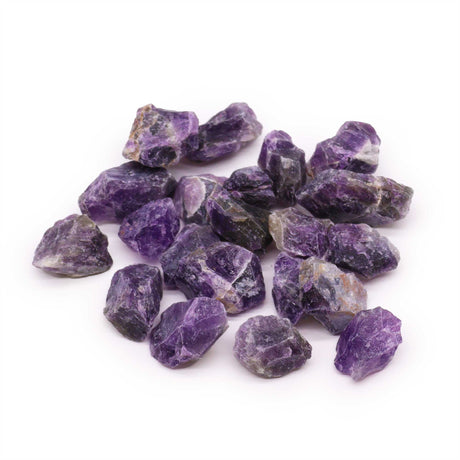
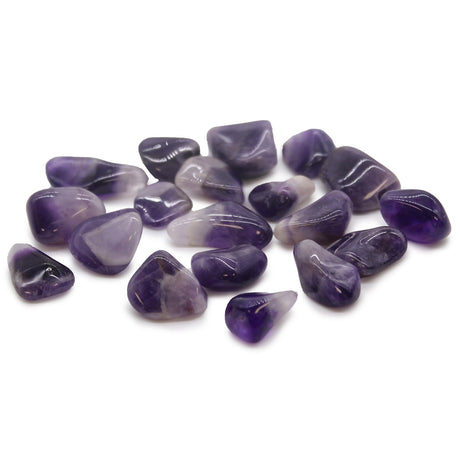
Amethyst is a variety of quartz (silicon dioxide, SiO₂) coloured by iron impurities combined with natural irradiation during crystal formation. Its hardness sits at 7 on the Mohs scale, which makes it durable enough for daily wear and stable in water. The purple ranges from pale lilac to deep violet depending on the concentration of iron and the conditions of its formation.
The world's largest volume of amethyst comes from Minas Gerais in Brazil, where the colour tends toward lighter purple, sometimes with a blue secondary hue. Uruguay's Artigas department produces stones with deeper, more saturated colour. Zambia's Kariba region yields a distinctive deep violet with a reddish secondary tone that European buyers have increasingly sought out. Rajasthan in India produces lighter material used extensively in local lapidary work and in the Vedic gem tradition. These are trade-recognised distinctions, useful to know when you are choosing a stone, and worth understanding as geography rather than hierarchy.
One practical note: prolonged direct sunlight fades amethyst's colour over time. Ultraviolet light degrades the iron-based colour centres responsible for the purple. This is a physical fact, not folklore, and it is why sun-charging is not recommended for this particular stone.
Three Traditions, One Recurring Theme
Pliny's record is the West's starting point, but it is not the only one. In the Vedic gem tradition (ratna shastra, the classical Indian science of gemstones) amethyst is known by the Sanskrit term katela (also transliterated kathela). In traditional Indian gem therapy, it is associated with Saturn (Shani) and historically prescribed for qualities linked to mental agitation and excess pitta. Ratna shastra is a living tradition with variation between lineages, so prescriptions differ; this is a documented association, not a universal rule. But the recurring concern, a restless or clouded mind, and the desire to settle it, is the same concern Pliny's Greek sources were addressing.
The third tradition is ecclesiastical. From the early medieval period, Catholic and Orthodox bishops wore amethyst in their episcopal rings. The choice was deliberate: a bishop's ring was a sign of spiritual authority, and amethyst's "not drunk" etymology made it theologically apt. Sobriety in the spiritual sense, freedom from the intoxications of ego, appetite, distraction, was precisely the quality a bishop was meant to embody. The stone was chosen because its name already said what the office required.
Three traditions, separated by geography and centuries, reaching for the same stone for the same reason. That kind of convergence is worth pausing over.
The Chakra Frame, Honestly
In the Hindu chakra system, amethyst is traditionally associated with Ajna (the sixth centre, often called the third eye) and Sahasrara (the seventh, the crown). Both sit in the violet and indigo range of the colour spectrum, which is part of the correspondence. But the more useful way to hold this association is not "amethyst activates your chakra." It is that amethyst is traditionally reached for when the qualities those centres govern are what you are trying to cultivate: discernment, stillness, the capacity to observe your own mind rather than be carried by it.
The person remains the active subject. The stone accompanies the cultivation. That distinction matters, because it keeps the practice honest and keeps the effort where it belongs, with you.
My own japa practice has always involved some form of tactile anchor: the mala in the hand, the texture of each bead as attention returns to the mantra. The stone works similarly, not as a source of the quality, but as a physical reminder that you have chosen to reach for it.
How to Work With It: One Practice in Full
Most guidance on working with amethyst stops at "hold it during meditation," which is true but not particularly useful. Here is a single practice with enough detail to actually do.
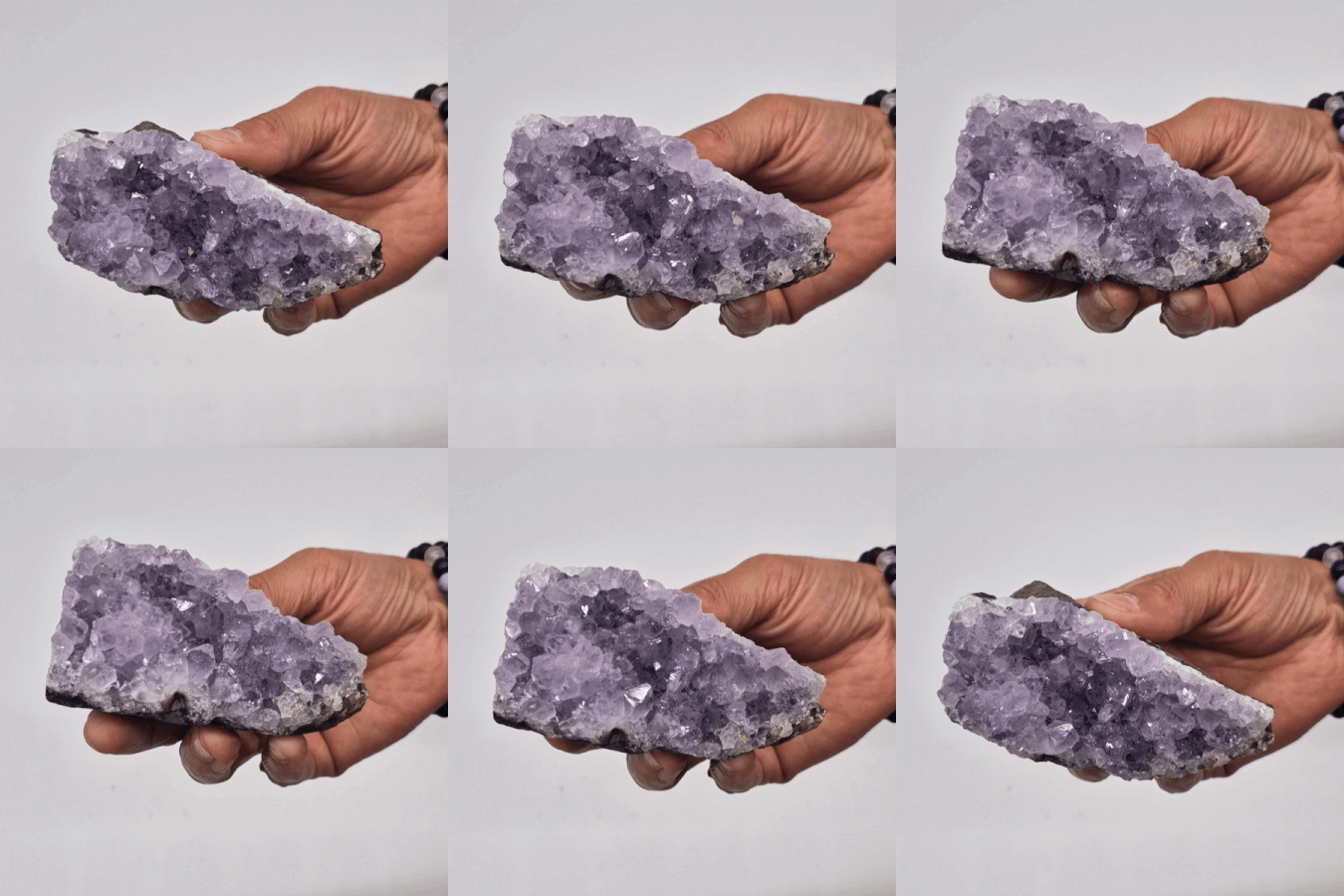
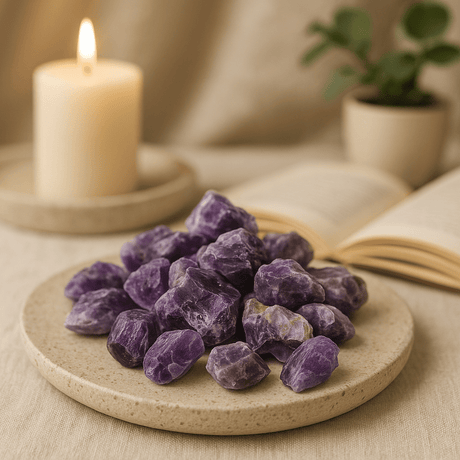
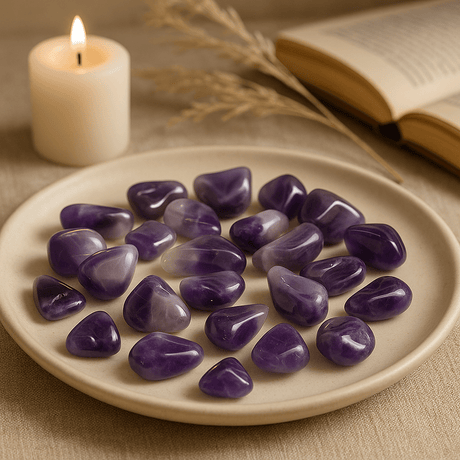
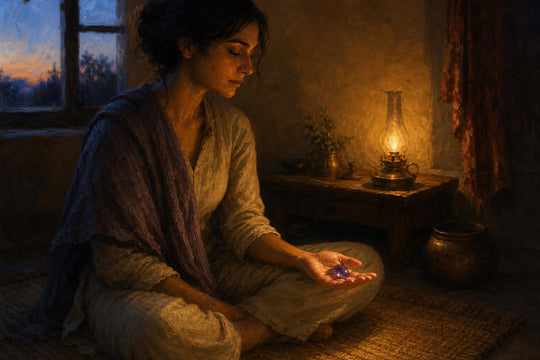
The pre-sleep intention hold. Sit on the edge of your bed or lie down before sleep. Hold the amethyst in your non-dominant hand, loosely, not gripped, just resting in the palm. Close your eyes. Spend the first two minutes simply noticing the weight and temperature of the stone: it will be cool at first, then gradually warm to your skin. This is not mystical; it is a way of bringing attention into the body and out of the day's residue.
Over the next five to eight minutes, set a single intention. Not a wish, but a quality you want to carry into sleep and into tomorrow: clarity, patience, the ability to listen rather than react. Name it once, internally, and then let it rest. If the mind wanders (it will), the stone in your hand is the cue to return, not to the thought, but to the quality. When you feel settled, set the stone on your bedside surface and sleep.
The stone's role here is as a tactile anchor for the intention. The mental work, the actual settling of attention, is yours. A japa mala strung in amethyst can serve a similar function during morning practice, if that is already part of your routine.
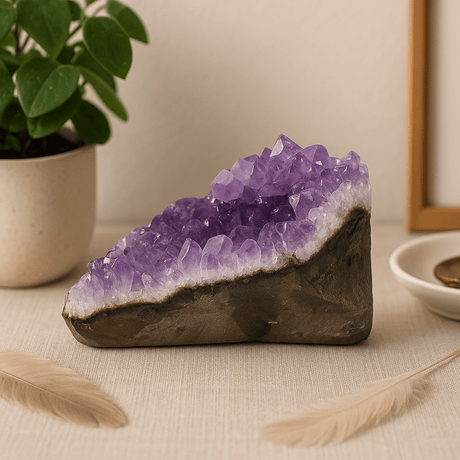
Two lighter uses: an amethyst cluster placed at a workspace functions as a visual cue, a reminder each time your eye lands on it of the quality of attention you intended to bring to the work. For cleansing, amethyst is water-stable at Mohs 7: a brief rinse under cool running water is sufficient. Avoid prolonged sunlight, as noted above.
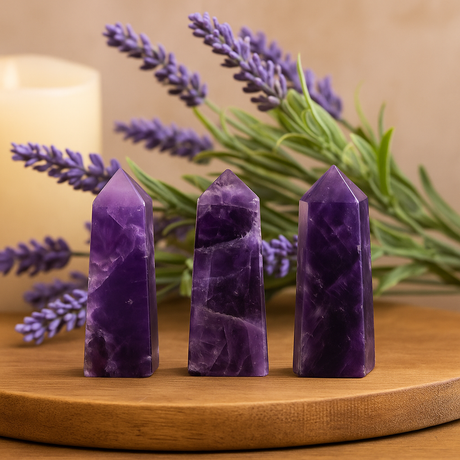
If you use lavender incense as part of an evening ritual, it pairs naturally with this practice, not because the combination is prescribed anywhere, but because the scent itself tends to slow the breath, and a slower breath is a better starting condition for the hold.
What the Stone Actually Asks
The name amethystos has survived more than two thousand years because the problem it names has not changed. The intoxications are different now: the feed, the inbox, the low-grade noise of a day that never quite ends. But the desire for a clear mind, a settled attention, a moment of genuine stillness is the same desire Pliny's sources were describing.
What every tradition that reached for amethyst understood is that the stone is not the answer, only the reminder to keep asking the question.
The Question the Stone Keeps Asking
A practice only works if it interrupts something. The amethyst on a desk or a bedside table is not decoration and not talisman, it is a prompt, the same way a marked page in a book is a prompt: it holds a place you agreed to return to. Whether you return, and what you bring when you do, is entirely yours. The stone waits with the same patience it has always had.
What the traditions were pointing at, in their different vocabularies, is something simpler than any of them made it sound: clarity is not a state you achieve once. It is a direction you keep choosing, usually in small moments, usually when something easier is available. The amethyst does not make that choice for you. It makes the choice visible, a purple glint at the edge of your attention that asks, quietly, whether this is the moment you meant to be living, or another one you drifted through.
That is what has kept the name alive for two thousand years. Not the mineral, not the myth, not the chakra system, but the recognition, repeated across cultures that never spoke to one another, that a clear mind is worth reaching for, and that reaching for it, deliberately and often, is the whole of the practice.