In the early 1700s, Dutch traders working the Ceylon gem routes gave a heated black stone a name that had nothing to do with spirits or auras: aschentrekker, the ash-drawer. Warmed in the hand or held near a flame, the mineral would pull cold ash straight out of a pipe bowl, a small, repeatable trick that had nothing mystical about it, even though nobody at the time had the physics to explain why it worked. The stone was schorl, the iron-rich tourmaline now sold everywhere as black tourmaline, and the trick was real: tourmaline is genuinely pyroelectric, which means it develops a measurable electric charge when heated, and piezoelectric, meaning the same charge appears under pressure. No metaphor, no aura, just static electricity, recorded in mineralogical reference works long before the word "energy" attached itself to crystals at all.
Five stones, one shared reason
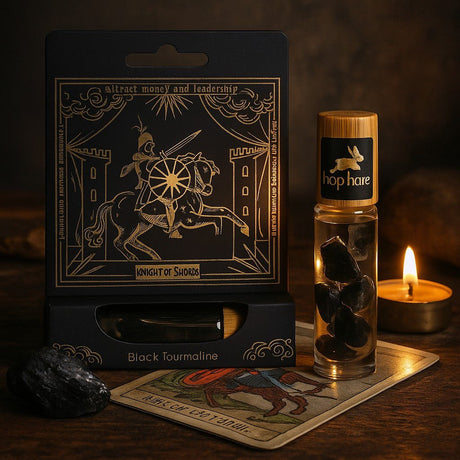
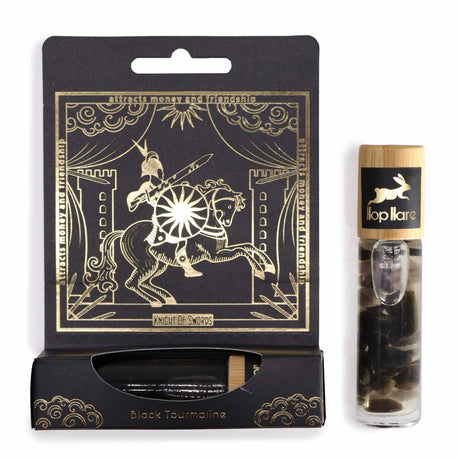
Look through what circulates about crystals said to block negativity and the same five names keep surfacing: black tourmaline, amethyst, obsidian, selenite, smoky quartz. They reappear not because any one of them cancels a bad mood on contact, but because each carries a specific, checkable reason to be trusted with attention: a real chemical property, a documented history, a use recorded by name rather than assumed. Schorl itself, the iron-rich tourmaline behind that Ceylon story, is also the most abundant member of the tourmaline group, and the word tourmaline comes from the Sinhalese turmali or toramalli, a term Ceylonese gem dealers used for parcels of mixed, unidentified stones, a plain origin for something sold today under such large claims. At 7 to 7.5 on the Mohs hardness scale, harder than quartz, a polished piece survives years in a pocket without wearing down, which may be the plainest reason it has become the stone people carry daily rather than keep only for an altar. Set among the household's grounding stones, or simply left where a hand returns to it, a piece of black tourmaline earns its keep through that returning, not through anything it is said to emit.
Amethyst and the word for not drunk
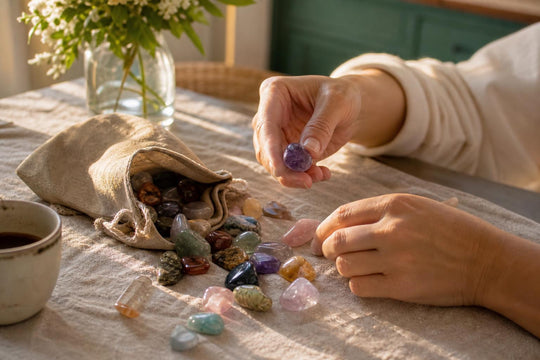
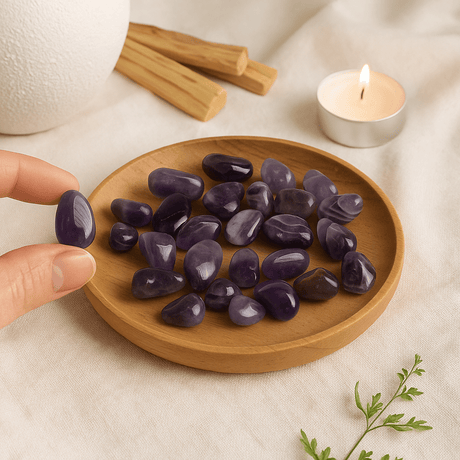
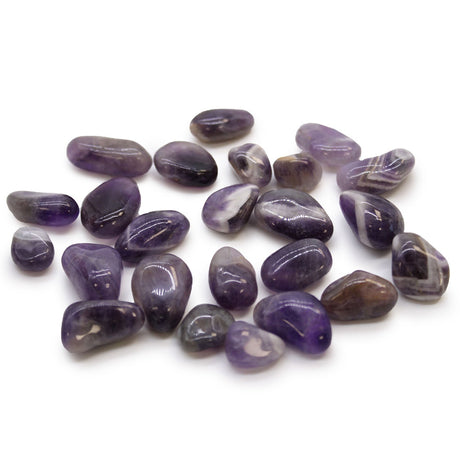
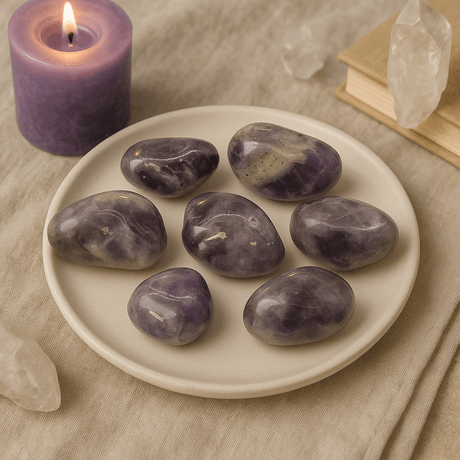
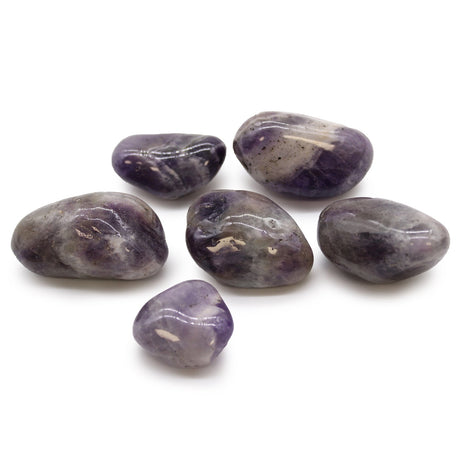
Amethyst takes its name from the Greek amethystos, "not drunken". The earliest known literary reference to the stone as a guard against intoxication appears in a poem attributed to Asclepiades of Samos, born around 320 BCE; centuries later Pliny the Elder recorded that drinking goblets were carved from amethyst for the same reason, so that whatever wine went into them would, by association, do less harm to the drinker. A stone once carried by people trying not to lose themselves to wine became, over a much longer stretch of time, a stone carried by people trying not to lose themselves to something else entirely, a bad mood, a spiral of thought, the kind of unravelling that gets called negativity now. The connection is not scientific, but it is not invented either; it runs through named writers and dated texts, which is more grounding than most claims made for a stone can offer. A small piece, such as amethyst tumbled stones kept somewhere visible, works on roughly the same old logic as the goblet: not because the mineral changes the mind, but because reaching for it is itself a kind of pause.
Obsidian, glass from the ground
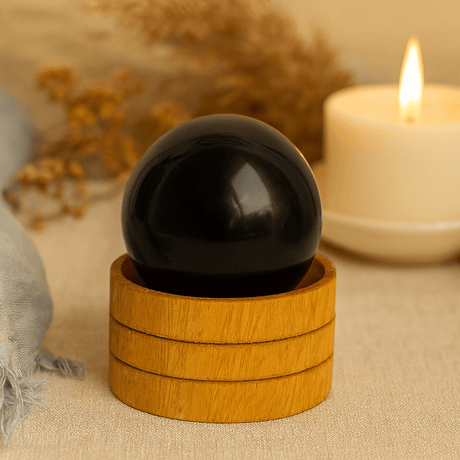
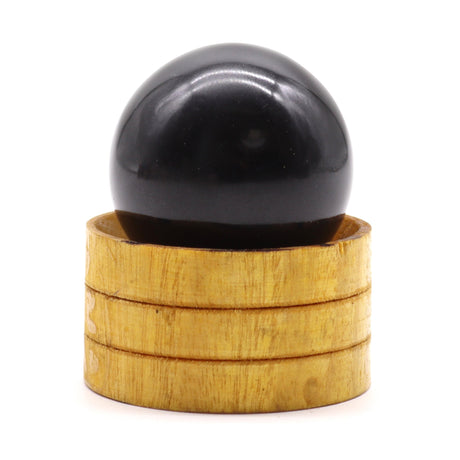
Obsidian is not, strictly, a crystal at all. It is volcanic glass, formed when lava cools too quickly for any mineral structure to grow, and that same rapid cooling is why it fractures into edges sharp enough that cultures across the ancient world shaped it into blades and cutting tools. In Mesoamerica it was also polished into mirrors used in ritual and divination; one such Aztec obsidian mirror, historically associated with the Elizabethan scholar John Dee, is held today in the British Museum. It is a genuinely strange survival, a piece of volcanic glass that crossed an ocean and several very different centuries of belief about what a mirror can show. In its own traditions it was never described as absorbing negativity into itself, the way modern shops now put it; it was a surface for looking, sharp enough to cut and dark enough to hold a reflection. What obsidian shares with the other stones here is simpler than any of that: it gives the hand something specific to hold while a difficult moment passes.
Selenite and smoky quartz
Selenite is a form of gypsum, calcium sulfate arranged in thin, translucent sheets, and it takes its name from Selene, the Greek personification of the moon, after the pale sheen the stone shows when cut. Smoky quartz gets its grey-to-brown colour from natural irradiation acting on trace aluminium held within the quartz's own crystal lattice, a slow geological process rather than anything added afterwards. Neither fact says a word about mood or protection. Both are simply true, and both stones have been reached for, across long stretches of time and quite different cultures, for much the same reason as the other three: something to hold that has a name and a history attached to it, rather than an empty pocket or an empty hand. A smoky quartz pendulum, where that is already the shape someone reaches for, does the same modest work as the others, giving a scattered moment of attention something to land on.
The pause, not the mineral
None of this, mineral facts included, explains why touching a stone in a difficult moment helps. What seems to help is not the stone itself but the pause: the half-second of naming a moment as one worth noticing, rather than one to carry through on autopilot. A stone works as an anchor for that attention, not as its cause; it gives the hand a reason to stop moving and the mind a reason to notice what it was about to do next. Take the stone away and the pause would still be available in theory, but in practice most people find it easier to reach for something with weight and history than to summon a pause out of nothing at all.
The stone that ends up working is rarely the one bought for a single crisis and set on a shelf to be admired. It is the one kept somewhere the hand actually returns to: a coat pocket, a desk drawer opened several times a day, the edge of a bathroom shelf seen every morning without fail. Choosing one from the five above is less about matching a stone to a mood than about choosing something ordinary enough to stay near. A piece of Black Tourmaline Tumbled Stones, kept where it will actually be touched rather than displayed, becomes a cue precisely because it is unremarkable enough to handle without ceremony. That, more than colour or hardness or history, is the difference between a talisman, meant to work from a distance, and a cue, which only works through contact repeated often enough to become a habit.
That repetition, not the mineral itself, is what interrupts the autopilot: the small, repeated act of noticing a bad moment early enough to reach for something, anything, that asks for a second of attention before the mood is allowed to run its usual course. Schorl will not do that noticing on its own, and neither will amethyst, obsidian, selenite or smoky quartz. What each of them can do, honestly, is sit close enough to be picked up, so that the next time a difficult moment starts to gather, there is already a small, deliberate habit waiting to meet it halfway.