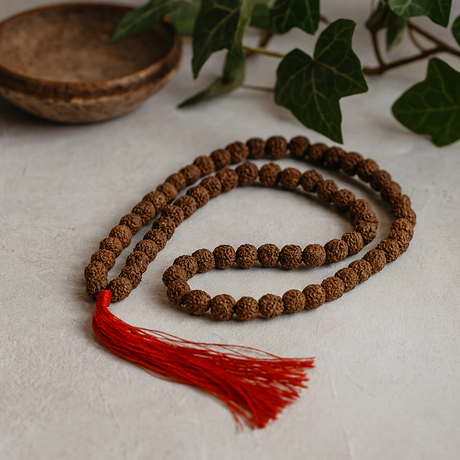
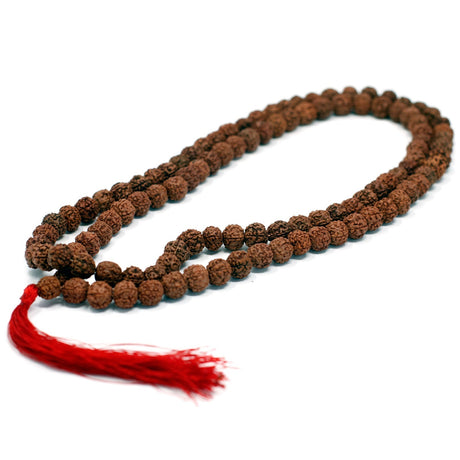
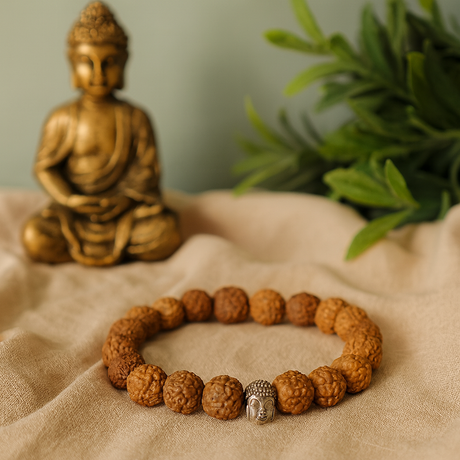
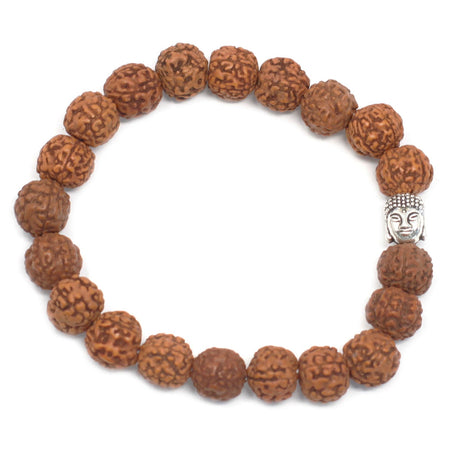
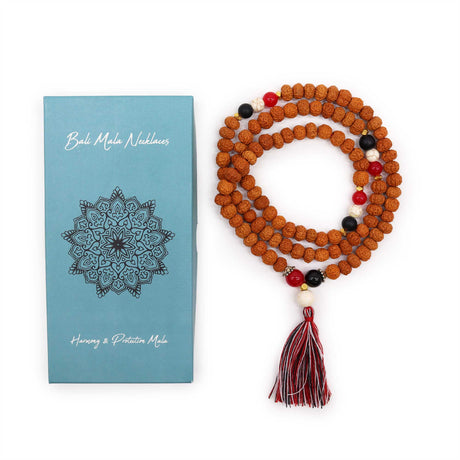
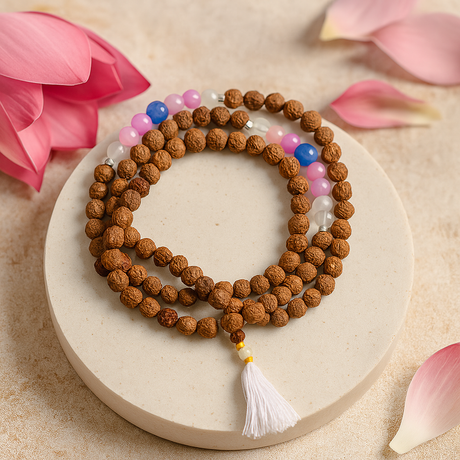
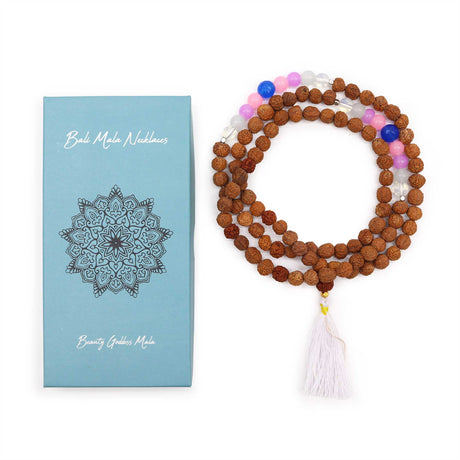
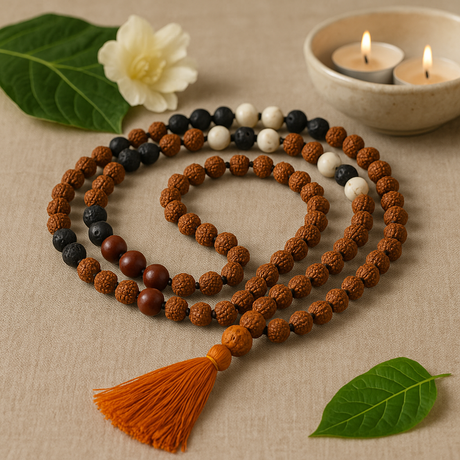
A rudraksha bead is a seed, not a bone. It grows on a tree, the Elaeocarpus ganitrus, native to the Himalayan foothills and parts of South and Southeast Asia, and by the time it reaches a mala it has already dried, hardened and been strung, still recognisably a piece of fruit. The thread holding those beads together is a different story, and a harder one: most mala cord is silk, and most silk asks something of a living creature that the seed never did. That gap, between what the beads are and what strings them, is nearly the whole of what "ahimsa-clean" means when it is written under a listing for a mala, and it is the fact that almost no page selling one bothers to say plainly.
The Seed, Not the Bone

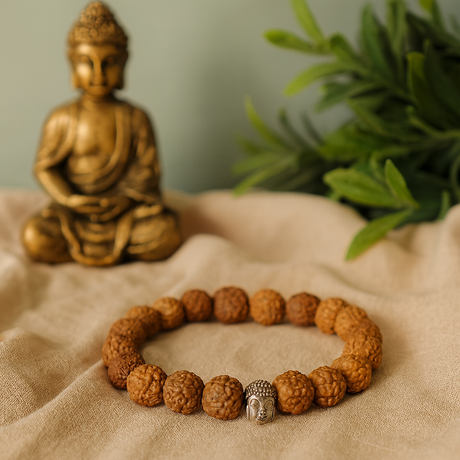
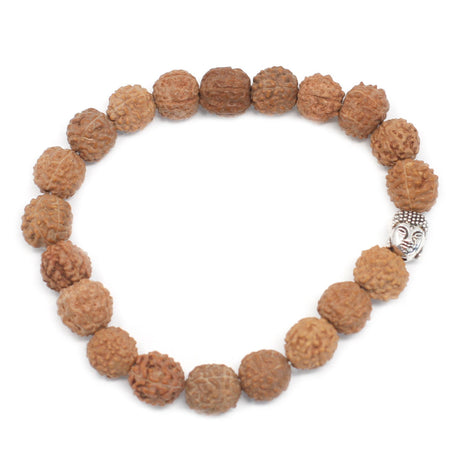
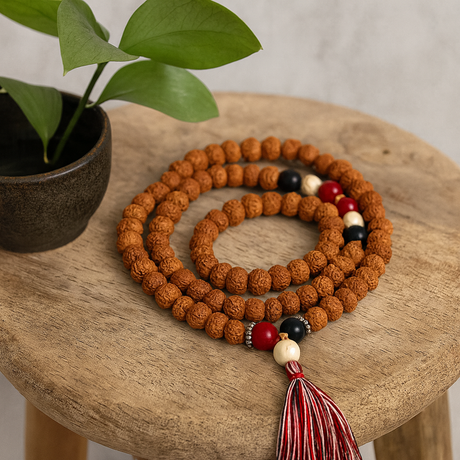
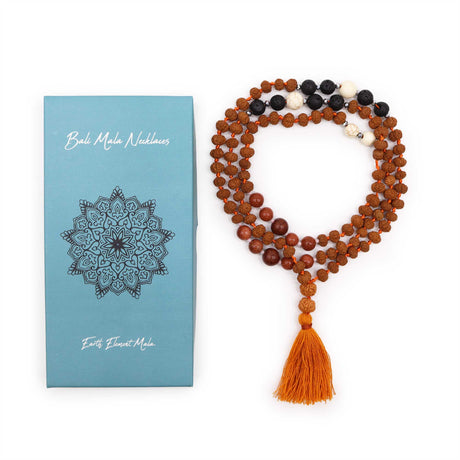
Walk through a market that sells prayer beads, in India or anywhere its diaspora has settled, and you will find seed against bone against stone against wood, often within the same tray. A rudraksha mala is plant material from root to thread: the seed itself, its rough, ridged surface unaltered beyond drilling and polishing. A bone mala is a different, equally genuine object, most often associated with Tibetan Buddhist practice and traditionally made from yak, water buffalo or ox bone. Neither is a modern invention pretending to be old, and neither needs the other disparaged to be understood. What a practitioner deserves is simply to know which one is in their hand. If seed matters to you and you are choosing a first mala, a rudraksha mala is the plant-based route into that same, very old form: 108 beads plus one additional guru bead, the traditional count for a full round of japa.
Where the Word Comes From
Ahimsa is not a marketing coinage dreamed up for an era of ethical labels. It is a Sanskrit word, meaning non-harm or non-violence, and it sits as a central ethical principle across Jainism, Buddhism and Hinduism, with real differences in how strictly each tradition applies it to daily conduct. Jain practice has historically taken it furthest, shaping diet, occupation and even how one walks so as to avoid harming the smallest creature. Buddhist and Hindu ethics hold non-harm as a serious value too, worked out with somewhat more latitude in ordinary life. The word arrives on a product page centuries after it first arrived in a monk's or householder's daily reckoning of what he owed to other living beings, and it is worth remembering that lineage rather than letting the word do work it was never built for.
The Thread Question

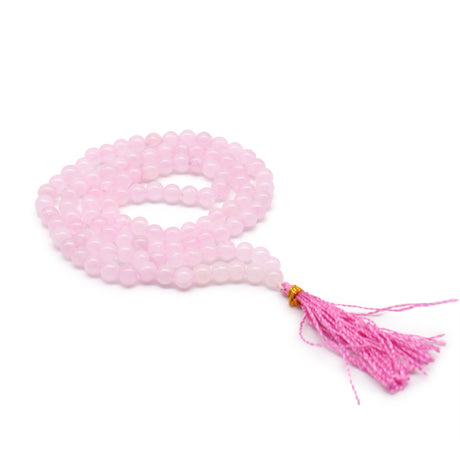
Conventional silk is made by killing the pupa inside its cocoon, usually by steaming, boiling or drying, precisely so the single continuous filament stays unbroken. That is simply how reeled silk is produced, and most silk cord sold for stringing beads is reeled silk, so the beads that seemed to answer every question about the mala can still hang from a thread that answers none. Ahimsa silk, often called peace silk, waits instead for the moth to complete its life cycle and emerge, which breaks the filament and yields far less usable fibre per cocoon. That is why peace silk costs more and stays a smaller, cottage-scale craft rather than an industrial one: the trade-off is real, not a marketing footnote to skip past. Eri silk, long associated with Assam, Meghalaya and Nagaland, is among the best-known peace silks, produced from a domesticated moth species. And even here the moth still dies naturally within days of emerging; the method reduces harm at the point of harvest, it does not remove the animal from the picture entirely. Cotton avoids the question altogether, and is widely chosen for exactly that reason. A stone mala such as a rose quartz mala raises none of the silk question at all, since the material itself and its usual stringing cord sit outside the animal-fibre debate.
Beyond the Mala

The same plant-or-animal question quietly follows other objects on an altar, if you look. Incense resin is almost always plant-derived, tapped from a tree the way sap is tapped, and something like frankincense resin or a stick of sandalwood incense carries no animal question to weigh at all. Candle wax is a slightly different story: beeswax involves the labour of bees in a way some traditions choose to avoid and others do not think twice about, while plant waxes sidestep the question entirely. None of this needs turning into a checklist you carry into every shop. It is simply the same instinct, applied a little further than the mala in your hand.
A Practice: Reading What You Already Own
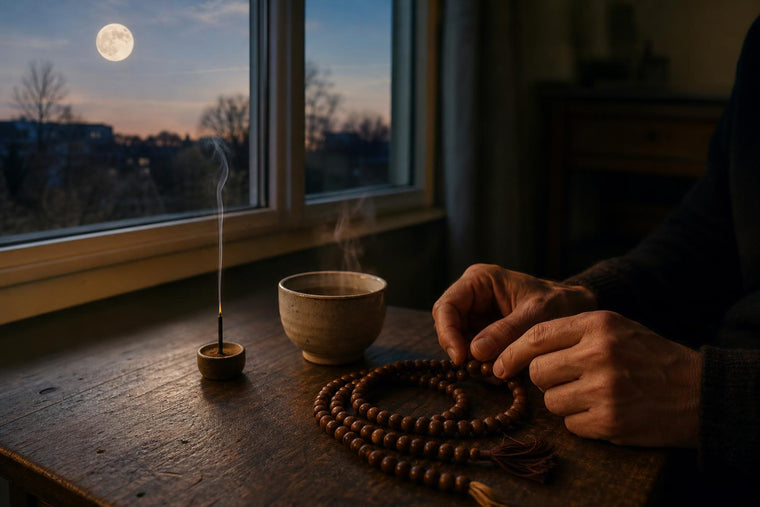
My own japa practice runs through beads I chose without asking any of these questions, years before I thought to ask them, so this is not a lecture aimed downward from a position of having got it right from day one. None of this turns your mala into a moral exam: a seed and a bone bead have both, in their own traditions, sat in the hands of people saying the same mantra with the same sincerity, and the material has never been the whole of the practice. But it is worth five minutes to actually look. Pick up the mala, or the cord, or the shawl folded near your seat. Look at what the beads actually are: seed, stone, wood, bone, glass, plastic. Then look at the thread. Does it shine with the particular sheen of reeled silk, or is it cotton, coarser and matte? You are simply finding out, plainly, what the object in front of you is made of, the way you would read a label on anything else you use daily and rarely examine. Do this once, during the pause before you begin your count, and the object stops being background. It becomes something you actually know, carried forward into the next round of beads the same way you might carry any other piece of attention you have finally decided to give something.