Restyling a calm corner for autumn does not mean building a new one. If you already keep a windowsill, shelf or small table where you sit, light something and go quiet, the work is simple: clear the surface completely, put back only the few objects you actually reached for this past week, and then add two or three things that belong to the season. That is the whole method. The surface, empty for a moment, is the real starting point, not the first pumpkin you find.
Most advice on autumn altars assumes you are starting from nothing: pick a table, choose a palette, gather acorns and pinecones, assign a candle colour to each element. That is fine advice for a first altar. But a corner that has been running all year does not need decorating from scratch. It needs editing. My own practice runs on a small altar at home, kept daily with incense, a few stones and whatever text I am reading through the Gita at the time, and the honest truth of keeping one for years is that the hardest skill is not adding, it is taking away.
What should stay, and what is ready to come off?
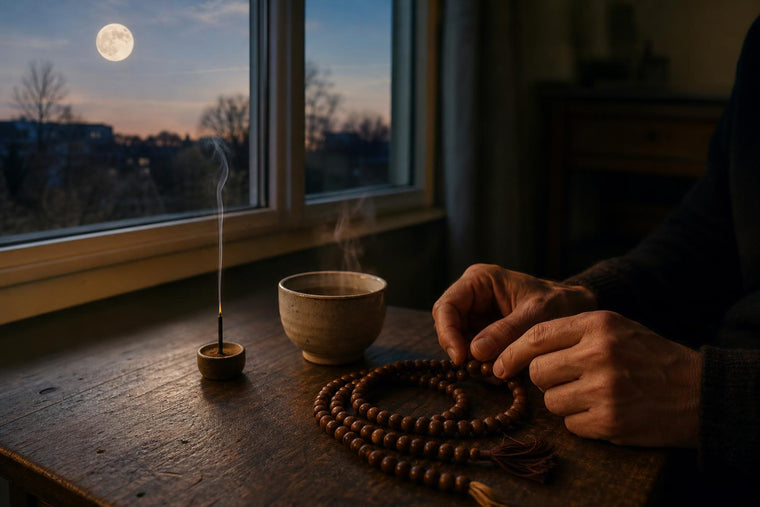
A useful way to think about a long-running calm corner is in two layers. The first is the evergreen base: the objects with no season attached to them at all, because they belong to the practice itself rather than to the time of year. For most people that is a candle holder, a dish for incense ash, a mala or a few stones they actually touch, perhaps a small image or object that holds personal meaning. None of that needs to move for autumn.
The second layer is seasonal, and it should be small: two or three objects in, whatever summer brought still sitting there out. The test for what goes is simple, and it is the one I actually use. If you cannot remember why something is on the surface, that is usually the sign it is ready to come off. A shell from July, a stone chosen for a focus you have since moved past, anything you would struggle to explain to someone standing next to you. That forgetting is not a failing of attention; it is information. The object has finished its work.
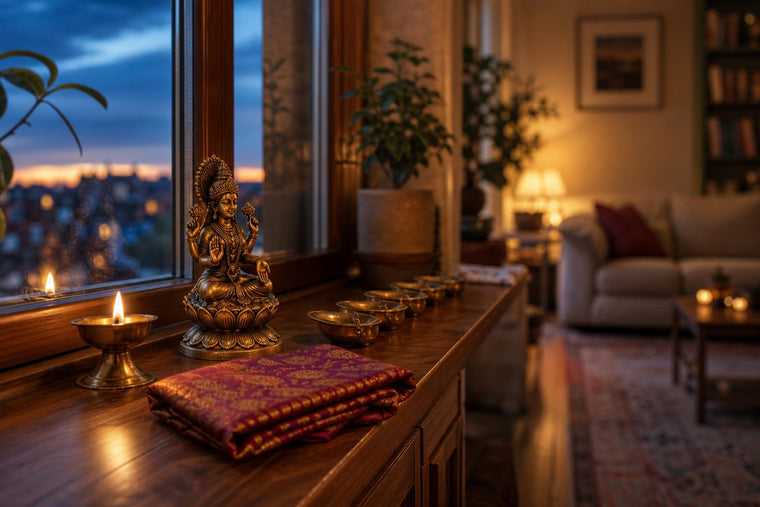
This is where editing earns its keep over simply accumulating. A corner that only ever gains things stops being a place you notice and becomes a shelf you dust around. Materials follow from the same test, once the clearing is done: dried leaves, acorns, pinecones, small gourds, a few stems of wheat belong because they are what is actually falling and ripening now, not because a display calls for them. A single dried branch, or a small bowl of acorns, does the work a whole harvest arrangement would only repeat. If your evergreen base already runs toward wood, brass or stone, a run of warm-toned taper and dinner candles is often the only colour change the corner needs, since candlelight itself does more seasonal work than any object placed beside it. None of this needs a large surface: a drawer, a windowsill, one shelf corner is enough, and autumn's additions should be sized to match whatever space you already keep.
What scent belongs on a calm corner in autumn?

Scent is where most seasonal advice turns into a one-off purchase: a "harvest" candle, bought once, burned twice, forgotten. I would rather treat it the way incense is actually used in a daily practice, which is as a repeated small act rather than a seasonal theme. The scent that belongs on your corner in autumn is simply the one you are willing to light most days through the season, because it is the daily repetition that gives a scent its weight, not the occasion.
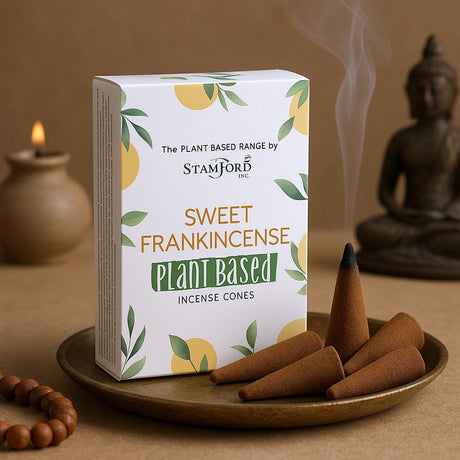
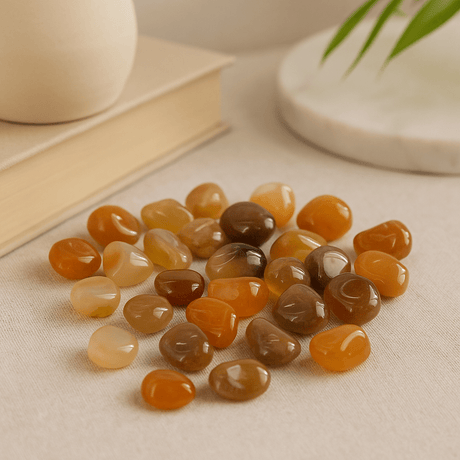
Deeper, warmer notes suit the shortening days and the lower light: something earthy rather than bright. Patchouli incense sits well here, carrying associations with grounding and the root chakra that make it a natural match for a season asking you to settle rather than expand. If stones are part of your corner, this is also where grounding crystals for a calm corner earn their place, less as a new addition than as a quiet continuation of the same idea: weight, root, settling in before winter closes the year further. For the seasonal layer itself, something like a set of autumn table decor or a small arrangement from dried flowers and grasses gives you that layer without turning the corner into a display case.
When is the right moment to restyle it?
You do not need a precise date. Many people use the equinox, in late September, as a natural point to refresh a home altar, since it marks the visible turn of the season rather than a date picked at random. But the better marker is your own attention: the first week you notice the light changing at the hour you usually sit, or the first evening the air actually asks for a candle rather than an open window. That is the sign the corner is ready for its edit, whatever the calendar says.
Once you have cleared the surface and chosen what stays, the restyle itself takes minutes, not an afternoon. Two or three new objects, one change of candle colour, a scent you are willing to repeat. The rest of the season is simply using the corner, which was always the point of keeping it.
Living with the season, not decorating for it
A calm corner is not a stage set that needs refreshing to stay interesting. It is a place you return to often enough that small changes register, which is exactly why the edit matters more than the addition. Clear what you no longer use, keep what still earns its place, let autumn add a little weight and warmth rather than a new theme, and the corner will carry you honestly through to winter, when the whole quiet process asks to happen again.