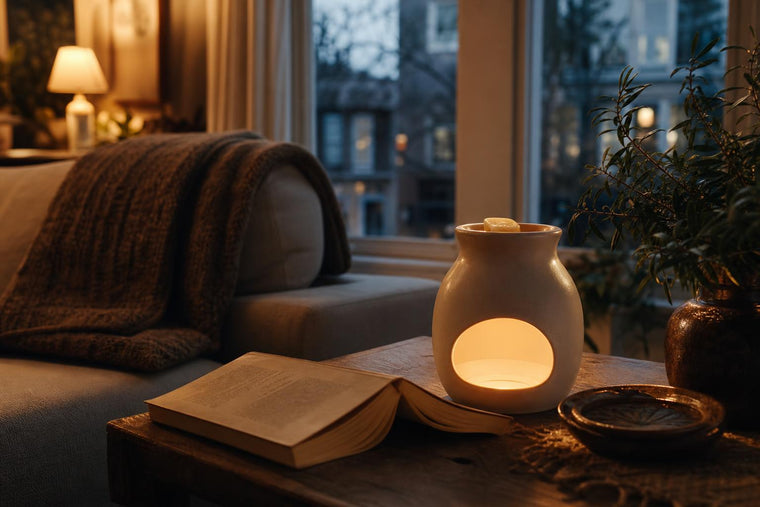
Every few weeks a letter arrives about the same small problem: someone we love has moved, and we do not want to turn up with a monogrammed cheese board. Three questions, honestly answered.
What should I actually bring to a housewarming?
A version of this list appears across a striking number of cultures, and it still, quietly, works. Four objects turn up again and again on the way through a new door: something to eat, something to burn, something to hold water, and something to sweep. Bread and salt for the eating; a candle, a stick of incense or a hearth-fire for the burning; a pot, a jug, a kettle for the water; a broom for the sweeping. That is the whole frame. You are not decorating a room. You are giving your friend the first tools a household needs to be a household. Choose one, not four. A gift piled with symbolism is a chore, not a welcome. Bring the object you can honestly stand behind, add a sentence about why you chose that one, and the gesture will do more work than any thirty-item shortlist ever could.
Is bread and salt still a real tradition, or a Pinterest invention?
Real, and older than the aesthetic revival suggests. In much of the Slavic world, in Russian, Ukrainian, Polish and Belarusian households among them, the custom is called khleb-sol (literally "bread-salt"), a loaf and a small dish of salt offered by hosts to honoured guests, often carried on an embroidered cloth (in Ukrainian tradition, a rushnyk). By natural extension, guests bring the same pairing to a new home: the loaf so the household never knows hunger, the salt so its life is never without savour. As with most living customs, families disagree about the details, some insist on a dark rye loaf, others on white bread, and the cloth is a nicety rather than a rule.
The pairing also runs through Jewish practice. In rabbinic tradition, salt commonly accompanies bread at the table, and Ashkenazi families still bring bread, salt, and sometimes a broom, a candle, or a small bag of sugar into a new house. Frank Capra's It's a Wonderful Life famously depicted a version of this: Mary Bailey brings bread, salt and wine to the Martini family's new home, which is likely why so many people vaguely remember the gesture without knowing where it came from. The film borrowed the custom; it did not invent it.
Why does it survive? Because the objects are honest. Bread and salt cost almost nothing, they cannot be aestheticised into meaninglessness, and they name what a home is for: feeding people. If you do bring them, bring a loaf you would actually eat, and a small dish or twist of good salt rather than the shaker from the corner shop. A cloth to lay them on is not compulsory, but it turns a gift into a small ceremony, which is what your grandmother was quietly teaching you.
My friend has just moved into her first flat in Bengaluru, what's appropriate?
The ceremony you are gifting into is griha pravesha (literally "entering the house"), the puja that marks a family's first proper day in a new home. Practices vary considerably between regions, communities and families, so ask before assuming; that said, a few threads run widely. A priest is often invited to perform the puja. Auspicious items are carried across the threshold before anything else. Milk is set to boil on the new stove until it overflows, a sign the house will know abundance rather than lack. Rice, turmeric, a kalash (a pot, often brass or clay, filled with water and topped with mango leaves and a coconut), and sweets tend to appear.
For a gift, keep to the same register: small, auspicious, useful in the household or on its altar. A brass or clay pot is a beautiful and traditional choice. Good rice, jaggery or a box of proper sweets from a shop she trusts is never wrong. If she keeps a home altar, a small brass lamp in the form of Ganesha, the deity traditionally invoked first at any new beginning, sits naturally there. In Bengaluru households, friends often arrive with something as modest as a bag of rock salt and a coconut, or with a full puja thali; both are received warmly. The scale is not really the point, though it is fair to say that in some families and social circles the expected scale can itself become a quiet pressure. Ask what is customary before assuming either a modest or an elaborate gift is expected; what travels furthest is the attention behind it, not its price.
What to avoid: leather, alcohol as a default (many households do not keep it), knives or anything sharp as a stand-alone gift (in several traditions this is thought to cut the friendship), and the western reflex of a scented candle in a colour that clashes with everything she owns. When in doubt, ask her mother.
I want to give a candle without it feeling generic

By making it specific to the house, and by telling her when to light it. A candle becomes a gift the moment it stops being a fragrance and starts being a moment. Choose the scent to answer a room you have actually been in: something green and herbal for a kitchen with a window over the sink; something resinous, closer to temple incense, for a room she plans to read in; something plain, beeswax, unscented, for a bedroom where she wants nothing to compete with sleep. Wax and wick set the burn, not the price tag; a hand-poured plant-wax or beeswax candle in a wide enough vessel will outlast a smaller, more expensive one by hours.
Then write, on the card, when to light it. The first evening she cooks something proper. The first morning she wakes up and it feels like her flat rather than an address. The night she finally hangs the last picture. This is the difference between a candle-shaped object and a gift: the second one arrives with an occasion attached.
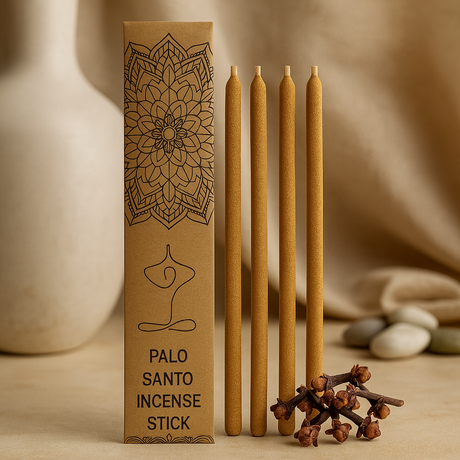
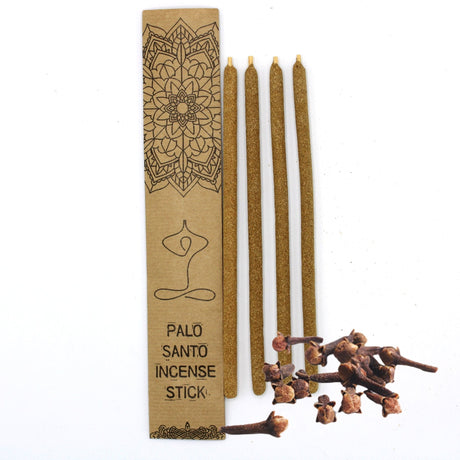
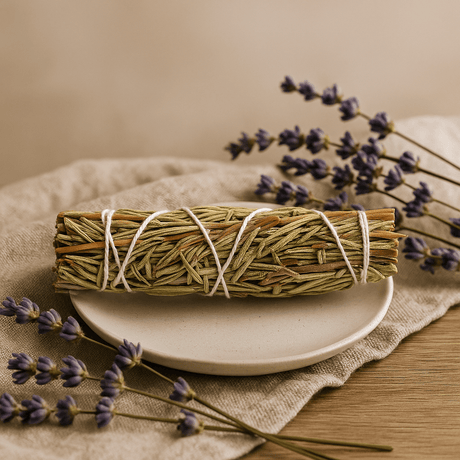
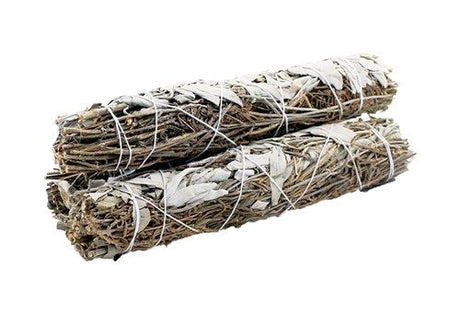
The same logic works for the older burnable gifts. A length of palo santo or a white sage bundle is a lovely offering to a friend who wants to mark the space before her own things are in it. The English word housewarming, after all, once meant this quite literally: guests would light fires in every hearth of a new house to warm it and clear it, a custom recorded in various forms for centuries. If she loves sound, a small singing bowl is a gift she will still be using in ten years. The reason these older objects keep working is not that they are more beautiful than the ones in the round-ups. It is that they are honest about what a gift on a threshold is for. You are not upgrading her decor. You are being the first person to feed, warm, water or clear her new home, and you are doing it in a way she will remember when the walls have stopped feeling unfamiliar.