A short letter on the smallest habit in the house: the click of a switch, and what it asks of you.
You reach for the little switch on the warmer and press it down, and that's it. No match, no lighter, nothing to watch afterwards. Every other scented flame in your house asks something of you while it burns: a candle wants your eye on it, incense wants its ash caught before it falls. The wax melt asks nothing. It will sit there releasing its scent for hours whether you are in the room or three streets away, and that is either the best thing about it or the thing worth thinking about for a moment before you walk off.
What the wax actually is
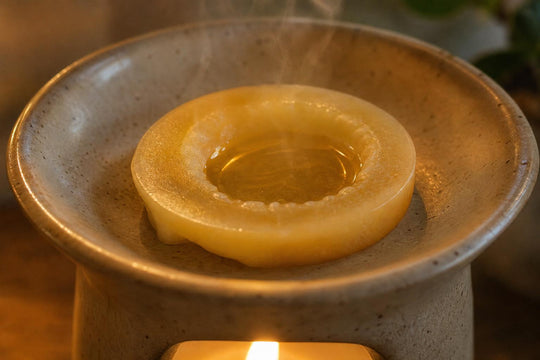
It helps to know what is actually sitting in the little dish, because most people never ask. Paraffin, the wax behind a great many melts and candles, is generally traced to the 1830s, when the chemist Carl Reichenbach isolated it while distilling coal tar in search of something else entirely. It is, in other words, a by-product of chemistry rather than an ancient material with a folk history behind it, and there is nothing wrong with that. It burns clean, it holds scent well, and it has done the job for close to two centuries.
Soy wax has a much shorter story. It's credited to an American candle maker in the early 1990s, who hydrogenated soybean oil to give the industry a plant-based alternative to paraffin and beeswax. Neither wax is more sincere than the other; they are simply two different answers to the same question, made roughly a hundred and sixty years apart. Trade opinion still argues over which burns "cleaner" or throws scent further, and the honest answer is that it depends more on the blend and the wick than on the raw material alone, so the choice is really about what you'd rather have in the dish, not a verdict either wax has won. Knowing that much means you are choosing a material, not a marketing word on a label.
The on and the off

Here is the part every tutorial skips because it isn't dramatic enough to write up: a wax melt has no wick and is never lit, so there is no open flame to tend, which is exactly why it's so easy to leave running as background for an entire afternoon without once noticing it's there. That's not a flaw. It's an invitation to do something more deliberate with the one moment you do control, which is the switch itself.
I keep incense and a candle going most days as part of a daily practice, and half of what that practice teaches is attention: you light the thing, you sit with it, at some point you put it out. A wax melt removes the watching, but it needn't remove the beginning and the end. Press the switch when you actually sit down to something, a stretch of reading, a piece of work you want to give an hour to, the last part of the evening, and let that press mean something. Turn it off, deliberately, when that stretch is over, rather than letting the scent simply run down on its own timetable while your attention has already moved elsewhere. The wax will keep giving off fragrance long after you've stopped noticing it; the switch is the one place left where you get to decide.
When the scent has finally faded, let the puddle cool and harden fully before you lift it out. It comes free cleanly that way, with none of the mess of trying to scoop it warm, and it's a small, quiet full stop to whatever the scent was marking.
A short close
None of this needs a chart of room sizes or a rule about how many cubes make a proper dose. It needs you to notice that you have, in this one object, a scent with no flame and therefore no built-in reason to be mindful of it at all, and to supply that reason yourself. Choose the wax knowing what it is. Choose the moment you switch it on. Choose, just as clearly, the moment you switch it off.
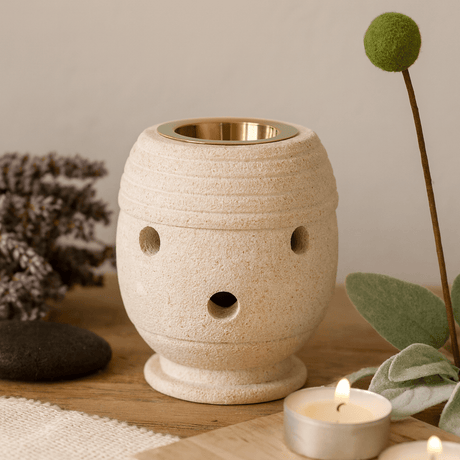
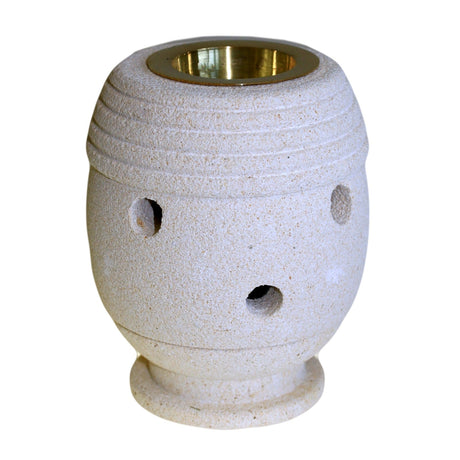
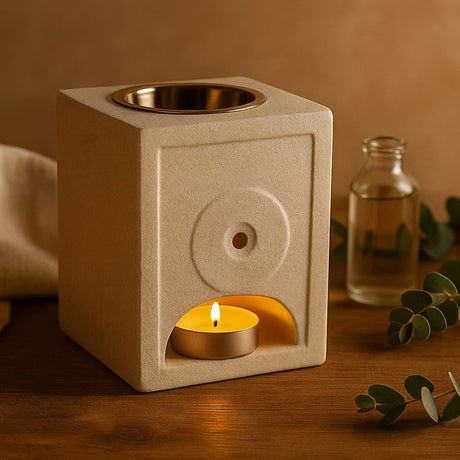
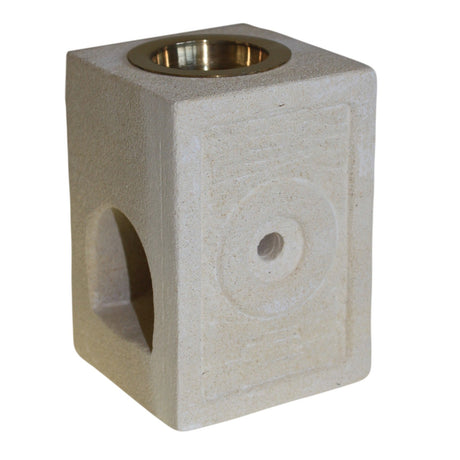
If the warmer itself has been sitting unused, it is sometimes just the container that needs replacing, something plain enough to actually reach for rather than leave in a cupboard.
Warmly,
Alex
From the shelf: if you'd like to try the newer of the two waxes, our soy wax melts are a plant-based place to start; if the warmer itself needs replacing, our oil burner is a plain option worth a look.