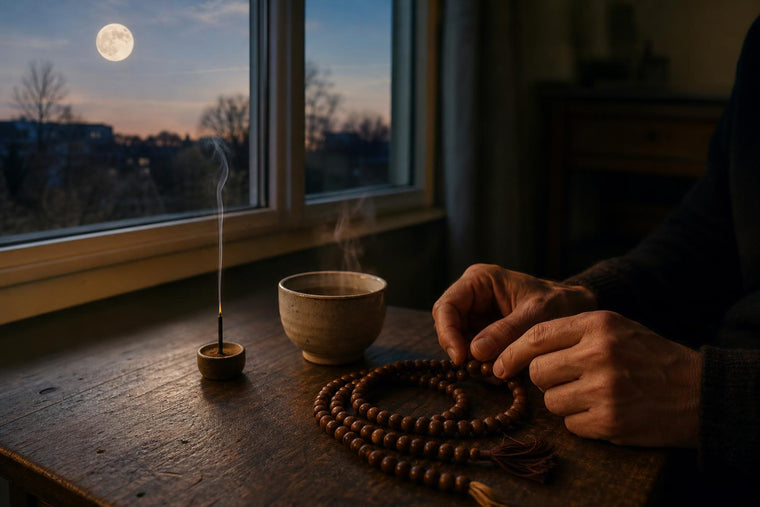
Before the day arrives with its demands, there is a window that tradition has quietly protected for centuries. This is a guide to using it well, and to building a morning practice that survives the mornings you fail to have one.
The Window That Isn't a Clock
A muhurta is a unit from traditional Indian timekeeping: a day, in this older reckoning, was divided into thirty of them, each roughly forty-eight minutes. Most muhurtas carry no particular character. But the last two before sunrise, roughly ninety-six minutes together, are named brahma muhurta, and yogic and Vedic tradition has long pointed to this stretch as favourable for quiet practice, before the day's noise has properly started.
The window moves with the sun rather than a clock, so it falls earlier in an Indian summer than in a Russian winter, and households at different latitudes keep slightly different hours by it. What stays constant is the logic: this is the stretch when the mind has not yet been handed to anyone else, before messages, meetings, or even the day's first cup of tea have made their claims on it. My own practice keeps to roughly this stretch, and I trust the reasoning without needing to defend it further. A missed sunrise does not cost you the next one; the window opens again tomorrow at its own pace, not at the pace of a streak you're keeping.
Why a Checklist Doesn't Last
Most modern advice about mornings is a productivity system wearing gentler clothes: prepare the night before, remove friction, start absurdly small, stack the new habit onto an old one, track the streak. None of this is wrong, exactly. It is simply aimed at a different problem. It tells you how to begin. It rarely tells you how to know you have done enough.
That gap is where most morning rituals quietly fail. Without a natural end point, a practice either drifts, fifteen minutes becomes five, then nothing, or it becomes a private accountancy of guilt, each missed day logged as a broken streak. A ritual that depends on a checklist needs the checklist to be finished by something other than willpower running out.
The Bead That Tells You When to Stop
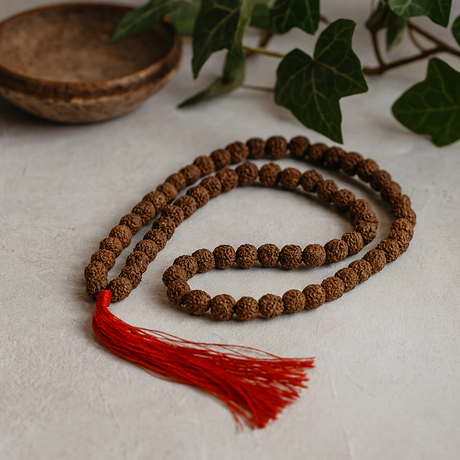
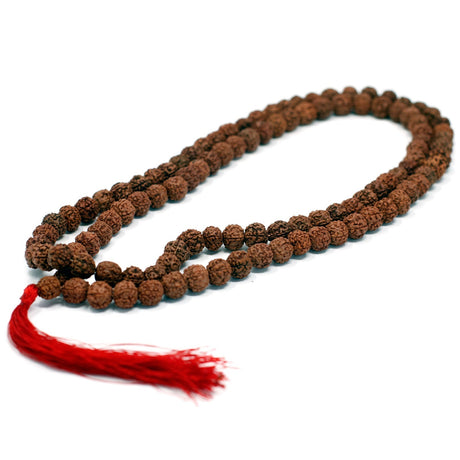
Japa, the repeated recitation of a mantra, solves the checklist problem in the plainest possible way: with a bead in the hand. A mala traditionally carries 108 beads, plus one additional bead, the guru or meru bead, which sits apart from the count and marks where the sequence begins and ends. Tradition holds that this particular bead should not be crossed over; when the thumb reaches it, the round is complete, and if you wish to continue you turn back the way you came rather than carrying on past it.
Why 108 became the traditional count is a question the tradition itself does not settle in one voice, and no single origin should be taken as the whole story. What matters for a morning practice is simpler: the counting happens in the hand, one bead per repetition, so the mind is free to attend to the mantra instead of keeping score. I keep a mala within reach of where I sit each morning, and the plain mechanics of it, thumb finding the next bead, are half the reason the practice holds. Some practitioners find the counting itself a distraction and let it go entirely, returning to it only when they want a way to mark the rounds.
This is also why the bead survives a missed morning better than a checklist does. A tracking app treats an absent day as a broken chain, day one again tomorrow. The guru bead does not remember whether you held it yesterday; it is only ever waiting at the same place for the next round, resumed rather than re-earned. If you are choosing a first mala, the material, rudraksha, sandalwood, tulsi, rose quartz, matters less than the count: 108 beads plus the guru bead is the standard to look for, whatever it is made from.
The Order the Senses Meet

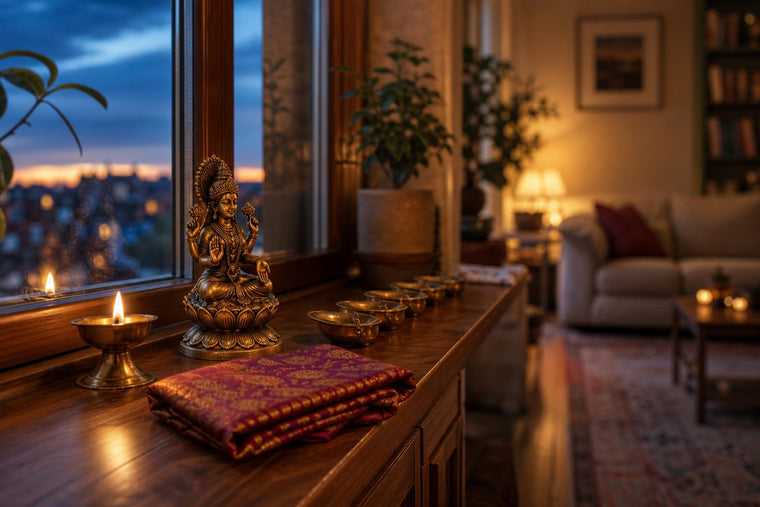
A basic puja, the ritual worship many households keep in some form, traditionally moves through offerings to the senses in turn: water, a flower, incense, a lamp, and food. The simplest home version compresses this into five offerings in one sitting; the fuller shodashopachara puja, set out in the Agama texts compiled across roughly the fifth to ninth centuries CE, runs to sixteen. Households vary in how much of either they keep, but the underlying idea, offering something to each sense before the day claims that sense for its own purposes, predates any modern morning routine by a very long way.
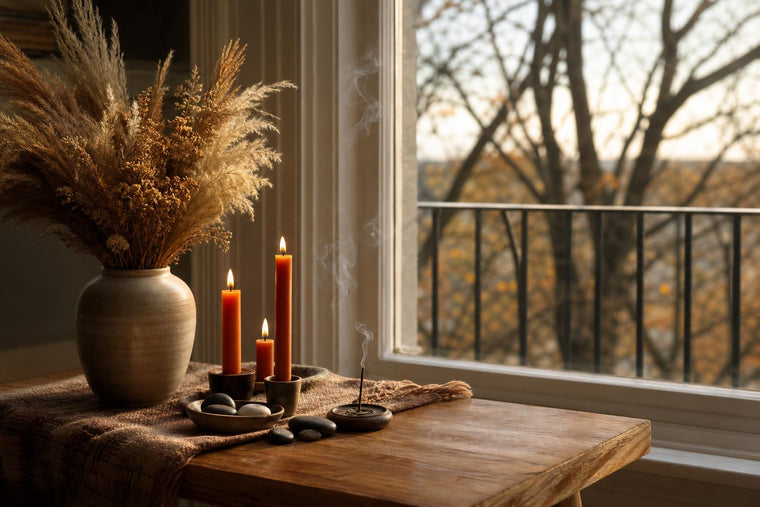
Begin, if you like, with sight and touch together: a bowl of water and a flower set down before anything else is asked of the eyes that morning. Then let smell arrive, well before the phone's light does. Lighting a wick or a stick of sandalwood incense is not a background scent so much as a small, deliberate signal that this hour belongs to something other than the inbox; sandalwood is favoured for this particular slot because it burns slow and even rather than sweet, so it can mark the same hour daily without becoming a distraction in its own right. Many people keep a small figure on the altar, a quiet point the eyes return to through the sequence, and what sits there differs from household to household.
None of this asks for a perfect morning. It asks for a window that opens again whether or not you were there for it yesterday, and a bead that only ever waits at the same place, ready for you to pick it up and turn back to where the round began.