There is an hour on the Plateau de Valensole when the lavender is not yet the thing in the photographs. The rows are grey-violet, not full purple; the light has not decided to be gold. This is a piece about that hour, about the hand that cuts the first armful of fine lavender before the sun volatilises the scent, and about the copper still that turns it into a drop you can carry home.
The field before the sun
Walk out onto the plateau in the half-light and the first thing you notice is not the colour but the sound, or rather the absence of it. The plateau is quiet at this hour in a way lowland places forget. It is one of the largest lavender plateaux in Europe, a high dry table of stone and thin soil, holding the night's cold even as the sky begins to warm.
The rows run toward the middle distance, and as the light crests the ridge they change. Grey-violet first, the colour of lavender in shadow. Then the first true sun rakes along the furrows, the flower heads catch, and the whole field shifts into the full colour everyone knows from photographs, that deep, almost blue violet. Except now you are inside it, and the photograph is the lesser thing.
And then the scent. It lifts off the warm stems in a thread, faintly sweet, faintly green, more present than you expect at that hour. The sun has only just touched the heads, and already the warmth is drawing the volatile oil out of the flowers and into the air. This is the moment the distiller is waiting for, and the reason the morning hour matters more than any other on the plateau.
What grows on the plateau
Not all lavender is the same plant, and the difference is the whole story of why this plateau is prized. Two lavenders grow in Provence.
The first is fine lavender, Lavandula angustifolia, sometimes called true lavender. It grows at the higher altitudes, roughly 600 to 1,500 metres, where the air is cooler and the limestone soil is at its thinnest. A single flower spike on each stem, lower yield, slower to bloom. This is the lavender of fine perfumery and the most valued essential oil. Huile essentielle de lavande de Haute-Provence is an EU AOP and AOC protecting fine lavender oil produced in a defined four-department area, the Alpes-de-Haute-Provence, the Drôme, the Hautes-Alpes and the Vaucluse.
The second is lavandin, Lavandula x intermedia, a natural hybrid of fine lavender and spike lavender (L. latifolia). It grows at lower altitude, throws larger spikes, yields considerably more oil, and carries a more camphorous note. Most of the broad purple fields a traveller photographs from the road are lavandin, the workhorse of lavender soaps, sachets and household scenting. But it is the fine lavender, the smaller and rarer plant, that the distiller rises at first light to cut.
Fine lavender flowers earlier, typically late June into July; lavandin follows, July into August. The distillation harvest falls in July, when the morning air is still cool enough to hold the oil in the cut stems.
The First-Light Harvest

The distiller is on the field before the sun is. A short curved sickle, a wooden trug, and the work is simple in description and demanding in practice: cut the flower spikes, armful by armful, before the midday heat rises. Aromatic plants are traditionally cut for distillation in the cooler part of the day, because heat volatilises the essential oils, the very thing the harvest is gathered to keep. The oil is in the flower at first light; by noon, a measurable part of it has already left for the air.
The cutting is rhythmic. A fistful of stems gathered, the sickle drawn through, the bundle laid in the trug. Dew is still on the flowers and on the forearm, and the scent that lifts off each cut is sharper than the field's general perfume, green and sweet together, with a faintly resinous edge from the cut stem.
This is the part the travel listicles do not stop for. The field is not a backdrop here. It is a discipline of attention, a place that asks you to rise for it, to notice the moment the scent changes as the sun climbs. You can stand at the edge and photograph the rows. Or you can be in the rows, hands wet with dew, and let the field teach you what it has taught the people who have worked it for a century and more.
From Flower to Oil

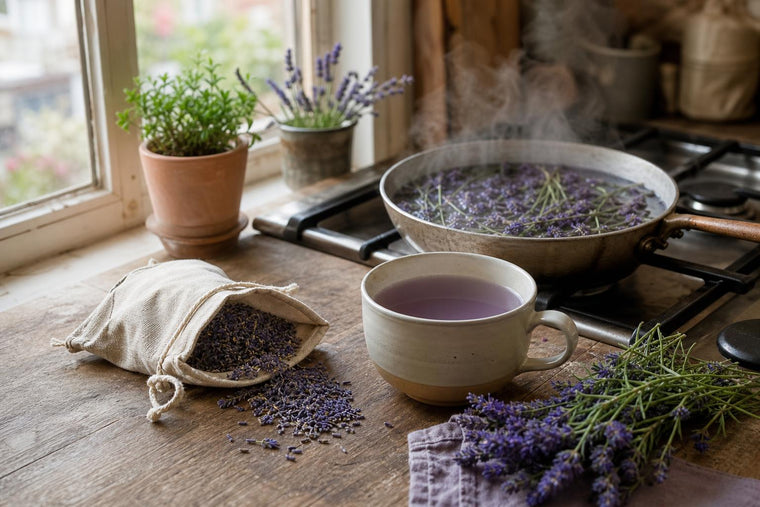
Within hours of cutting, the flower spikes are in the still. The traditional Provençal method is steam distillation in a copper alambic, barely changed in its essentials for generations. The cut lavender is loaded into the still's body. Steam rises through the flower heads, carrying the volatile aromatic compounds out of the plant matter. The vapour passes through a coiled condenser, cools back into liquid, and runs into a receiver.
There the two separate. The essential oil, lighter than water, rises to the top and is drawn off. The water left behind is lavender hydrosol, eau de lavande, a gently scented distillate that carries a softer, greener version of the flower's character. The oil is the concentrated essence; the hydrosol is the field's breath, caught in water.
The yield is small, and worth holding loosely rather than as a fixed constant. On the order of 150 kilograms of fine lavender flower heads produce roughly one kilogram of essential oil. Lavandin yields considerably more, which is part of why lavandin oil is the less expensive of the two. The copper still does not hurry any of this, it runs at the pace of steam and condensation, and the first drops of clear oil in the glass receiver are the slow reward of a morning's cutting. This is craft as timing, not as machinery, the skill is in knowing when to cut, how to load the still, how to read the run, and none of it can be rushed without losing what the morning was for.
First light as a threshold
Step back from the still and notice what the hour has been. First light is a threshold, the day's first boundary, the seam between the night's quiet and the day's activity. Every tradition that rises for dawn, whether to distil lavender or simply to walk out before the household wakes, is responding to the same thing: the day becomes itself at this hour, and there is a quality of attention in it the rest of the day does not give back.
The difference between photographing a field and being present in it is the whole difference. The photograph freezes the colour and the light and lets you move on. Being present means you feel the cold leaving the ground, you smell the scent strengthening as the sun touches the rows, you notice the first bee arrive. You are not collecting the field; you are keeping it company while it does the thing it does once a day. This is the slow-living core, the choice to rise for first light not to capture it but to be present for the moment the day becomes itself, and to carry a little of that calm into the hours that follow.
Bringing First Light Home

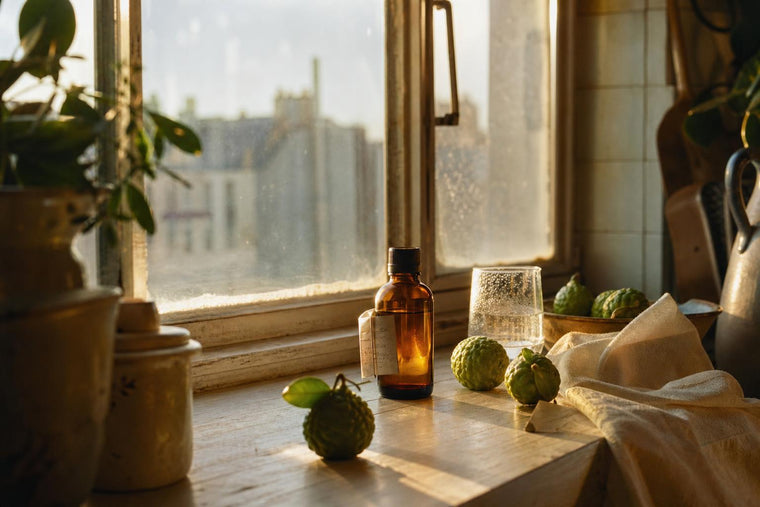
You do not need to be on the Plateau de Valensole to keep a version of this hour. The dawn the distiller works is, at its root, a morning practice, and it travels. A single drop of fine lavender essential oil on a tissue, placed on the sill of the window you open first, carries the field's morning into your own room.
Here is a simple dawn practice, built from the same elements the distiller's morning is built from, a scent, a threshold, and the choice to be present for it.
- Open the window before anything else. Not the phone, not the kettle. The window. Let the morning air in and stand by it for one breath.
- Place a drop of lavender oil on a tissue or the corner of a linen cloth. Set it on the sill. The scent will meet you as the room warms, the same thread of fragrance that lifts off the cut stems on the plateau, only smaller and indoors.
- Light a stick of lavender incense if you prefer smoke to oil. One stick, at the open window, as the sun comes in. Let the ash fall while you set the day's first intention, not a grand one, just the quality you want to carry into the next hours.
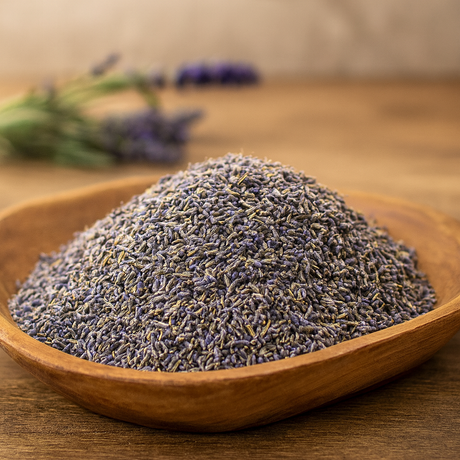
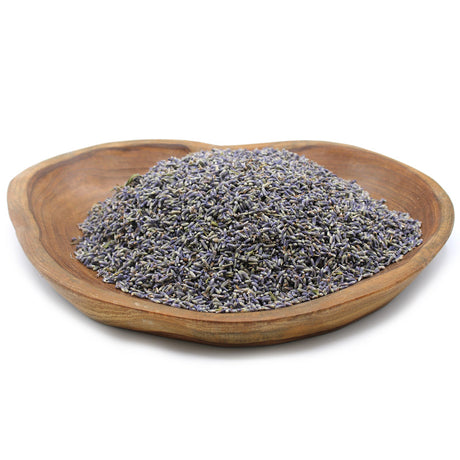
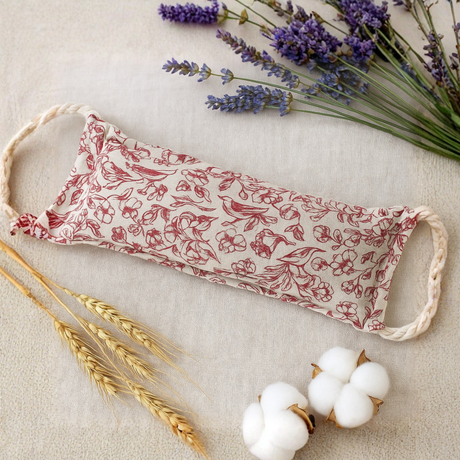
- Keep a linen sachet of dried lavender in the drawer where your morning clothes live. The field's scent meets you before the mirror does, and the day begins with a breath of Provence rather than a rush.
This is not a routine to master. It is a threshold to keep. Done once, it is a pleasant morning; done across a week, it becomes a small reliable place where the day is met on purpose.
Scenting the morning room
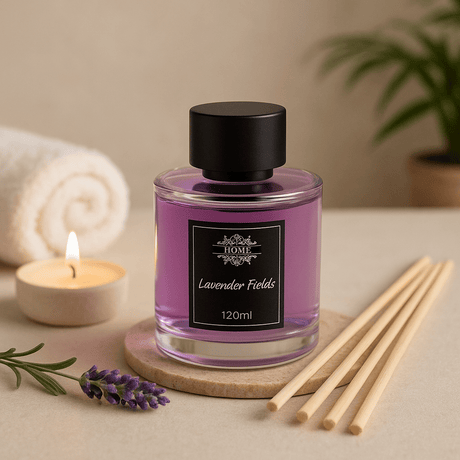
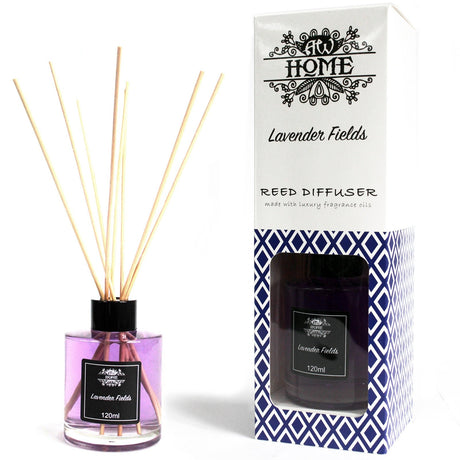
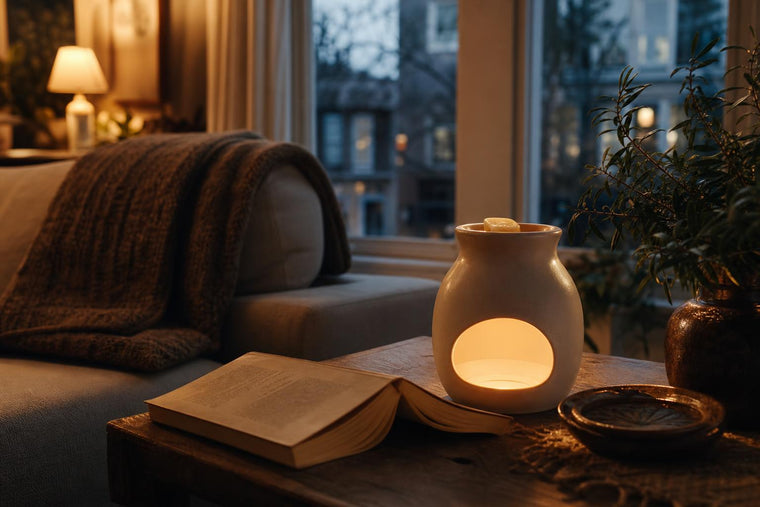
For those who prefer a flameless scent through the first hour, a reed diffuser set in the room you wake into turns the hallway into the field's quiet edge, the reeds draw the aromatherapy blend up slowly through the morning, and the scent is there before you are, steady and unwarming. A wax melt warmed in a burner while the kettle heats fills the room with the field's breath in the same way the still fills the distillery, by gentle heat, not by force.
The first-light bath
For the days when the morning can be slower, a weekend, a day off, a morning you have guarded from obligation, the dawn practice extends into water. A warm bath scented with a lavender bath bomb, taken before the house is fully awake, is the field's hour drawn out. The steam carries the scent the way the still's steam carries the oil. You are marking the threshold with the whole body, letting the morning arrive through the skin as well as the nose.
The bath is the most generous version of the practice, and it is not the point. The point is the drop on the tissue, the stick of incense, the sachet in the drawer, the small, repeatable gesture that turns a generic morning into a met one.
A living heritage
The lavender of Provence is not a relic. It is a living heritage, worked and distilled year after year by people who learned the plateau from the people before them. The clearest single example is the Abbaye Notre-Dame de Sénanque, a 12th-century Cistercian monastery near Gordes in the Vaucluse. The community has grown a lavender field in front of the Romanesque abbey for generations, as part of the self-sufficient economy that has sustained the house since its foundation. The field and the stone are photographed together endlessly, but the truer thing is that the lavender is there because the community works it, year after year, as a lived rhythm rather than a tableau.
The heritage is not confined to one abbey. The Route de la Lavande threads the plateaux and the villages where the harvest is still a summer event. The season is marked by festivals, at Sault, at Ferrassières, at Valensole itself. Grasse, the historic capital of perfumery, lies within the same region, and the fine lavender of the high plateaux has fed its workshops for the better part of two centuries. The dried buds in a linen sachet, the soap in a Provençal basin, the drop of oil on a morning tissue, all are threads of the same living tradition.
When the field is full light
The hour is over now, on the plateau. The sun has climbed, the heat has risen, and the field that was grey-violet and then full purple is now simply bright, the colour flattened by the high light, the scent lifting off the uncut rows in waves the midday air carries away. The distiller's morning is done; the still will run through the heat of the day, but the cutting is finished and the first oil is already in the receiver.
The day has become itself. That is what the hour was for, to be present for the becoming, not to hold it still. The field will do this again tomorrow, for the few weeks of the harvest, and then the bloom will pass and the plateau will go back to its dry summer quiet.
What stays is the practice. The drop at your window. The sachet in the drawer. The stick of incense lit as the sun comes in. Wherever you wake, a flat in Manchester, a house outside Munich, an apartment in Milan with the shutters still closed, the first light is there too, asking the same quiet thing it asks on the plateau: will you be present for the moment the day becomes itself? The night has done its work. The morning is yours to meet.