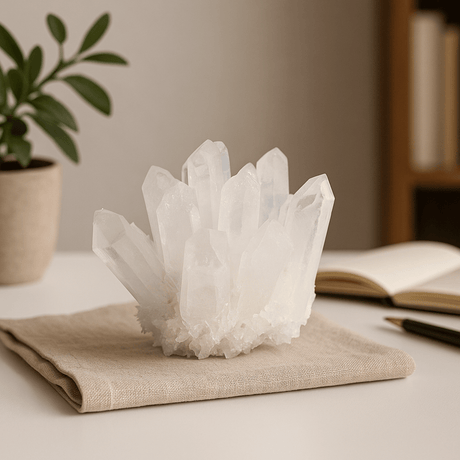
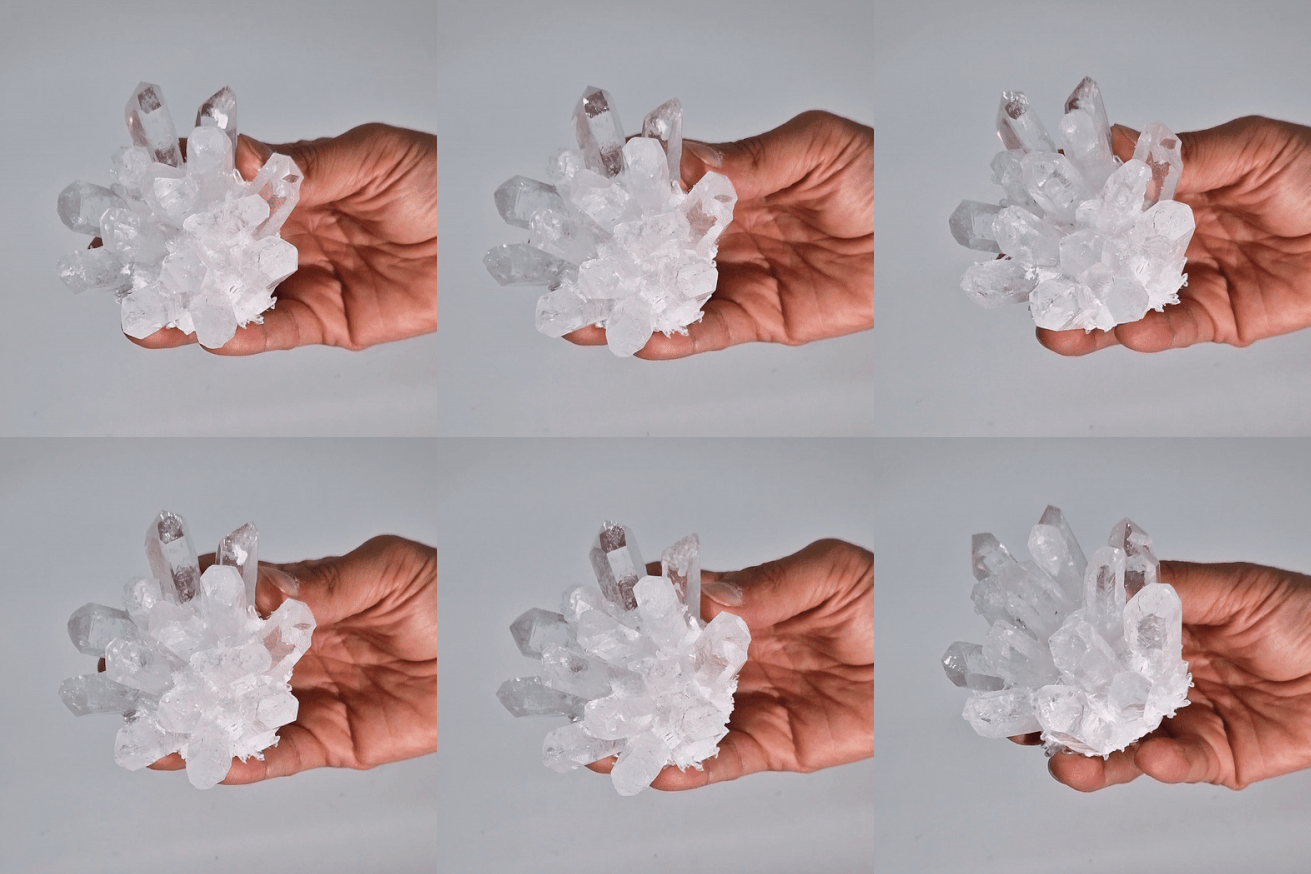
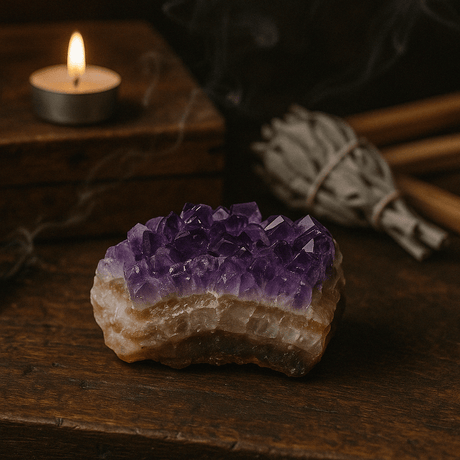
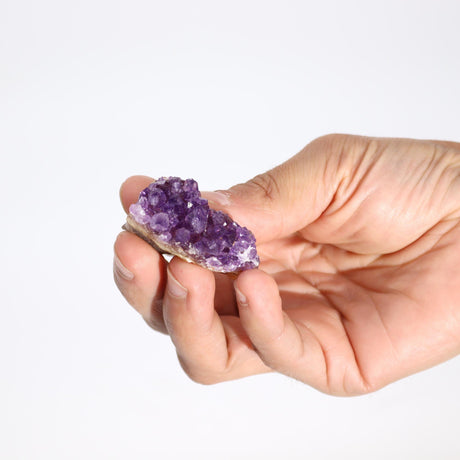
The Ouachita Mountains run east to west for roughly 225 miles, from the middle of Arkansas into eastern Oklahoma. Most ranges on this continent run north to south; the Ouachitas do not, and geologists have long treated that as a small anomaly worth explaining. Inside a narrow belt of these mountains, no more than thirty miles wide, sits one of relatively few places in the world where quartz grows large and clean enough to be mined as a commercial product rather than gathered as a curiosity. This is the true origin point of the crystal cluster you might place on a windowsill: a named mountain range, a documented geology, a working industry, and, if certain local accounts are right, a story of human hands reaching for this same quartz long before anyone thought to mine it for a living.
The Mountains Where Quartz Grows
The clearest points and the largest clusters come from the country around Hot Springs, Arkansas, where the quartz belt is at its richest. The crystals formed as silica-rich water moved through cracks and cavities in the Crystal Mountain and Blakely Sandstones, both laid down in the Ordovician period, hundreds of millions of years before anyone thought to dig for them. Slowly, over an unhurried geological timescale, that mineral-laden water deposited silica along the walls of those fractures, and quartz crystals grew inward from the rock face until they met, or ran out of room, or simply stopped.
The scale some of these formations reach is genuinely startling. Clusters pulled from Arkansas ground have been reported at up to fifteen feet long and ten feet wide, weighing more than ten tons, with individual crystals inside them said to have reached five feet and over five hundred pounds. Figures like these are hard to verify precisely, but they recur across multiple written accounts of the region's mining history. Naturalist Henry Rowe Schoolcraft visited the Hot Springs of the Ouachita as early as 1819 and described the quartz there, in his own words, as "one of the most noted localities of the mineral west of the Mississippi." People were working this quartz long before Schoolcraft arrived: an arrowhead made from it, found near the Mount Blakely Dam site in Garland County, has been reported in some local accounts as several thousand years old, though dating a surface find this precisely is difficult, and the figures given vary between sources. Whatever its exact age, it puts a human hand into this same stone a very long time before the first commercial pit was ever dug. Geologists often name Arkansas alongside Brazil as among the few places on earth where quartz grows both large and clear enough for commercial mining, though no strict global tally of such deposits exists.
The Dig

Behind any cluster sitting in a shop is a family-run mine, and behind the mine is a genuinely physical business. Operations such as Ron Coleman Mining, about half an hour from Hot Springs, have produced clusters of remarkable size, including one recorded at nine feet long and around 3,000 pounds, and mines like it work the same veins that Schoolcraft noticed two centuries ago. Some sites let visitors dig through the mine's own tailings for a flat fee, sometimes as little as ten dollars at one Jessieville tailings site, with a guarantee that whatever is found will be worth at least that much. It is a rare kind of shop where the customer does some of the labour themselves, and a rare kind of souvenir that comes with dirt still under the fingernails.
It is worth being honest about what that digging actually turns up. Mineralogists writing on the Smithsonian's own gem and mineral collections have described Arkansas quartz as among the finest and cleanest quarried in the country, while also noting plainly that not every cluster pulled from the ground is spectacular. Many are cloudy, from trapped air inside the crystal, or have broken points from millennia of pressure and movement in the rock. Prices for finished pieces range from a few pounds for a modest specimen to many thousands for a museum-grade cluster, and that range is not marketing, it is the honest spread between an ordinary find and a rare one. According to Arkansas state records, the General Assembly formally recognised this economy in 1967, naming quartz crystal the state's official mineral and citing, among its reasons, the mineral's evident popularity with visiting tourists, its own kind of honest complexity, since the crystal trade here has long depended on people travelling specifically to dig, and on tourism the mining towns now depend on in turn.
Quartz from these mountains has not stayed purely decorative, either. During the Second World War, Arkansas quartz was cut into thin slices called oscillators and used inside radio equipment. Put simply, a quartz oscillator vibrates at a very steady rate when a small electric current runs through it, and that steady vibration was used to keep a radio signal locked on the right frequency, ordinary technical work for a mineral more often prized on a shelf for its clarity.
Crystal Cluster or Crystal Tree?
This is where shop pages tend to blur two objects that are not really the same kind of thing. A cluster is a single mined specimen: it came out of a specific mountain range, grew there over an unhurried span of geological time, and carries that one place of origin whether or not the label says so. A "crystal tree" or "gem tree" is something else entirely, a modern handcrafted object in which small polished gemstone chips are wired onto a branching wire form, usually rooted in a mineral or resin base. It has a maker rather than a mountain. Choosing an amethyst crystal tree is closer to choosing a piece of craft jewellery scaled up for a shelf than to choosing a mineral specimen; the material is real amethyst, but the tree itself is a made thing.
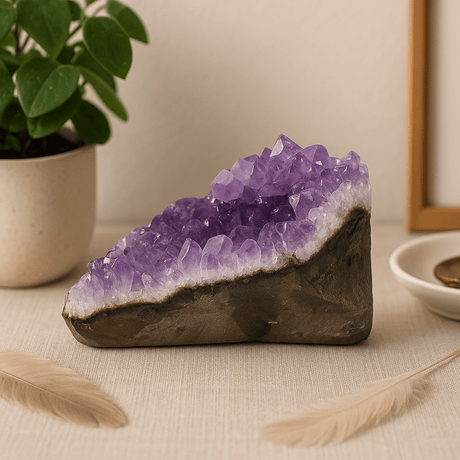
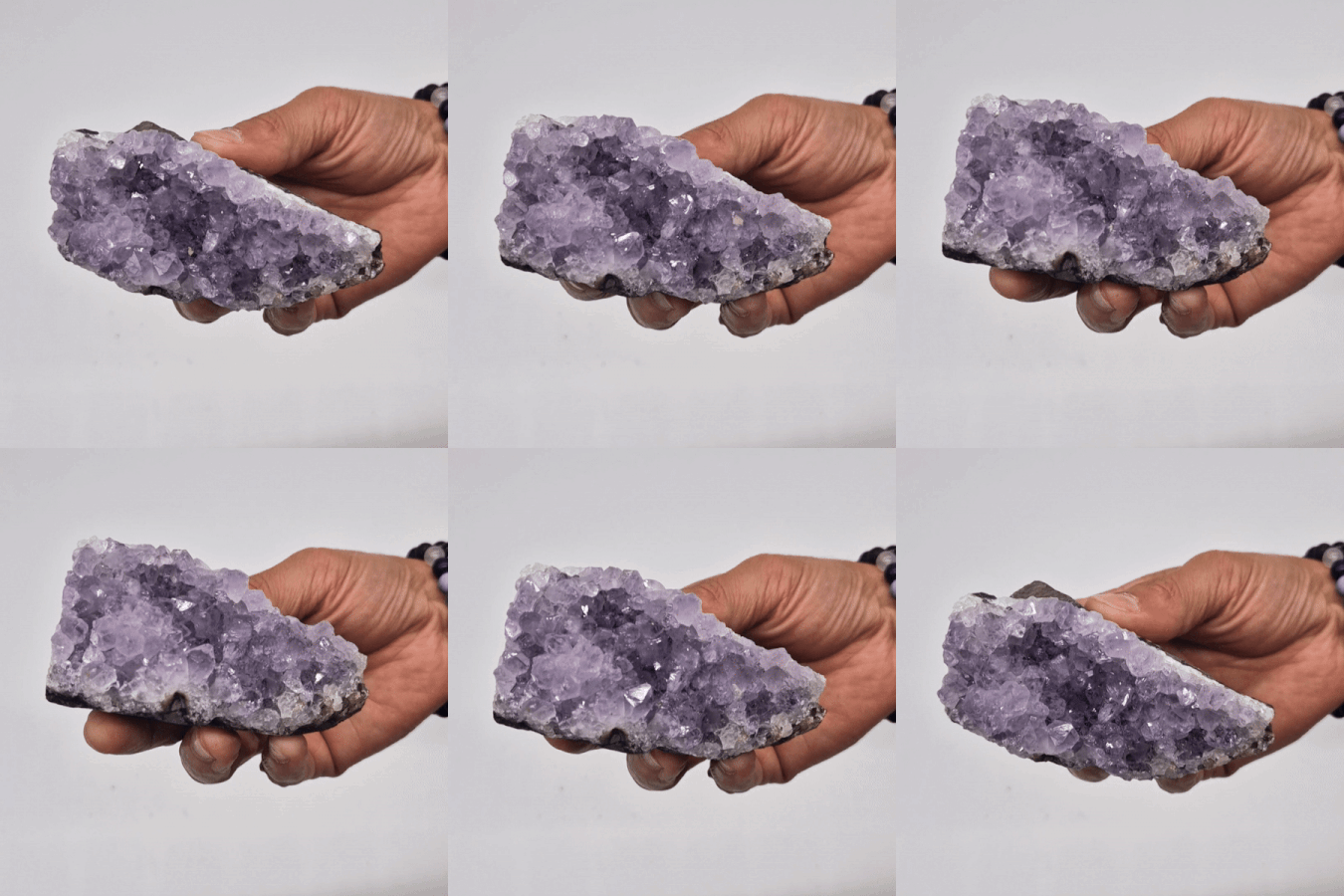
Judging both by the same vague standard, "does it suit the room" or "does it feel like it has good energy", flattens a distinction worth keeping in mind before you buy either one. In practice the choice usually comes down to what you want the object to do. A natural amethyst cluster carries its own irregular geometry, points at odd angles, sometimes a milky patch where air was trapped inside as it grew; it rewards being handled and turned. A gem tree is more composed, closer to an ornament than a specimen, and suits a spot where you want something finished rather than raw.
Either way, the object earns its place by being tended rather than simply set down. A cluster gathers dust in its crevices quickly and is worth a light dusting now and then; both kinds of piece sit better raised slightly off a surface than pushed flat against a wall, which is the case for a low teak display stand rather than a bare shelf. For anyone who would rather meet the mineral before it is polished at all, there is also the more direct route of a geode you open yourself, which turns the moment of opening into something closer to that Arkansas tailings pile: you do not know quite what is inside until you have done the work of finding out.
The Same Stone, Two Hands
Somewhere in that same Ouachita ground, someone worked this quartz into an arrowhead long before Schoolcraft ever wrote a word about it, and the stone in a cluster nearby had already been sitting in the rock for millions of years by the time that hand picked it up. A gem tree keeps a version of that same reach going: someone still has to notice the stone is worth shaping, and put it into a form meant to be looked at rather than thrown. The mountain does the slow work in one case; a pair of hands does the quicker work in the other. Both are real. Neither needs pretending to be the other.