Some evenings the mind will not settle. The to-do list keeps replaying, the shoulders stay up around the ears, and sleep feels a long way off. This is often where people first reach for sound, a long, resonant note from a bowl, a single sustained tone, a recording played softly in a dark room. Not as a cure, but as something to lean the attention against until the body remembers how to slow down.
Sound healing is best understood as a quiet, conscious practice rather than a treatment. It gathers together a wide range of techniques and instruments, from the gentle tones of singing bowls to the precise frequencies of tuning forks, and uses them as a focus for relaxation. The sound does not act on you. You bring your attention to the sound, and the practice does its quiet work from there.
This piece walks through the ideas behind the practice, the frameworks people use, Solfeggio tones, chakra toning, binaural beats, and the instruments themselves. We have kept the claims honest throughout. Where the evidence is real but early, we say so; where a frequency carries a traditional intention rather than a measured effect, we frame it that way.
Understanding Sound Waves and Frequencies
Sound healing draws on a simple idea: that we respond to sound not only with our ears, but with the whole body. To see why people use it the way they do, it helps to start with what a sound wave actually is.
What are sound waves?
A sound wave is a movement of energy through a medium, air, water, or the tissues of the body. The wave is a series of small compressions and rarefactions, molecules nudging one another along. When those vibrations reach the ear, we hear them as sound.
In a sound-healing session, the instruments are chosen for their tone: gongs, crystal singing bowls, tuning forks. Each produces vibrations at a particular frequency, measured in Hertz (Hz), or cycles per second. The human ear can usually detect frequencies from about 20 Hz to 20,000 Hz.

How frequencies meet the body
Sound-healing traditions like to describe the body itself as vibration, bone, breath, heartbeat, the rhythm of a calm or anxious mind. This is a useful metaphor for the practice, rather than a statement of physics, and it is best held lightly. What matters is the experience: a sustained tone gives the attention somewhere soft to rest.
People often notice a few things when they sit with sound:
- A settling effect, many find a long, even tone calming, and that calm can ease tension in the body.
- A shift in pace, slow, repetitive sound seems to help the mind drop out of a busy, alert state into something quieter.
- The body following suit, as the mind slows, breathing tends to deepen and the shoulders drop.
- A pause in the chatter, a clear tone gives the thinking mind something simple to hold, which is why it sits so naturally alongside meditation.
The ideas behind the practice
Practitioners tend to explain sound healing through a handful of recurring ideas. None of these is a medical mechanism, and they are best read as the language of the tradition rather than settled science:
- Resonance: the observation that objects vibrate readily at certain frequencies. In sound work, this is used as a metaphor for tuning the attention, letting a steady tone draw you toward a steadier state.
- Entrainment: the tendency of rhythms to fall into step with one another. Many people find that breath and pace naturally slow to match a slow, repeating sound, a gentle nudge toward relaxation rather than a forced one.
- Cymatics: the study of how sound vibration shapes visible patterns in matter, sand on a plate, or droplets in water. The physician Hans Jenny named and popularised the field in the twentieth century, building on much earlier work by Ernst Chladni and Margaret Watts Hughes. The body is roughly half to two-thirds water, and the mandala-like patterns sound makes in water are a favourite image in the practice.
As for evidence: some small studies have looked at sound, relaxation and stress, and the early signs are gentle but encouraging. The research is limited, and a singing bowl is a companion to good rest and care, not a substitute for it.
The Solfeggio Frequencies
Where the Solfeggio frequencies come from
The Solfeggio frequencies are a set of specific tones that many practitioners associate with particular intentions. Their story is often told as if it were ancient; it is more honest, and more interesting, to untangle the two threads that get woven together.
The first thread is the solmisation syllables, Ut, Re, Mi, Fa, Sol, La. These were introduced by Guido of Arezzo around the eleventh century as a teaching tool, a way for singers to learn Gregorian chant, the sacred music of Christian worship. The syllables remained in use through the Renaissance and beyond; the modern "do-re-mi" descends from them.
The second thread is much newer. The particular Hertz values now called "the Solfeggio frequencies", 396, 417, 528 and the rest, were proposed in the 1970s by Joseph Puleo, who linked them to a numerical reading of a passage in the Book of Numbers. Medieval chant had no fixed pitch standard in Hertz, so these specific numbers are a twentieth-century reconstruction, popularised in New Age practice, not an ancient measurement. Held that way, as a modern framework rather than old science, they are a perfectly good focus for intention.
The six classic Solfeggio tones
The six tones most often named, with the intentions practitioners attach to them, are:
- 396 Hz (UT), associated with releasing guilt and fear.
- 417 Hz (RE), associated with change and new beginnings.
- 528 Hz (MI), called the "love frequency" by some practitioners; associated with transformation.
- 639 Hz (FA), associated with connection and relationships.
- 741 Hz (SOL), associated with self-expression and problem-solving.
- 852 Hz (LA), associated with intuition and inner order.
Each tone carries one of the chant syllables, drawn from the first stanza of the hymn to John the Baptist. They are used as a frame for attention, a name to hold a session around, rather than as buttons that produce a guaranteed result.

A note on the bigger claims
You will sometimes see far larger promises attached to these tones, that 528 Hz repairs DNA, or that a frequency can clear the cells of radiation. There is no evidence for any of that, and we will not repeat it. What the Solfeggio set offers, honestly, is a tidy vocabulary of intentions: a way to choose a theme, calm, connection, expression, and return to it while you listen.
The tones are usually played through a tuning fork, a singing bowl, or a recording. Many people simply sit with one tone for a few minutes, or fold it into a meditation.
Chakra Tones and Sound
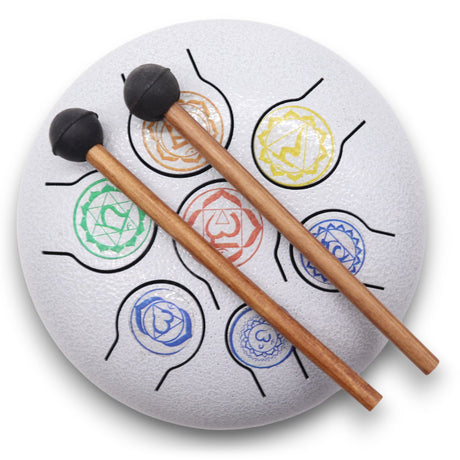
Sound is a long-standing companion to chakra practice. In this tradition the body is mapped as seven energy centres, and people use specific tones to balance and harmonise these energy centres, or, more honestly, to give each centre a clear point of focus during meditation. It is worth saying plainly that pairing particular Hertz values with the chakras is a modern, contemporary association, not an ancient measurement.
The seven main chakras
The system describes seven primary centres along the spine, each linked in the tradition to a different theme:
- Root (Muladhara), at the base of the spine; safety and grounding.
- Sacral (Svadhisthana), below the navel; creativity and flow.
- Solar Plexus (Manipura), above the navel; confidence and personal will.
- Heart (Anahata), centred in the chest; love and compassion.
- Throat (Vishuddha), at the throat; communication and self-expression.
- Third Eye (Ajna), at the brow; intuition and clarity.
- Crown (Sahasrara), at the top of the head; connection and openness.

The frequencies people pair with each chakra
A modern convention pairs each chakra with a tone, usually drawn from the Solfeggio set and extended with one further frequency for the crown. Treat this as a framework practitioners use, a way to give each centre its own note, rather than a fixed natural fact:
- Root, 396 Hz
- Sacral, 417 Hz
- Solar Plexus, 528 Hz
- Heart, 639 Hz
- Throat, 741 Hz
- Third Eye, 852 Hz
- Crown, 963 Hz (an extension beyond the six classic Solfeggio tones)
You will notice 528 Hz appears here against the solar plexus, while elsewhere it is described as the "love" tone. That overlap is exactly why these mappings are best held as conventions, not measurements, different teachers arrange them differently. A full seven-bowl chakra set lets you sound every centre in turn; many people prefer to start with a single bowl tuned to one note and simply return to it.
Using sound with the chakras
Practitioners reach for a few familiar tools:
- Solfeggio tones, played or listened to, one centre at a time, as a focus for the session.
- Singing bowls, rich, sustained harmonics, with each bowl tuned to a particular note resonating with a specific chakra.
- Mantra and seed sounds, in the Hindu tradition each chakra carries a seed sound, such as "Lam" for the root or "Om" for the third eye, offered here as cultural context rather than prescribed practice.
- Tuning forks, a single calibrated tone, held near the body or sounded in the space.
The honest heart of the matter is this: the practice works together with your attention. What seems to shift things is less the precise number of Hertz than the quality of focus and intention you bring. Sound gives the busy mind something to hold; the rest is the attention you lend it. Paired with meditation, that focus is what people return for.
Binaural Beats and Brainwave Entrainment
What are binaural beats?
Binaural beats are an auditory effect, created in the brain when two tones of slightly different frequencies are played, one into each ear through headphones. The brain blends them into a third perceived pulse, at a frequency equal to the difference between the two. Play 405 Hz in one ear and 415 Hz in the other, and you perceive a 10 Hz beat that exists nowhere but in the listening.
The superior olivary complex, a structure in the brain stem, processes input from both ears and is involved in producing this perceived beat, which in turn appears to influence brainwave activity.
The brainwave states
Brainwaves are the rhythm of synchronised electrical activity across neurons, measurable with electroencephalography (EEG). They are grouped by frequency, and each band is loosely linked to a mental state:
- Delta (0.5-4 Hz), deep, dreamless sleep.
- Theta (4-7 Hz), deep relaxation, reverie, meditation.
- Alpha (8-12 Hz), calm, relaxed focus.
- Beta (13-30 Hz), alertness, analytical thinking.
- Gamma (30-100 Hz), heightened, concentrated attention.

How people use them
Binaural beats are popular as a low-effort way to settle into a state. People report a range of experiences, and it is fair to keep these as reports rather than promises:
- Some people find delta- and theta-range beats relaxing, and use them to wind down.
- Some report that the same low ranges help with settling toward sleep, potentially improving sleep quality.
- Some find higher, beta-range beats useful for focus and concentration.
- Many use them simply as a quick on-ramp into meditation, in place of silence.
Here the honesty is built in, and it sets the standard for the whole field: the evidence remains preliminary and based mainly on small studies, though most experts agree the risk of side effects is low. As with the rest of sound work, the practice leans on your own attention, the expectation and focus you bring are part of what makes the time feel worthwhile. To try them, you need only headphones and a recording or app that supplies the two tones.
Sound Healing Instruments and Techniques
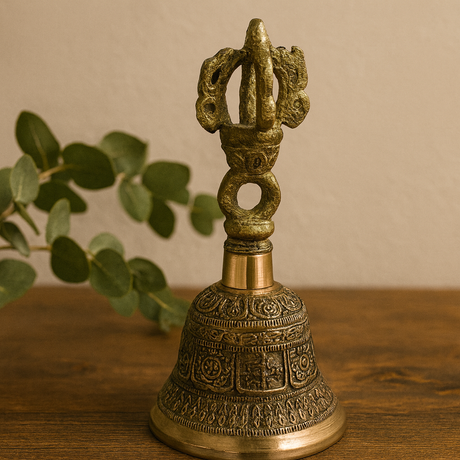
People have made calming sound across many cultures and many centuries, bells, bowls, drums, the voice. The instruments below are the ones most often reached for today, each with its own character and its own way of holding the attention.
Singing Bowls
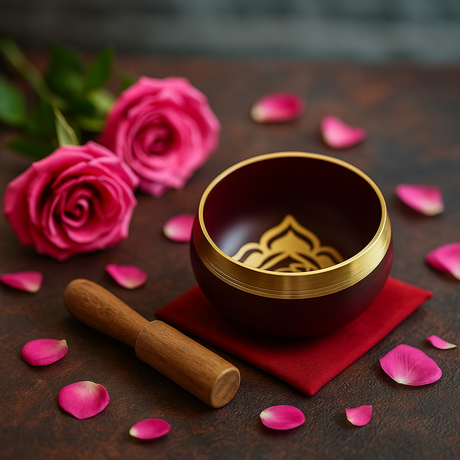
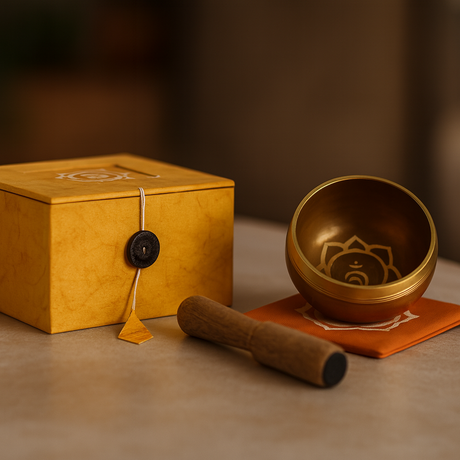
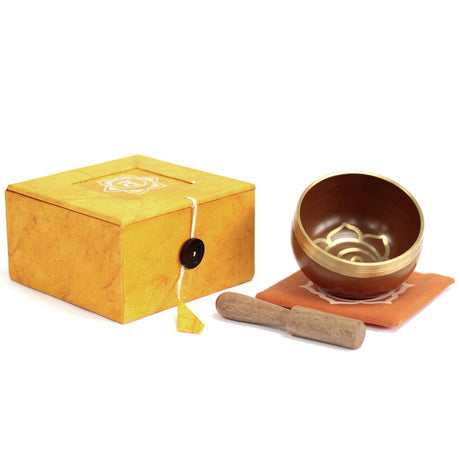
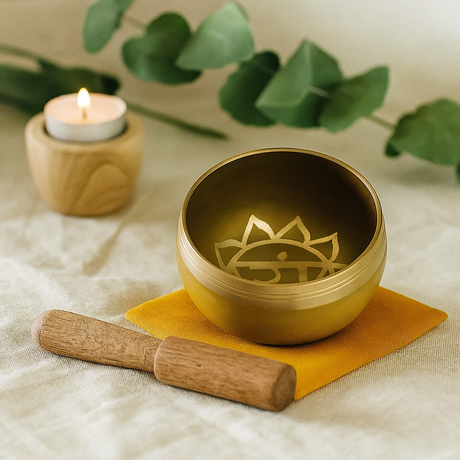
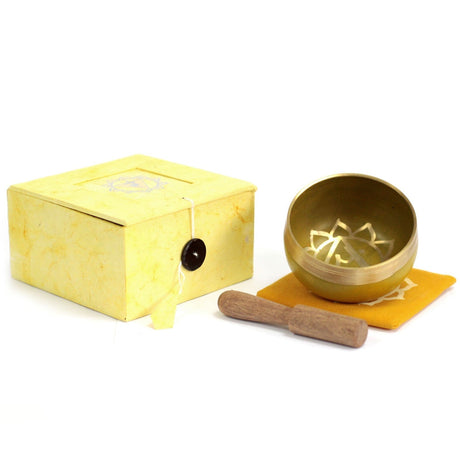
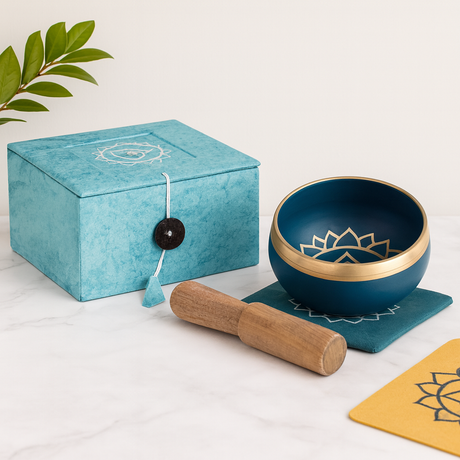
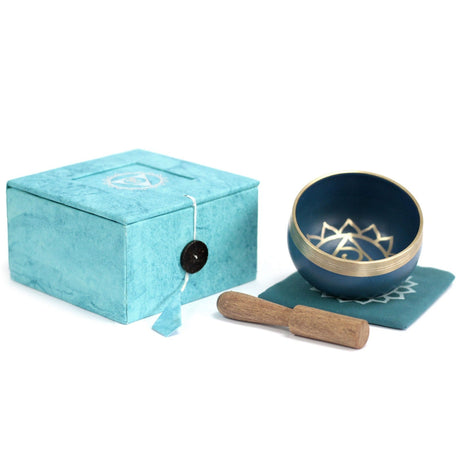
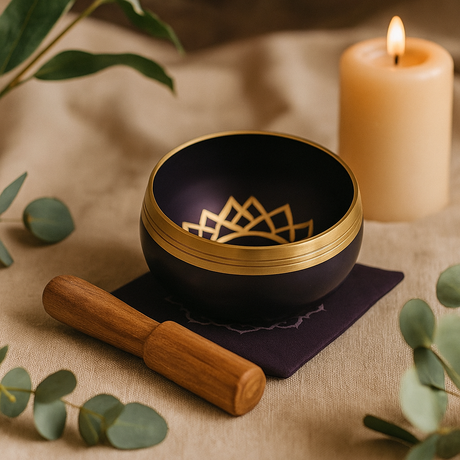
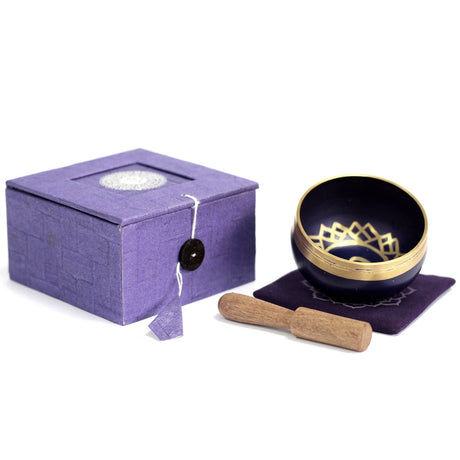
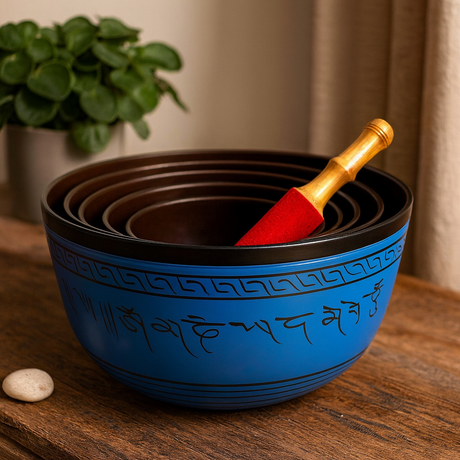
Singing bowls, particularly Tibetan or Himalayan bowls, are among the most recognised sound-healing instruments. Metal bowls have long been made across the Himalayas; their use in meditation and sound healing as we know it today is largely a modern practice, much of it shaped in the twentieth century. Struck gently or circled with a mallet, a good bowl gives a long, even tone that many people find deeply settling, which is the whole appeal.
Crystal singing bowls, turned from quartz, give a brighter, almost glassy sound. These are often tuned to particular notes that practitioners associate with the chakras, typically somewhere between roughly 200 and 1,000 Hz. In a session, a practitioner chooses bowls for their tone and lets the sound fill the room while you rest and listen.
You do not need a session to begin. A single bowl, rested on its cushion and struck softly, is enough, let each note rise and fade completely before the next, and keep bringing your attention back to the sound.

Tuning Forks
A tuning fork is a precise acoustic instrument calibrated to a single frequency. Struck with a mallet, its tines vibrate and send a clear, pure tone into the air around them. In sound work, people use that single clean note as a focus for relaxation, something exact and steady to settle the attention against.
That is the honest scope of it. A tuning fork is a beautifully simple way to bring one clear tone into a quiet practice, nothing more dramatic and nothing less lovely for it.
Voice Toning
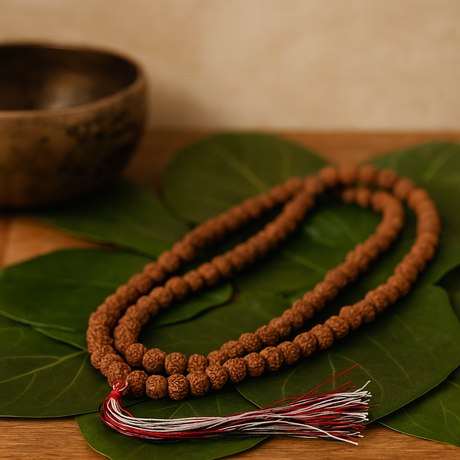
Vocal toning is an old practice: producing a single sustained sound or vowel, often for several minutes, and listening to it as much as making it. Chanting and mantra recitation are forms of vocal toning, and a mala of 108 beads is the traditional way to keep count without watching the clock.
People who tone regularly tend to report a few honest, everyday benefits:
- Easing tension, a long exhale on a sustained note is naturally relaxing.
- Steadier breathing, toning encourages a slower, fuller breath.
- Emotional settling, many people find chanting quietly grounding.
- A clearer, more comfortable voice over time.
Gongs and Drums
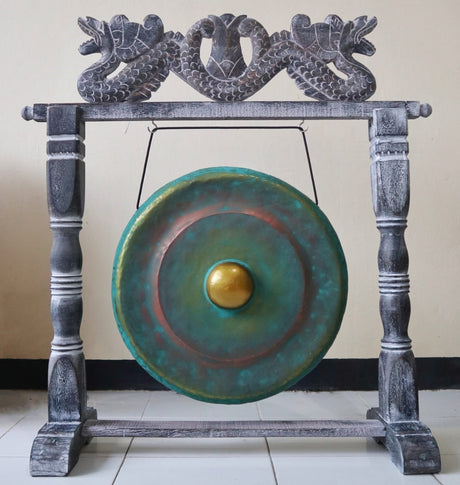
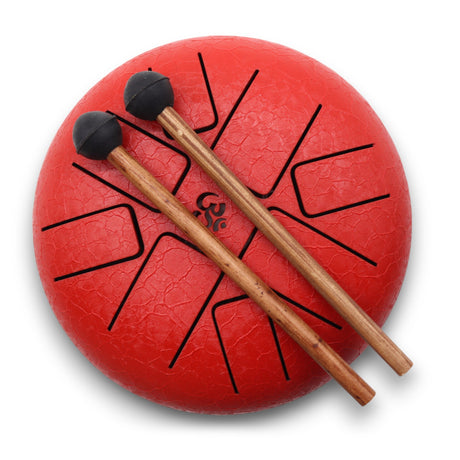
The gong has a deep, enveloping sound, and people use the transformative vibrations of gongs in a session often called a "gong bath". You lie down on a mat while the gong is played, starting soft and building slowly. The continuous, washing sound is a strong focus for the attention, and many people drift into the calm, dreamy register associated with alpha and theta brainwaves.
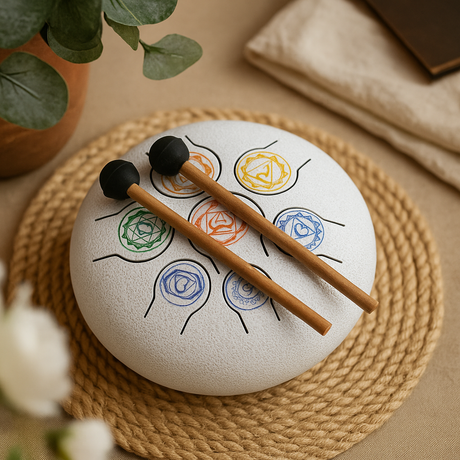
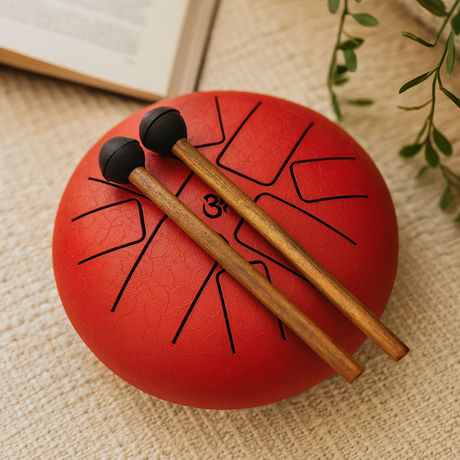
Rhythmic drumming belongs to the same family. It has been used for centuries in ceremony and gathering across many cultures, the steady repetition carrying people into a trance-like, absorbed state. Offered here as cultural context, it remains one of the oldest ways humans have used sound to shift how they feel.
Between them, the long tone of a bowl, the single note of a fork, the voice, the wide sound of a gong or drum, these instruments give plenty of ways to begin. The thread running through all of them is the same: a sound to rest the attention on, and the attention you choose to bring.
Conclusion
Sound healing is, in the end, a simple and forgiving practice. A bowl on its cushion, a few quiet minutes, a tone followed until it fades, that is most of it. People reach for it to reduce stress, enhance relaxation, and to find a small, repeatable way back to calm at the end of a long day.
We would not call it a cure, and we would not promise it fixes anything. What it offers is something quieter and more honest: a way to give a busy mind something steady to hold, and to let the body slow down in its own time. The frameworks, Solfeggio tones, chakra notes, brainwave bands, are maps for paying attention, not measurements of the soul. Held that way, with curiosity rather than certainty, sound becomes a gentle companion to a more mindful day.