There is a particular kind of quiet that comes from saying one sound, slowly, over and over, until the day's noise begins to settle. That is the whole of mantra practice. A mantra is a sound, a word, or a short phrase, repeated aloud or under the breath. The steady repetition gives the mind a single point to rest on, which many people find quietens mental chatter and brings a calmer, more settled state. It asks for very little: a few minutes, a quiet corner, and a willingness to return when the mind wanders.
This is a beginner's guide to chanting, where the practice comes from, a simple way to start, and the small, honest tips that make it easier to keep going.
Origins and history of mantra meditation
Mantra meditation reaches back thousands of years, woven through the spiritual traditions of South Asia, particularly Hinduism and Buddhism. It is helpful to meet these roots as cultural and historical heritage rather than as something you must believe.
- Hinduism. Mantras run through Hindu practice. The Vedas, the ancient scriptures composed roughly between 1500 and 500 BCE, are full of hymns and chants, among them the Gayatri Mantra, traditionally revered as one of the holiest verses of the Vedas. In the tradition it is said to illuminate the intellect. Each mantra is understood as a distinct sound said to work on mind, body, and spirit. Some Hindu mantras are bija, or "seed", mantras. Single-syllable seed mantras such as "Om" or "Hrim" are, in the tradition, treated as concentrated sounds, each carrying its own resonance.
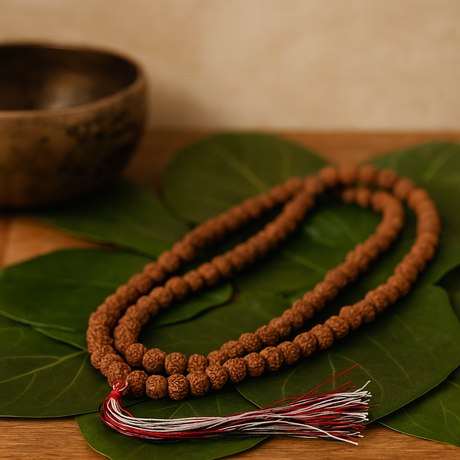
- Buddhism. Mantra meditation holds an important place across several Buddhist schools. The Mahayana tradition gives weight to mantras such as "Om Mani Padme Hum" (often rendered "the jewel in the lotus"), the mantra of the bodhisattva Avalokiteshvara. Chanting it is said to cultivate compassion, wisdom, and inner peace. Tibetan Buddhism uses mantra meditation widely. Here mantras are often counted on a japa mala of 108 beads, traditionally used for keeping the count, and recitation is often paired with visualisation. During the 8th century CE, Padmasambhava, a revered Buddhist teacher, is credited with bringing mantra meditation and Tantric practices to Tibet.
Traces of counting-practice predate the Vedas. Archaeological finds from the Indus Valley Civilisation (3300-1300 BCE) include beads that may have been used for counting, possibly during meditation.

A step-by-step guide to mantra meditation
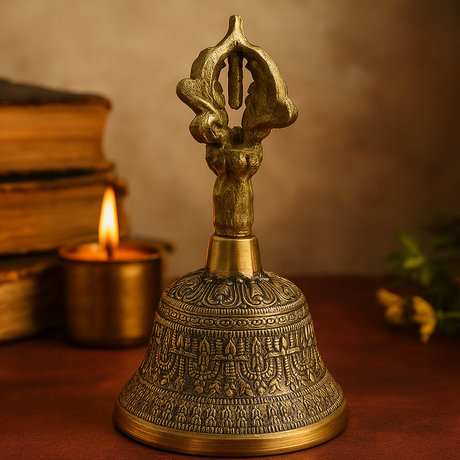
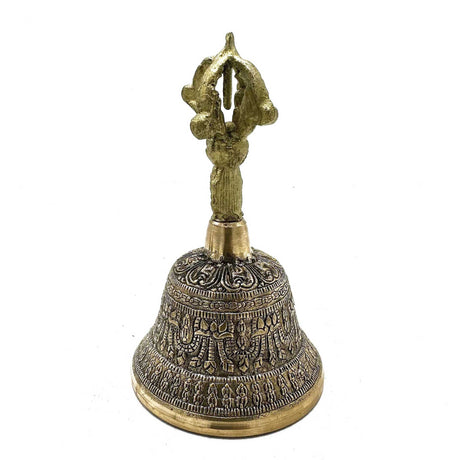
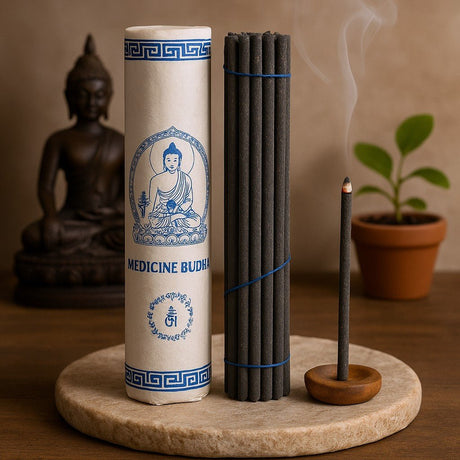
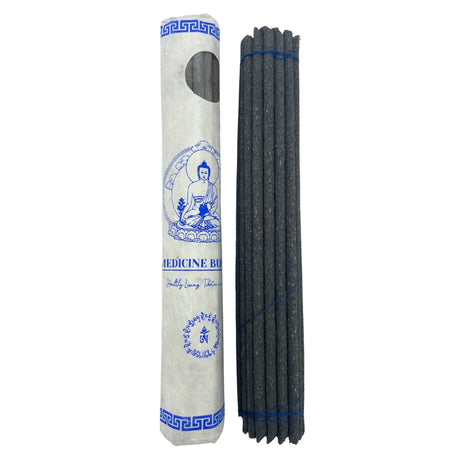
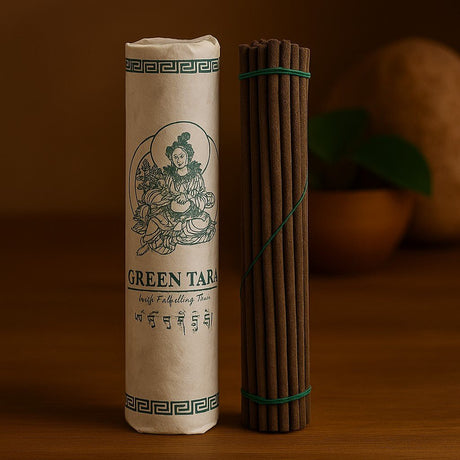
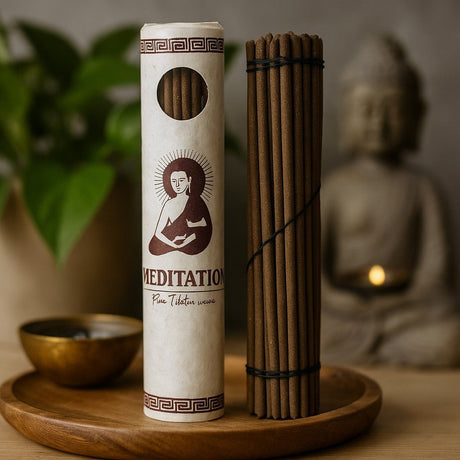
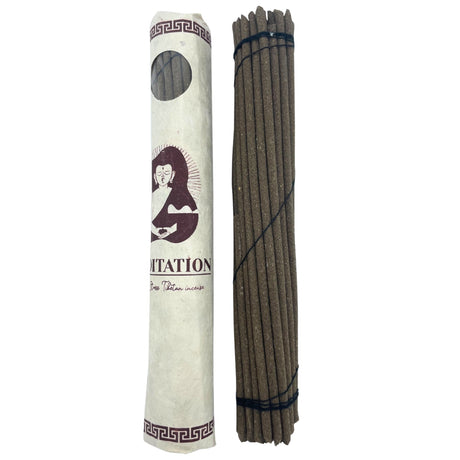
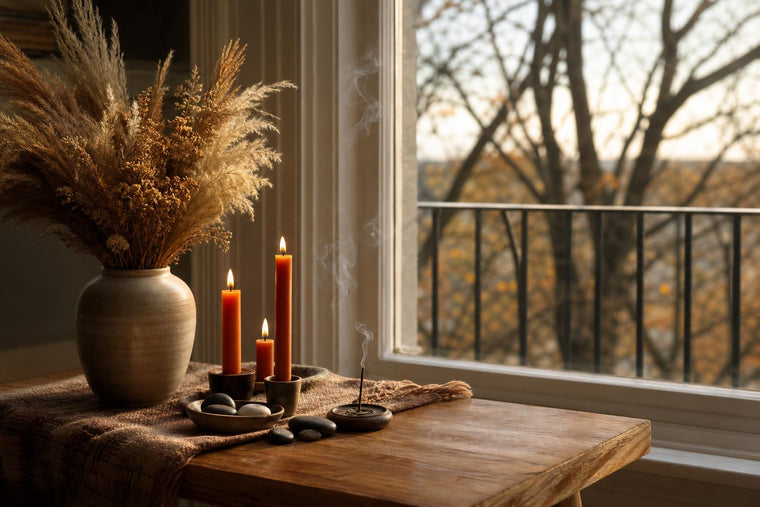
1. Find a quiet space. Choose a comfortable, quiet place where you will not be disturbed. A small, settled corner is enough, perhaps a cushion, a little light, and a few spiritual tools for a quiet corner nearby. Some people like to light a stick of incense to mark the start of practice, or sound Tibetan bells to open and close a sitting.
2. Settle into a comfortable posture. Sit upright but at ease. A chair with both feet flat on the floor is fine, as is a traditional seat such as lotus or sukhasana. Comfort matters more than form.
3. Set an intention. Quietly name an intention for the session. It might be to settle the mind, to find clarity on something, or simply to spend a few minutes in stillness.
4. Choose your mantra. Pick a mantra whose sound and meaning suit you. Many well-loved mantras exist; if you would like more examples to begin with, see our guide to Vedic mantras. You can also keep a meaningful phrase or affirmation of your own.
5. Begin chanting. Start to repeat your mantra, aloud or silently. Rest your attention on the sound and the feel of it with each repetition.
6. Notice your thoughts. Thoughts will arrive, that is normal. Notice them without judgement, and bring your attention gently back to the mantra.
7. Keep a steady rhythm. Chant at a comfortable pace, letting a steady rhythm form. If it helps, let the breath fall in with the mantra. Counting on mala beads can keep the rhythm without the mind having to track the number.
8. Close your practice. After a set time, often 10 to 20 minutes, repeat the mantra a few more times, then let it fall quiet. Sit for a moment before slowly opening your eyes. Some like to mark the end with the soft note of a bell.
Tips for steady chanting
- Build a consistent practice. Regular practice is what makes this yours. Aim for a set few minutes each day, however short.
- Hold a light, open attitude. Meet the practice with an open mind. Let go of expectations and simply return to the mantra.
- Don't force results. A calmer, clearer mind tends to come gradually, not at once. Be patient, and let the practice unfold.
- Seek guidance. If you are new to this, consider learning from a qualified meditation teacher.
The notes above are a general introduction. It is worth saying plainly that mantras, and the way they are used, can be subtle, particularly within specific traditions.
Why guidance matters
- Traditional practice. In some traditions a mantra is considered sacred and is ideally received from a qualified teacher or Guru, who holds the knowledge of correct pronunciation, meaning, and context.
- Respectful use. Incorrect pronunciation or use of certain mantras may be considered disrespectful, or even harmful, according to some beliefs.
So if you wish to go deeper, especially within a particular tradition, learning from a qualified teacher is the respectful path.
To set the space, some people add the felt sense of sound and scent: the steady tone of a singing bowl or other sound healing instruments to begin and end a sitting, or essential oils for the meditation room such as sandalwood, long associated with meditation. These are companions to the practice, not the practice itself.

Mantra chanting: common questions
Is mantra chanting effective?
Many people find that regular chanting helps them settle, steady their attention, and feel calmer. It is a focus practice, a steady sound to return the mind to, rather than a remedy. Whether it suits you is something you discover by trying it, gently, over a few weeks.
Can mantras be chanted silently?
Yes. Silent recitation is a complete practice in its own right. It turns the focus inward, towards the felt sense of the mantra rather than the spoken sound.
Is there a set number of times to chant a mantra?
There is no single answer. As a guide:
- 3 times. A perfectly good starting point, especially when you are focusing on the meaning and your intention.
- 9, 27, 108. Numbers that recur across many traditions, with 108 the most widely used, it is the number of beads on a traditional japa mala.
Choose a number that lets you stay present rather than chasing a total.
How long should I chant each day?
There is no strict rule. Beginners can start with five to ten minutes and let the time stretch naturally as concentration steadies. Aim for a length that leaves you feeling a little quieter than when you began.
What is the easiest way to start with mantras?
- Find a simple mantra. Choose one whose sound settles you, a single syllable such as "Om", or a short, well-loved phrase such as "Om Namah Shivaya" (traditionally understood as a devotional salutation to Shiva).
- Use prayer beads. A string of beads, such as a mala bracelet you can wear through the day, helps keep track of repetitions so your attention can stay on the sound.
- Focus on the sound and feeling. Repeat the mantra silently or aloud, resting on the sound and the feel of it.
- Start short and simple. Begin with five to ten minutes and lengthen the practice as it becomes familiar.
Can mantras be chanted quickly?
For beginners, a slower pace is usually easier, as it leaves room to rest on the sound and the meaning. Faster chanting is sometimes used in group settings to lift the energy, or by more experienced practitioners. The right speed is simply the one that lets you stay with the mantra.
A quiet place to return to
Mantra chanting is a simple, patient practice for steadying attention and finding a little calm in the day. Whether you have sat for years or are beginning this week, there is no single right way to do it. Choose a mantra that settles you, be gentle with yourself, and let the practice grow at its own pace. Take a breath, find your sound, and begin.