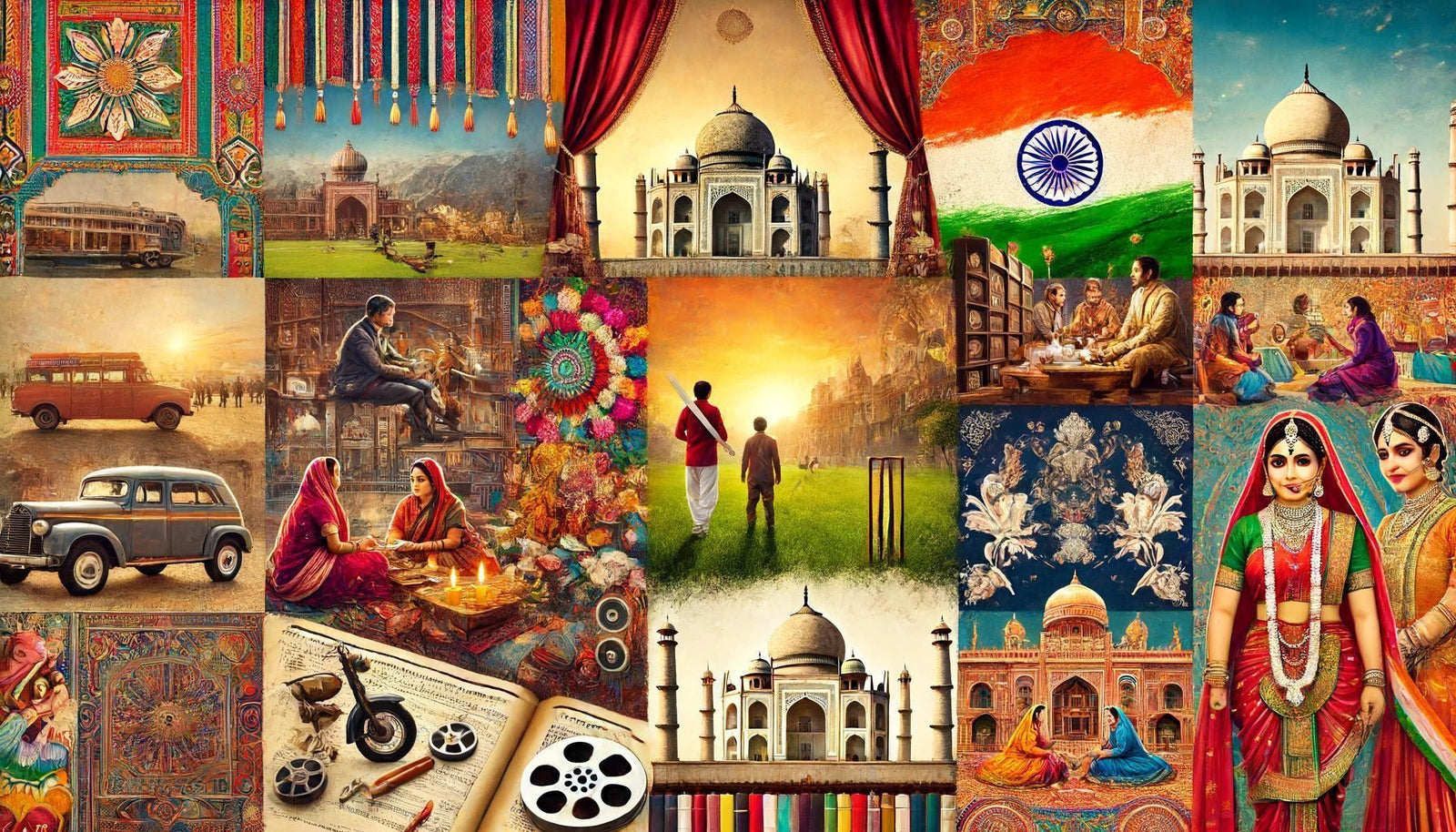
India does not fit on one screen. It is a country of many languages, many faiths, and many centuries living side by side. The next-best thing to standing in it is to let its cinema carry you there for an evening. So pour a pot of masala chai, light a stick of incense before you press play, and let the lights go low. Here are fifteen films that open a window onto India's diversity and heritage, each a different doorway into the same vast, generous place.
1. Lagaan: Once Upon a Time in India (2001)
Genre and runtime. Historical drama, sport. 3h 44m.
The story. It is the late nineteenth century, under the British Raj. A small village faces a crippling land tax. To escape it, the villagers stake everything on an unlikely cricket match against their colonial rulers.
Led by the spirited Bhuvan, they learn the game from scratch. The film grows into a study of unity, nerve, and the quiet refusal to be ground down.
Cultural threads. Rural village life, social hierarchy, and the long shadow of colonialism. Sport becomes a language of defiance and belonging.
The scene that stays. The final over of the match, with the village's future hanging on a single ball.
Why it is worth watching. A rousing underdog tale that honours India's heritage while turning on themes of resistance and pride. The characters and the music carry you a long way.

2. Pather Panchali (1955)
Genre and runtime. Drama. 2h 5m.
The story. Satyajit Ray's debut is a poetic portrait of a poor Bengali family in rural India. We follow young Apu and his sister Durga through their small joys and daily hardships.
Their bond sits at the centre. Around it, the film holds the simplicity and the ache of village life with great tenderness.
Cultural threads. Bengali village customs, the closeness of land and people, and the festivals, music, and landscape woven through it. A festival here is lived, not staged.
The scene that stays. Apu and Durga running through a field of white kaash flowers as a train passes in the distance.
Why it is worth watching. This is the film through which the wider world first met Indian cinema. Its themes of family, struggle, and hope still feel close.

3. Monsoon Wedding (2001)
Genre and runtime. Comedy, drama, romance. 1h 54m.
The story. An upper-middle-class Punjabi family in Delhi throws itself into preparing a daughter's elaborate wedding. Several storylines run at once, threading love, secrets, and family loyalty through the festivity.
As the day nears, old tensions surface. The film holds the chaos and the warmth of a big family gathering in the same frame.
Cultural threads. The rituals, colour, and noise of an Indian wedding, and the gentle tug between tradition and modern life. The textiles alone are a study in block-printed cottons and tapestries.
The scene that stays. The wedding ceremony itself, a swirl of marigolds, music, and rain.
Why it is worth watching. A warm, funny look at modern Indian family life, fond of its own contradictions. Easy to love, and quietly moving.

4. Swades (2004)
Genre and runtime. Drama. 3h 6m.
The story. A NASA scientist returns to the remote Indian village of his childhood. What he meant as a short visit becomes a reckoning with the realities of rural life.
Slowly, he finds his purpose in lifting the community around him. It is a journey home in more than one sense.
Cultural threads. The gap between urban and rural India, and questions of poverty, education, and self-reliance. The film makes a quiet case for giving something back.
The scene that stays. His reunion with his childhood nanny, which reconnects him to where he came from.
Why it is worth watching. A thoughtful film that stirs pride in Indian heritage while looking its social questions in the eye. Its message about community lands without preaching.

5. Gandhi (1982)
Genre and runtime. Biography, drama, history. 3h 11m.
The story. A sweeping biographical epic that traces Mohandas Gandhi from his early years in South Africa to his place at the heart of India's non-violent struggle for independence.
It moves through the milestones with care: the Salt March, the imprisonments, the long negotiations. Above all, it follows a man and his belief in peace.
Cultural threads. Non-violence, civil disobedience, and the historical weight of India's freedom movement. The film opens onto the country's diversity along the way.
The scene that stays. The Salt March, walking quietly into history.
Why it is worth watching. A landmark biopic, carried by its sweeping scope and emotional depth. It honours its subject in spirit and has inspired audiences for decades.

6. Devdas (2002)
Genre and runtime. Drama, romance. 3h 5m.
The story. An opulent, tragic love story set in early twentieth-century Bengal. It follows the doomed bond between Devdas, Paro, and Chandramukhi against the weight of rigid social codes.
Lavish sets and aching music carry the grandeur and the grief. The dance sequences and the central performances give it real depth.
Cultural threads. The splendour of Bengali aristocracy, and the pull between love, duty, and convention. Classical music, dance, and architecture run all the way through.
The scene that stays. Madhuri Dixit's dance as the courtesan Chandramukhi.
Why it is worth watching. A visually rich adaptation of a literary classic, alive to Indian art and craft. The tragedy and the staging linger long after.

7. Jodhaa Akbar (2008)
Genre and runtime. Action, drama, history. 3h 33m.
The story. A fictionalised account of the Mughal Emperor Akbar and his marriage to the Rajput princess Jodhaa. It turns on their love, on religious tolerance, and on the meeting of two cultures.
Their relationship grows amid the intrigue of the Mughal court. The historical recreations are grand, the romance unhurried.
Cultural threads. The splendour of the Mughal era in its sets and costumes, and the blending of Indian faiths and traditions. Love is shown crossing the lines drawn around it.
The scene that stays. The royal wedding, a meeting of Rajput and Mughal custom.
Why it is worth watching. A sweeping historical drama that celebrates India's cultural blending. The visuals and the central story make for an immersive evening.

8. Barfi! (2012)
Genre and runtime. Comedy, drama, romance. 2h 31m.
The story. A warm, unconventional love story about a deaf and mute young man, the two people who come to love him, and the lives they make together against the odds.
It carries its characters through hardship with humour and grace. Tenderness, not pity, is its register.
Cultural threads. Disability and social prejudice, seen with an open heart. The misty hills and tea gardens of Darjeeling and the streets of Kolkata add their own charm.
The scene that stays. The playful, near-silent comic sequences built on the lead's mischief.
Why it is worth watching. A film that handles a sensitive subject with warmth and lightness, gently arguing for inclusion. Its characters are easy to root for.

9. Bajirao Mastani (2015)
Genre and runtime. Action, drama, history. 2h 38m.
The story. A lavish historical drama set in eighteenth-century India. It follows the Maratha warrior Bajirao and his love for Mastani, a princess of mixed Rajput and Muslim heritage.
Their bond is passionate and forbidden, caught between cultures and politics. Bajirao must hold his duty as a Peshwa and his heart in the same hands.
Cultural threads. The grandeur of the Maratha Empire, the meeting of an interfaith Hindu-Muslim union, and the cost of crossing the lines of one's world. The costumes, sets, and dance are sumptuous.
The scene that stays. Mastani's dance sequences, all skill and poise.
Why it is worth watching. A visually rich epic that celebrates India's heritage while sitting with love, duty, and identity. Its scale and its performances are striking.

10. Mother India (1957)
Genre and runtime. Drama, family. 2h 52m.
The story. An iconic drama following a poverty-stricken woman who gives everything to protect her family and hold on to their dignity. Drought and hardship test her again and again.
Through it all, her strength and her moral compass hold. In time, she becomes a figure of resilience for the whole community.
Cultural threads. The hard realities of rural Indian life, the strength of motherhood, and the rhythms of an agrarian world and its traditional values.
The scene that stays. The wrenching final confrontation between the mother and her rebellious son.
Why it is worth watching. A cultural landmark, woven into how India sees its own rural roots and the strength of its women. Few films hold their place so firmly.

11. The Lunchbox (2013)
Genre and runtime. Drama, romance. 1h 44m.
The story. A lunchbox is delivered to the wrong desk, and an unlikely friendship begins between a young housewife and an older office worker. Both are quietly searching for connection.
Their bond unfolds through notes tucked into the tiffin. Set in the rush of Mumbai, it is a film about loneliness and the longing for company.
Cultural threads. The famous dabbawalas who carry Mumbai's lunches, and the city's deep culinary traditions. It finds the lives of ordinary people and lets them matter.
The scene that stays. The handwritten letters travelling back and forth in the lunchbox, bridging two solitudes.
Why it is worth watching. A charming, poignant story about food and human connection, and a real slice of contemporary Indian life. Gentle, and deeply felt.

12. Neerja (2016)
Genre and runtime. Biography, drama, thriller. 2h 2m.
The story. Based on the true story of Neerja Bhanot, a young flight attendant who gave her life to protect passengers during a hijacking. The film holds the tension of those hours with care.
Between the events, flashbacks open up her private life. What emerges is a portrait of courage and compassion under impossible pressure.
Cultural threads. The bravery and selflessness of an ordinary woman in extraordinary circumstances. Duty, heroism, and quiet resolve run through it.
The scene that stays. The hijacking itself, where Neerja's calm and quick thinking carry the room.
Why it is worth watching. A moving tribute to a real hero, and to the spirit of the people who quietly do the brave thing. Gripping from start to finish.

13. Lucia (2013)
Genre and runtime. Drama, fantasy, mystery (a Kannada-language psychological thriller). 2h 15m.
The story. Nikki, a theatre usher who cannot sleep, is sold a drug called Lucia that makes his desires real in lucid dreams. As he takes it, the line between dreaming and waking begins to dissolve.
The film unfolds as two interwoven timelines. One is told in colour, the other in monochrome, and working out which is which becomes part of the pleasure.
Cultural threads. A landmark of audience-financed Indian cinema, made through crowdfunding, and a standout of the Kannada new wave. Its playful, puzzle-box structure carries echoes of Nolan and Lynch.
The scene that stays. The moments where the two timelines bleed into each other and you stop trusting the ground beneath the story.
Why it is worth watching. A bold, inventive film that pushed Indian regional cinema somewhere new, on a budget raised by its own future audience. A rewarding watch for anyone who loves a narrative experiment.

14. The Legend of Bhagat Singh (2002)
Genre and runtime. Biography, drama, history. 2h 35m.
The story. A biographical drama charting the life and revolutionary work of Bhagat Singh, one of India's most iconic freedom fighters. It follows his early influences and his deepening commitment to justice.
Powerful courtroom scenes sit beside moments of action. Together they capture the conviction of a very young revolutionary.
Cultural threads. The spirit of the Indian independence movement and the sacrifices made for it. Patriotism, resistance, and the long reach toward freedom.
The scene that stays. The courtroom, where Bhagat Singh defends his actions and his ideals.
Why it is worth watching. A stirring tribute to a revered figure, told with conviction and care. Its place in India's history gives it real weight.

15. Gully Boy (2019)
Genre and runtime. Drama, music. 2h 34m.
The story. A young man from the slums of Mumbai chases his dream of becoming a rapper, against social barriers and his own circumstances. We follow him from obscurity toward a name of his own.
Rap battles and sharp lyrics carry the energy. Underneath them runs a story about ambition, voice, and not letting go.
Cultural threads. An honest portrait of life in Mumbai's underserved communities, and the city's vivid underground hip-hop scene. Self-expression becomes a way to rise.
The scene that stays. The rap battles, raw and electric, where the lead's talent finally has room.
Why it is worth watching. A film that hands a microphone to voices often left out, and finds real power in art and self-belief. One of the standouts of recent Indian cinema.

India's heritage through cinema
Film is one of the kindest ways to learn a country. It lets you sit inside its history, its traditions, and its everyday lives for a couple of hours.
Indian cinema, with all its range, is a wide window onto that heritage. From quiet village stories to grand historical sagas, these fifteen films catch something of the country's many-sided identity. Watch a few, and you come away knowing it a little better.
There is another, slower way to keep some of that warmth close after the credits roll. Many of the pieces we carry are objects made in India — hand-rolled incense, hand-beaten singing bowls, brass figures cast in small workshops, and elephant and mandala wall hangings. A few minutes with a string of mala beads, a little warm Indian fragrance for the room, or backflow incense cones for a slow evening turn a film night into something closer to a ritual. They are no substitute for the place itself — only a quiet way to keep its texture and craft near.
As is often attributed to Mahatma Gandhi:
A nation's culture resides in the hearts and in the soul of its people.