A vision board doesn't bring your dreams to you. It keeps them in plain sight — a quiet corner of the room where what you're working towards is allowed to stay visible, day after day. The board doesn't do the work. It holds the intention steady while you do. Here is an honest, unhurried way to make one, and to make it useful.
Most of us carry our hopes around loosely — half-formed, easy to lose under the week's noise. A vision board gives them a place to live. It's a collage of images, words and intentions set with care that reflects what you want for your life, gathered onto a single surface you'll pass often. By keeping your goals in view, it makes them harder to forget and easier to act on.
What is a vision board?
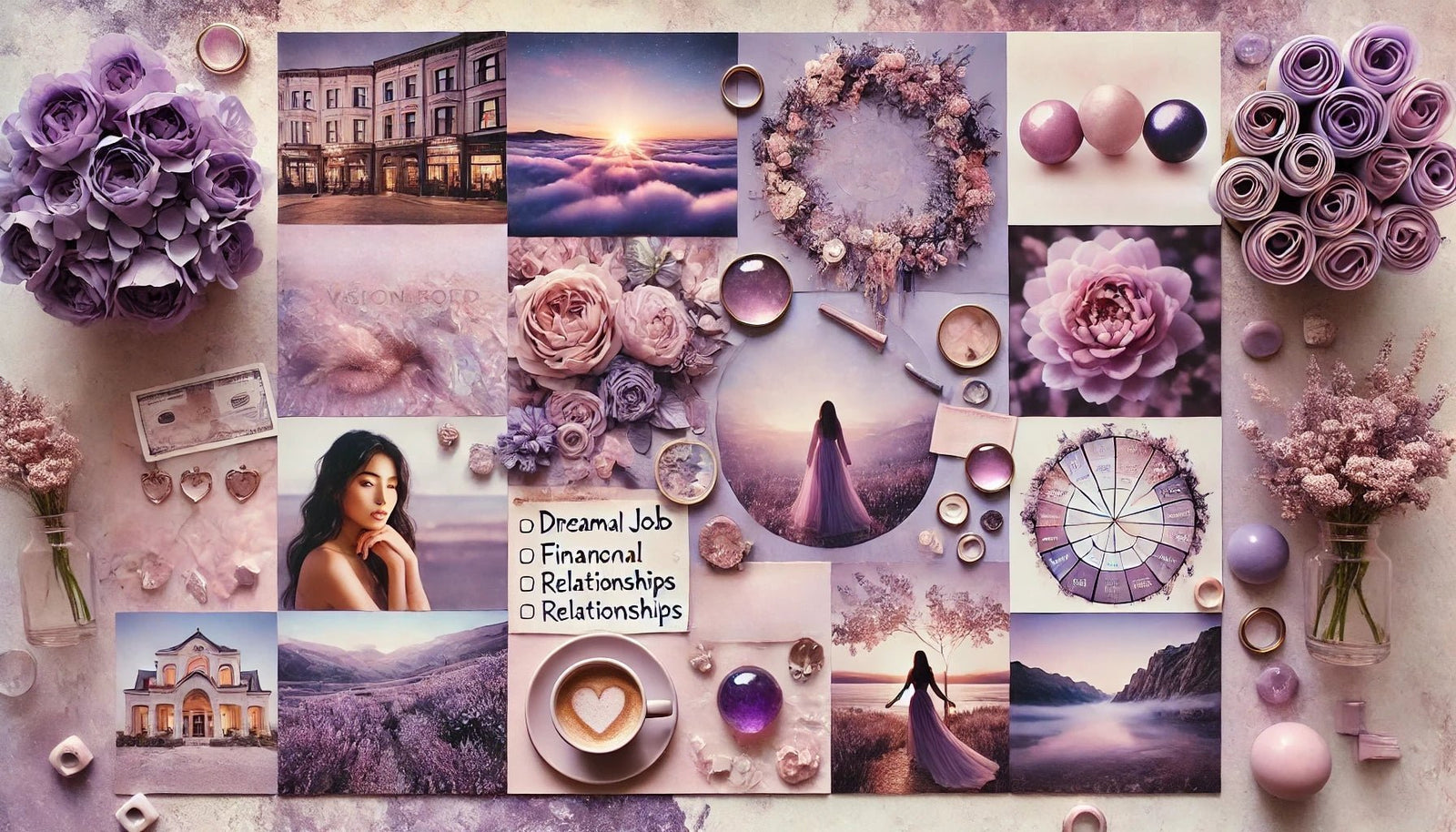
A vision board is a visual map of your goals and aspirations — the work, the relationships, the places, the version of your days you're moving towards. It can be a physical collage on a corkboard or a digital one on your phone. Either way, the idea is the same: gather what matters into one frame, then look at it regularly enough that it stays present in your mind.
That regular looking is the whole point. A goal you set in January and never revisit fades. A goal you see each morning quietly keeps shaping the small choices you make through the day.
Do vision boards actually work?
It depends what you mean by work. A vision board is a tool, not a spell — and it's worth being clear-eyed about that from the start.
The idea draws on the law of attraction, the belief held in some traditions that our thoughts shape the reality we draw towards us. You don't have to take that on faith to find a vision board useful. There's a grounded reading that asks nothing metaphysical of you: what you focus on is what you notice, and what you notice is what you act on. A board keeps your attention pointed in a chosen direction.
Research lends some quiet support to the practice. Mental rehearsal — picturing yourself doing a thing — engages many of the same brain regions as actually doing it, which is why athletes use visualisation alongside their training. It's worth being precise about what that means: imagery seems to help most when you picture the process rather than only the glossy outcome, and it works as a companion to real practice, never a substitute for it. Visualisation without action steps has only a small advantage over wishing. The board is a prompt to move, not a way around the moving.
One way to understand why a board helps is the brain's filtering system, sometimes called the reticular activating system — a network of neurons in the brainstem that, among other jobs, helps regulate sleep and wakefulness and sifts the flood of information we meet each day. When something matters to you, you tend to start noticing it more. It's the same reason you spot your car's exact model everywhere once you've bought one. Keep a goal in view, and you may simply become quicker to notice the openings, conversations and small chances that move you towards it. Nothing is guaranteed — but your attention is a real resource, and a board points it somewhere on purpose.

What to include on your vision board
There's no fixed list. The board is yours, and the only test is whether each piece resonates with what you actually want. A few areas people often draw on:
- Work and direction — the kind of work, the setting, the milestones you're moving towards.
- Money and abundance — images and words that hold your sense of stability, savings or a freer relationship with money.
- Relationships — the connection you hope to nurture, with a partner, family or friends.
- Places — somewhere you long to go, captured well enough that you can almost feel the air there.
- Health and wellbeing — the rhythms, food and movement that keep you well.
- Growth — skills, learning, the qualities you'd like to grow into. Some people set green aventurine for growth and new ventures beside this corner, traditionally a stone of fresh starts.
- Home — the space you want to come back to, its light and its textures.
- Spiritual practice — meditation, mindfulness, or images that reflect your own path, however you hold it.
- Affirmations — short lines, written in the present tense, that keep you steady. Some people like to carry one off the board too: simple manifestation bracelets keep an intention with you when you step away.
You can hold space for almost anything that genuinely matters to you. The aim isn't to crowd the board, but to choose pieces that ring true.

How to make your vision board
Making a board is a simple, unhurried process. It tends to flow best when you slow down and listen to what feels right. A gentle way through:
- Set your intentions. Begin by getting clear on what you're working towards across the areas of your life — work, relationships, health, growth. Writing these down by hand first helps them settle. Keep a notebook to write your intentions by hand, and a vague wish becomes something you've actually named. Some keep clear quartz to hold a clear intention on the desk while they write — the tradition links it with clarity.
- Gather your supplies. For a physical board you'll want a corkboard or sheet of card, scissors, glue or pins, a few magazines and printed images, and markers. For a digital one, your phone or laptop and a free layout app are enough.
- Collect your images and words. Look for pictures, quotes and affirmations that genuinely resonate. Magazines, printouts and online sources all work; for digital boards, Pinterest is a good place to gather and arrange ideas.
- Try a layout. Before you fix anything down, move the pieces around. Play with the arrangement until the composition feels right.
- Assemble it. Once you're happy, attach everything — glue or pins for a physical board, a simple design app for a digital one.
- Personalise it. Add your own hand to it: a sketch, a handwritten line, a small object. Some people tuck a stone into a corner as an anchor for a particular intention — a stone for abundance like citrine resting on the work or money section, kept there as a focusing cue rather than a promise. Others like a stack of crystals to keep beside the board, each paired with a different corner.
- Place it where you'll see it. Put the board somewhere it falls into your daily eyeline — beside the bed, by the kettle, above the desk. The more often you meet it, the more it keeps your intentions present.
Types of vision board
Traditional vision board
A physical collage on a corkboard, sheet of card or canvas, built from cut-out images, quotes and small touches. To make one: gather your magazines, printouts, scissors, glue and board; cut out what aligns with your goals; arrange the pieces and fix them down; then add personal touches like doodles or handwritten notes.
Digital vision board
Made with an app and kept as your phone or laptop wallpaper, so your intentions travel with you. Gather images on a platform like Pinterest, arrange them into a collage in a free design tool such as Canva, then set it as your background — or print it if you'd like a physical copy too.
Themed vision board
A board focused on one area of life — work, health, relationships, travel — for when you want to concentrate. Decide on the theme, gather images and words that fit it, and follow the steps for a physical or digital board with that single focus held at the centre. A work-themed board, for instance, might hold images of the kind of workspace, role and rhythm you're moving towards.

Tips for using your vision board
- Be specific. The clearer the images and words, the clearer the intention. Choose pictures that say precisely what you mean.
- Use present-tense affirmations. Write your affirmations as though they're already true. A soft, well-made journal kept beside the board is a good home for them.
- Stay flexible. Your goals will shift. Update the board as they do, so it keeps reflecting where you're actually heading.
- Sit with it daily. Spend a minute or two each morning looking at the board and letting yourself feel the goals as real — then a glance or two more as the day goes on. Some people light a candle while they sit with it, or keep amethyst to keep you calm and focused within reach, turning the minute into a small ritual.
- Read it aloud. Saying your affirmations out loud, even quietly, gives them a little more weight.
- Keep it close. Hang it where you pass it most — the desk, the bedroom, the kitchen.
What a vision board can offer
Used honestly, a vision board supports a few things worth having:
- Steadier motivation. Kept in view, your goals become a quiet, constant reminder of what you're working towards — which tends to keep the drive alive.
- A little more confidence. Seeing your aspirations laid out can reinforce your belief that they're within reach, and encourage a kinder picture of yourself.
- Real clarity. Making a board asks you to decide what you actually want. That alone sorts the genuine from the borrowed, and gives the year some shape.
- A more positive frame. Returning to the board regularly nudges your outlook gently towards the hopeful — useful when obstacles arrive, as they do.
- A bias towards action. Picturing where you're headed makes you quicker to spot, and take, the steps that move you there. The board prompts; you act.
Questions to sit with before you start
Before you gather a single image, it's worth a quiet reflection on what you want and why. A few questions to turn over:
- What are my hopes for the year ahead, near and far?
- Which areas of life do I most want to focus on — work, relationships, health, growth?
- What do I genuinely want more of in my days?
- What kind of person am I growing into?
- Which of my values matter most, and how can the board reflect them?
- What inspires me and keeps me going?
- What stands between me and these goals, and how might I meet it?
- What are the first real steps I can take?
- How will I weave the board into my daily routine?
- How can I make it unmistakably mine?
Sit with these honestly and the board becomes more than a pretty collage. It becomes a practical companion — a map you've drawn yourself, kept somewhere you'll keep returning to it.
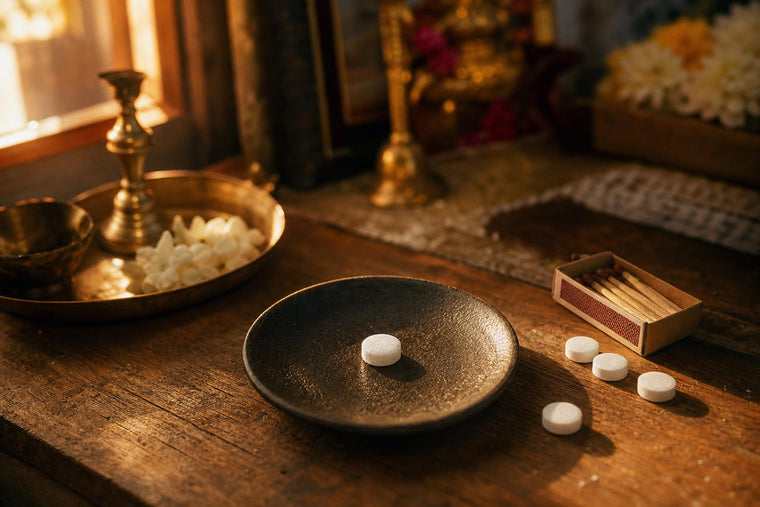
A vision board, in the end, is a small act of attention. You decide what matters, you put it where you'll see it, and you let the daily looking do its quiet work — while you do yours. Some people like to mark the practice with a little ritual: light a candle while you sit with it, perhaps a few minutes of incense to mark the ritual, read the affirmations aloud, sit a moment with the feeling, then begin the day. It's not where your future is decided. It's simply where you keep it in view, and remember to take the next step.
FAQs
Do vision boards actually work, or is it wishful thinking?
A vision board is a tool, not a spell. It works the way any focusing practice works: by keeping what matters to you in plain sight, day after day, so your attention quietly bends towards it. Looking at it each morning sharpens your sense of direction and makes you quicker to notice the opportunities and small choices that move you forward. The board doesn't do the work for you. It holds the intention steady while you do.
What do I actually need to make one?
Less than you'd think. A physical board takes a corkboard or sheet of card, scissors, glue or pins, and a stack of images, words and affirmations that genuinely resonate. A digital one needs only your phone and a free layout app, then lives on your lock screen. Many people like to keep a small notebook or journal alongside it, to write the intentions out by hand before they pin anything up.
How is a vision board different from just setting goals?
A written goal speaks to the planning part of your mind. An image speaks to the felt part — it lets you sense the place, the room, the morning you're working towards, not just name it. The two work best together: the picture holds the feeling, a line of writing holds the intention, and a daily glance keeps both alive. It's the difference between a plan you remember and one you keep returning to.
How often should I look at it for it to make a difference?
A minute or two in the morning is enough to set the tone for the day, with a glance or two more as you pass it. Place it somewhere you'll see often — beside the bed, by the kettle, above the desk. Consistency matters more than length. Some people make it part of a small ritual: light a candle, read the affirmations aloud, sit with the feeling for a moment, then begin.
Can crystals or candles help with a vision board practice?
Some people like to anchor the practice with an object — a stone kept beside the board, a candle lit while they sit with it. The tradition pairs a stone with an intention rather than a promise: name what you're working towards, and let the object keep the note. People often choose citrine for abundance, green aventurine for fresh starts, clear quartz for clarity. A simple intention bracelet carries the note with you when you step away, and a little incense helps some settle into the moment. The object supports the practice; the practice is yours.
What should I do if my goals change halfway through the year?
Change the board. A vision board is meant to be living, not fixed — it should reflect where you're actually heading, not where you were six months ago. Take down what no longer rings true, add what does, and treat the editing itself as a check-in with yourself. A board that grows with you stays useful; one frozen in an old version of your life slowly stops being seen.