There is a particular kind of escape in a tropical evening: warm light, the smell of something sweet on the breeze, a drink held in a vessel that asks to be looked at. Tiki culture grew out of that longing for somewhere warmer and slower. It is worth knowing what it actually is, and what it is not, before you bring a little of its spirit home.
What Tiki is, and where it comes from
Tiki culture draws on Polynesian motifs and the mid-century American taste for escapism. It began in 1930s California as one country's romantic picture of island life. The look is familiar: carved figures, bamboo, tropical drinks, a sense of somewhere far away.
Much of it lives in the Tiki bar, with thatched roofs, intricately carved Tiki statues and warm low light, providing a haven that whisks patrons away to an island dream. It is a created atmosphere, and a charming one, but it is an American interpretation of Polynesian life, not indigenous Hawaiian heritage. That distinction is worth keeping in mind.
In Māori tradition Tiki is the first man, one of several Polynesian creation legends. The word itself spans the Pacific: Tahitian tiʻi, Hawaiian kiʻi, from the Proto-Polynesian *tiki. That name travelled into the culture we know today.
The 1930s were the turning point. Don the Beachcomber opened the first Tiki bar and, with it, a whole imagined world of Polynesian myth and tropical drinks. It captured a country that wanted a taste of paradise, an artistic interpretation of island life, told from the outside.
The golden age, and its quiet revival
After the Second World War, returning servicemen brought back stories and souvenirs from the Pacific, and Tiki culture took hold. Bars spread quickly. Mixologists such as Don the Beachcomber and Trader Vic built their names on elaborate cocktails like the Zombie and Mai Tai.
The Tiki flame dimmed towards the end of the 20th century. Today a new generation of enthusiasts has rekindled it, with fresh appreciation for the craft behind the culture.

Tiki mugs and their legacy
Tiki mugs are the ambassadors of Tiki culture. From the mid-20th century to today they have been cherished not just as containers for tropical concoctions but as collectibles, small objects that hold a whole way of imagining the tropics.
They are usually made from ceramic and shaped into figures drawn from Polynesian mythology. In Polynesian tradition each carved figure was associated with protection, abundance, or fertility. Many are given stern expressions and tall headdresses, echoing the carvings found across the Pacific Islands.
The figures on the mugs
The faces on Tiki mugs are inspired by Māori, Hawaiian and other Oceanic art forms. Some carry names of specific gods, the Hawaiian war god Kū, or Lono, the Hawaiian god of fertility and peace. Each has its own story within its own tradition. Others show tropical animals, hula dancers, or skulls, leaning into the theatrical side of the Tiki look.
Collectability and craft
Over the years Tiki mugs have become genuinely collectable. Enthusiasts hunt for vintage pieces tied to a particular bar or era. Limited editions, made for a specific venue or event, can fetch high prices. The real appeal is the making: each mug is a small piece of sculpture you can drink from, which is what lifts it above ordinary drinkware.

Beyond the mugs and myths
The drinks
In Tiki culture the character is not only in the mugs but in what they hold. The signature drinks are built from rums, fruit juices and exotic syrups, finished with colourful garnishes, from the cocktail umbrella to live flowers.
These drinks are as much about colour and presentation as taste, from the bright blue of a Blue Hawaii to the deep red of a Zombie. They are served in themed vessels chosen to suggest the islands.
The ritual of serving
Ordering one is part of the appeal, and the experience of ordering a Tiki drink is a ritual in itself. It can come with a little theatre: dry ice, fire, a shared bowl passed around the table. At Disney's Trader Sam's Enchanted Tiki Bar, for instance, ordering a Krakatoa Punch can set off a miniature volcano.
Traditions that last
Many original recipes were once closely guarded, and some have been lost. Even so, the spirit of these drinks has carried through, picked up by new bartenders and enthusiasts. Tiki mugs and the drinks they hold are more than artefacts. They carry a story, a piece of American mid-century invention, layered over Pacific imagery, and the simple pleasure of a drink made with care.

Bringing a little of that spirit home
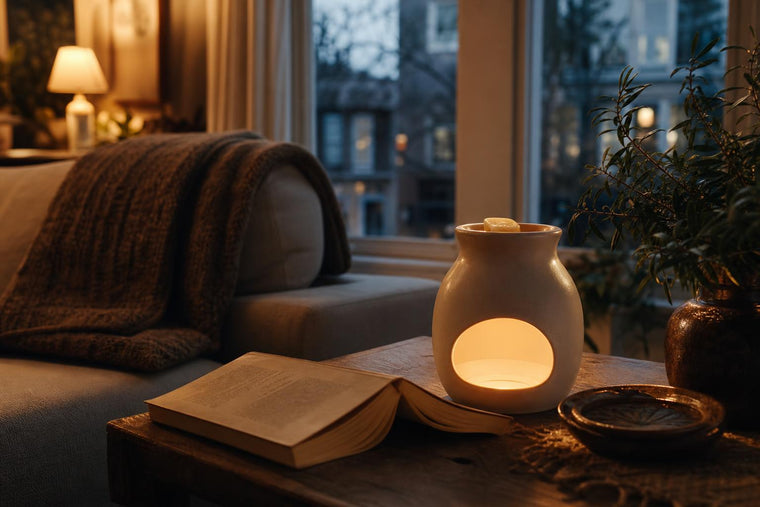
You do not need a full themed bar to enjoy what Tiki does best. At heart it is about atmosphere and the pleasure of pouring something for friends. A characterful ceramic vessel, warm light, the mellifluous strums of tropical tunes, a scent that suggests somewhere warm, that is often enough.
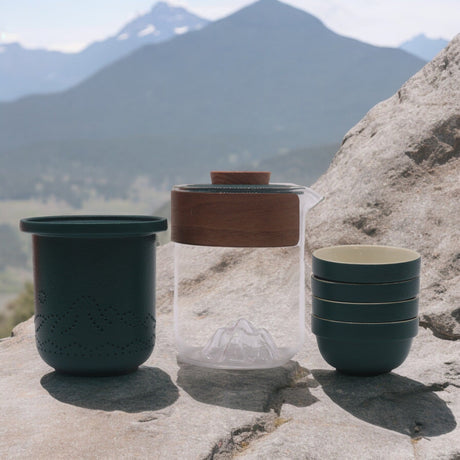
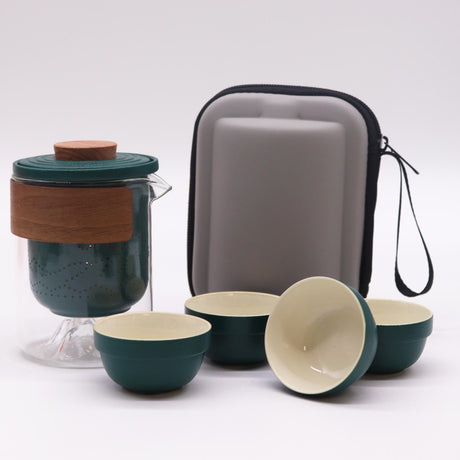
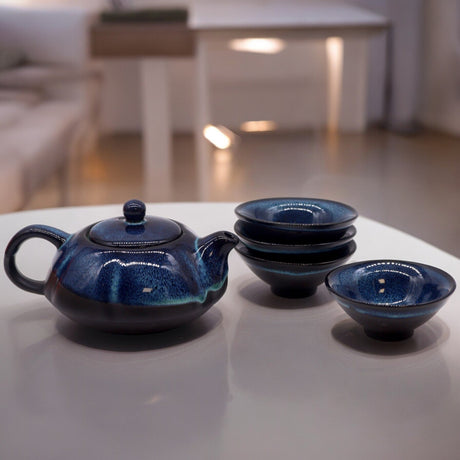
We do not stock Tiki mugs themselves, but the idea behind them, the shared cup, the small ritual of serving, runs through a lot of what we do. A ceramic tea set asks the same thing of you: gather, pour, share. For a slower kind of tropical escape, scent does the work that the drink once did. A mango or ylang ylang note, a pina colada infusion, a warm bath, these bring the timeless spirit of the islands into your home, with nothing to pour but warm water and time.